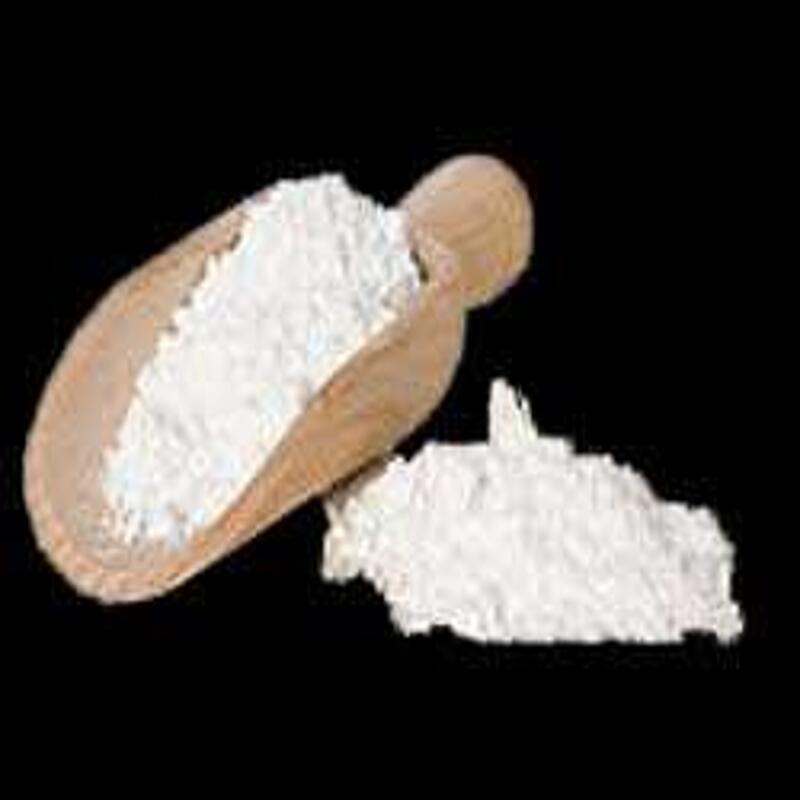
Sodium dichloroisocyanurate in bulk supply
17 Inquiries
2893-78-9
Industrial Grade
60%
QINGDAO
1000kg/3kg Bag (Used For AA,1000kg Bag)
Yes
2019-06-15

Trichloroisocyanuric acid,Cyanuric acid
-
Product Description
-
Seller Information
-
Inquiry History
-
Description
Origin: China
Appearance:White granular solid
Application
Sodium dichloroisocyanurate widely used in sterilizing power plants, petroleum, chemicals, textiles, electronics and other industrial circulating water system, algae, completely kill the system piping, heat exchangers, cooling towers and other bacteria and algae propagation. Solve clogging slime forming bacteria and algae, pipeline corrosion problem; in Japan, the textile industry is the excellent performance of bleach, sanitizers; conduct water, breeding sites of disinfection in livestock breeding, aquaculture and other aspects; in agricultural cultivation, more crops of fungi, bacteria and other diseases with special effects; in food and beverage processing industry, cleaning and disinfection, as a swimming pool disinfectant and hospitals, hotels and other public places disinfection.
Package
(50)Kg/Bag
ECHEMI Editorial ReferenceDichloroisocyanuric acid, sodium salt, is a white crystalline powder. Chlorine odor. Thermally unstable.
Sodium dichloro-s-triazinetrione is a white solid with an odor of bleach-like odor. Mixes with water. (USCG, 1999)|PelletsLargeCrystals|WHITE CRYSTALLINE POWDER WITH PUNGENT ODOUR.
Sodium dichloro-s-triazinetrione is a white solid with an odor of bleach-like odor. Mixes with water. (USCG, 1999)Basic Info-
Product Name:
Sodium dichloroisocyanurate
Other Name:1,3,5-Triazine-2,4,6(1H,3H,5H)-trione,1,3-dichloro-,sodium salt (1:1);s-Triazine-2,4,6(1H,3H,5H)-trione,1,3-dichloro-,sodium salt;1,3,5-Triazine-2,4,6(1H,3H,5H)-trione,1,3-dichloro-,sodium salt;ACL 60;Sodium dichlorocyanurate;Sodium dichloroisocyanurate;Dichloroisocyanuric acid sodium salt;Sodium dichlorisocyanurate;3,5-Dichloro-2-hydroxy-4,6-s-triazinedione sodium salt;CDB 63;Simpla;Dikonit;Fi Clor 60S;Clearon;Fi Clor Clearon;CDB Clearon;Neochlor 60P;Oniachlor 60;Hi-Lite 60G;Izosan G;Surchlor GR 60;Hi-Lite 60C;ACL 56;Clearon CDB;Actisan;Clearon CDB 56;Basolan DC;Crente;Hi-Lite G 60GW;SDIC 60P;Prisept;Oxidan DCN/WSG;SDIC-MG;Dichlosia;Fichlor;Presept;Dichloro-s-triazinetrione sodium salt;Vac Attack;Neochlor 60G;Neochlor 55;Neochlor 60MG;Neochlor 60M;Jundujing;Hidrosan;Sumaveg;DICD-G;Neochlor 55G;Javel Solid;Khlorapin;Aviclor;Medicarine;Actisept;Haz-Tab;Haz-Tabs;Histar G;Sodium dicycloroisocyanurate;10119-30-9;12676-23-2;13023-28-4;16499-74-4;25717-18-4;76560-28-6;81918-50-5;200401-83-8
CAS No.:2893-78-9
Molecular Formula:C3HCl2N3O3.Na
InChIKeys:InChIKey=UNWRHVZXVVTASG-UHFFFAOYSA-N
Molecular Weight:219.94600
Exact Mass:218.92100
EC Number:220-767-7
UNII:07M9U9U0LK
ICSC Number:0437
UN Number:2465
DSSTox ID:DTXSID3024994
Color/Form:White, crystalline powder
HScode:2933692990
Characteristics-
PSA:
79.95000
XLogP3:log Kow = 1.28 (est)
Appearance:White crystalline granular or powder or flake
Density:1 g/cm3
Melting Point:225°C
Boiling Point:306.7ºC at 760 mmHg
Flash Point:139.3ºC
Water Solubility:H2O: 30G/100ML (25 ºC)
Storage Conditions:0-6ºC
Vapor Pressure:7.05E-05mmHg at 25°C
Odor:Chlorine odor
PH:pH = 6.2-6.8, 1% aqueous solution
Experimental Properties:230-250 °C|When heated to decomposition it emits very toxic fumes of chloride, nitrogen oxides, and sodium oxide.|A powerful oxidizer. Incompatible with combustible materials, ammonium salts, nitrogenous materials.|Slightly hygroscopic|Active ingredient about 60% available chlorine; decomposes at 230 °C
Air and Water Reactions:The solid vigorously reacts with water releasing chlorine gas. Material containing less than 39% available chlorine will undergo reactions as described herein, but may take longer to initiate, and the resulting reaction may not be as vigorous. Water soluble.
Reactive Group:Salts, Acidic
Reactivity Alerts:Strong Oxidizing Agent
Reactivity Profile:Contact with ammonium compounds or hydrated salts can cause a very vigorous reaction. Prolonged exposure to heat /fire may result in the vigorous decomposition of the material with the rupture of its containers, it will accelerate the burning of combustible materials. Chlorine plus alcohols would yield alkyl hypochlorites. They decompose in the cold and explode on exposure to sunlight or heat. Tertiary hypochlorites are less unstable than secondary or primary hypochlorites [NFPA 491 M 1991].
Autoignition Temperature:225 °C (473 °F) at 1013 hPa
Hazard IdentificationClassification of the substance or mixture
Oxidizing solids, Category 2
Acute toxicity - Category 4, Oral
Eye irritation, Category 2
Specific target organ toxicity â single exposure, Category 3
Hazardous to the aquatic environment, short-term (Acute) - Category Acute 1
Hazardous to the aquatic environment, long-term (Chronic) - Category Chronic 1
GHS label elements, including precautionary statements
Pictogram(s) 


Signal word Danger
Hazard statement(s) H272 May intensify fire; oxidizer
H302 Harmful if swallowed
H319 Causes serious eye irritation
H335 May cause respiratory irritation
H410 Very toxic to aquatic life with long lasting effects
Precautionary statement(s) Prevention P210 Keep away from heat, hot surfaces, sparks, open flames and other ignition sources. No smoking.
P220 Keep away from clothing and other combustible materials.
P280 Wear protective gloves/protective clothing/eye protection/face protection/hearing protection/...
P264 Wash ... thoroughly after handling.
P270 Do not eat, drink or smoke when using this product.
P261 Avoid breathing dust/fume/gas/mist/vapours/spray.
P271 Use only outdoors or in a well-ventilated area.
P273 Avoid release to the environment.
Response P370+P378 In case of fire: Use ... to extinguish.
P301+P317 IF SWALLOWED: Get medical help.
P330 Rinse mouth.
P305+P351+P338 IF IN EYES: Rinse cautiously with water for several minutes. Remove contact lenses, if present and easy to do. Continue rinsing.
P304+P340 IF INHALED: Remove person to fresh air and keep comfortable for breathing.
P319 Get medical help if you feel unwell.
P391 Collect spillage.
Storage P403+P233 Store in a well-ventilated place. Keep container tightly closed.
P405 Store locked up.
Disposal P501 Dispose of contents/container to an appropriate treatment and disposal facility in accordance with applicable laws and regulations, and product characteristics at time of disposal.
Other hazards which do not result in classification
no data available
Handling and StoragePrecautions for safe handling
NO contact with flammables. NO contact with strong reducing agents, strong bases, ammonia, urea or water. Handling in a well ventilated place. Wear suitable protective clothing. Avoid contact with skin and eyes. Avoid formation of dust and aerosols. Use non-sparking tools. Prevent fire caused by electrostatic discharge steam.
Conditions for safe storage, including any incompatibilities
Separated from food and feedstuffs. See Chemical Dangers. Dry. Well closed.
-
-
Seller Information
-
Business Type:
Manufactory
-
Location:
Fenghuang development zone,Juancheng,China
-
-
Inquiry History17 Inquiries
Country Product Purchase Quantity Date Posted  Turkey
Granule Chlor Optional CAS number: 2893-78-9
1 TON Nov 19, 2024  Togo
Togo
SDIC 56%
100 MT Jun 20, 2025  France
SDIC
20 MT Aug 25, 2026  United Arab Emirates
Sodium Dichloroisocyanurate
20.00 MT May 24, 2025  Somali
Sodium Dichloroisocyanurate
20 40' Fcl May 21, 2025  Brazil
Sodium dichloroisocyanurate
500 KG Dec 18, 2024
Turkey
Swimming pool Sodium Dichloroisocyanurate 60%Granular 8-30 mesh 20-4
1 MT Jul 22, 2024  United States
SDIC 56%
1 MT Jul 1, 2024
Togo
SDIC 56%
5 20' Fcl Apr 1, 2024  Bangladesh
Sodium Dichloroisocyanurate
20 PCS Mar 25, 2026
United Arab Emirates
Sodium Dichloroisocyanurate (SDIC)
200.00 MT May 4, 2025
United States
SDIC
2 TON Nov 25, 2024  India
India
Sodium Dichloroisocyanurate
1000 KG Sep 14, 2024  Ivory Coast
SDIC
1 20' Fcl Mar 25, 2024
Togo
sdic
50 MT Nov 22, 2023  South Africa
Sodium dichloro iso cyanurate
80 Aug 30, 2024
India
Sodium Dichloroisocyanurate naddc powder
1000.00 KG Mar 1, 2024 Post an enquiry for this product
- Hot Searches
- colour brilliant blue
- retatrutide peptide buy usa price near me
- polylactic acid cost
- petrochemical prices
- what's the price of kerosene
- foxo4 peptide for sale
- zirconium silicate
- na 931 peptide for sale
- fipronil cockroach bait
- sodium pentothal
- ethylene vinyl acetate price
- gallium iii fluoride
Hot Related Products
-
 soda ash Lisa shop
 -
 Urea 46 %
 -
 urea good
 -
 Caustic Soda-Batong
 -
 TUODA-Sodium carbonate
 -
 Caustic Soda Flakes / Pearl Sodium Hydroxide Naoh High Purity 99% 98.5% 98% price
$450-550/MT FOB
-
 Factory direct sales Industrial/Agricultural/Vehicle Urea 46%fertilizers and multiple other fields
 -
 UREA SOLUTION 40%
 -
 Industrial Grade 99% Caustic Soda in Flake Pearl and Solid Forms
 -
 Ammonium Chloride 99.5% white powder JD-AC995-FG JD