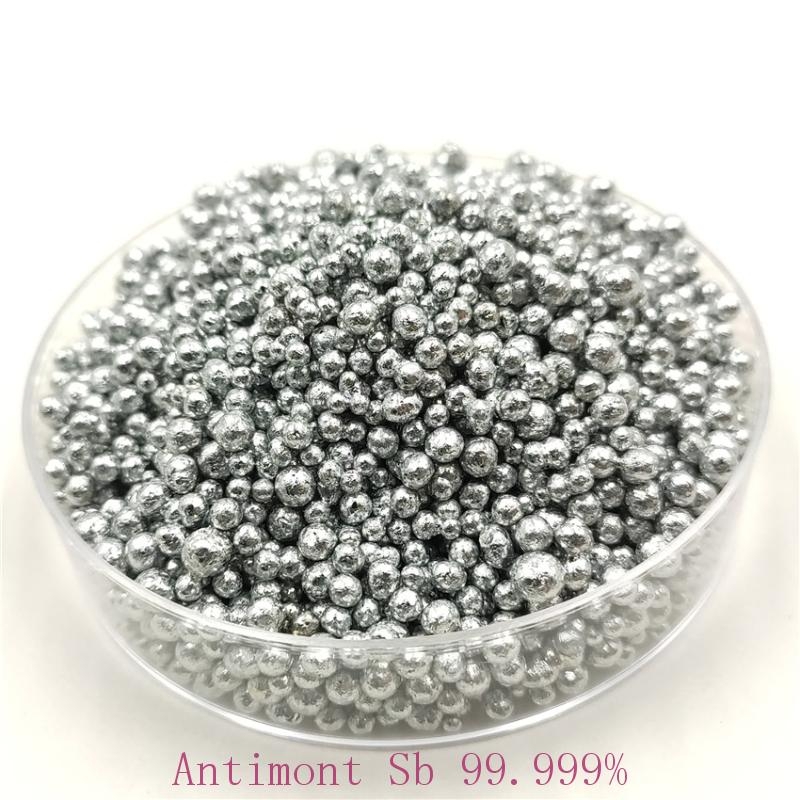


high pure Antimony Sb 99.999% chemical basic material CAS#:7740-36-0 99.999% schpm
3 Inquiries
7440-36-0
Industrial Grade
99.999%
Shen Zhen
schpm
1kg/alumium bag
2023-03-08
pure metal,inorganic chemicals,antimonide,high pure element,sulfide,telluride
-
Product Description
-
Seller Information
-
Inquiry History
-
DescriptionECHEMI Editorial ReferenceA natural element, antimony (symbol Sb; CASRN 7440-36-0) occurs in valence states of 3, 5, and -3 and has both metallic and nonmetallic properties. It is commercially available as a silver white lustrous solid metal or a dark gray powder (HSDB, 2005; Budavari, 1989). The amount in the earth’s crust is <1 parts per million (ppm); its most common ore is stibnite (CASRN 1345-04-6). Antimony trisulfide (symbol Sb2S3; CASRN 1317-86-8), is a chemical form of antimony (Beliles, 1979). In the soils ofBasic Info
-
Product Name:
Antimony
Other Name:Antimony;C.I. 77050;Antimony black;Stibium;Antimony element;SBE 03PB;117011-47-9;73063-67-9
CAS No.:7440-36-0
Molecular Formula:Sb
InChIKeys:InChIKey=WATWJIUSRGPENY-UHFFFAOYSA-N
Molecular Weight:121.76000
Exact Mass:120.90400
EC Number:270-130-2
ICSC Number:0775
UN Number:2871|1549|3141
DSSTox ID:DTXSID5023879
Color/Form:Silver metal; hexagonal (gray antimony); black amorphous solid (black antimony)|Silver-white, lustrous, hard, brittle metal; scale-like crystalline structure or dark gray, lustrous powder|Hexagonal (rhombohedral) crystals|Silvery or gray, lustrous metalloid|For more Color/Form (Complete) data for Antimony, elemental (6 total), please visit the HSDB record page.
HScode:81101000
Categories:
Characteristics-
PSA:
0
XLogP3:0.00000
Appearance:Antimony powder appears as a silvery or gray solid in the form of dust. Denser than water and insoluble in water. Toxic by inhalation and by ingestion. May burn and emit toxic fumes if heated or exposed to flames. Used to make electric storage batteries and semiconductors.
Density:6.684 g/cm3 @ Temp: 25 °C
Melting Point:630 °C
Boiling Point:1635 °C
Flash Point:1380ºC
Water Solubility:H2O: INsoluble
Storage Conditions:Keep container tightly closed in a dry and well-ventilated place. Air sensitive. Moisture sensitive. Handle and store under inert gas. Keep in a dry place. Storage class (TRGS 510): Non-combustible, acute toxic Cat.3 / toxic hazardous materials or hazardous materials causing chronic effects.
Vapor Pressure:0 mmHg (approx)
Toxicity:LD50 in rats, guinea pigs (mg Sb/100 g): 10.0, 15.0 i.p. (Bradley, Fredrick)
Flammability characteristics:Noncombustible Solid in bulk form, but a moderate explosion hazard in the form of dust when exposed to flame.
Explosive limit:Electrolysis of acid sulfides and stirred Sb halide yields explosive Sb.
Experimental Properties:Metal is not found alone ... Valence 0, -3, +3 or +5|Not affected by cold dilute acids; attacked by hot concentrat6ed sulfuric acid; readily by aqua regia|When finely divided reacts with hot concentrated hydrochloric acid|2 naturally occurring isotopes: 121 (57.25%); 123 (42.75%); artificial radioactive isotopes: 112-120; 122; 124-135|For more Other Experimental Properties (Complete) data for Antimony, elemental (15 total), please visit the HSDB record page.
Air and Water Reactions:Insoluble in water.
Reactive Group:Metals, Elemental and Powder, Active
Reactivity Alerts:Strong Reducing Agent
Reactivity Profile:ANTIMONY is spontaneously flammable in fluorine, chlorine, and bromine. With iodine, the reaction produces heat, which can cause flame or even an explosion if the quantities are great enough [Mellor 9:379 1946-47]. Even at 10° C. bromine trifluoride reacts with antimony incandescently. Bromine trifluoride reacts similarly with arsenic, boron, bromine, iodine, phosphorus, and sulfur [Mellor 2:113 1946-47]. Bromoazide explodes on contact with antimony, arsenic, phosphorus, silver foil, or sodium. It is very shock sensitive. Explosions of chloric acid have been due to the formation of unstable compounds with antimony, bismuth, ammonia, and organic matter [Chem. Abst. 46:2805e 1952]. The reaction of finely divided antimony and nitric acid can be violent [Pascal 10:504 1931-34]. Powdered antimony mixed with potassium nitrate explodes when heated [Mellor 9:282 1946-47]. When antimony or arsenic and solid potassium permanganate are ground together, the metals ignite [Mellor 12:322 1946-47]. Sodium peroxide oxidizes antimony, arsenic, copper, potassium, tin, and zinc with incandescence [Mellor 2:490-93 1946-47].
Flammable Limits:Moderate fire and explosion hazard in the forms of dust and vapor, when exposed to heat or flame.|Noncombustible Solid in bulk form, but a moderate explosion hazard in the form of dust when exposed to flame.
Physical Dangers:Dust explosion possible if in powder or granular form, mixed with air.
Heat of Vaporization:195,250 J/mol (latent heat)
Hazard IdentificationClassification of the substance or mixture
Not classified.
GHS label elements, including precautionary statements
Pictogram(s) No symbol. Signal word No signal word
Hazard statement(s) none
Precautionary statement(s) Prevention none
Response none
Storage none
Disposal none
Other hazards which do not result in classification
no data available
Handling and StoragePrecautions for safe handling
NO open flames. NO contact with oxidizing agents, halogens or acids. Closed system, dust explosion-proof electrical equipment and lighting. Prevent deposition of dust. Handling in a well ventilated place. Wear suitable protective clothing. Avoid contact with skin and eyes. Avoid formation of dust and aerosols. Use non-sparking tools. Prevent fire caused by electrostatic discharge steam.
Conditions for safe storage, including any incompatibilities
Separated from oxidants, acids, halogens and food and feedstuffs.
-
-
Seller Information
-
Business Type:
Manufactory
-
Main Products:
pure metal,inorganic chemicals,antimonide,high pure element,sulfide,telluride
-
Location:
Mianyang, Sichuan Provice, China, Mianyang, Sichuan Provice, China
-
Payment Terms:
TT against copy of documents,L/C
-
Average lead Time:
7
-
Total Annual Revenue:
$1 million-$2.5 million
-
Total Employees:
11-50
-
Year of Establishment:
2018
-
Certifications:
IOS9001
-
-
Inquiry History3 Inquiries
Country Product Purchase Quantity Date Posted  Pakistan
Antimony regulus
30000 KG Aug 26, 2025  United Kingdom
high pure Antimony Sb 99.999% chemical basic material CAS#:7740-36-0 99.999% schpm
0.01 KG Sep 29, 2023  United Arab Emirates
Antimony Ingot
10 TON Jan 15, 2025 Post an enquiry for this product