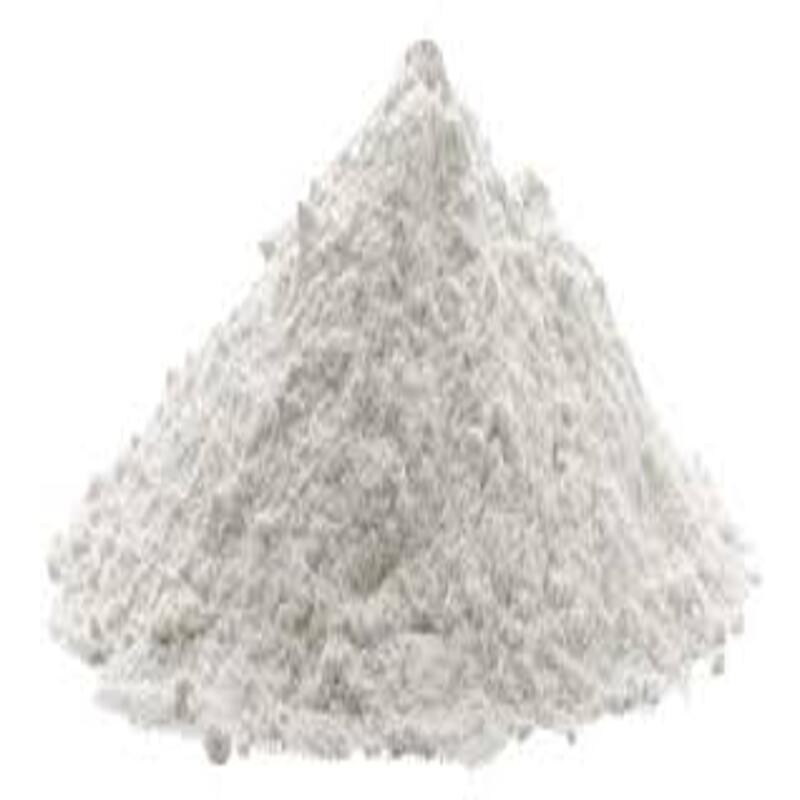
Professional Manufacturer Quinine Powder CAS 130-95-0 Quinine
GMP HALAL KOSHER ISO FDA 2 Inquiries
130-95-0
99%
Foil Bag, Box, Drum
Yes
2022-12-31

Herb Extracts,Cosmetic raw materails,API
-
Product Description
-
Seller Information
-
Inquiry History
-
Description

Product DescriptionProduct Name: Quinine Hcl
CAS No: 6119-47-7
Color: White crystalline powder
Purity: 99%
Quinine Hydrochloride is an alkaloid of cinchona that was once widely used to control and prevent malaria; it also has analgesic, antipyretic, mild oxytocic, cardiac depressant, and sclerosing properties, and it decreases the excitability of the motor end plate. It is used as the dihydrochloride, hydrochloride, or sulfate salt in the treatment of resistant falciparum malaria.
Quinine Hydrochloride occurs naturally in the bark of the cinchona tree, though it has also been synthesized in the laboratory. The medicinal properties of the cinchona tree were originally discovered by the Quechua, who are indigenous to Peru and Bolivia; later, the Jesuits were the first to bring cinchona to Europe.
Quinine Hydrochloride can cause abnormal heart rhythms, and should be avoided if possible in patients with atrial fibrillation, conduction defects or heart block. Quinine can cause hemolysis in G6PD deficiency (an inherited deficiency), but this risk is small and the physician should not hesitate to use quinine in patients with G6PD deficiency when there is no alternative.

An alkaloid derived from the bark of the cinchona tree.
It is used as an antimalarial drug, and is the active ingredient in extracts of the cinchona that have been used for that purpose since before 1633.
Quinine is also a mild antipyretic and analgesic and has been used in common cold preparations for that purpose.
It was used commonly and as a bitter and flavoring agent, and is still useful for the treatment of babesiosis.
Quinine is also useful in some muscular disorders, especially nocturnal leg cramps and myotonia congenita, because of its direct effects on muscle membrane and sodium channels. The mechanisms of its antimalarial effects are not well understood.

ECHEMI Editorial ReferenceQuinine is odorless, but has an intense, bitter taste white to light yellow crystal powdeA poisonous ALKALOID found in the bark of the cinchona tree of South America. It is used in treating malaria. quinine: A white solid, C20H24N2O2·3H2O, m.p. 57°C. It is apoisonous alkaloid occurring in thebark of the South American cinchonatree, although it is now usually producedsynthetically. It forms saltsand is toxic to the malarial parasite.
Quinine is a natural cinchona alkaloid that has been used for centuries in the prevention and therapy of malaria. Quinine is also used for idiopathic muscle cramps. Quinine therapy has been associated with rare instances of hypersensitivity reactions which can be accompanied by hepatitis and mild jaundice.CertificatesBasic Info-
Product Name:
Quinine
Other Name:Cinchonan-9-ol,6′-methoxy-,(8α,9R)-;Quinine;(8α,9R)-6′-Methoxycinchonan-9-ol;6′-Methoxycinchonidine;(-)-Quinine;(8S,9R)-Quinine;(R)-(-)-Quinine;NSC 192949;WR297608;Qualaquin;Mosgard;Quinlup;Quine 9;Cinkona;Quinex;Quinlex;Rezquin;QSM;SW 85833;(R)-(6-Methoxy-4-quinolyl)[(2S)-5-vinylquinuclidin-2-yl]methanol;6912-57-8;12239-42-8;21480-31-9;55980-20-6;72646-90-3;95650-40-1;128544-03-6;767303-40-2;840482-04-4;857212-53-4;864908-93-0;875538-34-4;888714-03-2;890027-24-4;894767-09-0;898813-59-7;898814-28-3;899813-83-3;900786-66-5;900789-95-9;906550-97-8;909263-47-4;909767-48-2;909882-78-6;910878-25-0;910880-97-6;911445-75-5;918778-04-8;1071756-51-8;1267651-57-9;1628705-47-4;2244812-93-7;2244812-97-1;2409557-51-1;2566761-34-8
CAS No.:130-95-0
Molecular Formula:C20H24N2O2
InChIKeys:InChIKey=LOUPRKONTZGTKE-WZBLMQSHSA-N
Molecular Weight:324.42
Exact Mass:324.42
BRN:91867
EC Number:205-003-2
DSSTox ID:DTXSID0044280
Color/Form:Triboluminescent, orthorhombic needles from absolute alcohol|Bulky, white, amorphous powder or crystalline alkaloid|CRYSTALS TURN BROWN ON EXPOSURE TO AIR
HScode:29392110
Categories:
Characteristics-
PSA:
45.6
XLogP3:log Kow = 2.88
Appearance:White Crystalline Powder
Density:1.1294 (rough estimate)
Melting Point:57 °C
Boiling Point:462.75°C (rough estimate)
Flash Point:>110°C (>230°F)
Refractive Index:1.6250 (estimate)
Water Solubility:H2O: slightly soluble
Storage Conditions:Refrigerator
Vapor Pressure:0mmHg at 25°C
Specific rotation:-172 º (c=1, EtOH)
Odor:ODORLESS
Taste:Very bitter taste
Henrys Law Constant:Henry's Law constant = 8.58X10⁻¹⁶ atm-cu m/mol at 25 °C (est)
Dissociation Constants:pK1 (18 °C) = 5.07; pK2 = 9.7
Experimental Properties:Sublimes in high vacuum at 170-180 °C blue fluorescence is especially strong in dilute sulfuric acid|Quinine sulfate occurs as fine, needle-like, white crystals which are usually lusterless and make a light and readily compressible mass; the drug has a persistent, very bitter taste. Quinine sulfate has solubilities of approximately 2 mg/mL in water and 8.3 mg/mL in alcohol at 25 °C. /Quinine sulfate/|Very bitter crystals or crystalline powder; efflorescent on exposure to air and darkens on exposure to light. One gram dissolves in 9 mL water, 0.7 mL boiling water, 23 mL alcohol, 0.7 mL alcohol at 60 °C, 625 mL chloroform, 2500 mL ether, 15 mL glycerol; pH: 3.5 /Bisulfate heptahydrate/|Bitter, silky needles. Effloresces on expsoure to warm air. Does not lose all its water below 120 °C. One gram dissolves in 16 mL water, in 0.5 mL boiling water, in 1.0 mL alcohol, in about 7.0 mL glycerol, in about 1 ml chloroform, in about 350 mL ether. pH (1% aqueous solution): 6.0-7.0. Bitterness threshold 1:30000 /Quinine hydrochloride dihydrate/|For more Other Experimental Properties (Complete) data for QUININE (6 total), please visit the HSDB record page.
Hazard IdentificationClassification of the substance or mixture
Acute toxicity - Category 4, Oral
Skin sensitization, Sub-category 1A
GHS label elements, including precautionary statements
Pictogram(s) 
Signal word Warning
Hazard statement(s) H302 Harmful if swallowed
H317 May cause an allergic skin reaction
Precautionary statement(s) Prevention P264 Wash ... thoroughly after handling.
P270 Do not eat, drink or smoke when using this product.
P261 Avoid breathing dust/fume/gas/mist/vapours/spray.
P272 Contaminated work clothing should not be allowed out of the workplace.
P280 Wear protective gloves/protective clothing/eye protection/face protection/hearing protection/...
Response P301+P317 IF SWALLOWED: Get medical help.
P330 Rinse mouth.
P302+P352 IF ON SKIN: Wash with plenty of water/...
P333+P317 If skin irritation or rash occurs: Get medical help.
P321 Specific treatment (see ... on this label).
P362+P364 Take off contaminated clothing and wash it before reuse.
Storage none
Disposal P501 Dispose of contents/container to an appropriate treatment and disposal facility in accordance with applicable laws and regulations, and product characteristics at time of disposal.
Other hazards which do not result in classification
no data available
Handling and StoragePrecautions for safe handling
Handling in a well ventilated place. Wear suitable protective clothing. Avoid contact with skin and eyes. Avoid formation of dust and aerosols. Use non-sparking tools. Prevent fire caused by electrostatic discharge steam.
Conditions for safe storage, including any incompatibilities
Quinidine should be stored at controlled room temperature. Quinidine salts slowly discolor on exposure to light, aquiring a brownish tint. Only clear, colorless solutions are suitable for injection./intravenous quinidine gluconate/
-
-
Seller Information
-
Business Type:
Manufactory
-
Main Products:
Herb Extracts,Cosmetic raw materails,API
-
Location:
1403,Jinye B Block
-
Payment Terms:
TT against copy of documents
-
Average lead Time:
8 days
-
Total Annual Revenue:
$2.5 million-$5 million
-
Total Employees:
11-50
-
Year of Establishment:
2015
-
-
Inquiry History2 Inquiries
Country Product Purchase Quantity Date Posted  India
India
cinchona powder quinine content 3.5 to 5
100-500 KG Sep 10, 2026  United States
Quinine
50 KG Feb 9, 2025 Post an enquiry for this product
- Hot Searches
- where to buy anadrol
- where can i buy sulfur hexafluoride
- pvc prices
- n-isopropylbenzylamine for sale
- where can i buy retatrutide peptide
- trimethylol propane
- polypropylene price per ton nigeria 2026
- where to buy sodium nitrite
- prices of ammonia
- high density polyethylene price
- barium sulfate suspension
- western chemical
More from this Seller
-
-

-
Natural Carrot Extract 98% Beta Carotene Powder Beta Carotene
Pharmaceutical Grade / 0.00%
-
-
-

-
99% Nootropic Supplement Series Powder CAS1270138-40-3 Nsi-189
Pharmaceutical Grade / 99.00%
-
-
-

-
Fisetin
Medical Grade / 99.00%
-
-
-

-
Natural berberine hcl Herbal berberine Hydrochloride berberine hcl
Pharma grade ; Food Grade / 99.00%
-
-
-

-
High Quality 1146963-51-0 Raw Material J-147 Powder for Medical Grade J-147
Pharmaceutical Grade / 0.00%
-


Hot Related Products
-
 formic acide grade
 -
 methanoic acid 94%
 -
 Liquid CH2o2 Formic Acid Leather Lowest Price 85% Methanoic Formic Acid Industrial Grade price
$500-600/MT FOB
-
 Formic Acid Colorless liquid
 -
 Formic Acid pure 100%
 -
 Formic Acid 85% 90% 94% 99% liquid
 -
 Industrial Grade 90% Formic Acid CAS 64-18-6 for Leather Tanning & Rubber Coagulation
 -
 Formic acid 85% industrial
 -
 85%-99% Formic acid cas no. 64-18-6
 -
 25kg Per Drum Economically Priced Industrial Grade Organic Formic Acid 85%min in Liquid Appearance