Camptothecin 7689-03-4
1 Inquiries
7689-03-4
Qigndao
Chenlv Herb
25KG/DRUM
2023-11-30

Synephrine,Mucuna Pruriens extract,Maca extract,Pomegranate peel extract,Resveratrol,Epimedium leaf extract
-
Product Description
-
Seller Information
-
Inquiry History
-
DescriptionECHEMI Editorial ReferenceCampathecin is a potent DNA enzyme topoisomerase I inhibitor, with an IC50 of 679 nM.
Camptothecin is a pyranoindolizinoquinoline that is pyrano[3',4':6,7]indolizino[1,2-b]quinoline which is substituted by oxo groups at positions 3 and 14, and by an ethyl group and a hydroxy group at position 4 (the S enantiomer). It has a role as an EC 5.99.1.2 (DNA topoisomerase) inhibitor, an antineoplastic agent, a genotoxin and a plant metabolite. It is a pyranoindolizinoquinoline, a tertiary alcohol, a delta-lactone and a quinoline alkaloid.|Camptothecin is an alkaloid isolated from the stem wood of the Chinese tree, Camptotheca acuminata. This compound selectively inhibits the nuclear enzyme DNA topoisomerase, type I. Several semisynthetic analogs of camptothecin have demonstrated antitumor activity.|Camptothecin is an alkaloid isolated from the Chinese tree Camptotheca acuminata, with antineoplastic activity. During the S phase of the cell cycle, camptothecin selectively stabilizes topoisomerase I-DNA covalent complexes, thereby inhibiting religation of topoisomerase I-mediated single-strand DNA breaks and producing potentially lethal double-strand DNA breaks when encountered by the DNA replication machinery. (NCI)|An alkaloid isolated from the stem wood of the Chinese tree, Camptotheca acuminata. This compound selectively inhibits the nuclear enzyme DNA TOPOISOMERASES, TYPE I. Several semisynthetic analogs of camptothecin have demonstrated antitumor activity.
Camptothecin is an alkaloid derived from Xi Shu (Camptotheca acuminata), which belongs to Nyssaceae. The traditional Chinese medicine Camptotheca acuminata (Xi Shu) has been collected in the Compilation of Chinese Herbal Medicine, Chinese Materia Medica, and Great Dictionary of Chinese Medicine. Camptotheca acuminata (Xi Shu) is widely distributed in the basin of Yangtze river and the southwestern provinces. The main medicinal parts of Camptotheca acuminata (Xi Shu) are root bark and fruit, which get rid of heat and toxic materials and eliminate the disease.
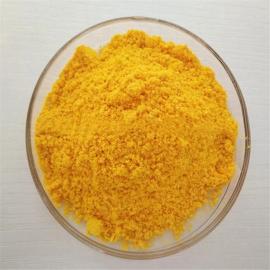
light yellow crystal powde
In 1966, Wall M E et al. from the United States isolated an alkaloid from Camptotheca acuminata and defined its chemical structure. The invitro anticancer tests revealed the anticancer activity of the tryptophan-terpene alkaloid, which is known as camptothecin and received widely concern. In 1975, Corey etal. first opened the door for the chiral synthesis of camptothecin, but the reaction step was long and the yield rate was very low. It was not until 1997 that Ciufolini etal. developed a new method for the synthesis of camptothecin by five steps, with a total yield rate up to 51%. The great breakthrough in the chemical synthesis of camptothecin has made its extensive application become a reality.Hydroxycamptothecin, as a camptothecin derivative with a hydroxyl group on the tenth carbon atom, is widely used for the treatment of various cancers. In 1969, researchers from Shanghai Institute of Materia Medica found that hydroxycamptothecin possessed potent anticancer activity and low toxicity. And this finding promoted the production and clinical application of hydroxycamptothecin, but its usage was interrupted for technology and quality. In the 1980s, hydroxycamptothecin was reproduced for clinical application with an improvement in producing technology, and hydroxycamptothecin got its approval number in 1986 for clinical usage in China. In the 1990s, the US Food and Drug Administration approved the clinical application of topotecan and irinotecan, which played a significant role in the prevention and treatment of cancers.Basic Info-
Product Name:
(+)-Camptothecin
Other Name:1,6-DIHYDROXY-7-GLUCURONOSYLFLAVONE;(20S)-CAMPTOTHECIN;CaMpetothecin;(4S)-4-Ethyl-4-hydroxy-1H-pyrano[3',4':6,7]indolizino[1,2-b]quinoline-3,14(4H,12H)-dione;CaMptothecin(NATURAL);CaMpathecin;4-ETHYL-4-HYDROXY-1H-PYRANO[3',4':6,7]INDOLIZINO[1,2-B]QUINOLINE-3,14(4H,12H)DIONE;5,6-DIHYDROXY-7-GLUCURONOSYLFLAVONE
CAS No.:7689-03-4
Molecular Formula:C20H16N2O4
InChIKeys:VSJKWCGYPAHWDS-FQEVSTJZSA-N
Molecular Weight:348.35
Exact Mass:348.35
BRN:631069
EC Number:444-280-6
UNII:XT3Z54Z28A
NSC Number:94600
DSSTox ID:DTXSID0030956
NCI Thesaurus Code:C338
Color/Form:yellow
HScode:29399990
Categories:
Characteristics-
PSA:
79.7
Physical Properties:Appearance: pale yellow needlelike crystal. Solubility: slightly soluble in ethanol and chloroform; poorly soluble in water; camptothecin fails to generate stable salt with acid, whereas it can produce sodium salt which is soluble in water by reacting with heated sodium hydroxide solution. Melting point: 264–267°C. Camptothecin derivatives
XLogP3:1
Appearance:yellow solid
Density:1.3112 (rough estimate)
Melting Point:260 °C (dec.)(lit.)
Boiling Point:482.73°C (rough estimate)
Flash Point:411.6±32.9 °C
Refractive Index:1.5700 (estimate)
Water Solubility:insoluble
Storage Conditions:2-8°C
Toxicity:Oral-rat LD50: 153 mg/kg; Oral-Mouse LD50: 50.1 mg/kg
Flammability characteristics:Thermal decomposition emits toxic nitrogen oxide fumes; reacts with acids to decompose
Specific rotation:D25 +31.3° (in chloroform-methanol, 8:2)
PKA:pKa 10.83 (Uncertain)
Collision Cross Section:181.9 Ų [M+H]+ [CCS Type: TW, Method: calibrated with polyalanine and drug standards]
Critical Temperature & Pressure:2-8°C
Hazard IdentificationClassification of the substance or mixture
Acute toxicity - Category 3, Oral
GHS label elements, including precautionary statements
Pictogram(s) 
Signal word Danger
Hazard statement(s) H301 Toxic if swallowed
Precautionary statement(s) Prevention P264 Wash ... thoroughly after handling.
P270 Do not eat, drink or smoke when using this product.
Response P301+P316 IF SWALLOWED: Get emergency medical help immediately.
P321 Specific treatment (see ... on this label).
P330 Rinse mouth.
Storage P405 Store locked up.
Disposal P501 Dispose of contents/container to an appropriate treatment and disposal facility in accordance with applicable laws and regulations, and product characteristics at time of disposal.
Other hazards which do not result in classification
no data available
Handling and StoragePrecautions for safe handling
Handling in a well ventilated place. Wear suitable protective clothing. Avoid contact with skin and eyes. Avoid formation of dust and aerosols. Use non-sparking tools. Prevent fire caused by electrostatic discharge steam.
Conditions for safe storage, including any incompatibilities
Store the container tightly closed in a dry, cool and well-ventilated place. Store apart from foodstuff containers or incompatible materials.
-
-
Seller Information
-
Business Type:
Manufactory
-
Main Products:
Synephrine,Mucuna Pruriens extract,Maca extract,Pomegranate peel extract,Resveratrol,Epimedium leaf extract
-
Location:
No.301, North Industrial park, Pujiang, Chengdu
-
Payment Terms:
TT against copy of documents,L/C
-
Average lead Time:
365 days
-
Total Annual Revenue:
$5 million-$10 million
-
Total Employees:
11-50
-
Year of Establishment:
2012
-
-
Inquiry History1 Inquiries
Country Product Purchase Quantity Date Posted  India
India
(S)-(+)-Camptothecin
1000 KG Nov 7, 2024 Post an enquiry for this product

- Hot Searches
- raw steroid powder
- carbon black pricing
- red 167
- stockmeier chemicals
- cheapest retatrutide
- butane price
- benzoic acid vs sodium benzoate
- price of anhydrous ammonia today
- fumed silica manufacturers
- buy reta peptide
- sodium potassium mag sulfates 17.5 gram-3.13 gram-1.6 gram oral solution
- where to buy sodium nitrite
More from this Seller


Hot Related Products
-
-10-Hydroxycamptothecin") (S)-10-Hydroxycamptothecin
(S)-10-Hydroxycamptothecin -
 10-Hydroxycamptothecin 99% Powder Dideu
 -
 19685-09-7 Hydroxycamptothecin
 -
 86639-52-3
 -
 Buy Irinotecan Intermediate 7 Ethyl 10 hydroxycamptothecin Powder
$98.99-108.89/KG FOB
-
 High-purity raw material Irinotecan CAS 97682-44-5 at competitive pricing
 -
 10-Hydroxy- CPT 97% light yellow powder Xieli
 -
-10-hydroxycamptothecin2") (S)-10-hydroxycamptothecin2
(S)-10-hydroxycamptothecin2 -
 10-Hydroxycamptothecin 19685-09-7
 -
 98% pure high quality raw material 10-Hydroxycamptothecin CAS 19685-09-7 with Best Price