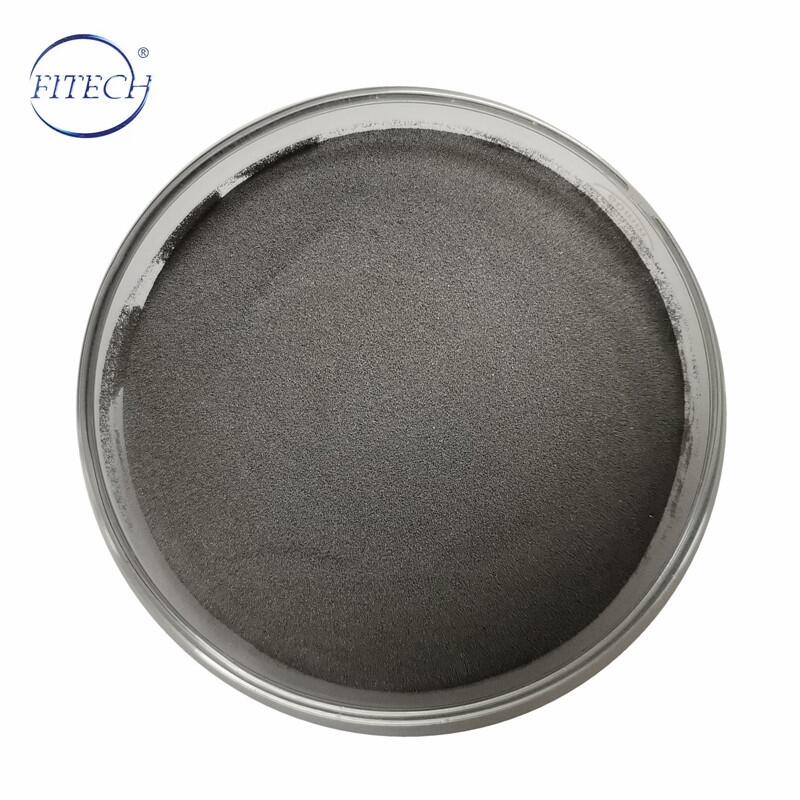


Fined Chromium Pure Grey 99.5% Powder
2 Inquiries
7440-47-3
Industrial Grade
99.5%
上海
FITECH
25kg/Cardboard Drum
2023-10-04

material company concentrated on providing high-pu
-
Product Description
-
Seller Information
-
Inquiry History
-
DescriptionECHEMI Editorial ReferenceChromium occurs in oxidation states from Cr
-2
through Cr
+6
but exists mainly in the Cr(III) and Cr(VI) states; Cr(III) is the most stable. Hexavalent chromium compounds have varying physical and chemical properties. Most Cr(VI) compounds are solids; chromyl chloride is a liquid. Their properties include corrosion-resistance, durability, and hardness. Sodium dichromate is the most common chromium chemical from which other Cr(VI) compounds are produced. Examples of other Cr(VI
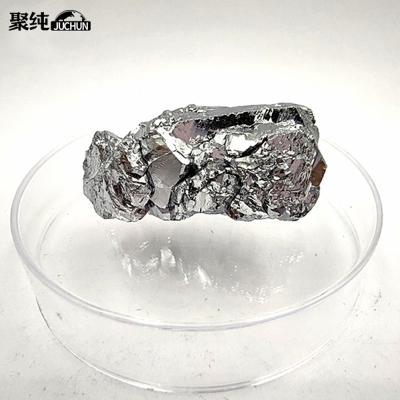
Chromium is a very hard gray solid with a metallic luster. (NTP, 1992)|DryPowder; DryPowder, OtherSolid; DryPowder, PelletsLargeCrystals; OtherSolid; OtherSolid, Liquid|GREY POWDER.|Blue-white to steel-gray, lustrous, brittle, hard, odorless solid.|Appearance and odor vary depending upon the specific compound.
Chromium is a very hard gray solid with a metallic luster. (NTP, 1992)|Chromium is a naturally occurring element found in rocks, animals, plants, soil, and in volcanic dust and gases. Chromium is present in the environment in several different forms. The most common forms are chromium(0), chromium(III), and chromium(VI). No taste or odor is associated with chromium compounds. Chromium(III) occurs naturally in the environment and is an essential nutrient. Chromium(VI) and chromium(0) are generally produced by industrial processes.The metal chromium, which is the chromium(0) form, is used for making steel. Chromium(VI) and chromium(III) are used for chrome plating, dyes and pigments, leather tanning, and wood preserving.|Chromium atom is a chromium group element atom that has atomic number 24. It has a role as a micronutrient. It is a chromium group element atom and a metal allergen.|Chromium is a transition element with the chemical symbol Cr and atomic number 24 that belongs to Group 6 of the periodic table. It is used in various chemical, industrial and manufacturing applications such as wood preservation and metallurgy. The uses of chromium compounds depend on the valency of chromium, where trivalent Cr (III) compounds are used for dietary Cr supplementation and hexavalent Cr (VI) compounds are used as corrosion inhibitors in commercial settings and are known to be human carcinogens. Humans can be exposed to chromium via ingestion, inhalation, and dermal or ocular exposure. Trivalent chromium (Cr(III)) ion is considered to be an essential dietary trace element as it is involved in metabolism of blood glucose, regulation of insulin resistance and metabolism of lipids. Clinical trials and other studies suggest the evidence of chromium intake improving glucose tolerance in patients with Type I and II diabetes, however its clinical application in the standard management of type II diabetes mellitus is not established. Chromium deficiency has been associated with a diabetic-like state, impaired growth, decreased fertility and increased risk of cardiovascular diseases. According to the National Institute of Health, the daily dietary reference intake (DRI) of chromium for adult male and non-pregnant female are 35 μg and 25 μg, respectively. Chromium picolinate capsules may be used as nutritional adjuvant in patients with or at risk of type 2 diabetes mellitus (T2DM) to improve blood sugar metabolism and stabilize the levels of serum cholesterol. Chromium chloride is available as an intravenous injection for use as a supplement to intravenous solutions given for total parenteral nutrition (TPN).|Chromium occurs in the environment primarily in two valence states, trivalent chromium (Cr III) and hexavalent chromium (Cr VI). Exposure may occur from natural or industrial sources of chromium. Chromium III is much less toxic than chromium (VI). The respiratory tract is also the major target organ for chromium (III) toxicity, similar to chromium (VI). Chromium (III) is an essential element in humans. The body can detoxify some amount of chromium (VI) to chromium (III). The respiratory tract is the major target organ for chromium (VI) toxicity, for acute (short-term) and chronic (long-term) inhalation exposures. Shortness of breath, coughing, and wheezing were reported from a case of acute exposure to chromium (VI), while perforations and ulcerations of the septum, bronchitis, decreased pulmonary function, pneumonia, and other respiratory effects have been noted from chronic exposure. Human studies have clearly established that inhaled chromium (VI) is a human carcinogen, resulting in an increased risk of lung cancer. Animal studies have shown chromium (VI) to cause lung tumors via inhalation exposure.|Chromium is a Standardized Chemical Allergen. The physiologic effect of chromium is by means of Increased Histamine Release, and Cell-mediated Immunity.|Chromium is an element with atomic symbol Cr, atomic number 24, and atomic weight 52.|A trace element that plays a role in glucose metabolism. It has the atomic symbol Cr, atomic number 24, and atomic weight 52. According to the Fourth Annual Report on Carcinogens (NTP85-002,1985), chromium and some of its compounds have been listed as known carcinogens.Basic Info-
Product Name:
Chromium
Other Name:Chromium;Chrome;Chromium element;Alpaste RRA 030;Alpaste RRA 050;Sun Ti-Cr;BioChrome;BioChrome (feed additive);Dinakrome;SunshineBabe D 9;188785-87-7;195161-82-1
CAS No.:7440-47-3
Molecular Formula:Cr
InChIKeys:InChIKey=VYZAMTAEIAYCRO-UHFFFAOYSA-N
Molecular Weight:52
Exact Mass:51.94050
EC Number:231-157-5
UNII:0R0008Q3JB
ICSC Number:0029
UN Number:1759|3089
DSSTox ID:DTXSID3031022
NCI Thesaurus Code:C370
Color/Form:Steel-gray, lustrous metal; body-centered cubic structure|Blue-white to steel-gray, lustrous, brittle, hard solid|Hard, brittle, semigray metal
HScode:8112210000
Categories:
Characteristics-
PSA:
0
XLogP3:0.00000
Appearance:Silver-gray powder
Density:7.14 g/cm3
Melting Point:1900 °C
Boiling Point:2642 °C
Flash Point:50 °F
Water Solubility:Insoluble in water.
Storage Conditions:Storage temperature: no restrictions.
Vapor Pressure:0 mmHg (approx)
Toxicity:Not reported-Rat LD50: 27.5 mg/kg
Flammability characteristics:Non-combustible; toxic chromium-containing fumes are produced in the fire;
Explosive limit:Powder will explode spontaneously in air. ... May ignite or react violently with bromine pentafluoride.
Odor:Odorless
PH:Bivalent chromium compounds are basic; trivalent chromium compounds are amphoteric; hexavalent chromium compounds are acidic
Experimental Properties:Enthalpy of fusion: 403.9 J/g at the melting pt|Under strongly oxidizing conditions, may be converted to hexavalent state & occur as chromate anions|Electronegativity (Pauling Scale): 1.6; orbital electrons: (Ar)3d5-4s1; abundance (% of earth's crust): 2X10⁻²|Chromium is a mixture of four stable isotopes with mass numbers 50 (4.31%), 52 (83.76%), 53 (9.55%) and 54 (2.38%). Thermal neutron capture cross sections are 17, 0.8, 18 and 0.38 barns, respectively.|For more Other Experimental Properties (Complete) data for CHROMIUM, ELEMENTAL (9 total), please visit the HSDB record page.
Air and Water Reactions:May be pyrophoric, as dust. Insoluble in water.
Reactive Group:Metals, Elemental and Powder, Active
Reactivity Alerts:Pyrophoric
Reactivity Profile:CHROMIUM reacts violently with NH4NO3, N2O2, Li, NO, KClO3, SO2 (NTP, 1992). Metal dusts when suspended in atmospheres of carbon dioxide may ignite and explode.
Flammable Limits:Noncombustible Solid in bulk form, but finely divided dust burns rapidly if heated in a flame.
Physical Dangers:Dust explosion possible if in powder or granular form, mixed with air.
Corrosivity:The silver soldered stainless steel wire corroded more than the cobalt-chromium type, & released more nickel & chromium than did the cobalt-chromium wires.
Heat of Vaporization:81.7 kcal/mol (at the boiling point)
Hazard IdentificationClassification of the substance or mixture
Not classified.
GHS label elements, including precautionary statements
Pictogram(s) No symbol. Signal word No signal word
Hazard statement(s) none
Precautionary statement(s) Prevention none
Response none
Storage none
Disposal none
Other hazards which do not result in classification
no data available
Handling and StoragePrecautions for safe handling
If powder: NO open flames Closed system, dust explosion-proof electrical equipment and lighting. Prevent deposition of dust. Handling in a well ventilated place. Wear suitable protective clothing. Avoid contact with skin and eyes. Avoid formation of dust and aerosols. Use non-sparking tools. Prevent fire caused by electrostatic discharge steam.
Conditions for safe storage, including any incompatibilities
Keep container tightly closed in a dry and well-ventilated place.
-
-
Seller Information
-
Business Type:
Trader
-
Main Products:
material company concentrated on providing high-pu
-
Location:
Anhui Fitech Materials Co.,Ltd
-
Payment Terms:
TT against copy of documents,TT against B/L draft before shipment,100% TT in advance
-
Average lead Time:
365
-
Total Annual Revenue:
$2.5 million-$5 million
-
Total Employees:
11-50
-
Year of Establishment:
2022
-
-
Inquiry History2 Inquiries
Country Product Purchase Quantity Date Posted  Egypt
Egypt
Chromium
1 TON Nov 19, 2024  Qatar
Qatar
Chrome
600 KG Feb 27, 2024 Post an enquiry for this product
Hot Related Products
-
 high pure Antimony Sb 99.999% chemical basic material CAS#:7740-36-0 99.999% schpm
 -
 Bromide CAS 7787-70-4") China Most Professional Factory Supply High Qulity Cuprous Bromide/Copper(I) Bromide CAS 7787-70-4
China Most Professional Factory Supply High Qulity Cuprous Bromide/Copper(I) Bromide CAS 7787-70-4 -
 Antimony block 99.9999% Sb metal basis purity 6N 99.999% solid scjc
 -
 Cuprousbromide Industrial Grade
 -
 o-Phenylenediamine CAS No:95-54-5
$22-26/MT FOB
-
 Chromium carbide 99% see COA Kanbei kanbei