Product
Supplier
Encyclopedia
Inquiry
Home > Industrial Coatings > Paint Solvent > Isopropanol for Sale > Factory Supply High Quality Isopropyl alcohol/IPA 99% Solid CAS67-63-0
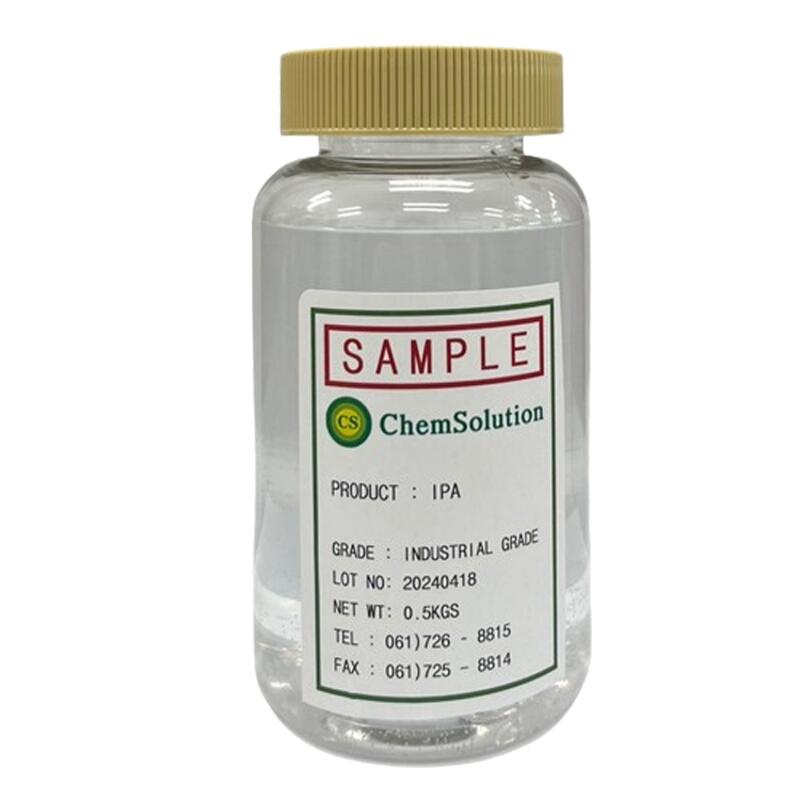
Factory Supply High Quality   Isopropyl alcohol/IPA 99% Solid CAS67-63-0 buy - large image1
Factory Supply High Quality   Isopropyl alcohol/IPA 99% Solid CAS67-63-0 buy - image1
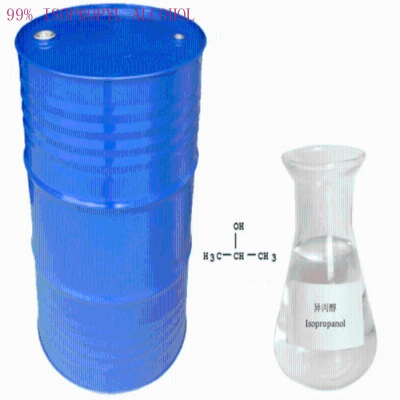
Factory Supply High Quality   Isopropyl alcohol/IPA 99% Solid CAS67-63-0 buy - image2
Factory Supply High Quality   Isopropyl alcohol/IPA 99% Solid CAS67-63-0 buy - image3
Factory Supply High Quality   Isopropyl alcohol/IPA 99% Solid CAS67-63-0 buy - image4
Factory Supply High Quality   Isopropyl alcohol/IPA 99% Solid CAS67-63-0 buy - image5
Factory Supply High Quality   Isopropyl alcohol/IPA 99% Solid CAS67-63-0 buy - image6

Factory Supply High Quality Isopropyl alcohol/IPA 99% Solid CAS67-63-0

613 Inquiries

Unit Price: Get Latest Price
CAS No.:

67-63-0

Grade:

Industrial Grade

Content:

99%

Port:

qingdao/shanghai/ningbo

Packaging:

25kg/bag

Price valid (until):

2024-01-26

Company Type:
Trader
Location:
China
Qualification:
Main Products:

Amino acid,intermediates

  • Product Description

  • Seller Information

  • Inquiry History

  • Description


      Product Detail  


    Isopropyl alcohol for use
    【 Use 1 】
    Mainly used in pharmaceutical, also used as solvent, extractant, antifreeze and so on
    【 Use 2 】
    Used as an experimental chemical reagent and chromatographic analysis reagent
    【 Use 3 】
    Isopropyl alcohol is an important intermediate in the production of pesticides, which can produce fungicides such as oryzoline and isoryzoline, insecticidal and acaricidal agents such as aminopropyl, thiophosphorion, methylissalichos, propoxur, Fenvalerate, etc., as well as herbicides such as isopropachlor, and can prepare isopropane bromide and isopropane chloride, which are also important intermediates of pesticides.
    【 Use 4 】
    Extraction solvent, carrier solvent. GB 2760-1996: Spices for food use temporarily permitted. Used for beet sugar, confectionery, nutritional supplement tablets, hop extract, lemon oil, spice oleoresin, yeast and other processing.
    【 Application 5 】
    It is widely used as organic raw material and solvent. As a chemical raw material, it can produce acetone, hydrogen peroxide, methyl isobutyl ketone, diisobutyl ketone, isopropylamine, isopropyl ether, isopropyl alcohol ether, isopropyl chloride, fatty acid isopropyl ester and chlorinated fatty acid isopropyl ester, etc. In the fine chemical industry, it can be used to produce isopropyl nitrate, isopropyl xanthate, triisopropyl phosphite, triisopropyl aluminum and medicine and pesticides. As a solvent, it can be used in the production of coatings, inks, extractants, aerosols, etc. It can also be used as antifreeze agent, cleaning agent, additives for blending gasoline, dispersant for pigment production, fixing agent for printing and dyeing industry, anti-fogging agent for glass and transparent plastics, etc.
    【 Application 6 】
    Solvents for creosote, shellac, resin, gum and nitrocellulose. The solvent of vegetable oil was determined by esterification analysis. Barium, calcium, copper, magnesium, nickel, potassium, sodium and strontium were determined. Determination of potassium content in soil and plants by sodium cobalt nitrite and isopropyl alcohol, extraction of alkaloids, analysis of pesticides, etc. Organic synthesis. Antifreeze solution combination.


    Physical and chemical properties of isopropyl alcohol
    Density 0.8± 0.1g /cm3
    Boiling point 73.0±3.0 °C at 760 mmHg
    Melting point -89.5 °C
    Molecular formula C3H8O
    Molecular weight 60.095
    Flash point 11.7±0.0 °C
    Precise mass 60.057514
    PSA 20.23,000
    LogP 0.16
    Appearance properties Colorless liquid
    Vapor density 2.1 (vs air)
    Vapor pressure 81.3±0.2 mmHg at 25°C
    Refractive index 1.376
    Storage condition
    (1) Anhydrous isopropyl alcohol storage tanks, pipes and related equipment can be made of carbon steel, but there should be measures to prevent water vapor. Hydrous isopropyl alcohol must be used in containers or equipment properly lined or made of stainless steel to prevent corrosion. Pumps that handle isopropyl alcohol are preferably centrifugal pumps that are automatically controlled and equipped with explosion-proof motors. It can be transported by truck, train tank, 200l(53usgal) iron drum or smaller container. The outer wall of the transport container shall be marked with flammable liquid.


    2. Storage precautions Store in a cool, ventilated warehouse. Keep away from fire and heat. The storage temperature should not exceed 37℃. Keep the container sealed. It should be stored separately from oxidizers, acids, halogens, etc., and should not be mixed. Explosion-proof lighting and ventilation facilities are adopted. Do not use mechanical equipment and tools that are prone to spark. The storage area should be equipped with leak emergency treatment equipment and suitable containment materials.

    stability
    1. Ethanol-like smell. Miscible with water, ethanol, ether, chloroform. Can melt alkaloids, rubber and other organic matter and some inorganic matter. It can be ignited at normal temperature, and its steam and air are easily mixed to form an explosive mixture.

    2. This product is low toxicity, the operator should wear protective equipment. Isopropyl alcohol is prone to peroxide production and sometimes needs to be identified before use. The method is: take 0.5mL isopropyl alcohol, add 1mL10% potassium iodide solution and 0.5mL 1:5 dilute hydrochloric acid and a few drops of starch solution, shake for 1 minute, if blue or blue black is shown to prove peroxide.

    3. Flammable and low toxic substances. The vapor is twice as toxic as ethanol and the opposite when taken internally. High concentration of vapor has obvious anesthetic effect, stimulating the mucous membrane of the eyes and respiratory tract, and can damage the retina and optic nerve. Rat transoral LD505.47g/kg. The maximum allowable concentration in the air is 980mg/m3. Operators should wear gas masks. When the concentration is high, wear airtight protective glasses. Sealing equipment and pipelines; Implement partial or full ventilation.

    4. It is a microtoxin. The physiological effect is similar to ethanol, and the toxicity, anesthetics and stimulation of upper respiratory mucosa are stronger than ethanol, but less than propyl alcohol. There is almost no accumulation in the body, and the bactericidal ability is 2 times stronger than ethanol. The olfactory threshold concentration is 1.1mg/m3. The maximum allowable concentration in the workplace is 1020mg/m3.

    5. Stability Stability

    6. Forbidden compounds Strong oxidants, acids, anhydrides, halogens

    7. Aggregation harms non-aggregation

    Water soluble miscible
    Freezing point -89.5℃
    Molecular structure
    1, molar refractive index: 17.44


    2, molar volume (cm3/mol) : 75.9

    3. Isotropic specific volume (90.2K) : 165.6

    4, surface tension (dyne/cm) : 22.6

    5. Polarizability (10-24cm3) : 6.91

    Computational chemistry
    1. Reference value of hydrophobic parameter calculation (XlogP) :0.3

    2. Number of hydrogen bond donors :1

    3. Number of hydrogen bond receptors :1

    4. Number of rotatable chemical bonds :0

    5. Number of tautomers: None

    6. Topological molecular polar surface area 20.2

    7. Number of heavy atoms :4

    8. Surface charge :0

    9. Complexity :10.8

    10. Number of isotope atoms :0

    11. Determine the number of protonic centers :0

    12. Number of uncertain atomic stereocentes :0

    13. Determine the number of chemical bond structure centers :0

    14. Number of uncertain chemical bond stereocenter :0

    15. Number of covalent bond units :1

    more
    1. Properties: Colorless transparent liquid, with a mixture of ethanol and acetone odor.

    2. Melting point (℃) : -88.5

    3. Boiling point (℃) : 82.5

    4. Relative density (water =1) : 0.79

    5. Relative vapor density (air =1) : 2.1

    6. Saturated vapor pressure (kPa) : 4.40 (20℃)

    7. Heat of combustion (kJ/mol) : -1995.5

    8. Critical temperature (℃) : 235

    9. Critical pressure (MPa) : 4.76

    10. Octanol/water partition coefficient: 0.05

    11. Flash point (° C) : 11 (CC)

    12. Ignition temperature (℃) : 456

    13. Explosion limit (%) : 12.7

    14. Lower explosive limit (%) : 2.0

    15. Solubility: soluble in water, ethanol, ether, benzene, chloroform and other organic solvents.

    16. Viscosity (mPa·s,20ºC) : 2.431

    17. Heat of evaporation (KJ/mol,b.p.) : 40.06

    18. Melting heat (KJ/kg) : 88.26

    19. Heat of formation (KJ/mol) : 2005.1

    20. Specific heat capacity (KJ/(kg·K),20ºC, constant pressure) : 2.55

    21. Electrical conductivity (S/m) : 35.1×10⁻⁷

    22. Thermal conductivity (W/(m·K),20ºC) : 15.49

    23. Coefficient of bulk expansion (K-1,20ºC) : 0.00107

    24. Relative density (20℃, 4℃) : 0.7855

    25. Relative density (25℃, 4℃) : 0.7813

    26. Refractive index (n25) at normal temperature: 1.3752

    27. Critical density (g·cm-3) : 0.271

    28. Critical volume (cm3·mol-1) : 222

    29. Critical compression factor: 0.250

    30. Eccentric factor: 0.669

    31.Lennard-Jones parameter (A) : 15.20

    32.Lennard-Jones parameter (K) : 135.4

    33. Solubility parameter (J·cm-3) 0.5:23.575

    34.van der Waals area (cm2·mol-1) : 6.270×10⁹

    35.van der Waals volume (cm3·mol-1) : 42.160

    36. Gas phase standard heat of combustion (enthalpy)(kJ·mol-1) : 2051.42

    37. The gas phase standard claims heat (enthalpy)(kJ·mol-1) : -272.42

    38. Gas phase standard entropy (J·mol-1·K-1) : 309.20

    39. Gas phase standard free energy of formation (kJ·mol-1) : -173.6

    40. Gas phase standard hot melt (J·mol-1·K-1) : 89.32

    41. Liquid phase standard heat of combustion (enthalpy)(kJ·mol-1) : -2005.98

    42. The liquid phase standard claims heat (enthalpy)(kJ·mol-1) : -317.86

    43. Liquid phase standard entropy (J·mol-1·K-1) : 180.58

    44. Liquid phase standard free energy of formation (kJ·mol-1) : -180.29

    45. Liquid phase standard hot melt (J·mol-1·K-1) : 154.4

    Basic Info
    Product Name:

    Isopropanol

    Other Name:

    2-Propanol;Isopropyl alcohol;Avantine;Dimethylcarbinol;Isohol;Isopropanol;Lutosol;PRO;Petrohol;sec-Propyl alcohol;Alcosolve 2;iso-Propanol;1-Methylethyl alcohol;Imsol A;Combi-Schutz;Alcojel;Avantin;Hartosol;Propol;Takineocol;n-Propan-2-ol;2-Hydroxypropane;2-Propyl alcohol;Sterisol Hand Disinfectant;1-Methylethanol;iso-Propyl alcohol;sec-Propanol;IPA;Autosept;IPS 1 (alcohol);IPS 1;Virahol;Tokuso IPA;NSC 135801;Steri-Fab;isopropanol;8013-70-5

    CAS No.:

    67-63-0

    UN No.:

    1219

    Molecular Formula:

    C3H8O

    InChIKeys:

    InChIKey=KFZMGEQAYNKOFK-UHFFFAOYSA-N

    Molecular Weight:

    60.09500

    Exact Mass:

    60.10

    EC Number:

    200-661-7

    Freezing Point:

    -89.5℃

    HScode:

    2905122000

    Categories:

    Paint Solvent

    Characteristics
    PSA:

    20.23000

    XLogP3:

    0.3871

    Appearance:

    Colourless liquid

    Density:

    0.78505 g/cm3 @ Temp: 20 °C

    Melting Point:

    -88.5 °C

    Boiling Point:

    82.5 °C @ Press: 760 Torr

    Flash Point:

    53 °F

    Refractive Index:

    n20/D 1.377(lit.)

    Water Solubility:

    Micible with water.

    Storage Conditions:

    Storage Room low temperature ventilation drying ,Separate storage with oxidizing agents and acids

    Vapor Pressure:

    Vapour pressure, kPa at 20°C: 4.4

    Vapor Density:

    2.1 (vs air)

    Toxicity:

    LD50 orally in rats: 5.8 g/kg (Smyth, Carpenter)

    Flammability characteristics:

    Class IB Flammable Liquid: Fl.P. below 73°F and BP at or above 100°F.

    Explosive limit:

    vol% in air: 22

    Odor:

    Pleasant odor

    Taste:

    Slightly bitter taste

    PKA:

    17.1None

    Hazard Identification

    Classification of the substance or mixture

    Flammable liquids, Category 2

    Eye irritation, Category 2

    Specific target organ toxicity – single exposure, Category 3

    GHS label elements, including precautionary statements

    Pictogram(s)
    Signal word

    Danger

    Hazard statement(s)

    H225 Highly flammable liquid and vapour

    H319 Causes serious eye irritation

    H336 May cause drowsiness or dizziness

    Precautionary statement(s)
    Prevention

    P210 Keep away from heat, hot surfaces, sparks, open flames and other ignition sources. No smoking.

    P233 Keep container tightly closed.

    P240 Ground and bond container and receiving equipment.

    P241 Use explosion-proof [electrical/ventilating/lighting/...] equipment.

    P242 Use non-sparking tools.

    P243 Take action to prevent static discharges.

    P280 Wear protective gloves/protective clothing/eye protection/face protection/hearing protection/...

    P264 Wash ... thoroughly after handling.

    P261 Avoid breathing dust/fume/gas/mist/vapours/spray.

    P271 Use only outdoors or in a well-ventilated area.

    Response

    P303+P361+P353 IF ON SKIN (or hair): Take off immediately all contaminated clothing. Rinse affected areas with water [or shower].

    P370+P378 In case of fire: Use ... to extinguish.

    P305+P351+P338 IF IN EYES: Rinse cautiously with water for several minutes. Remove contact lenses, if present and easy to do. Continue rinsing.

    P304+P340 IF INHALED: Remove person to fresh air and keep comfortable for breathing.

    P319 Get medical help if you feel unwell.

    Storage

    P403+P235 Store in a well-ventilated place. Keep cool.

    P403+P233 Store in a well-ventilated place. Keep container tightly closed.

    P405 Store locked up.

    Disposal

    P501 Dispose of contents/container to an appropriate treatment and disposal facility in accordance with applicable laws and regulations, and product characteristics at time of disposal.

    Other hazards which do not result in classification

    no data available

    Handling and Storage

    Precautions for safe handling

    NO open flames, NO sparks and NO smoking. Closed system, ventilation, explosion-proof electrical equipment and lighting. Handling in a well ventilated place. Wear suitable protective clothing. Avoid contact with skin and eyes. Avoid formation of dust and aerosols. Use non-sparking tools. Prevent fire caused by electrostatic discharge steam.

    Conditions for safe storage, including any incompatibilities

    Fireproof. Separated from strong oxidants. Cool. Well closed.Keep container tightly closed in a dry and well-ventilated place. Store at room temperature in the original container. Sensitive to light. Store in light-resistant containers. Keep away from heat and sources of ignition. Store in a segrated and approved area. Store away from incompatible materials. Isopropyl Alcohol, Reagent, ACS

  • Seller Information
    Business Type:

    Trader

    Main Products:

    Amino acid,intermediates

    Location:

    Room 403, 3-1, 4-1 (Industrial Design Center), No. 18, Wujiang Road, Wulidian Street, Jiangbei District, Chongqing City, China.

    Payment Terms:

    TT against copy of documents,D/P,L/C,D/A,O/A,TT against B/L draft before shipment,100% TT in advance

    Average lead Time:

    2

    Total Annual Revenue:

    $10 million-$25 million

    Total Employees:

    11-50

    Year of Establishment:

    2017

    We have more than 100 R&Dpersonnel, who are expertise inthe felds of organic synthesis,inorganic chemistry, microbialfermentation, natural productextraction and other relatedfelds. We have experiencedQA/QC personnel to make surethe good quality before shipment。
    We have four production basesmore than 1000 Professionalreaction and test equipmentsexcellent SOPs and facilities withISO certifcations. In addition,we keep close cooperationwith more than 1000 esteemedmanufacturers in China withabundant sources of all kinds ofchemicals goods
    We have more than 100 salesbusiness personnel who canspeak Chinese, English, Japanese,French, Spanish, Russian and etc.Regular clients and new clientswill be satisfied with our fullservices.
    We have competitive price, goodquality and after-service on topof notch, we can be your globalchemicals strategic source partner
  • Inquiry History
    613 Inquiries
    Country Product Purchase Quantity Date Posted
    Philippines

    Hot Sale 2-Propanol (Propan-2-ol, Isopropyl Alcohol, Iso-propyl Alcohol), AR, 10 L cas 67-63-0 Liquid

    6 L Jul 4, 2023
    Thailand

    ISOPROPYL ALCOHOL 99% CAS: 67-63-0 transparent liquid YUSSEN

    1000 L Jun 20, 2023
    Philippines

    ISOPROPYL ALCOHOL 99% CAS: 67-63-0 transparent liquid YUSSEN

    220 MT Oct 25, 2023
    Indonesia

    ISOPROPYL ALCOHOL 99% CAS: 67-63-0 transparent liquid YUSSEN

    1 KG Jul 26, 2023
    Bangladesh

    ISOPROPYL ALCOHOL 99% CAS: 67-63-0 transparent liquid YUSSEN

    30 MT Oct 25, 2023
    Algeria

    ISOPROPYL ALCOHOL 99% CAS: 67-63-0 transparent liquid YUSSEN

    1000 MT Aug 18, 2023
    Indonesia

    ISOPROPYL ALCOHOL 99% CAS: 67-63-0 transparent liquid YUSSEN

    2000 MT Oct 17, 2023
    Nigeria

    ISOPROPYL ALCOHOL 99% CAS: 67-63-0 transparent liquid YUSSEN

    5 MT Oct 17, 2023
    Poland

    ISOPROPYL ALCOHOL IPA CAS 67-63-0 Purity more than 99.9%

    50000 L Nov 7, 2023
    India

    ISOPROPYL ALCOHOL 

    1.00 KG May 17, 2025
    India

    ISOPROPYL ALCOHOL

    20.00 KG May 20, 2025
    India

    ISOPROPYL ALCOHOL

    15.00 KG May 20, 2025
    India

    ISOPROPYL ALCOHOL

    10.00 KG May 16, 2025
    Pakistan

    Iso Propyl Alcohol

    1.00 MT Oct 8, 2024
    India

    ISOPROPYL ALCOHOL

    400.00 KG May 30, 2025
    India

    ISOPROPYL ALCOHOL

    500.00 KG May 29, 2025
    India

    ISOPROPYL ALCOHOL 

    1.00 KG May 17, 2025
    India

    ISOPROPYL ALCOHOL 

    1.00 KG May 17, 2025
    India

    ISOPROPYL ALCOHOL 

    20.00 KG May 17, 2025
    Egypt

    Isopropyl alcohol

    1.00 40' Fcl Jun 17, 2024
    Post an enquiry for this product
pic ×

Scan the QR Code to Share

All products displayed on this website are only for non-medical purposes such as industrial applications or scientific research, and cannot be used for clinical diagnosis or treatment of humans or animals. They are not medicinal or edible.

According to relevant laws and regulations and the regulations of this website, units or individuals who purchase hazardous materials should obtain valid qualifications and qualification conditions.

The information shown above is provided by the enterprise itself, and the authenticity, accuracy and legitimacy of the content are the responsibility of the publishing company. ECHEMI does not bear any guarantee responsibility for this. Please be aware that risks in internet transactions objectively exist.

Feedback & Suggestions
Send Message

Thank you for your feedback. If you require further assistance, please contact us by email at info@echemi.com or call us at +86-532-55729510.