2
HAZARDS IDENTIFICATION
2.1. Classification of the substance or mixture (EC) 1272/2008 (CLP) Acute Tox. 4, H302
Acute Tox. 3, H311
Acute Tox. 4, H332
Skin Corr. 1A, H314
Eye Dam. 1, H318
STOT SE 3, H335
2.2. Label elements (EC) 1272/2008 (CLP)
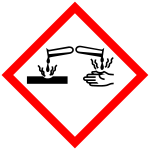
Hazard Pictogram(s)
Signal word : Danger
Hazard statement(s)
H302 Harmful if swallowed.
H311 Toxic in contact with skin.
H314 Causes severe skin burns and eye damage.
H318 Causes serious eye damage.
H332 Harmful if inhaled.
H335 May cause respiratory irritation.
Precautionary statement(s)
Prevention
P260 Do not breathe dust/fume/gas/mist/vapours/spray.
P261 Avoid breathing dust/fume/gas/mist/vapours/spray.
P264 Wash hands thoroughly after handling.
P270 Do not eat, drink or smoke when using this product.
P271 Use only outdoors or in a well-ventilated area.
P280 Wear protective gloves/protective clothing/eye protection/face protection.
Response
P301+P312 IF SWALLOWED: Call a POISON CENTER or doctor/physician if you feel unwell.
P301+P330+P331 IF SWALLOWED: Rinse mouth. Do NOT induce vomiting.2/9
Methacrylic Acid MSDS
P302+P352 IF ON SKIN: Wash with plenty of soap and water.
P303+P361+P353 IF ON SKIN (or hair): Remove/Take off immediately all contaminated clothing. Rinse
skin with water/shower.
P304+P340 IF INHALED: Remove victim to fresh air and keep at rest in a position comfortable for
breathing.
P305+P351+P338 IF IN EYES: Rinse cautiously with water for several minutes. Remove contact lenses,
if present and easy to do. Continue rinsing.
P310 Immediately call a POISON CENTER or doctor/physician.
P312 Call a POISON CENTER or doctor/physician if you feel unwell.
P321 Specific treatment
P322 Specific measures
P330 Rinse mouth.
P361 Remove/Take off immediately all contaminated clothing.
P363 Wash contaminated clothing before reuse.
Storage
P403+P233 Store in a well-ventilated place. Keep container tightly closed.
P405 Store locked up.
Disposal
P501 Dispose of contents/container in accordance with local/regional/national/international regulation .
2.3. Other hazards
The vapor mixes well with air, explosive mixtures are easily formed. The substance may polymerize readily due
to heating or under the influence of light, oxidizing agents such as peroxides, or in the presence of traces of HCl,
with fire or explosion hazard [ICSC].
Uninhibited monomer vapor may form polymer in vents and other confined spaces [NFPA].
COMPOSITION / INFORMATION ON INGREDIENTS
Chemical name
EINECS No.
CAS No.
REACH
Registration
No.
Concentration Classification
Methacrylic acid (MAA)
201-204-4
79-41-4
Registered
>99.9
Acute Tox. 4, H302
Acute Tox. 3, H311
Acute Tox. 4, H332
Skin Corr. 1A, H314
Eye Dam. 1, H318
STOT SE 3, H335
4.
FIRST AID MEASURES
4.1. Description of first aid measures
4.1.1. EYE CONTACT
Rinse cautiously with water for several minutes. Remove contact lenses, if present and easy to do. Continue
rinsing. Get medical advice/attention.
4.1.2. SKIN CONTACT
Remove/take off immediately all contaminated clothing. Rinse skin with water/shower or wash with plenty of
soap and water. If skin irritation or rash occurs, seek medical advice/attention. Wash contaminated clothing
before reuse.
4.1.3. INHALATION
If breathing is difficult, remove to fresh air and keep at rest in a position comfortable for breathing. If experiencing
respiratory symptoms or feel unwell, call a POISON CENTER or doctor/physician.
4.1.4. INGESTION
3.3/9
Methacrylic Acid MSDS
Not a likely route of exposure. Do not induce vomiting without medical advice. There may be irritation to the
gastro-intestinal tract with nausea and vomiting.
4.2. Most important symptoms and effects, both acute and delayed
The signs and symptoms of acute exposure to MAA include irritation of the eyes and skin, corneal burns, and
possible blindness [ACGIH 1991].
4.3. Indication of any immediate medical attention and special treatment needed
Skin contact may aggravate an existing dermatitis condition. Based on the individual reactions of the patient, the
physician's judgment should be used to control symptoms and clinical condition.
5.
FIRE FIGHTING MEASURES
5.1. Extinguishing media
Suitable extinguishing media
AFFF, alcohol-resistant foam , powder, carbon dioxide [ICSC].
Unsuitable extinguishing media
Do NOT use straight streams of water. Water spray may be used to keep fire exposed containers cool.
5.2. Special hazards arising from the substance or mixture
Above flash point, vapor-air mixtures are explosive within flammable limits noted Section 9 (Physical and
chemical properties). Polymerization may be caused by elevated temperature, oxidizers, peroxides, or sunlight.
Vapors can flow along surfaces to distant ignition source and flash back. Sealed containers may rupture when
heated. During a fire, irritating and highly toxic gases may be generated by thermal decomposition or combustion.
5.3. Advice for firefighters
In case of fire, wear a full face positive-pressure self contained breathing apparatus and protective suit. Keep
containers cool with water spray.
6.
ACCIDENTAL RELEASE MEASURES
6.1. Personal Precautions, protective equipment and emergency procedures
Eliminate all ignition sources. Restrict access to area as appropriate until clean-up operations are complete. Use
personal protective equipment recommended in Section 8 (Exposure Controls/Personal Protection). Stop or
reduce any leaks if it is safe to do so. Ventilate spill area if possible. Ensure clean-up is conducted by trained
personnel only. Do not touch spilled material. Have emergency equipment (for fires, spills, leaks, etc.) readily
available. Notify appropriate government, occupational health and safety and environmental authorities.
6.2. Environmental precautions
Prevent material from entering sewers or waterways. Notify appropriate government, occupational health and
safety and environmental authorities.
6.3. Methods and material for containment and cleaning up
SMALL SPILLS: Soak up spill with absorbent material (sand or other non combustible adsorbent material). Place
residues in a suitable, covered, properly labeled container. Wash affected area.
LARGE SPILLS: Contain liquid using absorbent material, by digging trenches or by diking. Reclaim into recovery
or salvage drums or tank truck for proper disposal. Clean contaminated surfaces with water or aqueous cleaning
agents. Dispose of material in compliance with regulations indicated in Section 13 (Disposal Considerations).
6.4. Reference to other sections
See also section 8.
7.
HANDLING AND STORAGE
7.1. Precautions for safe handling4/9
Methacrylic Acid MSDS
Do not get in eyes, on skin, on clothing. Do not take internally. Use with adequate ventilation. Do not breathe
vapors/gases/dust. In case of inadequate ventilation wear respiratory protection. Keep the containers closed
when not in use. Use non-sparking type tools and equipment, including explosion proof equipment. Use
connections properly earthed to prevent generation of electrostatic charges. Vapours are heavier than
air and may travel considerable distances to a source of ignition and flash back. Have emergency equipment (for
fires, spills, leaks, etc.) readily available. Ensure all containers are labelled. Do not use, store, spill or pour near
heat, sparks or open flame.
MAA polymerizes at increased temperatures, and in the case of contact with radical donors (e.g. peroxides and
azo compounds). Uncontrolled exothermic polymerization in closed systems might lead to explosion caused by
increasing pressure [EU-RAR No.25 (2002)].
7.2. Conditions for safe storage, including any incompatibilities
Store in suitable labelled containers. Store the containers tightly closed. Store away from heat and sources of
ignition. Protect from direct sunlight. Keep containers placed in cool, well–ventilated areas. Have appropriate fire
extinguishers available in and near the storage area. Store separately from incompatibles.
8.
EXPOSURE CONTROLS/PERSONAL PROTECTION
8.1. Control parameters
8.1.1. Occupational exposure limits
Belgium : TWA 20 ppm (71 mg/m3), Bulgaria : TWA 70.0 mg/m3, Croatia : TWA 20 ppm (70 mg/m3)
Denmark : TWA 20 ppm, Finland : TWA 20 ppm (71 mg/m3), France : VME 20 ppm (70 mg/m3)
Germany : MAK 5 ppm ( 18 mg/m3), Peak limitation I(2), Greece : TWA 20 ppm (70 mg/m3)
Italy : TWA 20 ppm, United Kingdom : TWA 20 ppm (72 mg/m3)
8.1.2. DNELs
Not available
8.1.3. PNECs
Not available
8.2. Exposure controls
8.2.1. Appropriate engineering controls
General ventilation is recommended. Use local exhaust ventilation if necessary to control airborne mist and
vapor. Provide mechanical ventilation of confined spaces.
8.2.2. Individual protection measures
GENERAL ADVICE
The use and choice of personal protection equipment is related to the hazard of the product, the workplace and
the way the product is handled. In general, we recommend as a minimum precaution that safety glasses with
side-shields and work clothes protecting arms, legs and body be used. In addition any person visiting an area
where this product is handled should at least wear safety glasses with side-shields.
RESPIRATORY PROTECTION
Where concentrations in air may exceed the limits given in this section, the use of a half face filter mask or air
supplied breathing apparatus is recommended. If significant mists, vapors or aerosols are generated an
approved respirator is recommended. A suitable filter material depends on the amount and type of chemicals
being handled. If respiratory protection is required, institute a complete respiratory protection program including
selection, fit testing, training, maintenance and inspection.
HAND PROTECTION
All vinyl gloves appeared to provide poorer protection. Gloves should be replaced immediately if signs of
degradation are observed. Most glove materials are of low chemical resistance. Consult PPE manufacturers.
Replace gloves regularly.
The resistance of various materials to permeation by MAA is shown below: [OSHA]
Material Breakthrough
time (hr)5/9
Methacrylic Acid MSDS
Butyl rubber
> 8
Viton
> 8
4H (PE/EVAL)
> 8
Natural rubber
< 1 (Not recommended. Degradation may occur*) Neoprene
< 1 (*)
Nitrile rubber
< 1 (*)
Polyvinyl alcohol
< 1 (*)
Polyvinyl chloride
< 1 (*)
SKIN PROTECTION
When handling this product, the use of a chemical resistant suit and rubber boots is recommended. Keep a
safety shower available.
EYE PROTECTION
When handling this product, the use of splash chemical goggles or face shields is recommended. Keep an eye
wash fountain available.
PHYSICAL AND CHEMICAL PROPERTIES
9.1. PHYSICAL APPEARANCE:
Clear, colorless liquid.
9.2. ODOR:
Penetrating odor.
9.3. ODOR THRESHOLD:
No data available.
9.4. pH:
1.2 – 2.0 (98 g/L water, 20°C) [OECD SIDS]
9.5. MELTING/FREEZING POINT:
16°C [The Merck Index, II. Ed., Merck and Co., Inc.,
USA, 935 (1989) and ICSC]
9.6. INITIAL BOILING POINT/BOILING POINT RANGE: 159 - 163°C [ICI Acrylics, Cleveland, England, letter of
8th. Nov. 1993 and ICSC]
9. 7. FLASH POINT:
77°C (Open Cup) [ICSC]
9.8. EVAPORATION RATE:
No data available.
9.9. FLAMMABILITY (GAS, SOLID):
Not applicable.
9. 10. UPPER AND LOWER EXPLOSION LIMITS:
1.6 – 8.8 [ICSC]
9. 11. VAPOUR PRESSURE:
0.9 hPa (20°C) [EU-RAR No.25 (2002)]
9. 12. SOLUBILITY:
89g/L (water, 25°C) [Riddick (1984)]
Sol in most organic solvents [HSDB]
9. 13. RELATIVE VAPOUR DENSITY:
2.97 (air= 1) [ICSC]
9. 14. SPECIFIC GRAVITY:
1.02 (water=1) [ICSC and The Merck Index, II. Ed.,
Merck and Co., Inc., USA, 935 (1989)]
9. 15. n-OCTANOL/WATER PARTITION COEFFICIENT: 0.93 [PHYSPROP Database,2005]
9. 16. AUTOIGNITION TEMPERATURE:
400°C [ICI Acrylics, Cleveland, England, letter of
8th. Nov. 1993]
9.17. DECOMPOSITION TEMPERATURE:
No data available.
9.18. VISCOSITY:
1.3 mPa [HSDB]
9.19. EXPLOSIVE PROPERTIES:
No data available.
9.20. OXIDISING PROPERTIES:
No data available.
10.
STABILITY AND REACTIVITY
10.1. Reactivity
Polymerization may be caused by elevated temperature, oxidizers, peroxides, or sunlight.
10.2. Chemical stability
Inhibited MAA is stable at room temperature for a limited storage period. Vapors are uninhibited and may form
polymers in vents, causing stoppage.
10.3. Possibility of hazardous reactions
9.6/9
Methacrylic Acid MSDS
Polymerizes easily, especially on heating or in presence of traces of hydrochloric acid [HSDB]. The product is
readily polymerized by light, heat, or oxidants without inhibitor.
10.4. Conditions to avoid
Insufficient inhibitor, incompatibles, heat, flame and ignition sources.
10.5. Incompatible materials
Contact with polymerization catalysts (e.g. peroxides, persulfates), hydrochloric acid, strong oxidizers and other
bases (e.g. ammonia, amines).
10.6. Hazardous decomposition products
Oxides of carbon (COx).
11.
TOXICOLOGICAL INFORMATION
11.1. ACUTE TOXICITY:
11.1.1. ACUTE ORAL TOXICITY:
Species
LD50
Test Descriptor / Reference
Rat
Rat
Rat
Mouse
1,320 mg/kg
2,260 mg/kg
1,060 mg/kg
1,250 mg/kg
EU-RAR No.25 (2002)
EU-RAR No.25 (2002)
RTECS
IUCLID
11.1.2. ACUTE DERMAL TOXICITY:
Species
LD50
Test Descriptor / Reference
Rabbit
Guinea pig
500 mg/kg
1,000 mg/kg
RTECS
RTECS
11 1 A TE INHALATI N T XI ITY:
Species
LC50
Test Descriptor / Reference
Rat
7. 1 mg/L/4hrs
OECD guideline 403 (1993)
EU-RAR No.25 (2002)
- Oral: May cause weakness and rough haircoat, and severe gastric irritation depend on concentration based on
animal test [EU-RAR No.25 (2002)].
- Skin: May cause slight weight loss and severely burned skin after application of 500 mg/kg, 1,000 mg/kg and
2,000 mg/kg based on animal test.
- Inhalation: Mist or vapor produce severe irritation of respiratory tract. May cause weight loss, lung discoloration
and bloody nasal discharge based on animal test.
11.2.SKIN CORROSION/IRRITATION:
MAA is a corrosive substance and contact will cause severe burns on skin. MAA causes adverse effects at the
site of application, depending on the concentration and frequency or time of exposure [EU-RAR No.25 (2002)].
11.3. SERIOUS EYE DAMAGE/IRRITATION:
MAA is a corrosive substance and contact will cause severe burns eye. MAA causes adverse effects at the site
of application, depending on the concentration and frequency or time of exposure [EU-RAR No.25 (2002)].
Liquid or spray mist may produce tissue damage particularly on mucous membranes of eyes, mouth and
respiratory tract.
11.4. RESPIRATORY OR SKIN SENSITIZATION:
MAA is not expected to be a sensitizer on skin.
No information available on the potential for MAA to produce respiratory sensitization in animals.
MAA is not a sensitizing substance as demonstrated by human experience [EU-RAR No.25 (2002)].
11.5. GERM CELL MUTAGENICITY:
. .3. CU O O C7/9
( )
Methacrylic Acid MSDS
Not expected to cause mutagenicity based on some mutagenicity assay.
11.6. CARCINOGENICITY:
No data available. However, data from studies concerning MMA, there is no concern on carcinogenic properties
of MAA [EU-RAR No.25 (2002)].
11.7. REPRODUCTIVE TOXICITY:
No data available. However, data from studies concerning MMA, there is no concern in relation to reproductive
toxicity [EU-RAR No.25 (2002)].
11.8. SPECIFIC TARGET ORGAN TOXICITY – SINGLE EXPOSURE:
May cause respiratory irritation.
11.9. SPECIFIC TARGET ORGAN TOXICITY – REPEATED EXPOSURE:
No data available.
11.10. ASPIRATION HAZARD:
No data available.
12
ECOLOGICAL INFORMATION
12.1. TOXICITY
ACUTE FISH RESULTS:
Species
Exposure
LC50
Test Descriptor / Reference
Brachydanio rerio
96 hrs
> 100 – 180 mg/L
GLP, OECD guideline 203
Oncorhynchus mykiss
96 hrs
85 mg/L
GLP, EPA guideline 660/ 3–75–009
ACUTE INVERTEBRATE RESULTS:
Species
Exposure
EC50
Test Descriptor / Reference
Daphnia magna (Crustacea)
24 hrs
> 100 – 180
GLP, OECD guideline 202
Daphnia magna (Crustacea)
48 hrs
> 130 (NOEC)
GLP, EPA guideline 660/3–75–009
AQUATIC PLANTS e.g. ALGAE RESULTS:
Species
Exposure
EC50
Test Descriptor / Reference
Scenedesmus quadricauda
(Algae)
72 hrs
14 mg/L
9.8 (NOEC)
OECD Guideline 201 ( 1999)
12.2. PERSISTENCE AND DEGRADABILITY
MAA is stable in neutral solution and is classified as "readily biodegradable"
- Biodegradation: 91 % (14 days (BOD test)) [Safety assessment for Existing Chemicals, JAPAN (2000)].
12.3. BIOACCUMULATIVE POTENTIAL
MAA is not expected to significantly bioaccumulation.
12.4. MOBILITY IN SOIL
Due to the high mobility of MAA in soils, a potential for leaching to groundwater has to be expected [EU-RAR
No.25 (2002)].
12.5. OTHER ADVERSE EFFECTS
No data available.
13.
DISPOSAL CONSIDERATIONS
13.1. Waste treatment methods8/9
Methacrylic Acid MSDS
Must be disposed of as a special waste in accordance with regulations for special waste.
Small quantities may be incinerated under controlled conditions in incinerators suitable for methacrylates.
Hazardous wastes must be transported by a licensed hazardous waste transporter and disposed of or treated in
a properly licensed hazardous waste treatment, storage, disposal or recycling facility.
Consult local, state, and federal regulations for specific requirements.
14.
TRANSPORT INFORMATION
* The following results are for the product.
A. UN NUMBER:
2531.
B. UN PROPER SHIPPING NAME:
METHACRYLIC ACID, STABILIZED.
* Technical Name(s)
-
C. TRANSPORT HAZARD CLASS(ES):
8 (Corrosive).
D. PACKING GROUP, IF APPLICABLE:
II.
E. ENVIRONMENTAL HAZARDS:
Not regulated.
F. SPECIAL PRECAUTIONS FOR USER:
No data available.
15.
REGULATORY INFORMATION
15.1. Safety, health and environmental regulations/legislation specific for the substances or mixture
List of substances subject to authorisation, Substances of very high concern: N/A
Restrictions on the manufacture, placing on the market and use of certain dangerous substances, mixtures and
articles: N/A
15.2. Chemical safety assessment
Not conducted
16.
OTHER INFORMATION








 India
India
 Kazakstan
 Malaysia
 Qatar
Qatar
 Germany
 Saudi Arabia
 United States
 Sri Lanka
 France
 Hongkong, China