Section 2 Hazards Identification |
Emergency Overview: Colorless liquid. Flammable liquid and vapour. Hazardous combustion products may include carbon monoxide. May damage fertility or the unborn child. |
GHS Classification: |
Physical hazards | Flammable liquids | Category 3 |
Health hazards | Toxic to reproduction | Category 1B |
Environmental hazards | Not classified |
|
Label elements |
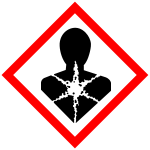
Pictogram: | ![Shop Ethylene glycol monoethyl ether acet-Detailed Image 2]()
|
Signal Word(s): | Danger |
Hazard Statement: | Flammable liquid and vapour May damage fertility or the unborn child |
Precautionary statement |
| Prevention: | Obtain special instructions before use. Do not handle until all safety precautions have been read and understood. Keep away from heat/sparks/open flames/hot surfaces. No smoking. Keep container tightly closed. Ground/Bond container and receiving equipment. Use explosion-proof electrical/ventilating/lighting equipment. Use only non-sparking tools. Take precautionary measures against static discharge. Wear protective gloves/protective clothing/eye protection/face protection. |
| Response: | IF ON SKIN (or hair): Take off immediately all contaminated clothing. Rinse skin with water/shower. IF exposed or concerned: Get medical advice/attention. In case of fire: Use water spray, alcohol-resistant foam, dry chemical or carbon dioxide to extinguish. |
| Storage: | Store in a well-ventilated place. Keep cool. Store locked up. |
| Disposal: | Dispose of contents/container in accordance with local regulation. |
Physical and chemical hazards: | Flammable liquid and vapour. Hazardous combustion products may include carbon monoxide. |
Health hazards: | May damage fertility or the unborn child. |
Environmental hazard: | The product has no obvious harm to the water environment. |
Other hazards: | This product has not been found to have other hazards which are outside the scope of GB30000.2-29. |
|
Section 3 Composition Information on Ingredients |
Substance/Mixture/Article: | Substance |
Ingredient(s): |
Chemical Name | CAS No. | Concentration or concentration range (w/w %) |
Ethylene glycol monoethyl ether acetate | 111-15-9 | ≥99% |
|
Section 4 First Aid Measures |
In case of inhalation: | If breathed in, move person into fresh air. If not breathing give artificial respiration Consult a physician. |
In case of skin contact: | Wash off with soap and plenty of water. Consult a physician. |
In case of eyes contact: | Rinse thoroughly with plenty of water for at least 15 minutes and consult a physician. |
In case of ingestion: | Never give anything by mouth to an unconscious person. Rinse mouth with water. Consult a physician. |
Most important symptoms and effects, both acute and delayed: | May damage fertility or the unborn child. |
To protect playing rescuer advice and the special hints to the doctor: | Ensure that medical personnel are aware of the material(s) involved, and take precautions to protect themselves. |
Indication of any immediate medical attention and special treatment needed: | Treat symptomatically. |
|
Section 5 Fire-fighting Measures |
Extinguishing agent |
|
Suitable extinguishing media: | Use water spray, alcohol-resistant foam, dry chemical or carbon dioxide. |
Unsuitable extinguishing media: | No data available |
Special hazards arising from the chemical: | Hazardous combustion products may include carbon monoxide. |
Special fire fighting methods and special protective actions for fire-fighters: | Firefighters should wear self-contained breathing apparatus, and wear full-length firefighting gear, and cool the exposed container with water until all fire sources have been extinguished. Contain and dispose of fire-fighting water to prevent chemicals from entering the environment. |
|
Section 6 Accidental Release Measures |
Personal precautions, protective equipment and emergency procedures: | Use personal protective equipment. Avoid breathing vapors, mist or gas. Ensure adequate ventilation. Evacuate personnel to safe areas. |
Environmental precautions: | Keep away from drains, water and soil. Advise authorities if spilled material has entered water courses or sewer or has contaminated soil or vegetation. |
Methods and materials for containment and cleaning up: | Soak up with inert absorbent material and dispose of as hazardous waste. Keep in suitable, closed containers for disposal. |
Precautions to prevent the occurrence of secondary hazards: | Dispose of the collected spill immediately to avoid further leaks or sewers. |
|
Section 7 Handling and Storage |
Safe handling | |
Local and general ventilation: | Operations should be carried out in a place with partial ventilation or full ventilation. |
Safety instructions: | Operators should follow the procedure and use the personal protective equipment recommended by the SDS section 8. |
Precautions: | Avoid inhalation of vapour or mist. Keep away from sources of ignition - No smoking. Take measures to prevent the build up of electrostatic charge. |
Storage | |
Suitable storage conditions: | Keep container tightly closed in a dry and well-ventilated place. Containers which are opened must be carefully resealed and kept upright to prevent leakage. |
Incompatible materials: | Strong oxidizing agents, Nitrates, Strong acids, Strong bases. |
Safe packaging materials: | Keep it in the original container. |
|
Section 8 Exposure Controls / Personal Protection |
Occupational exposure limits: | Ethylene glycol monoethyl ether acetate (CAS#111-15-9): O ELs(mg/m3): MAC: -; PC-TWA: 30; PC-STEL: - Note: Skin |
Biological limits: | No standard has been established. |
Engineering controls: | Ensure adequate ventilation. The workplace shall have safe place to shower, clean eyes and body, and place for safe care. |
Personal protection equipment |
Respiratory protection: | Where risk assessment shows air-purifying respirators are appropriate use a full-face respirator with multi-purpose combination (US) or type ABEK (EN 14387) respirator cartridges as a backup to engineering controls. If the respirator is the sole means of protection, use a full-face supplied air respirator. Use respirators and components tested and approved under appropriate government standards such as NIOSH (US) or CEN (EU). |
Hand protection: | Handle with gloves. |
Eye protection: | Face shield and safety glasses. |
Skin and body protection: | Choose body protection according to the amount and concentration of the dangerous substance at the work place. |
Hygiene measures: | Avoid contact with eyes. Wash hands after handling. Do not eat and drink in the workplace. |
|
Section 9 Physical and Chemical Properties |
Appearance: | Colorless liquid |
Odor: | No data available |
Odor threshold: | No data available |
Molecular formula: | C6H12O3 |
Molecular weight: | 132.16 |
Melting point/freezing point (°C): | -61 °C (-78 °F) - lit. |
Boiling point, initial boiling point (°C): | 156 °C (313 °F) - lit. |
Density: | 0.975 g/mL at 25 °C (77 °F) |
Relative density(H2O=1): | No data available |
Vapor pressure (20°C) (kPa): | 3 hPa (2 mmHg) |
Partition coefficient (n-octanol/water): | No data available |
Solubility in water: | No data available |
Solubility in organic solvents: | No data available |
Flash point (°C): | 54 °C (129 °F) - closed cup |
Auto-ignition temperature (°C): | No data available |
Flammability limit - lower (%): | No data available |
Flammability limit - upper (%): | No data available |
Decomposition temperature (°C): | No data available |
Flammability (solid, gas): | No data available |
Explosive properties | No data available |
Explosive limit - lower (%): | 1.7 %(V) |
Explosive limit - upper (%): | 13 %(V) |
pH value: | No data available |
Viscosity: | No data available |
Relative vapor density (air=1): | 4.56 |
Relative evaporation rate (n-butyl acetate=1): | No data available |
|
Section 10 Stability and Reactivity |
Stability: | Material is stable under normal conditions. |
Possibility of hazardous reactions: | No dangerous reaction known under conditions of normal use. |
Conditions to avoid: | Incompatible materials. |
Incompatible materials: | Strong oxidizing agents, Nitrates, Strong acids, Strong bases. |
Hazardous decomposition products: | Oxides of carbon. |
|
Section 11 Toxicological Information |
Acute toxicity: |
LD50(Oral, Rat): | No data available |
LD50(Dermal, Rabbit): | No data available |
LC50(Inhalation, Rat, 4h): | No data available |
Skin corrosion/Irritation: | Not classified |
Serious eye damage/irritation: | Not classified |
Respiratory or skin sensitization: | Not classified |
Germ cell mutagenicity: | Not classified |
Carcinogenicity: | Not classified |
Reproductive toxicity: | May damage fertility or the unborn child. |
STOT- single exposure: | Not classified |
STOT-repeated exposure: | Not classified |
Aspiration hazard: | Not classified |
|
Section 12 Ecological Information |
Ecotoxicity |
LC50 (Fish, 96h) | No data available |
EC50 (Daphnia, 48h) | 193.6 mg/l |
EC50 (Algae, 72h): | No data available |
Persistence and degradability: | Not available. |
Bioaccumulative potential: | Not available. |
Mobility in soil: | Not available. |
|
Section 13 Disposal Considerations |
Residual waste | Recycling as much as possible. If recycling is not possible, use incineration methods for disposal. Do not dispose of this product by means of discharge to the sewer. |
Contaminated packaging | Empty containers or pads may retain some product residue, so beware of label warnings even when empty containers. These materials and their containers must be disposed of in a safe manner. Empty containers should be returned to the manufacturer or sent to a national / local approved waste disposal site. |
Disposal considerations: | Waste disposal should refer to the relevant national and local laws and regulations, the waste chemicals for recycling, or packed in sealed containers, to a special waste disposal sites. |
|
Section 14 Transport Information |
UN Number: | 1172 |
UN Proper shipping name: | Ethylene glycol monoethyl ether acetate |
Transport hazard Class: | 3 |
Packaging group: | III |
Marine pollutant (yes/no): | No |
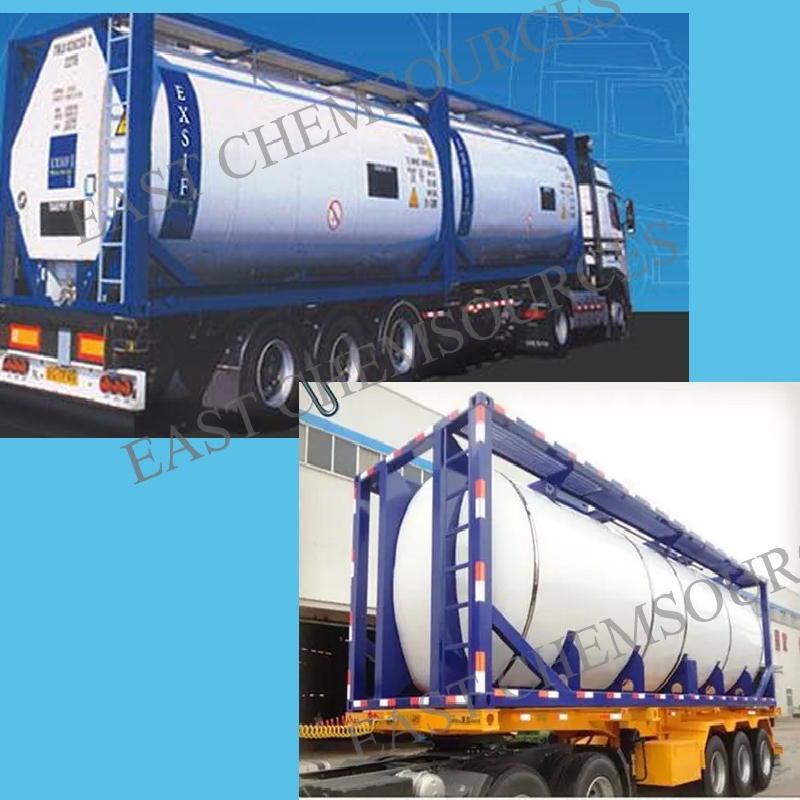
Transport special precautions: —Grounding chains should be equipped with tank or car during transportation, hole plate can be set in the tank to prevent static electricity generated by shaking; —Exhaust pipe of the vehicle which transports this product shall be equipped with fireproofing equipment, Do not handle with the machinery or tools which may produce spark easily; —Do not package or transport with oxidant, food chemicals or others; —Prevent from sunlight exposure, rain and heat during transportation, in summer, best to transport in the morning or evening; —Keep away from fire, heat source and high temperature when stops on the way; —Follow the route as prescribed during highway transportation, do not stay in residential areas and densely populated area; —Prohibit humping in railway transportation; —Transport vehicles should be equipped with corresponding fire equipment and spill contingency processing equipment. |
|
Section 15 Regulatory Information |
The following laws, regulations, rules and standards, provide corresponding provisions of the management of chemicals: |
Name | Relevant Inventories | Listed Or Not |
Measures On Safety Management Of Hazardous Chemicals | Inventory Of Hazardous Chemicals | Listed |
| The First Batch Of Key Regulatory List Of Hazardous Chemicals | Not listed |
Measures On New Substance Environmental Management | The Inventory Of Existing Chemical Substance In China | Listed |
Provisions On Environmental Management Of First Import And Export Of Toxic Chemicals | China Strictly Restricted List Of Import And Export Of Toxic Chemicals | Not listed |
|
Section 16 Other Information |
Indication of changes: |
Version 1.0 Amended by GB/T16483 and GB/T 17519. |
Abbreviations: |
CAS: Chemical Abstracts Service LC50: Lethal Concentration 50 EC50: Concentration for 50% of maximal effect LD50: Lethal dose 50% PC-TWA: time-weighted average allowable concentration, average allowable concentration in 8h working day, 40h work week. PC-STEL: Short-Term Exposure Tolerance, the concentration allowed to be exposed in short-term (15 minutes). IARC: International Agency for Research on Cancer ACGIH: US Government Conference of Industrial Hygienists ADR: European Agreement Concerning the International Carriage of Dangerous Goods by Road IMDG: International Maritime Dangerous Goods EINECS: European Inventory of Existing commercial Chemical Substances IATA: International Air Transport Association ICAO-TI: International Civil Aviation Organization The International Civil Aviation Covenant |
Disclaimer: |
The information in this Safety Data Sheet (SDS) applies only to the products specified and does not apply to mixtures containing this product with other substances, unless otherwise specified. This Safety Data Sheet (SDS) is based on information currently available in all its aspects and will not be held responsible for its long-term timeliness. This Safety Data Sheet (SDS) provides information about the safety of the product for the intended purpose only to appropriately trained personnel operating the product. Users of this SDS must make independent judgments on the suitability of this SDS for special conditions of use. Under special conditions of use, the SDS author will not be responsible for the damage caused by the use of this Safety Data Sheet (SDS). Each user of the product should read carefully the contents of this Safety Data Sheet (SDS) before proceeding. For more information to ensure correct evaluation, please contact the product supplier. |