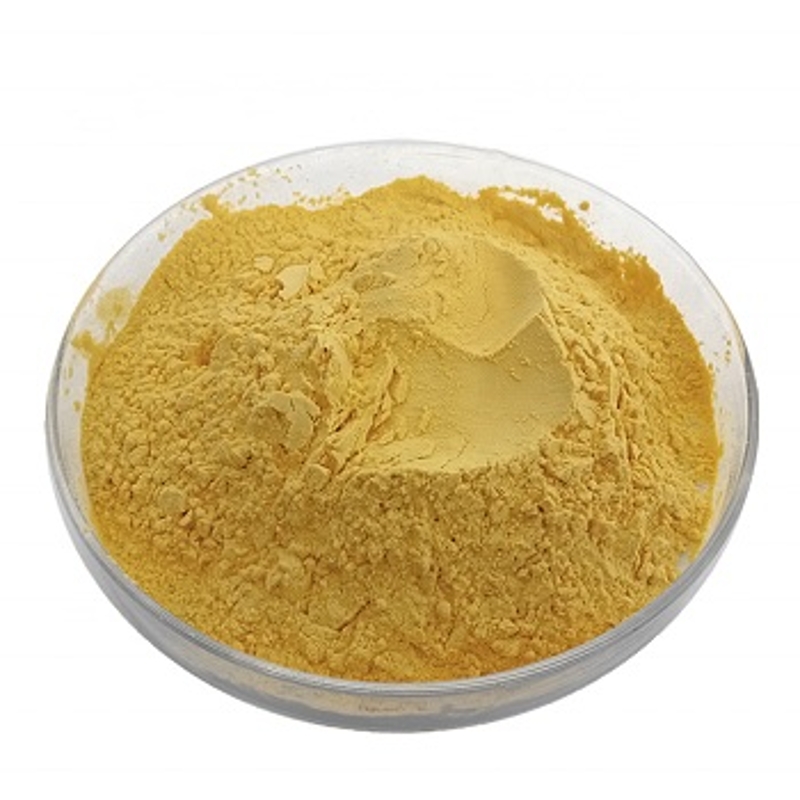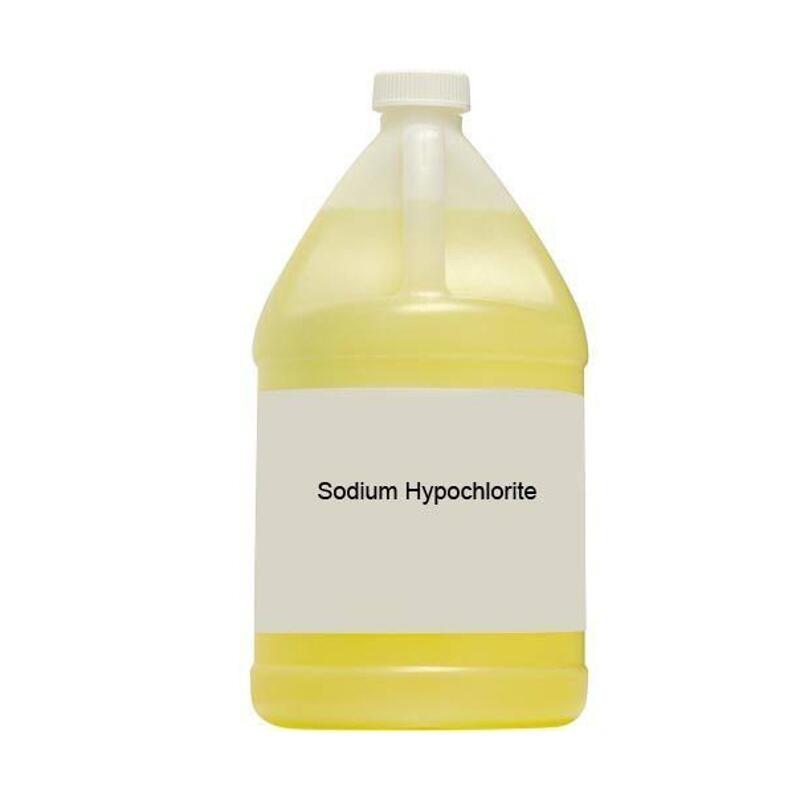


Sodium Hypochlorite 10%,12%,13%,15% pure Sodium Hypochlorite liquid
157 Inquiries
7681-52-9
Industrial Grade
15%
Durban
Custom
As per customer requirement
2024-05-05
Sodium Lauryl Ether Sulfate,Caustic Soda,Soda Ash,Citric Acid,Calcium Hypochlorite,Oxalic Acid
-
Product Description
-
Seller Information
-
Inquiry History
-
DescriptionECHEMI Editorial ReferenceSodium hypochlorite, NaOCl, is an air-unstable,pale green crystalline solid that is soluble in cold water, decomposes in hot water, and has a sweet aroma. It generally is available in one of two strengths. The household liquid bleach contains about 5.25 wt% NaCIO. The commercial product(sometimes called 15% bleach) contains 150g/L available chlorine. This is equivalent to about 13 wt% sodium hypochlorite. Sodium hypochlorite is used as a bleaching agent for paper pulp and textiles, as an oxidiz
Sodium hypochlorite appears as colorless or slightly yellow watery liquid with an odor of household bleach. Mixes with water. (USCG, 1999)|Liquid|CLEAR SLIGHTLY YELLOW SOLUTION WITH CHARACTERISTIC ODOUR.
Sodium hypochlorite appears as colorless or slightly yellow watery liquid with an odor of household bleach. Mixes with water. (USCG, 1999)|Sodium hypochlorite is generally used dissolved in water at various concentrations. Although available, solid sodium hypochlorite is not commercially used. Sodium hypochlorite solutions are clear, greenish to yellow liquids with an odor of chlorine. Calcium hypochlorite is a white solid that readily decomposes in water releasing oxygen and chlorine. It also has a strong chlorine odor. Neither compound occur naturally in the environment. Sodium and calcium hypochlorite are used primarily as bleaching agents or disinfectants. They are components of commercial bleaches, cleaning solutions, and disinfectants for drinking water and waste water purification systems and swimming pools.|Sodium hypochlorite is an inorganic sodium salt in which hypochlorite is the counterion. It is used as a bleaching and disinfecting agent and is commonly found in household bleach. It has a role as a disinfectant and a bleaching agent. It contains a hypochlorite.|Sodium Hypochlorite is a chlorine compound often used as a disinfectant or a bleaching agent. Sodium hypochlorite in 0.5% w/v solution is called Dakin's solution, and is used as an antiseptic to clean infected topical wounds.|It is used as an oxidizing and bleaching agent and as a disinfectant. (From Grant and Hackh's Chemical Dictionary, 5th ed)Basic Info-
Product Name:
Sodium hypochlorite
Other Name:Hypochlorous acid,sodium salt (1:1);Hypochlorous acid,sodium salt;Hyclorite;B-K Liquid;Sodium hypochlorite;Clorox;Antiformin;Sodium hypochlorite (NaOCl);Carrel-Dakin solution;Modified Dakin's solution;Milton;Chloros;Javex;Deosan;Neo-cleaner;Purin B;Klorocin;Dakin's solution;Sodium hypochloride;Parozone;Sodium hypochlorite (NaClO);Neoseptal CL;XY 12;Sunnysol 150;Javel water;Javelle water;Solutions,Dakin's;Hypure;Hypure N;Dispatch;Sodium chloride oxide (NaClO);Youxiaolin;AD Gel;Cloralex;Super White L;Dispatch (salt);AgClor 310;ActiPlus N 2818;Sodium oxychloride;Linely;Hishikurin S;Fox-Chlor;Purelox;Aron Clean;Parazone;Belizna;Comfor;Belkina;Tsurukuron;Sanrack P;Jomax Mold & Mildew Stain Remover;Baso agri+;Milton Sterilising Fluid;Javex 5;Nades;Aron Clean LB 10;Raverrack D;Purelex;Hypex;Histolith;DanKlorix;Tsurukuron N 40;Tsurukuron TW;Cloralex NL;Purelox S;Sodium chloride oxide;Deccoklor;Neolux Super;Sodium hypochlorite (Na(ClO));Lavanox;Kerrasol;ActiMaris Forte;Avol ACT;8007-59-8;56172-57-7;102324-78-7;227453-69-2;2243270-16-6
CAS No.:7681-52-9
Molecular Formula:ClHO.Na
InChIKeys:InChIKey=KQPBSBAEBKRAAU-UHFFFAOYSA-N
Molecular Weight:74.44220
Exact Mass:73.95350
EC Number:231-668-3
UNII:DY38VHM5OD
ICSC Number:0482|1119
UN Number:1791
DSSTox ID:DTXSID8021276
NCI Thesaurus Code:C80658
Color/Form:Greenish yellow liquid|Anhydrous
ATC Code:D - Dermatologicals
HScode:2828900000
Categories:
Characteristics-
PSA:
23.06000
XLogP3:0.57070
Appearance:Sodium hypochlorite appears as colorless or slightly yellow watery liquid with an odor of household bleach. Mixes with water. (USCG, 1999)
Density:1.25 g/mL at 20ºC
Melting Point:18 °C
Boiling Point:111ºC
Water Solubility:Solubility in water, g/l at 20°C: 293 (good)
Storage Conditions:2-8ºC
Vapor Pressure:Vapour pressure, kPa at 20°C: 2 - 2.5
Toxicity:Skin contact with the solid hypochlorite pentahydrate or its concentrated solution can cause irritation. Ingestion may cause corrosion of mucous membranes and gastric perforation.
Explosive limit:Anhydrous sodium hypochlorite is very explosive.
Odor:Disagreeable, sweetish odor
Experimental Properties:Does not produce red color with phenolphthalein; colorless or slightly yellow liq /Sodium hypochlorite soln, diluted/|ODOR OF HYPOCHLORITES; YELLOWISH CLEAR LIQ /ALKALINE/|Decomp by carbon dioxide from air /Pentahydrate/|Strong oxidizing agent usually stored and used in soln|For more Other Experimental Properties (Complete) data for SODIUM HYPOCHLORITE (10 total), please visit the HSDB record page.
Air and Water Reactions:Water soluble. Decomposes into chlorine and oxygen gases in hot water.
Reactive Group:Salts, Basic
Reactivity Alerts:Strong Oxidizing Agent
Reactivity Profile:Salts of hypochlorous acid, HClO. Generally toxic, irritants and powerful oxidizers, particularly in the presence of water or at higher temperature as they decompose to release oxygen and chlorine gases. On contact with urea they form the highly explosive NCl3 . When heated or on contact with acids, they produce highly toxic fumes of chlorine gas [Sax, 9th ed., 1996, p. 1905]. Can react with sulfuric acid to produce heat and chlorine gas.
Hazard IdentificationClassification of the substance or mixture
Skin corrosion, Sub-category 1B
Serious eye damage, Category 1
Hazardous to the aquatic environment, short-term (Acute) - Category Acute 1
Hazardous to the aquatic environment, long-term (Chronic) - Category Chronic 1
GHS label elements, including precautionary statements
Pictogram(s) 

Signal word Danger
Hazard statement(s) H314 Causes severe skin burns and eye damage
H410 Very toxic to aquatic life with long lasting effects
Precautionary statement(s) Prevention P260 Do not breathe dust/fume/gas/mist/vapours/spray.
P264 Wash ... thoroughly after handling.
P280 Wear protective gloves/protective clothing/eye protection/face protection/hearing protection/...
P273 Avoid release to the environment.
Response P301+P330+P331 IF SWALLOWED: Rinse mouth. Do NOT induce vomiting.
P363 Wash contaminated clothing before reuse.
P304+P340 IF INHALED: Remove person to fresh air and keep comfortable for breathing.
P316 Get emergency medical help immediately.
P321 Specific treatment (see ... on this label).
P305+P351+P338 IF IN EYES: Rinse cautiously with water for several minutes. Remove contact lenses, if present and easy to do. Continue rinsing.
P305+P354+P338 IF IN EYES: Immediately rinse with water for several minutes. Remove contact lenses, if present and easy to do. Continue rinsing.
P317 Get medical help.
P391 Collect spillage.
Storage P405 Store locked up.
Disposal P501 Dispose of contents/container to an appropriate treatment and disposal facility in accordance with applicable laws and regulations, and product characteristics at time of disposal.
Other hazards which do not result in classification
no data available
Handling and StoragePrecautions for safe handling
Handling in a well ventilated place. Wear suitable protective clothing. Avoid contact with skin and eyes. Avoid formation of dust and aerosols. Use non-sparking tools. Prevent fire caused by electrostatic discharge steam.
Conditions for safe storage, including any incompatibilities
Separated from combustible substances, reducing agents, acids and food and feedstuffs. See Chemical Dangers. Cool. Keep in the dark. Well closed. Store only in original container.
-
-
Seller Information
-
Business Type:
Distributor
-
Main Products:
Sodium Lauryl Ether Sulfate,Caustic Soda,Soda Ash,Citric Acid,Calcium Hypochlorite,Oxalic Acid
-
Location:
13 PROTEA PARK MILKWOOD STREET RANGEVIEW GAUTENG 1739
-
Payment Terms:
TT against copy of documents,TT against B/L draft before shipment
-
Average lead Time:
60
-
Total Annual Revenue:
$1 million-$2.5 million
-
Total Employees:
11-50
-
Year of Establishment:
2012
-
-
Inquiry History157 Inquiries
Country Product Purchase Quantity Date Posted  India
India
Sodium hypochlorite
50.00 KG Jun 7, 2025
India
Sodium hypochlorite
50.00 KG May 23, 2025
India
Sodium hypochlorite
40.00 KG May 23, 2025
India
Sodium hypochlorite
40.00 KG May 17, 2025
India
Sodium hypochlorite
10.00 KG May 16, 2025
India
Sodium hypochlorite
100.00 KG Jun 7, 2025
India
Sodium hypochlorite
30.00 KG May 16, 2025
India
Sodium hypochlorite
25.00 KG May 14, 2025
India
Sodium hypochlorite
20.00 KG May 21, 2025
India
Sodium hypochlorite
20.00 KG May 20, 2025
India
Sodium hypochlorite
30.00 KG May 26, 2025
India
Sodium hypochlorite
7000.00 L Sep 11, 2025
India
Sodium hypochlorite
50.00 KG May 24, 2025
India
Sodium hypochlorite
50.00 KG May 27, 2025  South Africa
Sodium hypochlorite
100.00 KG Jun 7, 2025
India
Sodium hypochlorite
10.00 KG May 23, 2025
India
Sodium hypochlorite
30.00 KG May 25, 2025
India
Sodium hypochlorite
20.00 KG May 23, 2025
India
Sodium hypochlorite
1.00 KG May 17, 2025
India
Sodium hypochlorite
40.00 KG May 26, 2025 Post an enquiry for this product

- Hot Searches
- sterioids for sale
- draw the structure of 3 4-dimethyl-1-pentene
- melanotan 1 for sale
- chemical manufacturing news
- methyl acetate liquid
- na 931 buy online
- prices of ammonia
- retatrutide buy online usa
- reta peptide buy
- price of methylamine
- sodium sulphate anhydrous price
- drostanolone enanthate powder