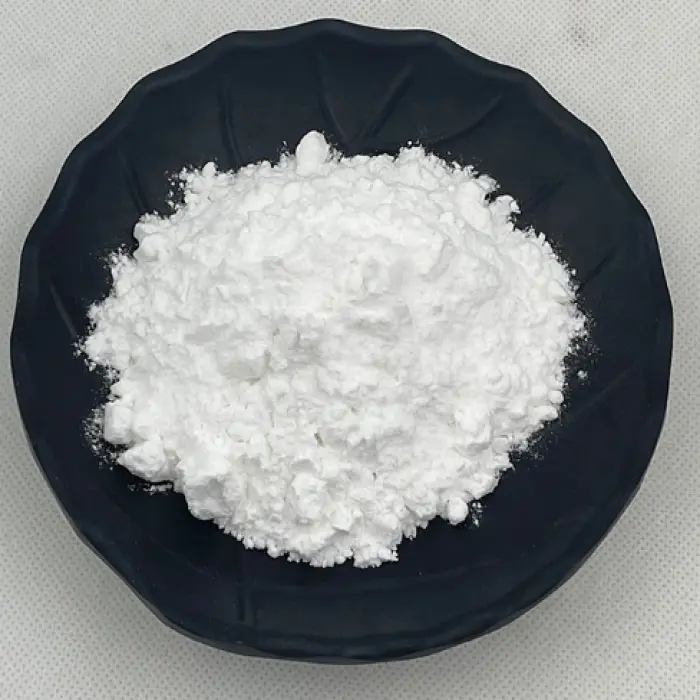
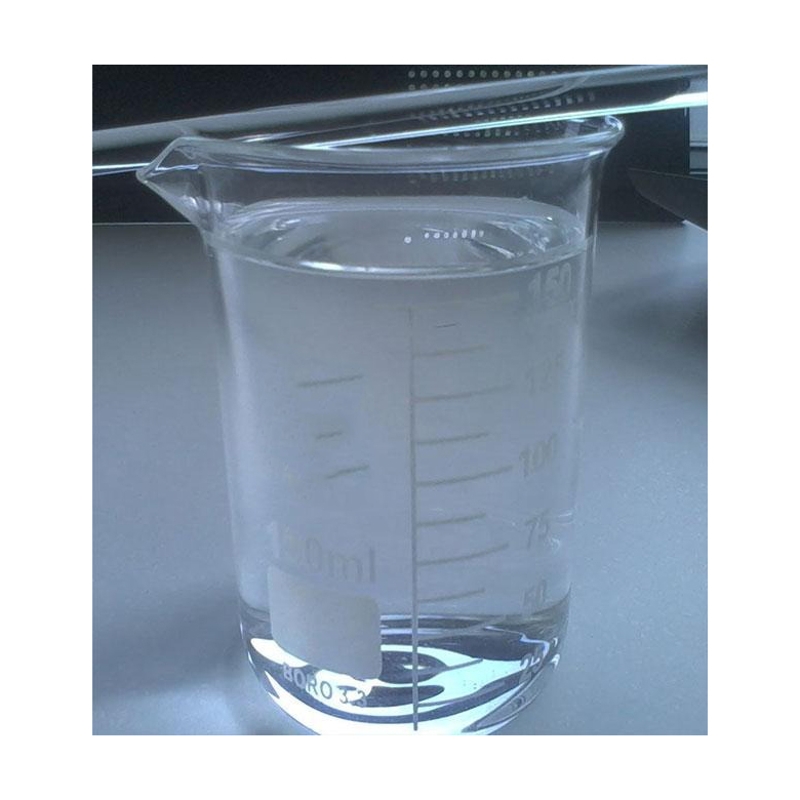
ZnCl2 battery grade Zinc Chloride 25% factory price CAS:7646-85-7 in bulk
25 Inquiries
7646-85-7
Food Grade
25%
Durban
Custom
As per customer requirement
Yes
2024-05-06
Sodium Lauryl Ether Sulfate,Caustic Soda,Soda Ash,Citric Acid,Calcium Hypochlorite,Oxalic Acid
-
Product Description
-
Seller Information
-
Inquiry History
-
DescriptionECHEMI Editorial ReferenceWhite granular crystal or powder of hexagonal system, highly soluble in water, soluble in methanol, ethanol, glycerine, acetone, diethyl ether but Insoluble in liquid ammonia.
Zinc chloride, solution is a colorless liquid. It is mildly corrosive to metals. It causes burns to eyes, skin and mucous membranes.|DryPowder; Liquid; OtherSolid; PelletsLargeCrystals, Liquid|WHITE HYGROSCOPIC ODOURLESS SOLID IN VARIOUS FORMS.|White particulate dispersed in air with an acrid odor. Zinc chloride is a white crystalline solid.|White particulate dispersed in air.
Zinc chloride, solution is a colorless liquid. It is mildly corrosive to metals. It causes burns to eyes, skin and mucous membranes.Basic Info-
Product Name:
Zinc chloride
Other Name:Zinc chloride (ZnCl2);Zinc chloride;Butter of zinc;Zinc Butter;Zinc dichloride;Zinc(II) chloride;Knittex ZH;NSC 529648;Z 0014;53917-99-0;1162648-93-2
CAS No.:7646-85-7
UN No.:2331
Molecular Formula:Cl2Zn
InChIKeys:InChIKey=JIAARYAFYJHUJI-UHFFFAOYSA-L
Molecular Weight:136.28600
Exact Mass:133.86700
EC Number:231-592-0
ICSC Number:1064
NSC Number:529648
UN Number:1840|2331
DSSTox ID:DTXSID2035013
Color/Form:White, very deliquesce granules, or fused pieces or rods|White, hygroscopic crystals|White particulate dispersed in air /Zinc chloride fume/
ATC Code:B - Blood and blood forming organs
HScode:2827399000
Categories:
Characteristics-
PSA:
0
XLogP3:1.37650
Appearance:clear to cloudy colorless or faintly yellow
Density:2.907 g/cm3 @ Temp: 25 °C
Melting Point:290 °C
Boiling Point:732 °C
Flash Point:732ºC
Refractive Index:INDEX OF REFRACTION: 1.681; 1.713
Water Solubility:432 g/100 mL (25 ºC)
Storage Conditions:2-8ºC
Vapor Pressure:1 mm Hg ( 428 °C)
Toxicity:Inhalation of zinc chloride fumes can injure lungs and respiratory tract. Dusts or fumes also cause dermatitis, boils, conjunctivitis, and gastrointestinal tract upset (Lewis(Sr), R.J. 1996. Sax’s Dangerous Properties of Industrial Materials, 9th ed. New York: Van Nostrand Reinhold). LD50 oral (rat): 350mg/kg LCLO (inhalation): 1.960 g/m3/10 min
Flammability characteristics:Noncombustible Solid
Odor:Odorless|FUME HAS AN ACRID ODOR /ZINC CHLORIDE FUMES/
Experimental Properties:With much water, some zinc oxylchloride is formed|Heat of fusion: 40.6 cal/g|Hygroscopic; hydrates with 1, 1.5, 2.5, 3, and 4 molecules of water|Aqueous solution is acid to litmus, pH about 4|Evaporation at 20 °C is negligible; a harmful concentration of airborne particles can, however, be reached quickly when dispersed, especially if powdered.
Air and Water Reactions:When dissolved in water, it is a strong acid. [Handling Chemicals Safely 1980. p. 964]
Reactive Group:Acids, Strong Non-oxidizing
Reactivity Profile:When dissolved in water, ZINC CHLORIDE is a strong acid [Handling Chemicals Safely 1980. p. 964].
Autoignition Temperature:Not flammable (USCG, 1999)
Flammable Limits:Noncombustible Solid
Corrosivity:Fume corrosive to metals /zinc chloride fumes/
Hazard IdentificationClassification of the substance or mixture
Acute toxicity - Category 4, Oral
Skin corrosion, Sub-category 1B
Hazardous to the aquatic environment, short-term (Acute) - Category Acute 1
Hazardous to the aquatic environment, long-term (Chronic) - Category Chronic 1
GHS label elements, including precautionary statements
Pictogram(s) 


Signal word Danger
Hazard statement(s) H302 Harmful if swallowed
H314 Causes severe skin burns and eye damage
H410 Very toxic to aquatic life with long lasting effects
Precautionary statement(s) Prevention P264 Wash ... thoroughly after handling.
P270 Do not eat, drink or smoke when using this product.
P260 Do not breathe dust/fume/gas/mist/vapours/spray.
P280 Wear protective gloves/protective clothing/eye protection/face protection/hearing protection/...
P273 Avoid release to the environment.
Response P301+P317 IF SWALLOWED: Get medical help.
P330 Rinse mouth.
P301+P330+P331 IF SWALLOWED: Rinse mouth. Do NOT induce vomiting.
P363 Wash contaminated clothing before reuse.
P304+P340 IF INHALED: Remove person to fresh air and keep comfortable for breathing.
P316 Get emergency medical help immediately.
P321 Specific treatment (see ... on this label).
P305+P351+P338 IF IN EYES: Rinse cautiously with water for several minutes. Remove contact lenses, if present and easy to do. Continue rinsing.
P391 Collect spillage.
Storage P405 Store locked up.
Disposal P501 Dispose of contents/container to an appropriate treatment and disposal facility in accordance with applicable laws and regulations, and product characteristics at time of disposal.
Other hazards which do not result in classification
no data available
Handling and StoragePrecautions for safe handling
See Chemical Dangers. Handling in a well ventilated place. Wear suitable protective clothing. Avoid contact with skin and eyes. Avoid formation of dust and aerosols. Use non-sparking tools. Prevent fire caused by electrostatic discharge steam.
Conditions for safe storage, including any incompatibilities
Store only in original container. Separated from strong bases, strong oxidants and food and feedstuffs. Dry. Well closed. Store in an area without drain or sewer access.
-
-
Seller Information
-
Business Type:
Distributor
-
Main Products:
Sodium Lauryl Ether Sulfate,Caustic Soda,Soda Ash,Citric Acid,Calcium Hypochlorite,Oxalic Acid
-
Location:
13 PROTEA PARK MILKWOOD STREET RANGEVIEW GAUTENG 1739
-
Payment Terms:
TT against copy of documents,TT against B/L draft before shipment
-
Average lead Time:
60 days
-
Total Annual Revenue:
$1 million-$2.5 million
-
Total Employees:
11-50
-
Year of Establishment:
2012
-
-
Inquiry History25 Inquiries
Country Product Purchase Quantity Date Posted  Egypt
Egypt
Zinc Ammonium Chloride | 45% ZnCl2 + 55% NH4Cl
25 MT Oct 8, 2026  Brazil
Zinc Chloride
200 KG Aug 24, 2026  Pakistan
zinc chloride
24 MT Aug 15, 2026  Vietnam
ZINC CHLORIDE (ZNCL2)
20 MT Jul 23, 2026  India
India
Zinc Chloride
15 MT May 22, 2026  Zambia
ZINC CHLORIDE
1.00 MT Sep 15, 2025  Hungary
Zinc chloride
400 G May 29, 2025
India
Zinc Chloride
2.00 MT Feb 14, 2025
India
ZINC CHLORIDE (Liquid)
500.00 MT Feb 8, 2025  Kuwait
ZnCl2 Powder
6700.00 KG Aug 12, 2024
India
Zinc Chloride Anhydrous
1.00 MT Apr 19, 2024
Vietnam
Zinc Chloride
6.00 20' Fcl Mar 27, 2024
Brazil
Zinc Chloride
200 KG Aug 28, 2026  Bangladesh
Zinc Chloride
1 MT Jul 24, 2026  Mexico
Zinc Chloride
10 MT Nov 25, 2025
Hungary
Zinc chloride food grade 99,9%
300 G May 28, 2025  Turkey
Zinc Chloride
500 G Mar 6, 2025
India
Zinc chloride
5.00 KG Oct 22, 2024  South Korea
Zinc chloride
10 MT Jun 13, 2024
Pakistan
ZINC CHLORIDE
1 KG Aug 21, 2026 Post an enquiry for this product

More from this Seller
-
-
")
-
Manufacturer of best quality powder Deoxy-Δ12,14-prostaglandin CAS NO (87893-55-8)
Industrial Grade / 99%
-
-
-
 Available for sale")
-
High Quality 3,4-Dichlorobenzotrifluoride CAS NO (328-84-7) Available for sale
Industrial Grade / 99%
-
-
-
")
-
Best Seller of best quality 99% Dicyclohexylamine CAS NO (101-83-7)
Industrial Grade / 99%
-
-
-
 Available at good price")
-
Factory Price Isopropylbenzylamine CAS NO (102-97-6) Available at good price
Pharmaceutical Grade / 99%
-
-
-
 For Sale")
-
Best Price 1H-1,2,3-Triazole CAS NO (288-36-8) For Sale
Industrial Grade / 99%
-
-
-
 For Sale At Low Price")
-
Factory Price Hypochlorous acid CAS NO (7790-92-3) For Sale At Low Price
Industrial Grade / 99%
-



Hot Related Products
-
 Best Price for Various Applications Titanium Dioxide Rutile Grade CAS 1317-80-2
 -
 Calciumcarbonate for sale
 -
 Hope--Zinc oxide
 -
 Zinc Oxide for Cosmetics
 -
 High quality zinc oxide
 -
 99% Min - High Purity") Sodium Sulfate (Alkali) 99% Min - High Purity
Sodium Sulfate (Alkali) 99% Min - High Purity -
 Food Grade Dextrose Monohydrate Powder 99.5% | Bulk Glucose for Food & Beverage
 -
 Best low temerature flow improver for diesel fuel MDFI
 -
-Glucose food grade 99% white powder SNC | Good Fortune") Dextrose Monohydrate/D(+)-Glucose food grade 99% white powder SNC | Good Fortune
Dextrose Monohydrate/D(+)-Glucose food grade 99% white powder SNC | Good Fortune -
 Nano Zinc Oxide High Purity Ultrafine Powder