Product
Supplier
Encyclopedia
Inquiry
Home > Biochemical Engineering > Saccharides > Methyl orange for Sale > Best Seller Of High Quality Powder Methyl orange CAS NO (547-58-0)
Best Seller Of High Quality Powder Methyl orange CAS NO (547-58-0) buy - large image1
Best Seller Of High Quality Powder Methyl orange CAS NO (547-58-0) buy - image1
Best Seller Of High Quality Powder Methyl orange CAS NO (547-58-0) buy - image2
Best Seller Of High Quality Powder Methyl orange CAS NO (547-58-0) buy - image3
Best Seller Of High Quality Powder Methyl orange CAS NO (547-58-0) buy - image4
Best Seller Of High Quality Powder Methyl orange CAS NO (547-58-0) buy - image5
Best Seller Of High Quality Powder Methyl orange CAS NO (547-58-0) buy - image6

Best Seller Of High Quality Powder Methyl orange CAS NO (547-58-0)

1 Inquiries

Unit Price: Get Latest Price
CAS No.:

547-58-0

Grade:

Industrial Grade

Content:

99%

Port:

Durban

Brand:

Custom

Packaging:

As per customer requirement

Price valid (until):

2024-05-20

Company Type:
Distributor
Location:
South Africa
Qualification:
Main Products:

Sodium Lauryl Ether Sulfate,Caustic Soda,Soda Ash,Citric Acid,Calcium Hypochlorite,Oxalic Acid

  • Product Description

  • Seller Information

  • Inquiry History

  • Description


      Product Detail  


              1. Introduction and Chemical Identity

                Methyl orange, with the chemical formula C14H14N3NaO3S, is a synthetic pH indicator dye widely used in laboratory experiments, chemical analyses, and industrial applications. Renowned for its distinct color changes in response to variations in pH, methyl orange plays a pivotal role in acid-base titrations, quality control assays, and biological studies.

                Historical Background and Discovery

                The discovery of methyl orange can be traced back to the late 19th century, amidst the rapid expansion of the dye industry and the development of synthetic organic chemistry. Originally synthesized as a textile dye, methyl orange gained recognition for its unique optical properties and chemical stability, leading to its adoption as a pH indicator and colorant in various applications.

                Chemical Structure and Properties

                Structurally, methyl orange consists of a sulfonated azo dye core substituted with an aromatic amine and a quaternary ammonium group. This molecular arrangement imparts unique optical characteristics to methyl orange, allowing it to exhibit distinct color changes in response to changes in pH. Under acidic conditions, methyl orange appears red, while in alkaline environments, it turns yellow, making it ideal for visualizing pH changes in chemical reactions and titrations.

                Synthesis and Production

                Methyl orange is synthesized through a series of chemical reactions involving the diazotization of an aromatic amine precursor, followed by coupling with a sodium salt of sulfanilic acid under controlled conditions. Industrial production entails meticulous optimization of reaction parameters such as temperature, pH, and catalyst concentration to achieve high yields and product purity. Quality control measures are implemented throughout the manufacturing process to ensure consistency and compliance with regulatory standards.

                Physical Properties and Color Characteristics

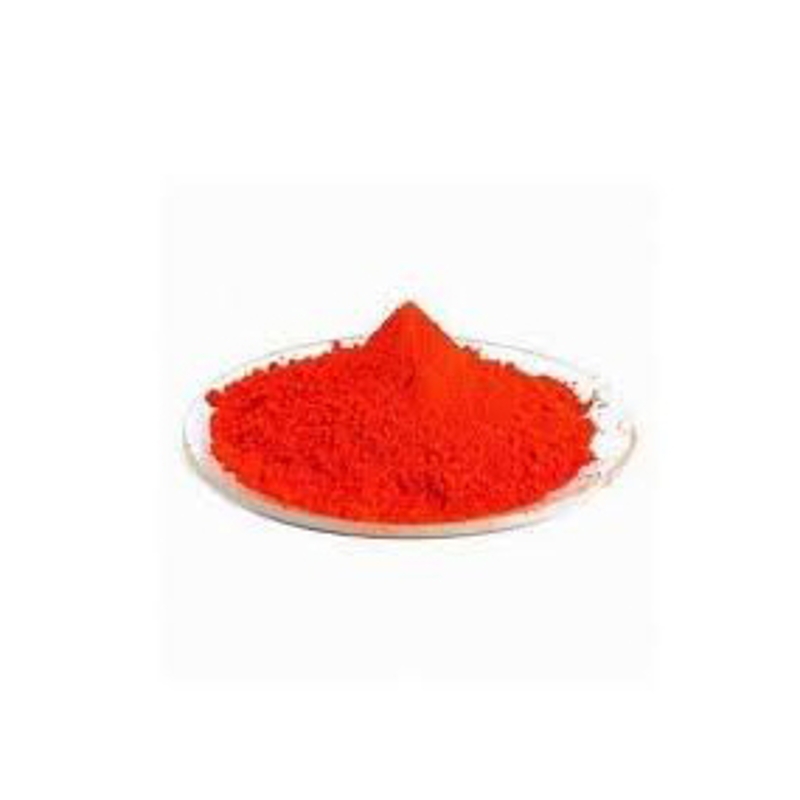
                Physically, methyl orange typically appears as a dark red or orange powder or granules with a fine particle size and uniform texture. Its color transitions are highly pH-dependent, with distinct spectral changes occurring within specific pH ranges. This property enables precise pH determination and endpoint detection in titrations, colorimetric assays, and analytical procedures across a wide range of industries.

                Applications in Chemistry

                In chemistry, methyl orange serves as a versatile pH indicator for acid-base titrations, complexometric titrations, and other volumetric analyses. Its well-defined color transition range, typically between pH 3.1 and 4.4, facilitates accurate endpoint determination and quantitative measurement of acidity or alkalinity in chemical solutions. Additionally, methyl orange finds utility in spectroscopic studies, fluorescence assays, and sensor development.

                Biological and Medical Uses

                In biological and medical research, methyl orange is utilized for pH measurement and monitoring in cell culture media, biological buffers, and physiological fluids. It serves as a valuable tool for studying enzyme kinetics, protein-protein interactions, and cellular metabolism, providing insights into pH-dependent processes and disease mechanisms. Moreover, methyl orange finds application in diagnostic assays, microbiological testing, and pharmaceutical formulations, where precise pH control is essential for product efficacy and safety.

                Safety Considerations and Regulatory Compliance

                While methyl orange is generally regarded as safe for laboratory use when handled and processed in accordance with good laboratory practices, precautions should be taken to minimize exposure to airborne dust, skin contact, and ingestion. Proper ventilation, personal protective equipment (PPE), and engineering controls should be implemented to mitigate potential health risks associated with methyl orange handling. Regulatory agencies such as the FDA (Food and Drug Administration) and EPA (Environmental Protection Agency) regulate the usage of methyl orange in consumer products and industrial applications, setting maximum permitted levels and safety standards to protect human health and the environment.

                Alternatives and Future Directions

                As scientific research advances, efforts are underway to develop novel pH indicators with enhanced sensitivity, specificity, and environmental sustainability compared to traditional dyes like methyl orange. Researchers explore alternative synthesis routes, renewable raw materials, and bio-based pigments as potential solutions for reducing environmental impact and resource depletion. Additionally, innovations in color science, materials engineering, and digital printing technologies continue to drive progress in the field, opening up new opportunities for methyl orange and other indicators to meet evolving market demands and regulatory requirements.

                Conclusion and Outlook

                In conclusion, methyl orange remains a valuable and indispensable component in the toolkit of pH indicators, offering reliable performance, versatility, and ease of use across a wide range of applications. Its rich history, enduring popularity, and continued relevance underscore its status as a classic indicator in the field of analytical chemistry. As we look to the future, methyl orange and its derivatives are poised to play an integral role in advancing our understanding of pH-dependent processes and addressing pressing challenges in fields ranging from healthcare to environmental science. Through ongoing research, innovation, and collaboration, the legacy of methyl orange will continue to inspire and inform scientific inquiry and technological innovation for generations to come.


      Product Detail  


    Items Specifications
    Chemical Formula C14H14N3NaO3S
    Molecular Weight Approximately 327.33 g/mol
    Appearance Orange to red solid
    Melting Point 190-192°C
    Solubility Soluble in water, sparingly soluble in organic solvents
    Density ~1.28 g/cm³
    pH Range pH 3.1 (red) - pH 4.4 (yellow)
    Absorption maxima 464 nm (in water)
    Purity Typically ≥ 95%
    Storage Conditions Store in a cool, dry place away from light
    Hazardous Properties Irritant, harmful if swallowed, may cause sensitization by skin contact
    Boiling Point Decomposes above 200°C
    Flash Point Not applicable (solid)
    Stability Stable under normal conditions
    Regulatory Status Compliant with relevant regulations


      Product Detail  


    Shop Best Seller Of High Quality Powder Methyl orange CAS NO (547-58-0)-Detailed Image 1Shop Best Seller Of High Quality Powder Methyl orange CAS NO (547-58-0)-Detailed Image 2Shop Best Seller Of High Quality Powder Methyl orange CAS NO (547-58-0)-Detailed Image 3Shop Best Seller Of High Quality Powder Methyl orange CAS NO (547-58-0)-Detailed Image 4Shop Best Seller Of High Quality Powder Methyl orange CAS NO (547-58-0)-Detailed Image 5Shop Best Seller Of High Quality Powder Methyl orange CAS NO (547-58-0)-Detailed Image 6

    Basic Info
    Product Name:

    Methyl orange

    Other Name:

    Benzenesulfonic acid,4-[2-[4-(dimethylamino)phenyl]diazenyl]-,sodium salt (1:1);Orange III;Benzenesulfonic acid,p-[[p-(dimethylamino)phenyl]azo]-,sodium salt;Benzenesulfonic acid,4-[[4-(dimethylamino)phenyl]azo]-,sodium salt;C.I. 13025;Eniamethyl Orange;Gold orange;Helianthine B;KCA Methyl Orange;Methyl Orange B;Sodium p-dimethylaminoazobenzenesulfonate;Tropaeolin D;C.I. Acid Orange 52;Methyl orange;Helianthine;Diazoben;Sodium 4′-(dimethylamino)azobenzene-4-sulfonate;Orange 3;Sodium 4-(dimethylamino)azobenzene-4′-sulfonate;4-Dimethylaminoazobenzene-4′-sulfonic acid sodium salt;Sodium 4-[4-(dimethylamino)phenylazo]benzenesulfonate;Sodium p-[[p-(dimethylamino)phenyl]azo]benzenesulfonate;Acid Orange 52;Albion Methyl Orange;Sodium 4-[(4-dimethylamino)phenyldiazenyl]benzenesulfonate;1342-24-1;66777-17-1;1773488-61-1

    CAS No.:

    547-58-0

    Molecular Formula:

    C14H15N3O3S.Na

    InChIKeys:

    InChIKey=LOJHDGOZROMANL-UHFFFAOYSA-N

    Molecular Weight:

    327.33400

    Exact Mass:

    327.06500

    EC Number:

    208-925-3

    UNII:

    6B4TC34456

    UN Number:

    3143

    Color/Form:

    ORANGE-YELLOW POWDER OR CRYSTALLINE SCALES

    HScode:

    2927000090

    Categories:

    Saccharides

    Characteristics
    PSA:

    93.54000

    XLogP3:

    4.15290

    Appearance:

    4-dimethylaminoazobenzene-4-sulfonic acid, sodium salt is an orange powder. (NTP, 1992)

    Density:

    1.468 g/cm3

    Melting Point:

    >300 °C

    Boiling Point:

    100ºC

    Flash Point:

    37 °C

    Water Solubility:

    In water= 200 mg/l at 25 deg C

    Storage Conditions:

    Store at RT.

    Toxicity:

    LD50 orally in Rabbit: 60 mg/kg

    Experimental Properties:

    PH: 3.1 RED, 4.4 YELLOW.

    Air and Water Reactions:

    Azo dyes can be explosive when suspended in air at specific concentrations. Insoluble in water.

    Reactive Group:

    Azo, Diazo, Azido, Hydrazine, and Azide Compounds

    Reactivity Profile:

    4-DIMETHYLAMINOAZOBENZENE-4-SULFONIC ACID, SODIUM SALT is an azo compound. Azo, diazo, azido compounds can detonate. This applies in particular to organic azides that have been sensitized by the addition of metal salts or strong acids. Toxic gases are formed by mixing materials of this class with acids, aldehydes, amides, carbamates, cyanides, inorganic fluorides, halogenated organics, isocyanates, ketones, metals, nitrides, peroxides, phenols, epoxides, acyl halides, and strong oxidizing or reducing agents. Flammable gases are formed by mixing materials in this group with alkali metals. Explosive combination can occur with strong oxidizing agents, metal salts, peroxides, and sulfides.

    Hazard Identification

    Classification of the substance or mixture

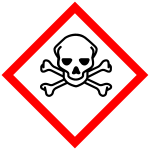
    Acute toxicity - Category 3, Oral

    GHS label elements, including precautionary statements

    Pictogram(s)
    Signal word

    Danger

    Hazard statement(s)

    H301 Toxic if swallowed

    Precautionary statement(s)
    Prevention

    P264 Wash ... thoroughly after handling.

    P270 Do not eat, drink or smoke when using this product.

    Response

    P301+P316 IF SWALLOWED: Get emergency medical help immediately.

    P321 Specific treatment (see ... on this label).

    P330 Rinse mouth.

    Storage

    P405 Store locked up.

    Disposal

    P501 Dispose of contents/container to an appropriate treatment and disposal facility in accordance with applicable laws and regulations, and product characteristics at time of disposal.

    Other hazards which do not result in classification

    no data available

    Handling and Storage

    Precautions for safe handling

    Handling in a well ventilated place. Wear suitable protective clothing. Avoid contact with skin and eyes. Avoid formation of dust and aerosols. Use non-sparking tools. Prevent fire caused by electrostatic discharge steam.

    Conditions for safe storage, including any incompatibilities

    Store the container tightly closed in a dry, cool and well-ventilated place. Store apart from foodstuff containers or incompatible materials.

  • Seller Information
    Business Type:

    Distributor

    Main Products:

    Sodium Lauryl Ether Sulfate,Caustic Soda,Soda Ash,Citric Acid,Calcium Hypochlorite,Oxalic Acid

    Location:

    13 PROTEA PARK MILKWOOD STREET RANGEVIEW GAUTENG 1739

    Payment Terms:

    TT against copy of documents,TT against B/L draft before shipment

    Average lead Time:

    60

    Total Annual Revenue:

    $1 million-$2.5 million

    Total Employees:

    11-50

    Year of Establishment:

    2012

  • Inquiry History
    1 Inquiries
    Country Product Purchase Quantity Date Posted
    India

    Methyl Orange

    10.00 MT Sep 21, 2023
    Post an enquiry for this product
pic ×

Scan the QR Code to Share

All products displayed on this website are only for non-medical purposes such as industrial applications or scientific research, and cannot be used for clinical diagnosis or treatment of humans or animals. They are not medicinal or edible.

According to relevant laws and regulations and the regulations of this website, units or individuals who purchase hazardous materials should obtain valid qualifications and qualification conditions.

The information shown above is provided by the enterprise itself, and the authenticity, accuracy and legitimacy of the content are the responsibility of the publishing company. ECHEMI does not bear any guarantee responsibility for this. Please be aware that risks in internet transactions objectively exist.

Feedback & Suggestions
Send Message

Thank you for your feedback. If you require further assistance, please contact us by email at info@echemi.com or call us at +86-532-55729510.