Product
Supplier
Encyclopedia
Inquiry
Home > Biochemical Engineering > Saccharides > Erythrosine for Sale > Erythrosine 99% Powder CAS NO (16423-68-0) Available for sale in low price
Erythrosine 99% Powder CAS NO (16423-68-0) Available for sale in low price buy - large image1
Erythrosine 99% Powder CAS NO (16423-68-0) Available for sale in low price buy - image1
Erythrosine 99% Powder CAS NO (16423-68-0) Available for sale in low price buy - image2
Erythrosine 99% Powder CAS NO (16423-68-0) Available for sale in low price buy - image3
Erythrosine 99% Powder CAS NO (16423-68-0) Available for sale in low price buy - image4
Erythrosine 99% Powder CAS NO (16423-68-0) Available for sale in low price buy - image5
Erythrosine 99% Powder CAS NO (16423-68-0) Available for sale in low price buy - image6

Erythrosine 99% Powder CAS NO (16423-68-0) Available for sale in low price

1 Inquiries

Unit Price: Get Latest Price
CAS No.:

16423-68-0

Grade:

Industrial Grade

Content:

99%

Port:

Durban

Brand:

Custom

Packaging:

As per customer requirement

Price valid (until):

2024-05-20

Company Type:
Distributor
Location:
South Africa
Qualification:
Main Products:

Sodium Lauryl Ether Sulfate,Caustic Soda,Soda Ash,Citric Acid,Calcium Hypochlorite,Oxalic Acid

  • Product Description

  • Seller Information

  • Inquiry History

  • Description


      Product Detail  


              1. Introduction and Chemical Identity

                Erythrosine, also known as Red No. 3, is a synthetic red dye commonly used as a food colorant, cosmetic pigment, and biological stain. With the chemical formula C20H8I4O5, Erythrosine belongs to the family of xanthene dyes, characterized by their intense red coloration and fluorescence properties.

                Historical Background and Discovery

                The discovery of Erythrosine can be traced back to the early 20th century, amidst the rapid expansion of the dye industry and the development of synthetic organic chemistry. Originally synthesized as a textile dye, Erythrosine gained recognition for its vibrant color, solubility, and stability, leading to its adoption in various applications beyond textiles.

                Chemical Structure and Properties

                Structurally, Erythrosine consists of a xanthene ring system substituted with iodine atoms and sulfonate groups. This molecular arrangement imparts unique optical characteristics to Erythrosine, including strong absorption in the visible region of the electromagnetic spectrum and fluorescence under ultraviolet light. These properties make Erythrosine suitable for a wide range of applications requiring intense red coloration and optical brightness.

                Synthesis and Production

                Erythrosine is synthesized through a series of chemical reactions involving the condensation of resorcinol with phthalic anhydride, followed by iodination and sulfonation under controlled conditions. Industrial production entails meticulous optimization of reaction parameters such as temperature, solvent choice, and catalyst concentration to achieve high yields and product purity. Quality control measures are implemented throughout the manufacturing process to ensure consistency and compliance with regulatory standards.

                Physical Properties and Color Characteristics

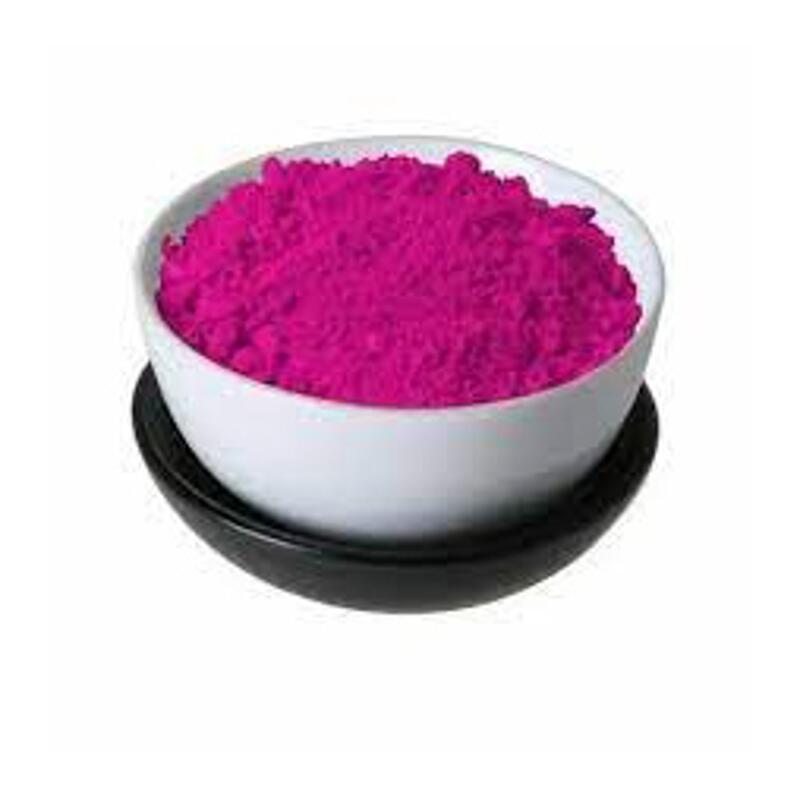
                Physically, Erythrosine typically appears as a dark red powder or granules with a fine particle size and uniform texture. Its color intensity and shade may vary depending on factors such as particle size, dispersion medium, and application method. Erythrosine exhibits excellent color strength, solubility in water, and resistance to fading, making it suitable for a wide range of applications in food, cosmetics, and pharmaceuticals.

                Applications in Industries

                Erythrosine finds applications across various industries, including food and beverage, cosmetics, pharmaceuticals, and textiles. In the food industry, Erythrosine is used as a food colorant to impart vibrant red hues to a wide range of products, including candies, beverages, desserts, and processed meats. In cosmetics, Erythrosine serves as a pigment in lipsticks, blushes, nail polishes, and hair dyes, enhancing their visual appeal and marketability. Moreover, Erythrosine is utilized in pharmaceutical formulations, biological stains, and histological dyes for diagnostic and research purposes.

                Regulatory Considerations and Safety

                Regulatory agencies such as the FDA (Food and Drug Administration) and EFSA (European Food Safety Authority) regulate the usage of Erythrosine in food, cosmetics, and pharmaceutical products, setting maximum permitted levels and safety standards to protect human health and ensure product quality. Extensive toxicological studies have been conducted to evaluate the safety of Erythrosine consumption, with the overall consensus indicating its safety when used within approved limits. However, concerns have been raised regarding potential allergic reactions and hypersensitivity in sensitive individuals, prompting ongoing monitoring and risk assessment by regulatory authorities.

                Alternatives and Future Directions

                As consumer preferences shift towards natural and clean label ingredients, there is growing interest in exploring natural alternatives to synthetic dyes like Erythrosine. Researchers investigate plant-based extracts, fruit and vegetable juices, and microbial pigments as potential substitutes for synthetic colorants, aiming to develop sustainable and eco-friendly alternatives with comparable color intensity and stability. Additionally, advances in nanotechnology, biotechnology, and color science continue to drive innovation in the field, opening up new possibilities for enhancing the performance and sustainability of Erythrosine-based formulations.

                Conclusion and Outlook

                In conclusion, Erythrosine remains a widely used and versatile red dye in various industries, owing to its intense coloration, stability, and compatibility with a wide range of substrates. Its rich history, diverse applications, and continued relevance underscore its status as a classic colorant in the realm of synthetic dyes. As we look to the future, Erythrosine and its derivatives are poised to play an integral role in meeting evolving market demands for vibrant, visually appealing products while addressing regulatory and consumer concerns related to safety and sustainability. Through ongoing research, innovation, and collaboration, the legacy of Erythrosine will continue to inspire and inform the development of novel colorants and pigments for generations to come


      Product Detail  


    Items Specifications
    Chemical Formula C20H6I4O5
    Molecular Weight Approximately 879.85 g/mol
    Appearance Dark cherry-red powder
    Melting Point > 300°C (decomposes)
    Solubility Soluble in water, slightly soluble in ethanol
    Density ~2.15 g/cm³
    pH Range pH 2.2 (yellow) - pH 3.0 (red)
    Absorption maxima 525 nm (in water)
    Purity Typically ≥ 95%
    Storage Conditions Store in a cool, dry place away from light
    Hazardous Properties Irritant, harmful if swallowed, may cause sensitization by skin contact
    Boiling Point Decomposes above 300°C
    Flash Point Not applicable (solid)
    Stability Stable under normal conditions
    Regulatory Status Compliant with relevant regulations


      Product Detail  


    Shop Erythrosine 99% Powder CAS NO (16423-68-0) Available for sale in low price-Detailed Image 1Shop Erythrosine 99% Powder CAS NO (16423-68-0) Available for sale in low price-Detailed Image 2Shop Erythrosine 99% Powder CAS NO (16423-68-0) Available for sale in low price-Detailed Image 3

    Basic Info
    Product Name:

    Erythrosine

    Other Name:

    Spiro[isobenzofuran-1(3H),9′-[9H]xanthen]-3-one,3′,6′-dihydroxy-2′,4′,5′,7′-tetraiodo-,sodium salt (1:2);Fluorescein,2′,4′,5′,7′-tetraiodo-,disodium salt;Erythrosine B;Spiro[isobenzofuran-1(3H),9′-[9H]xanthen]-3-one,3′,6′-dihydroxy-2′,4′,5′,7′-tetraiodo-,disodium salt;Erythrosine BS;Erythrosine;FD and C Red No. 3;Erythrosin;1427 Red;1671 Red;C.I. 45430;Aizen Erythrosine;Calcocid Erythrosine N;Canacert Erythrosine BS;Cilefa Pink B;C.I. Acid Red 51;C.I. Food Red 14;Dolkwal Erythrosine;Edicol Supra Erythrosine A;Erythrosine 3B;Erythrosine Bluish;Erythrosine Extra Conc. A Export;Erythrosine Extra Pure A;Erythrosine K-FO;Erythrosine B-FO;Erythrosine TB;Erythrosine TB Extra;Hexacert Red No. 3;Hexacol Erythrosine BS;Maple Erythrosine;New Pink Bluish Geigy;Tetraiodofluorescein sodium salt;Usacert Red No. 3;Erythrosine Extra;Food Dye Red 3;Acid Red 51;Food Red 14;D and C Red No. 3;2′,4′,5′,7′-Tetraiodofluorescein disodium salt;Erythrosin B sodium salt;FD&C Red No. 3;2,4,5,7-Tetraiodofluorescein disodium salt;Food Color Red 3;Food Red No. 3;E 127;Erythrosine extra bluish;S 887;Japan Red 3;Aizen Food Red 3;Japan Red No. 3;Erythrosine I;FDC Red 3;Synerid;Edicol Supra Erythrosin AS;Erythrosin BS;Red 1799;FDC Red 3 dye;Erythrosin B;Ceplac;FD and C Red 3;Food Red 3;D&C Red No. 3;Erythrosine 307046;Water Pink 176575;Neelicol Erythrosine;FD & C Red No. 3-307020;Erythrosine 36003;1342-20-7;1342-21-8;1342-28-5;16904-63-5;27540-70-1;72027-96-4;111634-12-9;145361-15-5;198832-03-0;658700-90-4

    CAS No.:

    16423-68-0

    Molecular Formula:

    C20H8I4O5.2Na

    InChIKeys:

    InChIKey=DVUWFIWQOSNKQJ-UHFFFAOYSA-N

    Molecular Weight:

    879.86

    Exact Mass:

    879.618896

    EC Number:

    240-474-8

    HScode:

    32129000

    Categories:

    Saccharides

    Characteristics
    PSA:

    81.6

    XLogP3:

    -0.05 (est)

    Appearance:

    Deep red to brown Fine Powder

    Density:

    0.8-1.0 kg/cu m (limit)

    Melting Point:

    142~144℃

    Boiling Point:

    693.2ºC at 760 mmHg

    Flash Point:

    285℃

    Water Solubility:

    100g/l

    Storage Conditions:

    Store at +5°C to +30°C.

    Vapor Pressure:

    2.22E-16mmHg at 25°C

    Toxicity:

    LD50 in male, female mice, male, female rats (g/kg): 0.40, 0.32, 0.34, 0.37 i.p.; 6.7, 6.9, 7.4, 6.8 orally (Butterworth); LD50 in mice, rats (mg/kg): 2558, 2891 orally (Yankell)

    Hazard Identification

    Classification of the substance or mixture

    Hazardous to the aquatic environment, long-term (Chronic) - Category Chronic 2

    GHS label elements, including precautionary statements

    Pictogram(s)

    Signal word

    Warning

    Hazard statement(s)

    H412 Harmful to aquatic life with long lasting effects

    Precautionary statement(s)
    Prevention

    P273 Avoid release to the environment.

    Response

    P391 Collect spillage.

    Storage

    none

    Disposal

    P501 Dispose of contents/container to an appropriate treatment and disposal facility in accordance with applicable laws and regulations, and product characteristics at time of disposal.

    Other hazards which do not result in classification

    no data available

    Handling and Storage

    Precautions for safe handling

    Handling in a well ventilated place. Wear suitable protective clothing. Avoid contact with skin and eyes. Avoid formation of dust and aerosols. Use non-sparking tools. Prevent fire caused by electrostatic discharge steam.

    Conditions for safe storage, including any incompatibilities

    Store the container tightly closed in a dry, cool and well-ventilated place. Store apart from foodstuff containers or incompatible materials.

  • Seller Information
    Business Type:

    Distributor

    Main Products:

    Sodium Lauryl Ether Sulfate,Caustic Soda,Soda Ash,Citric Acid,Calcium Hypochlorite,Oxalic Acid

    Location:

    13 PROTEA PARK MILKWOOD STREET RANGEVIEW GAUTENG 1739

    Payment Terms:

    TT against copy of documents,TT against B/L draft before shipment

    Average lead Time:

    60

    Total Annual Revenue:

    $1 million-$2.5 million

    Total Employees:

    11-50

    Year of Establishment:

    2012

  • Inquiry History
    1 Inquiries
    Country Product Purchase Quantity Date Posted
    Switzerland

    Érythrosine B

    100 G Oct 31, 2025
    Post an enquiry for this product
pic ×

Scan the QR Code to Share

All products displayed on this website are only for non-medical purposes such as industrial applications or scientific research, and cannot be used for clinical diagnosis or treatment of humans or animals. They are not medicinal or edible.

According to relevant laws and regulations and the regulations of this website, units or individuals who purchase hazardous materials should obtain valid qualifications and qualification conditions.

The information shown above is provided by the enterprise itself, and the authenticity, accuracy and legitimacy of the content are the responsibility of the publishing company. ECHEMI does not bear any guarantee responsibility for this. Please be aware that risks in internet transactions objectively exist.

Feedback & Suggestions
Send Message

Thank you for your feedback. If you require further assistance, please contact us by email at info@echemi.com or call us at +86-532-55729510.