Product
Supplier
Encyclopedia
Inquiry
Home > Pharmaceutical Intermediates > Bulk Drug Intermediates > Salicylsalicylic acid for Sale > Salicylsalicylic acid Chemical Raw Material
Salicylsalicylic acid Chemical Raw Material buy - large image1
Salicylsalicylic acid Chemical Raw Material buy - image1

Salicylsalicylic acid Chemical Raw Material

2 Inquiries

Unit Price: Get Latest Price
CAS No.:

552-94-3

Port:

CHINA

Packaging:

Drum/Customized packaging

Price valid (until):

2024-10-01

Company Type:
Trader
Location:
China
Qualification:
Main Products:

Heat Transfer Fluids

  • Product Description

  • Seller Information

  • Inquiry History

  • Description


      Product Detail  


    Salicylsalicylic acid

    • CAS No:

    552-94-3

    • Formula:

    C14H10O5

    • Chemical Name:

    Salicylsalicylic acid


    Description

    Salsalate is a nonsteroidal anti-inflammatory drug (NSAID).Target :Salsalate is a medication that belongs to the salicylate and non-steroidal anti-inflammatory drug (NSAID) classes. Relative to other NSAIDs, Salsalate has a weak inhibitory effect on the cyclooxygenase enzyme and decreases the production of several pro inflammatory chemical signals such as interleukin-6, TNF-alpha, and C-reactive protein. Common conditions in which Salsalate may be indicated include inflammatory disorders.

    Salsalate is a dimeric benzoate ester obtained by intermolecular condensation between the carboxy of one molecule of salicylic acid with the phenol group of a second. It is a prodrug for salycylic acid that is used for treatment of rheumatoid arthritis and osteoarthritis and also shows activity against type II diabetes. It has a role as a non-steroidal anti-inflammatory drug, a non-narcotic analgesic, an antirheumatic drug, a hypoglycemic agent, an antineoplastic agent, an EC 3.5.2.6 (beta-lactamase) inhibitor and a prodrug. It is a benzoate ester, a member of benzoic acids, a member of phenols and a member of salicylates. It derives from a salicylic acid.|Salsalate is a nonsteroidal anti-inflammatory agent for oral administration. Salsalate's mode of action as an anti-inflammatory and antirheumatic agent may be due to inhibition of synthesis and release of prostaglandins. The usefulness of salicylic acid, the active in vivo product of salsalate, in the treatment of arthritic disorders has been established. In contrast to aspirin, salsalate causes no greater fecal gastrointestinal blood loss than placebo. Salsalate is readily soluble in the small intestine where it is partially hydrolyzed to two molecules of salicylic acid. A significant portion of the parent compound is absorbed unchanged and undergoes rapid esterase hydrolysis in the body. The parent compound has an elimination half-life of about 1 hour. Salicylic acid (the active metabolite) biotransformation is saturated at anti-inflammatory doses of salsalate. Such capacity limited biotransformation results in an increase in the half-life of salicylic acid from 3.5 to 16 or more hours.|Salsalate is a nonacetylated dimer of salicylic acid that is used in the treatment of chronic arthritis as an analgesic and antipyretic. Salsalate can cause moderate serum aminotransferase elevations when given in high doses in a manner similar to aspirin.|Salsalate is an orally available salicylate and non-steroidal anti-inflammatory drug (NSAID), with anti-inflammatory, analgesic and antipyretic activities. As a prodrug, salsalate is hydrolyzed to salicylic acid which inhibits the expression of cyclooxygenase (COX) enzymes. This prevents the conversion of arachidonic acid into prostaglandin precursors and leads to decreased formation of prostaglandins that are involved in pain, fever and inflammation. In addition, salsalate appears to inhibit nuclear factor-kappa B (NF-kB), thereby preventing activation of the NF-kB-mediated pathway and the expression of genes involved in inflammation.


    Salicylsalicylic acid Basic Attributes

    Molecular Weight :258.23

    Exact Mass :258.23

    EC Number :209-027-4

    UNII :V9MO595C9I

    NSC Number :755823|49171

    DSSTox ID :DTXSID1023572

    NCI Thesaurus Code :C62636

    ATC Code :N - Nervous system


    Characteristics

    PSA :83.8

    XLogP3 :3

    Appearance :white to tan Crystalline Powder

    Density :1.4±0.1 g/cm3

    Melting Point :147 °C

    Boiling Point :482.9°C at 760 mmHg

    Flash Point :188.0±16.7 °C

    Refractive Index :1.646

    Water Solubility :HYDROLYSIS;DMSO: ≥15mg/mL

    Storage Conditions :room temp

    Collision Cross Section :151.3 ² [M+H]+ [CCS Type: TW, Method: calibrated with polyalanine and drug standards]


    Salicylsalicylic acid Use

    Nonacetylated (e.g., sodium salicylate) and acetylated (aspirin) forms of salicylate are widely used to target inflammation in the treatment of insulin resistance, type 2 diabetes, or rheumatic pain. Salsalate is a dimeric prodrug comprising two esterified salicylate moieties. It is advantageous over sodium salicylate because it is insoluble at the acid pH of the stomach and passes suspended but undissolved into the small intestine, sparing the gastric mucosa direct contact. Proof-of-principle clinical studies demonstrate that 3-4.5 g/d salsalate can reduce blood glucose, triglyceride, free fatty acid and C-reactive protein concentrations, improve glucose utilization, and increase circulating insulin and adiponectin concentrations in obese adults at risk for the development of type 2 diabetes as well as for patients with type 2 diabetes.

    Shop Xanthan gum Chemical Raw Material-Detailed Image 1
    Shop Xanthan gum Chemical Raw Material-Detailed Image 2
    Shop Xanthan gum Chemical Raw Material-Detailed Image 3
    Shop Xanthan gum Chemical Raw Material-Detailed Image 4
    Shop Xanthan gum Chemical Raw Material-Detailed Image 5
    Shop Xanthan gum Chemical Raw Material-Detailed Image 6
    Shop Xanthan gum Chemical Raw Material-Detailed Image 7
    Shop Xanthan gum Chemical Raw Material-Detailed Image 8
    Shop Xanthan gum Chemical Raw Material-Detailed Image 9

    Basic Info
    Product Name:

    Salicylsalicylic acid

    Other Name:

    Benzoic acid,2-hydroxy-,2-carboxyphenyl ester;Salicylic acid,bimol. ester;Salicylic acid,salicylate;Diplosal;Disalicylic acid;Salysal;o-Salicylsalicylic acid;Salsalate;Salicyloylsalicylic acid;Salicylsalicylic acid;Diacesal;Sasapirin;Sasapyrinum;Disalyl;Nobacid;Salical;Salina;Disalcid;Sasapyrine;Salicyl salicylate;Salicyloxysalicylic acid;Mono-Gesic;NSC 49171;Salflex;Disalgesic;2-Hydroxybenzoic acid 2-carboxyphenyl ester;2-(2-Hydroxybenzoyl)oxybenzoic acid;2-(2-Hydroxybenzoyloxy)benzoic acid;2-((2-Hydroxybenzoyl)oxy)benzoicacid;2087491-28-7

    CAS No.:

    552-94-3

    Molecular Formula:

    C14H10O5

    InChIKeys:

    InChIKey=WVYADZUPLLSGPU-UHFFFAOYSA-N

    Molecular Weight:

    258.23

    Exact Mass:

    258.23

    EC Number:

    209-027-4

    UNII:

    V9MO595C9I

    NSC Number:

    755823|49171

    DSSTox ID:

    DTXSID1023572

    NCI Thesaurus Code:

    C62636

    ATC Code:

    N - Nervous system

    HScode:

    2918990090

    Characteristics
    PSA:

    83.8

    XLogP3:

    3

    Appearance:

    white to tan Crystalline Powder

    Density:

    1.4±0.1 g/cm3

    Melting Point:

    147 °C

    Boiling Point:

    482.9°C at 760 mmHg

    Flash Point:

    188.0±16.7 °C

    Refractive Index:

    1.646

    Water Solubility:

    HYDROLYSIS;DMSO: ≥15mg/mL

    Storage Conditions:

    room temp

    Collision Cross Section:

    151.3 Ų [M+H]+ [CCS Type: TW, Method: calibrated with polyalanine and drug standards]

    Hazard Identification

    Classification of the substance or mixture

    Acute toxicity - Category 4, Oral

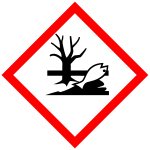
    Hazardous to the aquatic environment, short-term (Acute) - Category Acute 1

    GHS label elements, including precautionary statements

    Pictogram(s)

    Signal word

    Warning

    Hazard statement(s)

    H302 Harmful if swallowed

    H400 Very toxic to aquatic life

    Precautionary statement(s)
    Prevention

    P264 Wash ... thoroughly after handling.

    P270 Do not eat, drink or smoke when using this product.

    P273 Avoid release to the environment.

    Response

    P301+P317 IF SWALLOWED: Get medical help.

    P330 Rinse mouth.

    P391 Collect spillage.

    Storage

    none

    Disposal

    P501 Dispose of contents/container to an appropriate treatment and disposal facility in accordance with applicable laws and regulations, and product characteristics at time of disposal.

    Other hazards which do not result in classification

    no data available

    Handling and Storage

    Precautions for safe handling

    Handling in a well ventilated place. Wear suitable protective clothing. Avoid contact with skin and eyes. Avoid formation of dust and aerosols. Use non-sparking tools. Prevent fire caused by electrostatic discharge steam.

    Conditions for safe storage, including any incompatibilities

    Store the container tightly closed in a dry, cool and well-ventilated place. Store apart from foodstuff containers or incompatible materials.

  • Seller Information
    Business Type:

    Trader

    Main Products:

    Heat Transfer Fluids

    Location:

    Room 6109, 6th Floor, No. 27 Xiaoyun Road, Chaoyang District, Beijing, China

    Payment Terms:

    100% TT in advance

    Average lead Time:

    7

    Total Annual Revenue:

    $10 million-$25 million

    Total Employees:

    101-200

    Year of Establishment:

    2019

    About Us

    Glacier Coolant’s history goes back to 1994, when the founder of Glacier Coolant, Mr Songquan Bai, first invented a fluid, that can solve the problem of most chemical factory facing at that time, that the glycol solution they use to cool their reaction in their process system, corroded the pipe and equipment seriously. This product won favorable comments immediately once putted on the market, and was widely spread in China. It improved the plant operation efficiency in fine chemical factory and API factory.

    Latterly, a series of anti-corrosion products were developed. By 2023, Glacier Coolant has more than 40 products covering a very wide temperature range from -110°C (-166°F) to 340°C (644°F), application industry expand to food and beverages, HVAC, cold storage, data center, fuel cell cooling etc. The product line includes silicon oil and thermal oil, and phase change materials (PCM) are also developed.

    Currently, the company’s manufacturing facility is in Chaoyang, Liaoning, China. We created our Laboratory Service Unit in Beijing to improve research capabilities. Laboratory Service division helps the customer to design the product that can meet their specific requirement and solve the technique problems they are encountering. The center can also provide sample analysis for the products the customer currently use.

  • Inquiry History
    2 Inquiries
    Country Product Purchase Quantity Date Posted
    United Kingdom

    Salicylsalicylic acid

    1 MT Apr 11, 2025
    United States

    Sasapyrine

    10 G Dec 9, 2025
    Post an enquiry for this product
pic ×

Scan the QR Code to Share

All products displayed on this website are only for non-medical purposes such as industrial applications or scientific research, and cannot be used for clinical diagnosis or treatment of humans or animals. They are not medicinal or edible.

According to relevant laws and regulations and the regulations of this website, units or individuals who purchase hazardous materials should obtain valid qualifications and qualification conditions.

The information shown above is provided by the enterprise itself, and the authenticity, accuracy and legitimacy of the content are the responsibility of the publishing company. ECHEMI does not bear any guarantee responsibility for this. Please be aware that risks in internet transactions objectively exist.

Feedback & Suggestions
Send Message

Thank you for your feedback. If you require further assistance, please contact us by email at info@echemi.com or call us at +86-532-55729510.