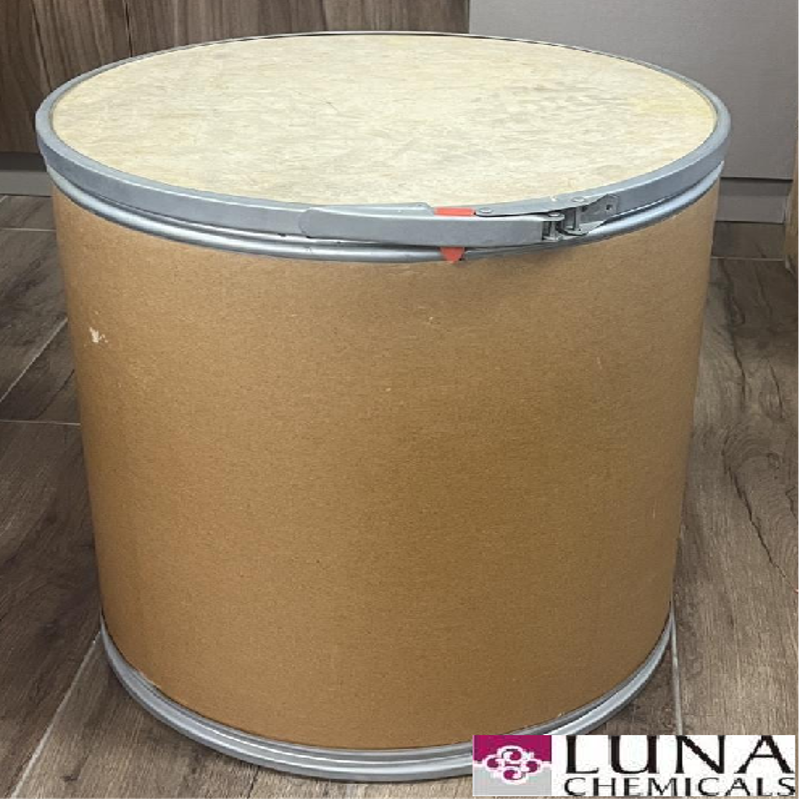
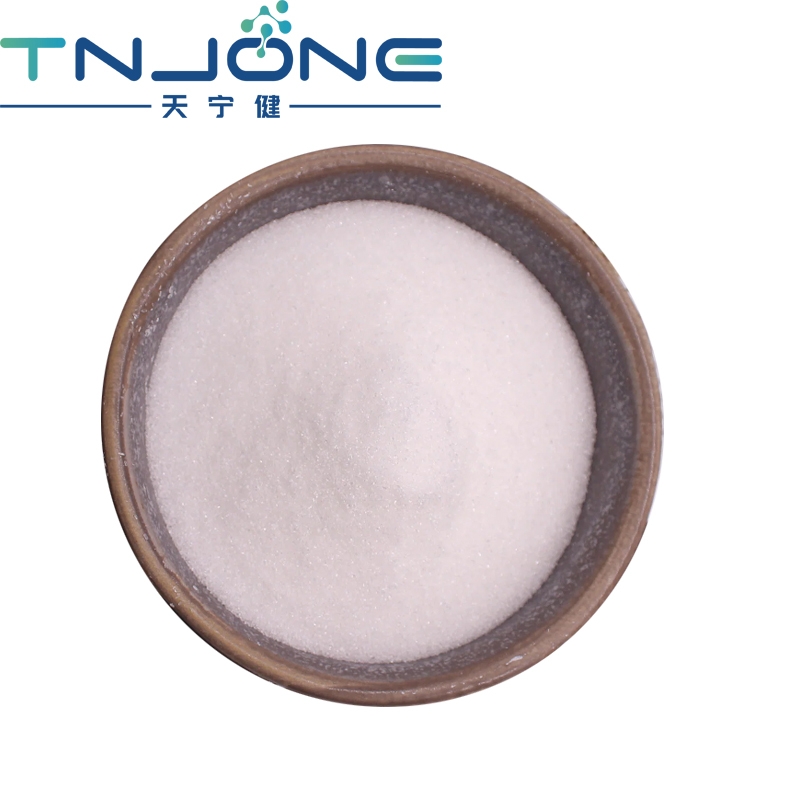
Cosmetic grade urea
263 Inquiries
57-13-6
CHINA
Drum/Customized packaging
Yes
2024-10-01
Heat Transfer Fluids
-
Product Description
-
Seller Information
-
Inquiry History
-
DescriptionECHEMI Editorial ReferenceUrea is a powerful protein denaturant via both direct and indirect mechanisms. A potent emollient and keratolytic agent. Used as a diuretic agent. Blood urea nitrogen (BUN) has been utilized to evaluate renal function[3]. Widely used in fertilizers as a source of nitrogen and is an important raw material for the chemical industry.
Urea appears as solid odorless white crystals or pellets. Density 1.335 g /cc. Noncombustible.|DryPowder; DryPowder, Liquid; Liquid; OtherSolid; OtherSolid, Liquid; PelletsLargeCrystals; PelletsLargeCrystals, Liquid; PelletsLargeCrystals, OtherSolid, Liquid; WetSolid|Colourless to white, prismatic, crystalline powder or small, white pellets|Solid|WHITE CRYSTALS WITH CHARACTERISTIC ODOUR.
Urea appears as solid odorless white crystals or pellets. Density 1.335 g /cc. Noncombustible.|Urea is a carbonyl group with two C-bound amine groups. The commercially available fertilizer has an analysis of 46-0-0 (N-P2O5-K2O). It has a role as a flour treatment agent, a human metabolite, a Daphnia magna metabolite, a Saccharomyces cerevisiae metabolite, an Escherichia coli metabolite, a mouse metabolite and a fertilizer. It is a monocarboxylic acid amide and a one-carbon compound. It derives from a carbonic acid. It is a tautomer of a carbamimidic acid.|A compound formed in the liver from ammonia produced by the deamination of amino acids. It is the principal end product of protein catabolism and constitutes about one half of the total urinary solids.|Urea is a nitrogenous compound containing a carbonyl group attached to two amine groups with osmotic diuretic activity. In vivo, urea is formed in the liver via the urea cycle from ammonia and is the final end product of protein metabolism. Administration of urea elevates blood plasma osmolality, resulting in enhanced flow of water from tissues, including the brain, cerebrospinal fluid and eye, into interstitial fluid and plasma, thereby decreasing pressure in those tissues and increasing urine outflow.Basic Info-
Product Name:
Urea
Other Name:Urea;Carbamide;UR;Isourea;Carbamimidic acid;Carbonyl diamide;Urevert;Ureaphil;Ureophil;Pseudourea;B-I-K;Varioform II;Benural 70;Urepearl;Urea perhydrate;Urepeal;Keratinamin Kowa;Pastaron;Pastaron 20;Pastaron 20 soft;Urepeal L;Pastaron 10;Eucerin 10% Urea Lotion;Optigen 1200;Aquacare;Basodexan;Keratinamin;Aquadrate;Hyanit;Elaqua XX;Onychomal;Nutraplus;NSC 34375;Pastaron soft;Rubinol ST 010;Carmol 40;SGN 250;Uroderm;Ultra Low Biuret Urea;Low Biuret Urea;Duration III;ESN;Optigen II;Uria;Cellton NP;Cellpaste K 4;AUS 32;Onyster;Diesel exhaust fluid;DEF;DEF (diesel exhaust fluid);AdBlue;U 6504;30535-50-3;118548-06-4;860639-56-1;923953-70-2;1202865-46-0;1228376-38-2;1262769-89-0;1637232-71-3;2060607-07-8;2417243-36-6
CAS No.:57-13-6
Molecular Formula:CH4N2O
InChIKeys:InChIKey=XSQUKJJJFZCRTK-UHFFFAOYSA-N
Molecular Weight:60.05530
Exact Mass:60.06
EC Number:200-315-5
UNII:8W8T17847W
ICSC Number:0595
NSC Number:757375|34375
DSSTox ID:DTXSID4021426
NCI Thesaurus Code:C29531
Color/Form:White crystals or powder|Tetragonal prisms
ATC Code:B - Blood and blood forming organs|D - Dermatologicals
HScode:3102100001
Categories:
Characteristics-
PSA:
69.11000
XLogP3:-1.4
Appearance:white powder
Density:1.3230 g/cm3 @ Temp: 20 °C
Melting Point:132.70 °C
Boiling Point:317-389 °C
Flash Point:53.7±22.6 °C
Refractive Index:1.528
Water Solubility:1080 g/L (20 ºC)
Vapor Pressure:<0.1 hPa (20 °C)
Toxicity:LD50 orally in Rabbit: 8471 mg/kg LD50 dermal Rat 8200 mg/kg
Explosive limit:Reacts with sodium hypochlorite or calcium hypochlorite to form the explosive nitrogen trichloride.
Odor:MAY GRADUALLY DEVELOP SLIGHT ODOR OF AMMONIA, ESP IN PRESENCE OF MOISTURE
Taste:Cooling, saline taste
PH:7.2 (10% solution)
PKA:0.1(at 21 °C)
Dissociation Constants:pKa = 0.10 at 21 °C (conjugate acid)
Air and Water Reactions:Water soluble.
Reactive Group:Amides and Imides
Reactivity Profile:UREA is a weak base. Reacts with hypochlorites to form nitrogen trichloride which explodes spontaneously in air [J. Am. Chem. Soc. 63:3530-32]. Same is true for phosphorus pentachloride. It reacts with azo and diazo compounds to generate toxic gases. Reacts with strong reducing agents to form flammable gases (hydrogen). The heating of improper stoichiometric amounts of urea and sodium nitrite lead to an explosion. Heated mixtures of oxalic acid and urea yielded rapid evolution of gases, carbon dioxide, carbon monoxide and ammonia (if hot, can be explosive). Titanium tetrachloride and urea slowly formed a complex during 6 weeks at 80° C, decomposed violently at 90 C, [Chem. Abs., 1966, 64, 9219b]. Urea ignites spontaneously on stirring with nitrosyl perchlorate due to the formation of the diazonium perchlorate. Oxalic acid and urea react at high temperatures to form toxic and flammable ammonia and carbon monoxide gases, and inert CO2 gas [Von Bentzinger, R. et al., Praxis Naturwiss. Chem., 1987, 36(8), 41-42].
Autoignition Temperature:Not flammable (USCG, 1999)
Hazard IdentificationClassification of the substance or mixture
Not classified.
GHS label elements, including precautionary statements
Pictogram(s) No symbol. Signal word No signal word
Hazard statement(s) none
Precautionary statement(s) Prevention none
Response none
Storage none
Disposal none
Other hazards which do not result in classification
no data available
Handling and StoragePrecautions for safe handling
Handling in a well ventilated place. Wear suitable protective clothing. Avoid contact with skin and eyes. Avoid formation of dust and aerosols. Use non-sparking tools. Prevent fire caused by electrostatic discharge steam.
Conditions for safe storage, including any incompatibilities
Separated from incompatible materials. See Chemical Dangers.
-
-
Seller Information
-
Business Type:
Trader
-
Main Products:
Heat Transfer Fluids
-
Location:
Room 6109, 6th Floor, No. 27 Xiaoyun Road, Chaoyang District, Beijing, China
-
Payment Terms:
100% TT in advance
-
Average lead Time:
7 days
-
Total Annual Revenue:
$10 million-$25 million
-
Total Employees:
101-200
-
Year of Establishment:
2019
-
-
Inquiry History263 Inquiries
Country Product Purchase Quantity Date Posted  Israel
Feed grade urea content 99% 57-13-6
500 MT Nov 8, 2023  Germany
Carbamide
450 TON Jun 14, 2024  Netherlands
Urea
1 MT May 28, 2026  Brazil
Feed Grade Urea
28 MT Jan 12, 2024  Hongkong, China
Prilled urea
20000 MT Apr 14, 2025
Hongkong, China
urea
20000 MT Apr 14, 2025  United Kingdom
urea
1 20' Fcl Feb 28, 2024  United States
Fertilizer
20 MT Aug 22, 2025  India
India
Urea
500 KG Sep 21, 2026
India
Urea
500 KG Sep 18, 2026
United Kingdom
UREA granular fertilizer. Product name: CH4N2O
3 40' Fcl Mar 24, 2026
United Kingdom
UREA granular fertilizer. Product name: CH4N2O
3 40' Fcl Mar 26, 2026
Brazil
Feed grade urea
1 40' Fcl Feb 28, 2024  Finland
Urea
25000 MT Oct 12, 2026  Russia
Urea
3 PCS Oct 10, 2026  Greece
Urea 40%
10.00 L Oct 8, 2026
United Kingdom
Automotive grade Urea
500 MT Oct 5, 2026  Lithuania
Urea
1 MT Oct 2, 2026  United Arab Emirates
Urea
50000 MT Sep 24, 2026  Bangladesh
Urea Formaldehyde 85%
1200 MT Sep 23, 2026 Post an enquiry for this product


More from this Seller




Hot Related Products
-
 TCCA 90% Trichloroisocyanuric Acid
 -
 TCCA 90% Trichloroisocyanuric Acid Chlorine Tablet Granular Powder for swimming pool
 -
 Potassium chloride ClK
$40-50/KG FOB
-
 Ammonium Chloride 99.5% white powder JD-AC995-FG JD
 -
 Industrial Grade 99.8% Glacial Acetic Acid for Multiple Industrial Manufacturing
 -
 Chinese high-quality acetic acid supplier
 -
 Glacial Acetic Acid 99.9%
 -
 Pharmacy Grade MELAMINE
$5.5-7/KG FOB
-
 TCCA 90%
 -
 Hot Selling Veterinary Medicine Nacl CAS7647-14-5 Sodium Chloride