


Tiglic Acid 99%
TDS 3 Inquiries
80-59-1
Food Grade
99%
shanghai
zhishang
25kg
2027-11-30

Agrochemicals,Daily Chemicals,Catalysts & Chemical Auxiliary Agents,Extract,Inorganic Chemicals,Organic Intermediate
-
Product Description
-
Seller Information
-
Inquiry History
-
DescriptionECHEMI Editorial ReferenceTiglic acid is a monocarboxylic unsaturated organic acid found in croton oil and in several other natural products. Tiglic aci has a role as a plant metabolite[1].
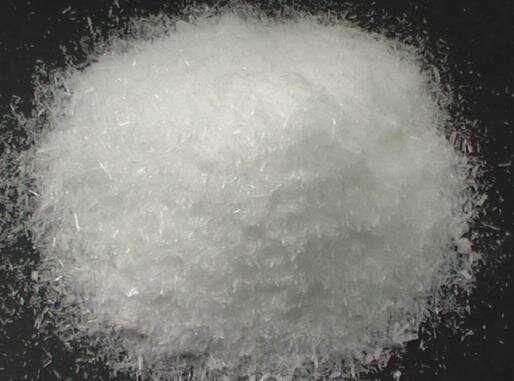
Tiglic acid, [corrosive solid] appears as a white lustrous flaked solid with a fruity or spicy odor. About the same density as water and slightly soluble in water. May burn if heated to high temperatures. May severely irritate skin, eyes, lungs or mucous membranes.|Solid|White crystalline solid; sweet, warm, spicy aroma
Tiglic acid, [corrosive solid] appears as a white lustrous flaked solid with a fruity or spicy odor. About the same density as water and slightly soluble in water. May burn if heated to high temperatures. May severely irritate skin, eyes, lungs or mucous membranes.|Tiglic acid is a 2-methylbut-2-enoic acid having its double bond in trans-configuration. It has a role as a plant metabolite. It derives from a crotonic acid.Certificates-
 TDS
TDS
Basic Info-
Product Name:
Tiglic acid
Other Name:2-Butenoic acid,2-methyl-,(2E)-;Crotonic acid,2-methyl-,(E)-;Tiglic acid;2-Butenoic acid,2-methyl-,(E)-;(2E)-2-Methyl-2-butenoic acid;Cevadic acid;trans-α,β-Dimethylacrylic acid;trans-2,3-Dimethylacrylic acid;trans-2-Methyl-2-butenoic acid;trans-2-Methylcrotonic acid;(E)-2-Methylcrotonic acid;Tiglinic acid;(E)-2,3-Dimethylacrylic acid;(E)-α-Methylcrotonic acid;(E)-2-Methyl-2-butenoic acid;NSC 44235;NSC 8999
CAS No.:80-59-1
Molecular Formula:C5H8O2
InChIKeys:InChIKey=UIERETOOQGIECD-ONEGZZNKSA-N
Molecular Weight:100.12
Exact Mass:100.12
BRN:1236500
EC Number:201-295-0
UNII:I5792N03HC
NSC Number:44235|8999
UN Number:3261
Color/Form:Triclinic plates, rods from water|Thick, syrupy liquid or colorless crystals|Tablets
HScode:29161980
Categories:
Characteristics-
PSA:
37.3
XLogP3:1
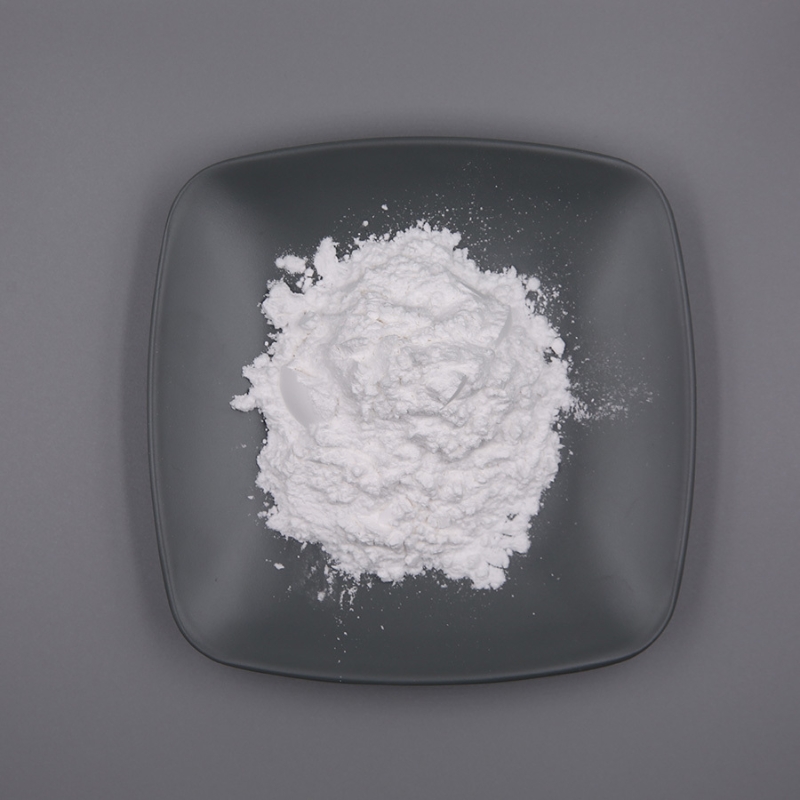
Appearance:White to beige Crystalline Powder and Chunks
Density:0.9427 g/cm3 @ Temp: 99.5 °C
Melting Point:64.5 °C
Boiling Point:198.5 °C
Flash Point:101°C
Refractive Index:1.451
Water Solubility:soluble in hot water
Storage Conditions:Refrigerator (+4°C)
Vapor Pressure:1.33X10⁻¹ mm Hg at 25 deg C
Explosive limit:This material is capable of creating a dust explosion.
Odor:Spicey
Henrys Law Constant:Henry's Law constant = 7.1X10⁻⁷ atm-cu m/mole at 25 °C (est)
Dissociation Constants:pKa = 4.96 at 18 °C|pk = 5.02 at 25 °C
Experimental Properties:Volatile with steam|Combustible|Liquid; density: 0.9498 at 20 °C/4 °C; boiling point: 139.6 °C at 766 mm Hg; index of refraction: 1.4370 at 20 °C/D. /Methyl ester/|Liquid; density: 0.9247 at 20 °C/4 °C; boiling point: 156 °C at 752 mm Hg, 55.5 °C at 11 mm Hg; index of refraction: 1.4350 at 20 °C/D; heat of formation: 953.2 kilocalories at constant volume, 954.4 kilocalories at constant pressure. /Ethyl ester/|Liquid; pleasant odor; density: 0.9279 at 15 °C/15 °C; boiling point: 149-151 °C at 7 mm Hg. /Geranyl ester/|Leaflets; much less soluble in water than calcium angelate: 100 parts of aqueous solution saturated at 17 °C contains 6.05 parts of anhydrous calcium tiglate. /Calcium salt trihydrate/|Hydroxyl radical reaction rate constant = 3.1X10⁻¹¹ cu cm/molecule-sec at 25 °C (est)
Air and Water Reactions:Slightly soluble in water.
Reactive Group:Acids, Carboxylic
Reactivity Profile:TIGLIC ACID is a carboxylic acid. Carboxylic acids donate hydrogen ions if a base is present to accept them. They react in this way with all bases, both organic (for example, the amines) and inorganic. Their reactions with bases, called "neutralizations", are accompanied by the evolution of substantial amounts of heat. Neutralization between an acid and a base produces water plus a salt. Carboxylic acids in aqueous solution and liquid or molten carboxylic acids can react with active metals to form gaseous hydrogen and a metal salt. Such reactions occur in principle for solid carboxylic acids as well, but are slow if the solid acid remains dry. Even "insoluble" carboxylic acids may absorb enough water from the air and dissolve sufficiently in it to corrode or dissolve iron, steel, and aluminum parts and containers. Carboxylic acids, like other acids, react with cyanide salts to generate gaseous hydrogen cyanide. The reaction is slower for dry, solid carboxylic acids. Insoluble carboxylic acids react with solutions of cyanides to cause the release of gaseous hydrogen cyanide. Flammable and/or toxic gases and heat are generated by the reaction of carboxylic acids with diazo compounds, dithiocarbamates, isocyanates, mercaptans, nitrides, and sulfides. Carboxylic acids, especially in aqueous solution, also react with sulfites, nitrites, thiosulfates (to give H2S and SO3), dithionites (SO2), to generate flammable and/or toxic gases and heat. Their reaction with carbonates and bicarbonates generates a harmless gas (carbon dioxide) but still heat. Like other organic compounds, carboxylic acids can be oxidized by strong oxidizing agents and reduced by strong reducing agents. These reactions generate heat. A wide variety of products is possible. Like other acids, carboxylic acids may initiate polymerization reactions; like other acids, they often catalyze (increase the rate of) chemical reactions.
Heat of Combustion:Molar heat of combusion: 635.1 kilocalories
Critical Temperature & Pressure:Critical temperature: 680.62 K; critical pressure: 4857.97 kPa (est)
Hazard IdentificationClassification of the substance or mixture
Skin irritation, Category 2
Eye irritation, Category 2
GHS label elements, including precautionary statements
Pictogram(s) 
Signal word Warning
Hazard statement(s) H315 Causes skin irritation
H319 Causes serious eye irritation
Precautionary statement(s) Prevention P264 Wash ... thoroughly after handling.
P280 Wear protective gloves/protective clothing/eye protection/face protection/hearing protection/...
Response P302+P352 IF ON SKIN: Wash with plenty of water/...
P321 Specific treatment (see ... on this label).
P332+P317 If skin irritation occurs: Get medical help.
P362+P364 Take off contaminated clothing and wash it before reuse.
P305+P351+P338 IF IN EYES: Rinse cautiously with water for several minutes. Remove contact lenses, if present and easy to do. Continue rinsing.
Storage none
Disposal none
Other hazards which do not result in classification
no data available
Handling and StoragePrecautions for safe handling
Handling in a well ventilated place. Wear suitable protective clothing. Avoid contact with skin and eyes. Avoid formation of dust and aerosols. Use non-sparking tools. Prevent fire caused by electrostatic discharge steam.
Conditions for safe storage, including any incompatibilities
Keep tightly closed. Store at 2-8 deg C.
-
-
Seller Information
-
Business Type:
Manufactory
-
Main Products:
Agrochemicals,Daily Chemicals,Catalysts & Chemical Auxiliary Agents,Extract,Inorganic Chemicals,Organic Intermediate
-
Location:
hisense intelligence valley,no 2116,of phoenix road
-
Payment Terms:
TT against copy of documents,D/P,L/C
-
Average lead Time:
7
-
Total Annual Revenue:
Less than $1 million
-
Total Employees:
11-50
-
Year of Establishment:
2017
-
-
Inquiry History3 Inquiries
Country Product Purchase Quantity Date Posted  India
India
TIGLIC ACID
10 MT Feb 9, 2026
India
Tiglic acid
10 MT Feb 11, 2026  United States
Tiglic Acid 99%
25 KG Oct 12, 2025 Post an enquiry for this product