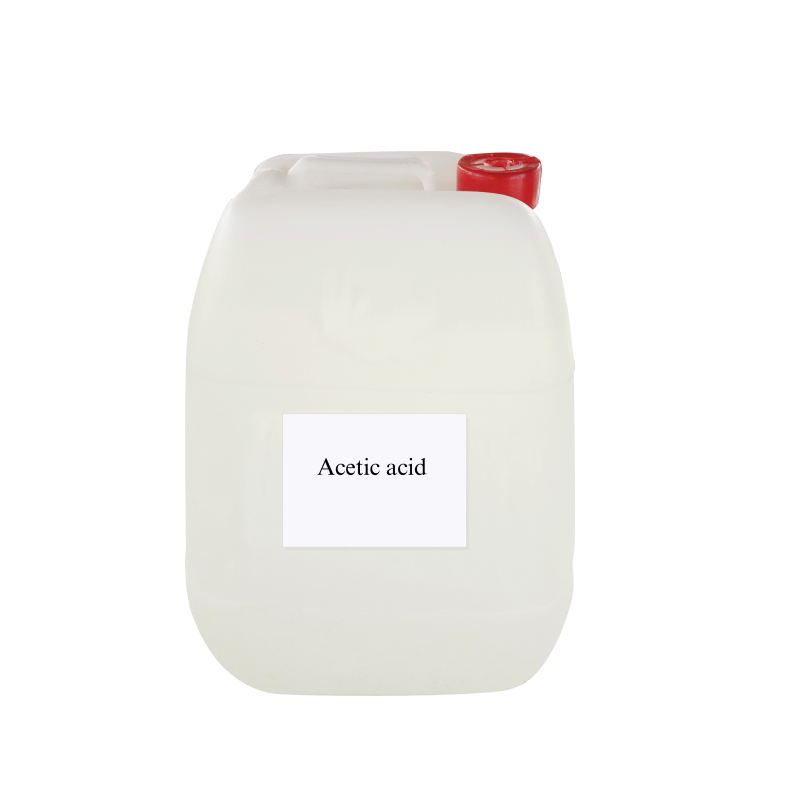
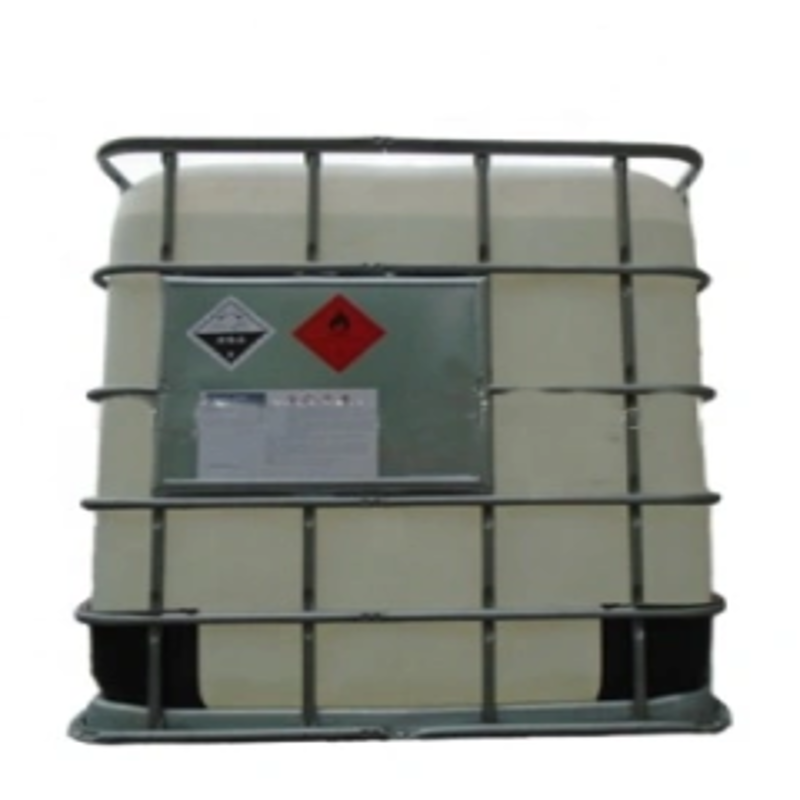
Acetyl chloride,CAS 75-36-5
3 Inquiries
75-36-5
Shang hai
Reagent packaging
Yes
2025-11-06

Agrochemicals,Daily Chemicals,Catalysts & Chemical Auxiliary Agents,Extract,Inorganic Chemicals,Organic Intermediate
-
Product Description
-
Seller Information
-
Inquiry History
-
DescriptionECHEMI Editorial ReferenceIt appears as colorless transparent liquid smoke with irritating smell. It is miscible with ether, acetic acid and benzene.
Acetyl chloride, CH3COCl is an acid chloride derived from acetic acid. It belongs to the class of organic compounds called acyl halides. It is a colorless, corrosive, volatile liquid.
Acetyl chloride appears as a colorless, fuming liquid with a pungent odor. Density 9.2 lb / gal. Flash point 40°F. Vapor, which is heavier than air, irritates the eyes and mucous membranes. Corrosive to metals and tissue .|COLOURLESS FUMING LIQUID WITH PUNGENT ODOUR.
Acetyl chloride appears as a colorless, fuming liquid with a pungent odor. Density 9.2 lb / gal. Flash point 40°F. Vapor, which is heavier than air, irritates the eyes and mucous membranes. Corrosive to metals and tissue .|Acetyl chloride is an acyl chloride. It derives from an acetic acid.Basic Info-
Product Name:
Acetyl chloride
Other Name:Acetyl chloride;Ethanoyl chloride;Acetic chloride;Acetic acid chloride
CAS No.:75-36-5
Molecular Formula:C2H3ClO
InChIKeys:InChIKey=WETWJCDKMRHUPV-UHFFFAOYSA-N
Molecular Weight:78.5
Exact Mass:78.50
BRN:605303
EC Number:200-865-6
UNII:QD15RNO45K
ICSC Number:0210
UN Number:1717
DSSTox ID:DTXSID2023852
Color/Form:Liquid|Colorless fuming liquid
HScode:2915900090
Categories:
Characteristics-
PSA:
17.1
XLogP3:-0.47
Appearance:Clear colorless Liquid
Density:1.1051 g/cm3 @ Temp: 20 °C
Melting Point:-112 °C
Boiling Point:52 °C
Flash Point:40 °F
Refractive Index:1.379
Water Solubility:Miscible with acetone, chloroform, glacial acetic acid, petroleum ether, ether and benzene.
Storage Conditions:Store at RT
Vapor Pressure:11.69 psi ( 20 °C)
Vapor Density:2.7 (vs air)
Toxicity:Oral-Rat LD50: 910 mg/kg
Flammability characteristics:Inflammable in case of fire, high temperature and oxidant; decomposes toxic phosgene in high heat; emits toxic chloride fumes in water
Explosive limit:7.3-19%(V)
Odor:Pungent odor
OH:9.10e-15 cm3/molecule*sec
Experimental Properties:Decomposed violently by water or alcohol|Highly refractive|Ratio of specific heats of vapor (gas): 1.1467|Liquid heat capacity: 0.350 Btu/lb-F at 70 °F|For more Other Experimental Properties (Complete) data for Acetyl chloride (8 total), please visit the HSDB record page.
Air and Water Reactions:Highly flammable. Fumes in air. Reacts violently with water producing heat and acidic HCl [Merck 11th ed. 1989]. Acetyl chloride reacts vigorously with water to generate gaseous HCl. Based on a scenario where the chemical is spilled into an excess of water (at least 5 fold excess of water), half of the maximum theoretical yield of Hydrogen Chloride gas will be created in 0.11 minutes. Experimental details are in the following: "Development of the Table of Initial Isolation and Protective Distances for the 2008 Emergency Response Guidebook", ANL/DIS-09-2, D.F. Brown, H.M. Hartmann, W.A. Freeman, and W.D. Haney, Argonne National Laboratory, Argonne, Illinois, June 2009.
Reactive Group:Acyl Halides, Sulfonyl Halides, and Chloroformates
Reactivity Alerts:Highly Flammable
Reactivity Profile:ACETYL CHLORIDE reacts violently with water, steam, methanol or ethanol to form hydrogen chloride and acetic acid. Reacts vigorously with bases, both organic and inorganic. Incompatible with oxidizing agents and alcohols. Produces highly toxic fumes of phosgene gas and chlorine when heated to decomposition [Sax, 9th ed., 1996, p. 35]. Reaction in a confined space with even a small amount of water may cause a violent eruption of gases [Bretherick, 5th ed., 1995, p. 281]. Vapor forms an explosive mixture with air [Kirk-Othmer, 3rd ed., Vol. 1, 1978, p. 162]. Polymerization reaction with dimethyl sulfoxide is particularly violent [Buckley, A., J. Chem. Ed., 1965, 42, p. 674]. May react vigorously or explosively if mixed with diisopropyl ether or other ethers in the presence of trace amounts of metal salts [J. Haz. Mat., 1981, 4, 291].
Autoignition Temperature:734 °F (USCG, 1999)|734 °F (390 °C)|390 °C
Heat of Combustion:-6,000 btu/lb = -3,000 cal/g = -140X10X5 J/kg
Flammable Limits:Lower: 5.0% by volume
Physical Dangers:The vapour is heavier than air and may travel along the ground; distant ignition possible.
Corrosivity:Corrosive|Corrosive to metals and tissue
Heat of Vaporization:160 btu/Lb = 88 cal/g = 3.7X10X5 J/kg
Critical Temperature & Pressure:Critical temperature: 475 °F = 246 °C = 519 deg K; Critical pressure: 845 psia = 57.5 atm = 5.83 MN/sq m
Hazard IdentificationClassification of the substance or mixture
Flammable liquids, Category 2
Skin corrosion, Sub-category 1B
GHS label elements, including precautionary statements
Pictogram(s) 

Signal word Danger
Hazard statement(s) H225 Highly flammable liquid and vapour
H314 Causes severe skin burns and eye damage
Precautionary statement(s) Prevention P210 Keep away from heat, hot surfaces, sparks, open flames and other ignition sources. No smoking.
P233 Keep container tightly closed.
P240 Ground and bond container and receiving equipment.
P241 Use explosion-proof [electrical/ventilating/lighting/...] equipment.
P242 Use non-sparking tools.
P243 Take action to prevent static discharges.
P280 Wear protective gloves/protective clothing/eye protection/face protection/hearing protection/...
P260 Do not breathe dust/fume/gas/mist/vapours/spray.
P264 Wash ... thoroughly after handling.
Response P303+P361+P353 IF ON SKIN (or hair): Take off immediately all contaminated clothing. Rinse affected areas with water [or shower].
P370+P378 In case of fire: Use ... to extinguish.
P301+P330+P331 IF SWALLOWED: Rinse mouth. Do NOT induce vomiting.
P363 Wash contaminated clothing before reuse.
P304+P340 IF INHALED: Remove person to fresh air and keep comfortable for breathing.
P316 Get emergency medical help immediately.
P321 Specific treatment (see ... on this label).
P305+P351+P338 IF IN EYES: Rinse cautiously with water for several minutes. Remove contact lenses, if present and easy to do. Continue rinsing.
Storage P403+P235 Store in a well-ventilated place. Keep cool.
P405 Store locked up.
Disposal P501 Dispose of contents/container to an appropriate treatment and disposal facility in accordance with applicable laws and regulations, and product characteristics at time of disposal.
Other hazards which do not result in classification
no data available
Handling and StoragePrecautions for safe handling
NO open flames, NO sparks and NO smoking. NO contact with hot surfaces. Closed system, ventilation, explosion-proof electrical equipment and lighting. Prevent build-up of electrostatic charges (e.g., by grounding). Do NOT use compressed air for filling, discharging, or handling. Use non-sparking handtools. Handling in a well ventilated place. Wear suitable protective clothing. Avoid contact with skin and eyes. Avoid formation of dust and aerosols. Use non-sparking tools. Prevent fire caused by electrostatic discharge steam.
Conditions for safe storage, including any incompatibilities
Fireproof. Separated from incompatible materials. See Chemical Dangers. Dry. Well closed.Separate from alcohols, alkalies, amines, and strong oxidizing materials. Store in a cool, dry well-ventilated location. Outside or detached storage is preferred. Inside storage should be in a standard flammable liquids storage warehouse, room, or cabinet.
-
-
Seller Information
-
Business Type:
Manufactory
-
Main Products:
Agrochemicals,Daily Chemicals,Catalysts & Chemical Auxiliary Agents,Extract,Inorganic Chemicals,Organic Intermediate
-
Location:
9F/TOWER B DANING MUSIC PLAZA NO.777, WANRONG ROAD JINGAN, DISTRICT, SHANGHAI, R.P. CHINA
-
Payment Terms:
TT against copy of documents,D/P,L/C,TT against B/L draft before shipment,100% TT in advance
-
Average lead Time:
14 days
-
Total Annual Revenue:
$2.5 million-$5 million
-
Total Employees:
5-10
-
Year of Establishment:
2022
-
-
Inquiry History3 Inquiries
Country Product Purchase Quantity Date Posted  Canada
Acetyl chloride
100 G Jun 15, 2026  Bangladesh
Hot selling high quality paracetamol 99% white powder 103-90-2 Ainuodi
70 MT Oct 20, 2023
Canada
Acetyl chloride
500 G Oct 1, 2026 Post an enquiry for this product
More from this Seller



Hot Related Products
-
 Industrial Grade 99.8% Glacial Acetic Acid for Multiple Industrial Manufacturing
 -
 Chinese high-quality acetic acid supplier
 -
 Glacial Acetic Acid 99.9%
 -
 Carbonyl Acetic Acid
 -
 Glacial Acetic Acid Colorless liquid SNC | Good Fortune
 -
 Acetic Acid.
 -
 Glacial Acetic Acid,Colorless clearliquid with pungent smello
 -
 Glacial Acetic Acid,64-19-7
 -
 Natural Acetic Acid 99%
 -
 acetic acid CAS 64-19-7") 99.8%( Glacial) acetic acid CAS 64-19-7
99.8%( Glacial) acetic acid CAS 64-19-7