






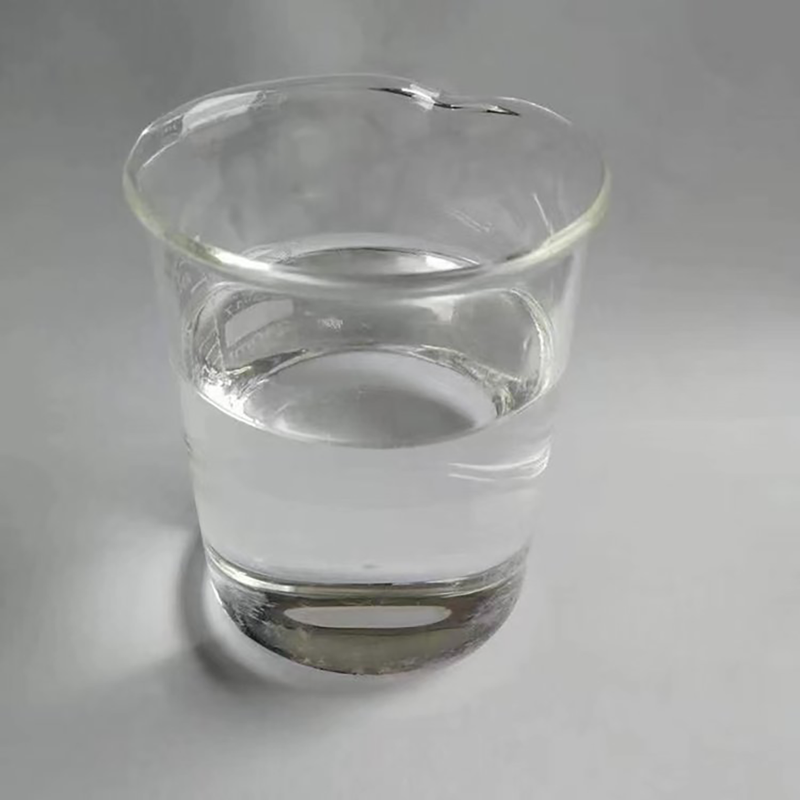


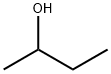
2-Butanol CAS: 78-92-2
TDS 1 Inquiries
78-92-2
Food Grade
99%
SHANGHAI
Orient
25kg/bag,500kg/bag, customized
2025-12-25

pharmaceutical intermediates,peptides,electronic chemicals
-
Product Description
-
Seller Information
-
Inquiry History
-
DescriptionCertificatesBasic Info
-
Product Name:
(±)-2-Butanol
Other Name:2-Butanol;sec-Butyl alcohol;CCS 301;sec-Butanol;Ethylmethyl carbinol;2-Hydroxybutane;Methylethylcarbinol;3-Butanol;1-Methyl-1-propanol;1-Methylpropyl alcohol;s-Butanol;s-Butyl alcohol;dl-sec-Butanol;dl-Methylethylcarbinol;DL-Butan-2-ol;(±)-2-Butanol;Racemic-2-butanol;NSC 25499;15892-23-6
CAS No.:78-92-2
Molecular Formula:C4H10O
InChIKeys:InChIKey=BTANRVKWQNVYAZ-UHFFFAOYSA-N
Molecular Weight:74.12
Exact Mass:74.12
BRN:1718765
EC Number:201-158-5
ICSC Number:0112
NSC Number:25499
UN Number:1120
DSSTox ID:DTXSID9021762
Color/Form:Colorless liquid
HScode:29051490
Categories:
Characteristics-
PSA:
20.2
XLogP3:0.6
Appearance:Colorless Liquid
Density:0.8063 g/cm3 @ Temp: 20 °C
Melting Point:-114 °C
Boiling Point:99.5 °C
Flash Point:80 °F
Refractive Index:1.393
Water Solubility:H2O: 12.5 g/100 mL (20 ºc)
Storage Conditions:Flammables area
Vapor Pressure:12.5 mm Hg ( 20 °C)
Vapor Density:2.6 (vs air)
Toxicity:Oral-Rat LD50: 6480 mg/kg; Intravenous-Mouse LD50: 764 mg/kg
Flammability characteristics:It is flammable in case of open flame, high temperature, oxidant; burning produces irritating smoke; spontaneous combustion in contact with chromium trioxide
Explosive limit:1.4-9.8%(V)
Odor:HAS A STRONG VINOUS ODOR
OH:9.60e-12 cm3/molecule*sec
Henrys Law Constant:9.06e-06 atm-m3/mole|Henry's Law constant = 9.06X10⁻⁶ atm-cu m/mol @ 25 °C
Dissociation Constants:pKa = 17.6
Experimental Properties:IT EXISTS AS D, L, & DL ISOMERS|Saturated concn in air: 52 g/cu m @ 20 °C; 94 g/cu m @ 30 °C|Liquid heat capacity: 0.580 BTU/lb-F at 75 °F; Liquid thermal conductivity: 0.938 BTU-inch/hr-sq ft-F at 75 °F; Ideal gas heat capacity: 0.368 BTU/lb-F at 75 °F|Ionization potential= 10 eV|For more Other Experimental Properties (Complete) data for SEC-BUTYL ALCOHOL (13 total), please visit the HSDB record page.
Air and Water Reactions:Highly flammable. Soluble in water.
Reactive Group:Alcohols and Polyols
Reactivity Alerts:Highly Flammable
Reactivity Profile:Attacks plastics. [Handling Chemicals Safely 1980. p. 236]. Acetyl bromide reacts violently with alcohols or water (Merck 11th ed. 1989). Mixtures of alcohols with concentrated sulfuric acid and strong hydrogen peroxide can cause explosions. Example: An explosion will occur if dimethylbenzylcarbinol is added to 90% hydrogen peroxide then acidified with concentrated sulfuric acid. Mixtures of ethyl alcohol with concentrated hydrogen peroxide form powerful explosives. Mixtures of hydrogen peroxide and 1-phenyl-2-methyl propyl alcohol tend to explode if acidified with 70% sulfuric acid [Chem. Eng. News 45(43):73 1967; J, Org. Chem. 28:1893 1963]. Alkyl hypochlorites are violently explosive. They are readily obtained by reacting hypochlorous acid and alcohols either in aqueous solution or mixed aqueous-carbon tetrachloride solutions. Chlorine plus alcohols would similarly yield alkyl hypochlorites. They decompose in the cold and explode on exposure to sunlight or heat. Tertiary hypochlorites are less unstable than secondary or primary hypochlorites [NFPA 491 M 1991]. Base-catalysed reactions of isocyanates with alcohols should be carried out in inert solvents. Such reactions in the absence of solvents often occur with explosive violence [Wischmeyer 1969].
Peroxide Forming Chemical:2-Butanol|B: Compounds that form peroxides on concentration (distillation/evaporation)|11 samples had 3 to > 1000 ppm, age > 1 yr|Kelly|An explosion occured during the distillation of a 10 yr old sample of the alcohol (the sample contained 12% peroxides). Another explosion of a 12 yr old sample occured during distillation. See Bretherick's.|Posdev, V. S. et al., Chem. Abs., 1977, 86, 194347
Autoignition Temperature:763 °F (406 °C) (IN AIR); 711 °F (377 °C) (IN OXYGEN)|406 °C
Heat of Combustion:-15,500 BTU/lb= -8600 cal/g= -360x10+5 J/kg
Ionization Potential:10.10 eV
Flammable Limits:Lower flammable limit: 1.7% by volume at 212 °F (100 °C); Upper flammable limit: 9.8% by volume at 212 °F (100 °C)|Class IC Flammable Liquid: Fl.P. at or above 73°F and below 100°F.
Corrosivity:sec-Butyl alcohol will attack some forms of plastics, rubber, and coatings.
Heat of Vaporization:49.72 kJ/mol @ 25 °C
Critical Temperature & Pressure:Critical temperature: 536.2 K; critical pressure: 4.202 MPa
Hazard IdentificationClassification of the substance or mixture
Flammable liquids, Category 3
Eye irritation, Category 2
Specific target organ toxicity â single exposure, Category 3
Specific target organ toxicity â single exposure, Category 3
GHS label elements, including precautionary statements
Pictogram(s) 

Signal word Warning
Hazard statement(s) H226 Flammable liquid and vapour
H319 Causes serious eye irritation
H335 May cause respiratory irritation
H336 May cause drowsiness or dizziness
Precautionary statement(s) Prevention P210 Keep away from heat, hot surfaces, sparks, open flames and other ignition sources. No smoking.
P233 Keep container tightly closed.
P240 Ground and bond container and receiving equipment.
P241 Use explosion-proof [electrical/ventilating/lighting/...] equipment.
P242 Use non-sparking tools.
P243 Take action to prevent static discharges.
P280 Wear protective gloves/protective clothing/eye protection/face protection/hearing protection/...
P264 Wash ... thoroughly after handling.
P261 Avoid breathing dust/fume/gas/mist/vapours/spray.
P271 Use only outdoors or in a well-ventilated area.
Response P303+P361+P353 IF ON SKIN (or hair): Take off immediately all contaminated clothing. Rinse affected areas with water [or shower].
P370+P378 In case of fire: Use ... to extinguish.
P305+P351+P338 IF IN EYES: Rinse cautiously with water for several minutes. Remove contact lenses, if present and easy to do. Continue rinsing.
P304+P340 IF INHALED: Remove person to fresh air and keep comfortable for breathing.
P319 Get medical help if you feel unwell.
Storage P403+P235 Store in a well-ventilated place. Keep cool.
P403+P233 Store in a well-ventilated place. Keep container tightly closed.
P405 Store locked up.
Disposal P501 Dispose of contents/container to an appropriate treatment and disposal facility in accordance with applicable laws and regulations, and product characteristics at time of disposal.
Other hazards which do not result in classification
no data available
Handling and StoragePrecautions for safe handling
NO open flames, NO sparks and NO smoking. Above 24°C use a closed system, ventilation and explosion-proof electrical equipment. Handling in a well ventilated place. Wear suitable protective clothing. Avoid contact with skin and eyes. Avoid formation of dust and aerosols. Use non-sparking tools. Prevent fire caused by electrostatic discharge steam.
Conditions for safe storage, including any incompatibilities
Fireproof. Separated from strong oxidants and aluminium.... STORE IN PLACES THAT ARE COOL ... PROVIDE ADEQUATE VENTILATION ... LOCATE ... STORAGE AREA WELL AWAY FROM AREAS OF FIRE HAZARD ... KEEP ... FROM POWERFUL OXIDIZING AGENTS ... EXPLOSIVES, OR MATERIALS WHICH REACT WITH AIR OR MOISTURE TO EVOLVE HEAT.
-
-
Seller Information
-
Business Type:
Trader
-
Main Products:
pharmaceutical intermediates,peptides,electronic chemicals
-
Location:
Room 102, 1st Floor, East Office Building, No. 45 Pengwan Road, Qianwan Bonded Port Area, Qingdao Zone, China (Shandong) Pilot Free Trade Zone
-
Payment Terms:
100% TT in advance
-
Average lead Time:
10
-
Total Annual Revenue:
$10 million-$25 million
-
Total Employees:
51-100
-
Year of Establishment:
2024
-
-
Inquiry History1 Inquiries
Country Product Purchase Quantity Date Posted  India
India
2-Butanol
1 PCS Jul 24, 2026 Post an enquiry for this product


Hot Related Products
-
 1-BUTENE WITH HIGH QUALITY 99.3% COLORLESS GAS XL N-BUTENE SIRLOONG
 -
 1-butylene 99.5%
 -
 Diisopropyl ether 108-20-3
 -
 tert-Butanol 99% Liquid 199-1-z Pharma;Conutrix
 -
 Diisopropyl Ether CAS NO.108-20-3 Industrial Grade 99% High Quality Intermediates
 -
 A quality supplier of n-butane 98% Colorless transparent liquid N-butane R600 Sirloong


