1. Description
Chemical Properties: N-Acetyl Semax Amidate is an ACTH-derived septapeptide compound with the core amino acid sequence Ac-Met-Glu-His-Phe-Pro-Gly-Pro-NH₂ (N-terminally acetylated, C-terminally amidated), representing the core neuroactive segment of the ACTH molecule (excluding the corticotropin-releasing hormone activity portion). Its primary target is the corresponding receptor on the surface of brain neurons, exerting effects by regulating neurotrophic factor expression and inflammatory pathways. Chemically stable, it exhibits significantly higher resistance to peptidase hydrolysis than natural ACTH fragments, with a half-life extended by 4-6 times. It remains stable and resistant to degradation within a pH range of 5.0-7.5 and demonstrates excellent compatibility with neurotrophic components such as phosphatidylserine and DHA.
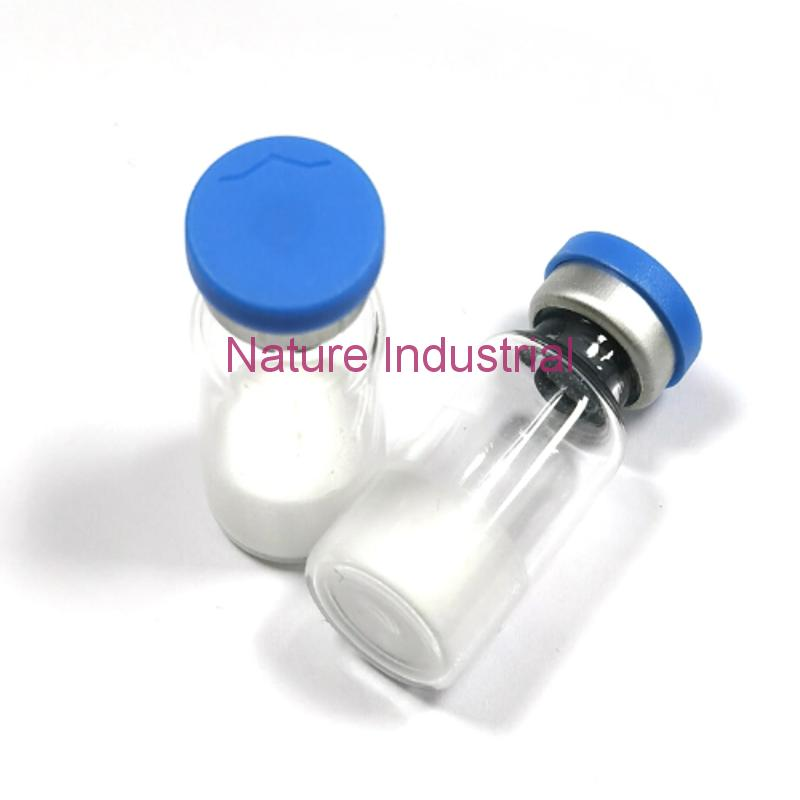
Physical Properties: N-Acetyl Semax Amidate appears as a white to off-white crystalline powder at room temperature, odorless and tasteless. excellent water solubility (solubility ≥70 mg/mL), rapidly dissolves in aqueous systems like pure water, saline, and phosphate-buffered saline (PBS), slightly soluble in ethanol and propylene glycol, insoluble in nonpolar solvents such as ether and petroleum ether. Molecular weight: 869.98 Da. Store at -20°C in a dry, sealed container protected from light. Avoid repeated freeze-thaw cycles. Research-grade/application-grade products exhibit ≥98% purity (HPLC-assayed), ≤1.0% impurity content, and are free of endotoxins and heavy metal residues.
Source and Preparation: N-Acetyl Semax Amidate has no natural occurrence and is precisely synthesized via solid-phase peptide synthesis. High-purity L-type amino acids serve as raw materials, undergoing condensation, deprotection, and peptide chain assembly. Subsequent dual modifications—N-terminal acetylation and C-terminal amidation—are performed, followed by high-performance liquid chromatography (HPLC) purification to yield a high-purity product. The synthesis process strictly controls reaction temperature and modification efficiency to ensure peptide chain structural integrity and neuroactive properties. Product purity and structure are validated via mass spectrometry (MS) and nuclear magnetic resonance (NMR) spectroscopy.
2. Application
In the field of biomedical research: N-Acetyl Semax Amidate serves as a core tool reagent for studying neuromodulatory mechanisms, applied to investigate the mechanisms underlying neurodegenerative diseases (Alzheimer's disease, Parkinson's disease), brain injury repair (ischemic stroke, traumatic brain injury), cognitive impairment, and neuroinflammation. Through cellular models such as hippocampal neurons and neural stem cells, as well as animal models including Alzheimer's disease mice and cerebral ischemia model mice, it analyzes its regulatory effects on neurotrophic factor expression (BDNF, NGF), neuronal survival, and inflammatory pathways, providing experimental evidence for neuropharmaceutical development.
Premium Functional Supplement Sector: N-Acetyl Semax Amidate serves as a cognitive enhancer and neuroprotective ingredient for developing dietary supplements like capsules, freeze-dried powders, and sublingual drops. It targets high-intensity cognitive users (students, professionals), middle-aged and elderly populations (addressing mild cognitive decline and memory loss), and those experiencing brain fatigue (alleviating inattention and sluggish responses). Its small-molecule structure (869.98 Da) enables blood-brain barrier penetration with high absorption efficiency, meeting EU and US dietary supplement compliance standards for long-term neuroprotective applications.
Potential applications in medical aesthetics and skin repair: Leveraging its anti-inflammatory and neuroprotective properties, N-Acetyl Semax Amidate can be incorporated into post-procedure repair products (e.g., serums/creams for photorejuvenation or microneedling) to alleviate neurogenic inflammation, redness, and stinging sensations. It may also be incorporated into sensitive skin repair products. By regulating the skin's neuro-immune pathways, it improves recurrent redness and itching in sensitive skin. Related applications are currently in the preclinical validation phase.
3. Main Efficacy
Neuroprotective and Repair Effects: The core mechanism of N-Acetyl Semax Amidate is to promote the expression of brain-derived neurotrophic factor (BDNF) and nerve growth factor (NGF), activate the neuronal survival signaling pathway (PI3K/Akt), inhibit neuronal apoptosis, and reduce damage to neurons caused by oxidative stress (ROS) and glutamate excitotoxicity. In cerebral ischemia models, it significantly enhances neuronal survival rates, reduces infarct size, promotes repair of damaged neural tissue, and improves postoperative motor and cognitive function recovery.
Cognitive Enhancement and Mental Performance Improvement: N-Acetyl Semax Amidate enhances synaptic plasticity in the hippocampus, promotes synthesis and release of neurotransmitters (acetylcholine, dopamine), and improves neural signal transmission efficiency, thereby enhancing learning and memory capacity, attention, and information processing speed. Animal studies demonstrate significant improvement in spatial and associative memory in aged mice. In human supplement clinical observations, continuous use for 4 weeks alleviates mental fatigue, enhances concentration, and increases working memory capacity.
Anti-inflammatory and Immunomodulatory Effects: N-Acetyl Semax Amidate inhibits the release of pro-inflammatory factors (TNF-α, IL-1β, IL-6) in the central and peripheral nervous systems, regulates macrophage polarization, and reduces neuroinflammation and local tissue inflammatory responses. At the skin level, it suppresses neurogenic inflammation (e.g., CGRP-mediated erythema), repairs the neuro-immune barrier, alleviates discomfort in sensitive skin and post-aesthetic procedure inflammation, and accelerates skin barrier repair.
Safety Advantages: N-Acetyl Semax Amidate exhibits no cytotoxicity (MTT assay shows >97% neuronal survival at concentrations ≤2 mg/mL), no mutagenicity, and no reproductive toxicity. Long-term low-dose use carries no risk of addiction or withdrawal reactions. Removes the corticotropin-releasing hormone activity of natural ACTH, avoiding hormone-related side effects. Exceptional biocompatibility makes it suitable for daily, long-term neural maintenance and inflammation regulation.









 Turkey
 United States