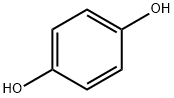
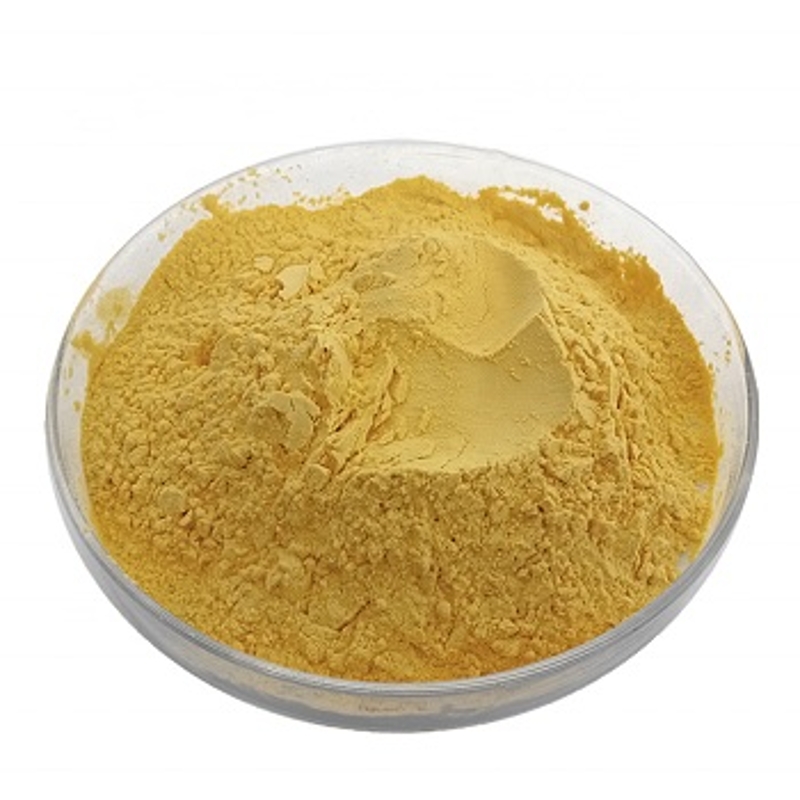
| Description | Hydroquinone (HQ) is produced by the oxidation of aniline or phenol, by the reduction of quinone, or from a reaction of acetylene and carbon monoxide. Hydroquinone occurs naturally as a glucose ether, also known as arbutin, in the leaves of many plants and in fruits, as well as one of the agents used in the defense mechanism of the bombardier beetle, family Carabidae. |
| Chemical Properties | Hydroquinone, a colorless, hexagonal prism, has been reported to be a good antimitotic and tumor-inhibiting agent. It is a reducing agent used in a photographic developer, which polymerizes in the presence of oxidizing agents. In the manufacturing industry it may occur include bacteriostatic agent, drug, fur processing, motor fuel, paint, organic chemicals, plastics, stone coating, and styrene monomers. |
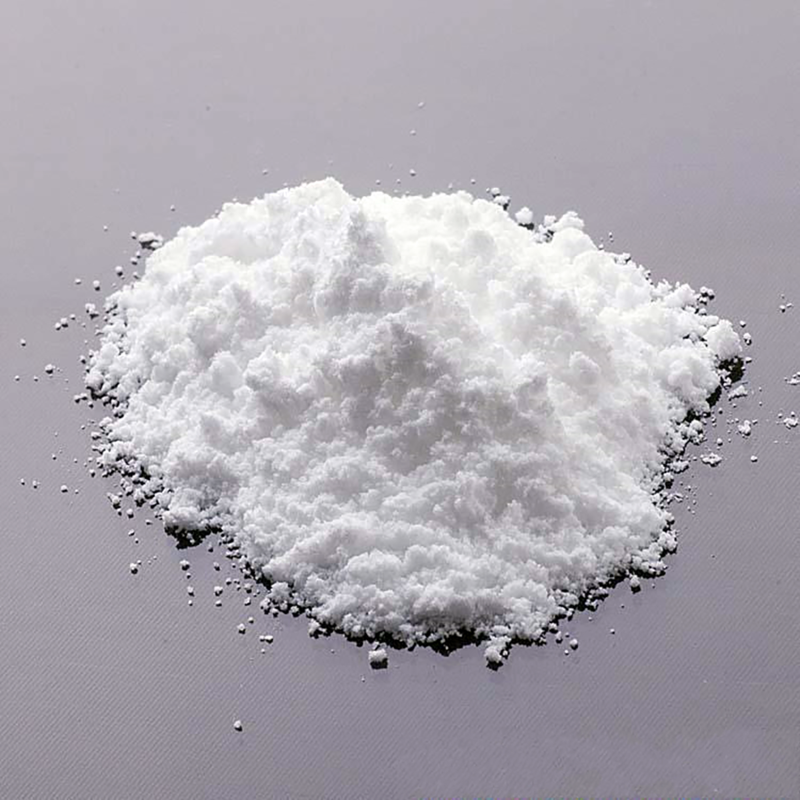
| Physical properties | Colorless to pale brown, odorless, hexagonal crystals |
| Uses | Use as photographic reducer and developer; as reagent in the determination of small quantities of phosphate; as antioxidant. Hydroquinone is mainly used as a polymerisation inhibitor during the manufacture of acrylic acid, methyl methacrylate and acrylonitrile. It is also used as a skin-lightening ingredient in cosmetics, functioning as an inhibitor of natural melanin production. [1] |
| Uses | hydroquinone is a pigment-lightening agent used in bleaching creams. Hydroquinone combines with oxygen very rapidly and becomes brown when exposed to air. Although it occurs naturally, the synthetic version is the one commonly used in cosmetics. Application to the skin may cause allergic reaction and increase skin sun sensitivity. Hydroquinone is potentially carcinogenic and is associated with causing ochronosis, a discoloration of the skin. The u.S. FDA has banned hydroquinone from oTC cosmetic formulations, but allows 4 percent in prescription products. Its use in cosmetics is prohibited in some european countries and in Australia. |
| Definition | ChEBI: Hydroquinone is a benzenediol comprising benzene core carrying two hydroxy substituents para to each other. It has a role as an antioxidant, a cofactor, a carcinogenic agent, a mouse metabolite, a human xenobiotic metabolite, an Escherichia coli metabolite and a skin lightening agent. It is a benzenediol and a member of hydroquinones. |
| Indications | Hydroquinone interferes with the production of the pigment melanin by epidermal melanocytes through at least two mechanisms: it competitively inhibits tyrosinase, one of the principal enzymes responsible for converting tyrosine to melanin, and it selectively damages melanocytes and melanosomes (the organelles within which melanin is stored). |
| Production Methods | There are three current manufacturing processes for Hydroquinone (HQ): oxidative cleavage of diisopropylbenzene, oxidation of aniline, and hydroxylation of phenol.
Diisopropylbenzene is air oxidized to the intermediate diisopropylbenzene bishydroperoxide. This hydroperoxide is purified by extraction and reacted further to form hydroquinone. The purified product is isolated by filtration and packaged. The process can be almost entirely closed, continuous, computer-controlled, and monitored.
HQcan also be prepared by oxidizing aniline to quinone in the presence of manganese dioxide and sulfuric acid. p-Benzoquinone is then reduced to HQ using iron oxide. The resulting hydroquinone is crystallized and dried. The process occurs in a closed system.
HQis also manufactured by hydroxylation of phenol using hydrogen peroxide as a hydroxylation agent. The reaction is catalyzed by strong mineral acids or ferrous or cobalt salts. |
| Manufacturing Process | Into a pressure reactor there was charged 100 ml of methanol and 1 g of diruthenium nonacarbonyl. The reactor was closed, cooled in solid carbon dioxide/acetone, and evacuated. Acetylene, to the extent of 1 mol (26 g), was metered into the cold reactor. Carbon monoxide was then pressured into this vessel at 835-980 atmospheres, during a period of 16.5 hours; while the reactor was maintained at 100°C to 150°C. The reactor was then cooled to room temperature and opened.
The reaction mixture was removed from the vessel and distilled at a pressure of 30-60 mm, and a bath temperature of 30°C to 50°C until the methanol had all been removed. The extremely viscous tarry residue remaining in the still pot was given a very crude distillation, the distillate boiling at 82°C to 132°C/2 mm. In an attempt to purify this distillate by a more careful distillation, 5.3 g of a liquid distilling from 53°C to 150°C/5 mm was collected. At this point, much solid sublimate was noted not only in this distillate but in the condenser of the still. 7 g of the solid sublimate was scraped out of the condenser of the still. Recrystallization of the sublimate from ethyl acetate containing a small amount of petroleum ether gave beautiful crystals melting at 175°C to 177°C (5 g). Infrared analysis confirmed that this compound was hydroquinone (9% conversion). |
| Brand name | Aida;Ambi- skin tone;Black and white;Creme des 3 fleur d'orient;Eldopaque forte;Eldoquin forte 4% cream;Epocler;Esoterica facial;Esoterica regular;Esoterica sensitive skin;Esoterica sunscreen;Melanex topical sollution;Melpaque hp;Melqui hp;Neostrata aha gel;Neostrata hq;Nuquin hp;Pigmanorm;Porcelana;Sinquin;Solaquin forte sun bleaching;Superfade age spot;Ultraquin plaine. |
| World Health Organization (WHO) | Hydroquinone was introduced in 1965 as a topical depigmenting agent for hyperpigmentation. At high concentrations hydroquinone is corrosive and in most countries has been restricted to the level of approximately 2% and limited to the period of less than 2 months. Additional consideration for restrictive action is that animal experiments have also demonstrated carcinogenic and mutagenic potential of hydroquinone. Although the use of hydroquinone in skinlightening cosmetics is banned in Japan, Australia and the EU, it is permitted in the US, China, India and a number of other markets. The U.S. FDA has banned hydroquinone from oTC cosmetic formulations, but allows 4 percent in prescription products. |
| Synthesis Reference(s) | Chemistry Letters, 14, p. 731, 1985
The Journal of Organic Chemistry, 50, p. 1722, 1985
Tetrahedron Letters, 22, p. 2337, 1981 DOI: 10.1016/S0040-4039(01)82900-2 |
| Air & Water Reactions | Darkens on exposure to air and light. Miscible in water. Solutions become brown in air due to oxidation. Oxidation is very rapid in the presence of alkali. |
| Reactivity Profile | Hydroquinone is a slight explosion hazard when exposed to heat. Incompatible with strong oxidizing agents. Also incompatible with bases. Hydroquinone reacts with oxygen and sodium hydroxide. Reacts with ferric salts . Hot and/or concentrated NaOH can cause Hydroquinone to decompose exothermically at elevated temperature. (NFPA Pub. 491M, 1975, 385) |
| Hazard | Toxic by ingestion and inhalation, irritant. Questionable carcinogen. |
| Health Hazard | Exposures to hydroquinone in large quantities by accidental oral ingestion produce toxicity and poisoning. The symptoms of poisoning include, but are not limited to, blurred speech, tinnitus, tremors, sense of suffocation, vomiting, muscular twitching, headache, convul- sions, dyspnea and cyanosis from methemoglobinemia, coma, and collapse from respira- tory failure. Occupational workers should be allowed to work with protective clothing and dust masks with full-face or goggles to protect the eyes, and under proper management. |
| Fire Hazard | Dust cloud may explode if ignited in an enclosed area. Hydroquinone can react with oxidizing materials and is rapidly oxidized in the presence of alkaline materials. Oxidizes in air. |
| Flammability and Explosibility | Non flammable |
| Contact allergens | Hydroquinone is used in photography developers (black and white, X-ray, and microfilms), in plastics, in hair dyes as an antioxidant and hair colorant. Hydroquinone is found in many skin bleaching creams. |
| Clinical Use | Hydroquinone is applied topically to treat disorders characterized by excessive melanin in the epidermis, such as melasma. In the United States, nonprescription skin-lightening products contain hydroquinone at concentrations of 2% or less; higher concentrations are available by prescription. |
| Side effects | The incidence of adverse effects with hydroquinone increases in proportion to its concentration. A relatively common side effect is local irritation, which may actually exacerbate the discoloration of the skin being treated. Allergic contact dermatitis occurs less commonly. A rare but more serious complication is exogenous ochronosis, in which a yellow-brown pigment deposited in the dermis results in blue-black pigmentation of the skin that may be permanent. |
| Potential Exposure | Tumorigen,Mutagen; Reproductive Effector; Human Data; PrimaryImritant. Hydroquinone is a reducing agent and is used as anindustrial chemical, chemical intermediate, pharmaceutical,and veterinary drug; as a photographic developer; and as anantioxidant or stabilizer for certain materials, which polymer-ize in the presence of oxidizing agents. Many of its derivativesare used as bacteriostatic agents, and others, particularly 2,5- bis(ethyleneimino) hydroquinone, have been reported to begood antibiotic and tumor-inhibiting agents. |
| First aid | If this chemical gets into the eyes, remove anycontact lenses at once and irrigate immediately for at least15 min, occasionally lifting upper and lower lids. Seek med-ical attention immediately. If this chemical contacts theskin, remove contaminated clothing and wash immediatelywith soap and water. Seek medical attention immediately. Ifthis chemical has been inhaled, remove from ex posure,begin rescue breathing (using universal precautions, includ-ing resuscitation mask) if breathing has stopped and CPR ifheart action has stopped. Transfer promptly to a medicalfacility. When this chemical has been swallowed, get medi-cal attention. Give large quantities of water and inducevomiting. Do not make an unconscious person vomit. |
| Source | Hydroquinone occurs naturally in strawberry tree leaves, pears, blackberries, Chinese alpenrose, bilberries, blackberries, hyacinth flowers, anise, cowberries, and lingonberries (Duke, 1992). |
| Environmental fate | Biological. In activated sludge, 7.5% mineralized to carbon dioxide after 5 d (Freitag et al., 1985). Under methanogenic conditions, inocula from a municipal sewage treatment plant digester degraded hydroquinone to phenol prior to being mineralized to carbon dioxide and methane (Young and Rivera, 1985). In various pure cultures, hydroquinone degraded to the following intermediates: benzoquinone, 2-hydroxy-1,4-benzoquinone, and β-ketoadipic acid. Hydroquinone also degraded in activated sludge but no products were identified (Harbison and Belly, 1982). Heukelekian and Rand (1955) reported a 5-d BOD value of 0.74 g/g which is 39.2% of the ThOD value of 1.89 g/g. In activated sludge inoculum, following a 20-d adaptation period, 90.0% COD removal was achieved. The average rate of biodegradation was 54.2 mg COD/gh (Pitter, 1976).
Photolytic. A carbon dioxide yield of 53.7% was achieved when hydroquinone adsorbed on silica gel was irradiated with light (λ >290 nm) for 17 h (Freitag et al., 1985). Chemical/Physical. Ozonolysis products reported are p-quinone and dibasic acids (Verschueren, 1983). Moussavi (1979) studied the autoxidation of hydroquinone in slightly alkaline (pH 7 to 9) aqueous solutions at room temperature. The oxidation of hydroquinone by oxygen followed first-order kinetics that yielded hydrogen peroxide and p-quinone as products. At pH values of 7.0, 8.0, and 9.0, the calculated half-lives of this reaction were 111, 41, and 0.84 h, respectively (Moussavi, 1979).
Chlorine dioxide reacted with hydroquinone in an aqueous solution forming p-benzoquinone (Wajon et al., 1982). Kanno et al. (1982) studied the aqueous reaction of hydroquinone and other substituted aromatic hydrocarbons (aniline, toluidine, 1- and 2-naphthylamine, phenol, cresol, pyrocatechol, resorcinol, and 1-naphthol) with hypochlorous acid in the presence of ammonium ion. They reported that the aromatic ring was not chlorinated as expected but was cleaved by chloramine forming cyanogen chloride. As the pH was lowered, the amount of cyanogen chloride formed increased (Kanno et al., 1982).
At influent concentrations of 1.0, 0.1, 0.01, and 0.001 mg/L, the GAC adsorption capacities were 160, 90, 51, and 29 mg/g, respectively (Dobbs and Cohen, 1980). |
| storage | (1) Color Code-- Yellow Stripe (strong reducingagent): Reactivity Hazard; Store separately inan area iso-lated from flammables, combustibles, or other yellow-codedmaterials. (2) Color Code- _Blue: Health Hazard/Poison:Store in a secure poison location. Prior to working with thischemical you should be trained on its proper handling andstorage. Hydroquinone must be stored to avoid contact withsodium hydroxide since violent reactions occur. Store intightly closed containers in a cool, well-ventilated areaaway from oxidizing materials. Where possible, automati-cally pump liquid from drums or other storage containers toprocess containers. |
| Purification Methods | Crystallise quinol from acetone, *benzene, EtOH, EtOH/*benzene, water or acetonitrile (25g in 30mL), preferably under nitrogen. Dry it under vacuum. [Wolfenden et al. J Am Chem Soc 109 463 1987, Beilstein 6 H 836, 6 IV 5712.] |
| Toxicity evaluation | Benzene, phenol, and hydroquinone are metabolized in vivo to benzoquinone and excreted as the mercapturate, N-acetyl-S- (2,5-dihydroxyphenyl)-L-cysteine. Hydroquinone is a reducing cosubstrate for peroxidase enzymes, and the resultant semiquinone and p-benzoquinone may bind to DNA. |
| Incompatibilities | Hydroquinone is a reducing agent. Dustforms an explosive mixture with air. May explode on con-tact with oxygen. Incompatible with strong oxidizers, caus-tics; reacts violently with sodium hydroxide. May beoxidized to quinone at room temperatures in the presence ofmoi sture. |
| Toxics Screening Level | The initial threshold screening level (ITSL) for hydroquinone (CAS # 123-31-9) is 140 μg/m 3 based on an annual averaging time. The initial risk screening level (IRSL) is 0.058 μg/m 3 with an annual averaging time, and the secondary risk screening level (SRSL) is 0.58 μg/m 3 with an annual averaging time. |
| References | [1] China: Solvay – hydroquinone. (2016). Focus on Pigments, 2016 8, Page 7. https://doi.org/10.1016/j.fop.2016.07.026 |









 Israel
 Russia
 South Africa
 United Kingdom
 South Korea
 India
India
 France
 Malaysia
 Brazil
 United Arab Emirates
 Nigeria
 Hongkong, China
 United States