Product
Supplier
Encyclopedia
Inquiry
Dimethyl disulfide624-92-0 buy - large image1
Dimethyl disulfide624-92-0 buy - image1
Dimethyl disulfide624-92-0 buy - image2
Dimethyl disulfide624-92-0 buy - image3
Dimethyl disulfide624-92-0 buy - image4
Dimethyl disulfide624-92-0 buy - image5
Dimethyl disulfide624-92-0 buy - image6

Dimethyl disulfide624-92-0

32 Inquiries

Unit Price:

$33-34/MT FOB

Get Latest Price
CAS No.:

624-92-0

Grade:

Pharmaceutical Grade

Content:

99.5%

Port:

上海

Brand:

OORENT

Packaging:

Vial/Bottle/Bag/Carton

Price valid (until):

2026-07-16

Company Type:
Trader
Location:
China
Qualification:
Main Products:

pharmaceutical intermediates,peptides,electronic chemicals

  • Product Description

  • Seller Information

  • Inquiry History

  • Description

    Product Detail  

    Dimethyl disulfide Basic information
    Product Name: Dimethyl disulfide
    Synonyms: MGC126532;MGC138156;YWHAZ;disulfuredemethyle;mds;methyldithiomethane;Sulfa-hitech;Sulfa-hitech 0382
    CAS: 624-92-0
    MF: C2H6S2
    MW: 94.2
    EINECS: 210-871-0
    Product Categories: Allium cepa (Onion);Allium sativum (Garlic);Building Blocks;Chemical Synthesis;Nutrition Research;Organic Building Blocks;sulfide Flavor;Phytochemicals by Plant (Food/Spice/Herb);Sulfides/Disulfides;Sulfur Compounds;Pesticides intermediate;Solvent;a solvent and pesticide intermediates, fuel and lubricating oil additives;Food additives;A
    Mol File: 624-92-0.mol
    Shop Dimethyl disulfide624-92-0-Detailed Image 1

    Dimethyl disulfide Chemical Properties
    Melting point  -85 °C
    Boiling point  109 °C(lit.)
    density  1.0625
    vapor density  3.24 (vs air)
    vapor pressure  22 mm Hg ( 20 °C)
    refractive index  n20/D 1.525(lit.)
    FEMA  3536 | DIMETHYL DISULFIDE
    Fp  76 °F
    storage temp.  Flammables area
    solubility  2.7g/l
    form  Liquid
    color  Clear yellow
    Specific Gravity 1.0647 (20/4℃)
    Odor at 0.10 % in propylene glycol. sulfurous vegetable cabbage onion
    Odor Threshold 0.0022ppm
    Odor Type sulfurous
    biological source rabbit
    explosive limit 1.1-16.1%(V)
    Water Solubility  <0.1 g/100 mL at 20 ºC
    JECFA Number 564
    BRN  1730824
    Henry's Law Constant 5.8×10⁻³ mol/(m3Pa) at 25℃, Burkholder et al. (2019)
    Exposure limits ACGIH: TWA 0.5 ppm (Skin)
    Dielectric constant 9.7699999999999996
    Stability: Stable. Incompatible with strong bases, strong oxidizing agents, strong reducing agents. Flammable.
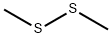
    InChI 1S/C2H6S2/c1-3-4-2/h1-2H3
    InChIKey WQOXQRCZOLPYPM-UHFFFAOYSA-N
    SMILES CSSC
    LogP 1.91 at 20℃
    CAS DataBase Reference 624-92-0(CAS DataBase Reference)
    NIST Chemistry Reference Disulfide, dimethyl(624-92-0)
    EPA Substance Registry System Methyl disulfide (624-92-0)

    Safety Information
    Hazard Codes  F,Xn,N,T+
    Risk Statements  11-20/22-36-51/53-36/37/38-26-22-36/37
    Safety Statements  26-61-45-38-36/37/39-28A-16-60-57-39-29
    RIDADR  UN 2381
    WGK Germany  2
    RTECS  JO1927500
    Autoignition Temperature 304 °C
    TSCA  TSCA listed
    HazardClass  3
    PackingGroup  II
    HS Code  29309070
    Storage Class 3 - Flammable liquids
    Hazard Classifications Acute Tox. 3 Inhalation
    Acute Tox. 3 Oral
    Aquatic Acute 1
    Aquatic Chronic 1
    Eye Irrit. 2
    Flam. Liq. 2
    Skin Sens. 1
    STOT SE 1 Inhalation
    STOT SE 3
    Hazardous Substances Data 624-92-0(Hazardous Substances Data)
    Toxicity LD50 orally in Rabbit: 290 - 500 mg/kg
    MSDS Information
    Provider Language
    DMDS English
    SigmaAldrich English
    ALFA English

    Dimethyl disulfide Usage And Synthesis
    Description Dimethyl disulfide has a diffuse intense onion odor. It is nonlachrymatory. Ironically, although many find its odor objectionable at high concentrations as noted above, when diluted, its aroma has also been described as pleasant. Dimethyl disulfide is often used in combination with other flavor compounds in food products, including baked goods, cheese, frozen dairy products, meat products, soups, savory flavors, fruit flavors, soft candy, gelatin, puddings, and both alcoholic and nonalcoholic beverages.
    Chemical Properties colourless to yellow liquid with a very unpleasant smell, insoluble in water, Soluble in ethanol, ethyl ether and acetic acid. It is a strong odor component irritant which is also included in garlic and has been designated as a specific malodorous substances based on the Offensive Odor Control Law. Its detection threshold shows 0.002 ppm, which senses a low concentration equivalent to Dimethyl sulfide.
    Occurrence Reported found in sour cherry, guava, melon, peach, pineapple, strawberry, cabbage, kohlrabi, onion, garlic, shallot, leek, chive, peas, potato, rutabaga, tomato, parsley, breads, many cheeses, yogurt, milk, egg, fish, meats, hop oil, beer, Scotch whiskey, cognac, grape wines, cocoa, coffee, peanut, peanut butter, pecan, potato chips, oats, soybean, beans, mushrooms, trassi, macadamia nut, mango, cauliflower, broccoli, brussels sprouts, rice, radish, sukiyaki, sake, watercress, malt, wort, krill, southern pea, loquat, sapodilla, shrimp, oyster, crab, crayfish, clam, scallops and squid.
    Uses Industrially, Dimethyl disulfide is also used as a sulfiding agent to catalyze reactions in oil refineries and other industries. It has a low flash point of 16 ℃ (61 °F) that presents fire hazards during refinery usage. Due to its strong odor and low flash point, Dimethyl disulfide typically requires storage under nitrogen pressure in closed containers.
    Dimethyl disulfide has a sulfurous odor similar to that of garlic and decaying fish. Because of the distinctive odor of sulfur compounds, similar to DMDS, they are often added to natural gas and propane to warn of leaks and protect people. Therefore, the odor of a DMDS fumigation can be mistaken for a gas leak. DMDS has an odor threshold of approximately 7 ppb, which is about 8 times less than the health‐based level considered by the EPA to be safe (55 ppb).
    Uses Dimethyl disulfide is used as an intermediate as well as a food additive in onion, garlic, cheese, meats, soups, savory flavors and fruit flavors. It is used in oil refineries as a sulfiding agent. It is used to alfa substitute 2-methylfuran-acrolein to produce food stuff. It is involved in the preparation of 4-(methylthio)phenol. Further, it is used to replace methyl mercaptan as a jet fuel additive. It finds application in artificial flavoring agent and a corrosion inhibitor. In addition to this, it serves as an effective soil fumigant in agriculture.
    Preparation Dimethyl disulfide can be prepared by the reaction between imethyl sulfate and sodium sulfide. under stirring, sulfur powder was added into sodium sulfide solution. The above reaction system was heated Up to 80-90℃, after reaction for 1 h, cooled to about 30 ℃. Dimethyl sulfate was dropped into the reaction system and the reaction was continued for 2h. Then, distillation, stratification, Separating waste alkali liquor, then through distillation and final products are prepared.
    In industry,dimethyl sulfate method is adopted to synthesize dimethyl disulfide.
    Na2S+S→Na2S2Na2S2+(CH3)2SO4→CH3SSCH3+Na2SO4
    From magnesium methyl iodide and S2Cl2, or from S2S2 and sodium methyl sulfate; also from methyl bromide and sodium thiosulfate, after which the resulting sodium methylthiosulfate is heated to yield dimethyl disulfide.
    Definition ChEBI: Dimethyl disulfide is an organic disulfide that is methane in which one of the hydrogens has been replaced by a methyldisulfanyl group. It has a role as a xenobiotic metabolite.
    Aroma threshold values Detection: 0.16 to 1.2 ppb. Recognition: 90 ppb
    General Description A colorless oily liquid with a garlic-like odor. Denser than water and slightly soluble in water. Flash point 40°F. Vapors heavier than air. May irritate skin and eyes. Used to make other chemicals.
    Air & Water Reactions Highly flammable. Slightly soluble in water.
    Reactivity Profile DMDS is a reducing agent. A dangerous fire hazard when exposed to oxidizing materials. Emits toxic fumes of oxides of sulfur when heated to decomposition or on contact with acids [Sax, 9th ed., 1996, p. 1320].
    Health Hazard May cause toxic effects if inhaled or absorbed through skin. Inhalation or contact with material may irritate or burn skin and eyes. Fire will produce irritating, corrosive and/or toxic gases. Vapors may cause dizziness or suffocation. Runoff from fire control or dilution water may cause pollution.
    Fire Hazard HIGHLY FLAMMABLE: Will be easily ignited by heat, sparks or flames. Vapors may form explosive mixtures with air. Vapors may travel to source of ignition and flash back. Most vapors are heavier than air. They will spread along ground and collect in low or confined areas (sewers, basements, tanks). Vapor explosion hazard indoors, outdoors or in sewers. Runoff to sewer may create fire or explosion hazard. Containers may explode when heated. Many liquids are lighter than water.
    Flammability and Explosibility Highly flammable
    Safety Profile Poison by inhalation. A very dangerous fire hazard when exposed to heat, flame, or oxidzers. Can react vigorously with oxiduing materials. See also SULFIDES.
    Potential Exposure PrimaryIrritant. This material may be used as an organicintermediate
    First aid If this chemical gets into the eyes, remove anycontact lenses at once and irrigate immediately for at least15 min, occasionally lifting upper and lower lids. Seek medical attention immediately. If this chemical contacts theskin, remove contaminated clothing and wash immediatelywith soap and water. Seek medical attention immediately. Ifthis chemical has been inhaled, remove from exposure,begin rescue breathing (using universal precautions, including resuscitation mask) if breathing has stopped and CPR ifheart action has stopped. Transfer promptly to a medicalfacility. When this chemical has been swallowed, get medical attention. Give large quantities of water and inducevomiting. Do not make an unconscious person vomit.
    storage Color Code—Red: Flammability Hazard: Store ina flammable liquid storage area or approved cabinet awayfrom ignition sources and corrosive and reactive materials.Prior to working with Dimethyl disulfide you should betrained on its proper handling and storage. Before enteringconfined space where this chemical may be present, checkto make sure that an explosive concentration does not exist.Store in tightly closed containers in a cool, well-ventilatedarea away from any form of moisture, oxidizers, acids.Metal containers involving the transfer of this chemicalshould be grounded and bonded. Where possible, automatically pump liquid from drums or other storage containers toprocess containers. Drums must be equipped with self-closing valves, pressure vacuum bungs, and flame arresters. Useonly nonsparking tools and equipment, especially whenopening and closing containers of this chemical. Sources ofignition, such as smoking and open flames, are prohibitedwhere this chemical is used, handled, or stored in a mannerthat could create a potential fire or explosion hazard.Wherever this chemical is used, handled, manufactured, orstored, use explosion-proof electrical equipment andfittings.
    Shipping This compound requires a shipping label of“FLAMMABLE LIQUID.” It falls in Hazard Class 3 andPacking Group II.
    Purification Methods Pass it through neutral alumina before use. [Trost Chem Rev 78 363 1978, Beilstein 1 IV 1281.]
    Toxicity evaluation Very little information is available on mechanism of toxicity. Although the authors of one experimental animal study suggested that methyl disulfide toxicity resembles that of hydrogen sulfide, it is not at all clear that cytochrome oxidase inhibition can result from methyl disulfide exposure. Mechanistically hydrogen sulfide is classified as a chemical asphyxiant because of its known ability to disrupt electron transport and oxidative phosphorylation by interaction with the enzyme cytochrome oxidase. Other sources classify methyl disulfide a simple asphyxiant, which means that it is nonreactive with enzymes or other cell components and simply displaces oxygen in the air. Some information indicates that neurotoxicity to insects results when methyl disulfide disrupts calcium-activated potassium channels in insect pacemaker neurons.
    Incompatibilities Forms explosive mixture with air.Contact with water or acids forms flammable and toxicvapors of hydrogen sulfide. Contact with oxidizing materials or acids can cause a violent reaction.
    Toxics Screening Level The initial threshold screening level (ITSL) for chronic exposure to dimethyl disulfide (DMDS) is 16 μg/m3 (annual averaging time) based on the Michigan Department of Environmental Quality (MDEQ).


        Shop Hypophosphorous acid6303-21-5-Detailed Image 3 Shop Hypophosphorous acid6303-21-5-Detailed Image 4 Shop Hypophosphorous acid6303-21-5-Detailed Image 5 Shop Hypophosphorous acid6303-21-5-Detailed Image 6 Shop Hypophosphorous acid6303-21-5-Detailed Image 7 Shop Hypophosphorous acid6303-21-5-Detailed Image 8


    Basic Info
    Product Name:

    Dimethyl disulfide

    Other Name:

    Disulfide,dimethyl;Methyl disulfide;Dimethyl disulfide;2,3-Dithiabutane;(Methyldithio)methane;Dimethyl disulphide;Sulfa-Hitech;NSC 9370;DMDS;Paladin;1,2-Dimethyldisulfane;(Methyldisulfanyl)methane

    CAS No.:

    624-92-0

    Molecular Formula:

    C2H6S2

    InChIKeys:

    InChIKey=WQOXQRCZOLPYPM-UHFFFAOYSA-N

    Molecular Weight:

    94.19900

    Exact Mass:

    94.20

    EC Number:

    210-871-0

    HScode:

    2930909090

    Characteristics
    PSA:

    50.60000

    XLogP3:

    1.62740

    Appearance:

    Dimethyl disulfide appears as a colorless oily liquid with a garlic-like odor. Denser than water and slightly soluble in water. Vapors heavier than air. May irritate skin and eyes. Used to make other chemicals.

    Density:

    1.0625 g/cm3 @ Temp: 20 °C

    Melting Point:

    -85 °C

    Boiling Point:

    109.8 °C

    Flash Point:

    15ºC

    Refractive Index:

    1.5243-1.5263

    Water Solubility:

    Solubility in water, g/l at 20°C: 2.5 (poor)

    Storage Conditions:

    Flammables area

    Vapor Pressure:

    22 mm Hg ( 20 °C)

    Vapor Density:

    3.24 (vs air)

    Toxicity:

    LD50 orally in Rabbit: 290 - 500 mg/kg

    Explosive limit:

    vol% in air: 1.16

    Odor:

    Garlic-like

    Hazard Identification

    Classification of the substance or mixture

    Flammable liquids, Category 2

    Acute toxicity - Category 4, Oral

    Skin sensitization, Sub-category 1B

    Eye irritation, Category 2

    Acute toxicity - Category 3, Inhalation

    Specific target organ toxicity – single exposure, Category 3

    Hazardous to the aquatic environment, short-term (Acute) - Category Acute 1

    Hazardous to the aquatic environment, long-term (Chronic) - Category Chronic 1

    GHS label elements, including precautionary statements

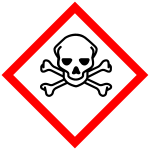
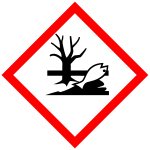
    Pictogram(s)
    Signal word

    Danger

    Hazard statement(s)

    H225 Highly flammable liquid and vapour

    H302 Harmful if swallowed

    H317 May cause an allergic skin reaction

    H319 Causes serious eye irritation

    H331 Toxic if inhaled

    H335 May cause respiratory irritation

    H410 Very toxic to aquatic life with long lasting effects

    Precautionary statement(s)
    Prevention

    P210 Keep away from heat, hot surfaces, sparks, open flames and other ignition sources. No smoking.

    P233 Keep container tightly closed.

    P240 Ground and bond container and receiving equipment.

    P241 Use explosion-proof [electrical/ventilating/lighting/...] equipment.

    P242 Use non-sparking tools.

    P243 Take action to prevent static discharges.

    P280 Wear protective gloves/protective clothing/eye protection/face protection/hearing protection/...

    P264 Wash ... thoroughly after handling.

    P270 Do not eat, drink or smoke when using this product.

    P261 Avoid breathing dust/fume/gas/mist/vapours/spray.

    P272 Contaminated work clothing should not be allowed out of the workplace.

    P271 Use only outdoors or in a well-ventilated area.

    P273 Avoid release to the environment.

    Response

    P303+P361+P353 IF ON SKIN (or hair): Take off immediately all contaminated clothing. Rinse affected areas with water [or shower].

    P370+P378 In case of fire: Use ... to extinguish.

    P301+P317 IF SWALLOWED: Get medical help.

    P330 Rinse mouth.

    P302+P352 IF ON SKIN: Wash with plenty of water/...

    P333+P317 If skin irritation or rash occurs: Get medical help.

    P321 Specific treatment (see ... on this label).

    P362+P364 Take off contaminated clothing and wash it before reuse.

    P305+P351+P338 IF IN EYES: Rinse cautiously with water for several minutes. Remove contact lenses, if present and easy to do. Continue rinsing.

    P304+P340 IF INHALED: Remove person to fresh air and keep comfortable for breathing.

    P316 Get emergency medical help immediately.

    P319 Get medical help if you feel unwell.

    P391 Collect spillage.

    Storage

    P403+P235 Store in a well-ventilated place. Keep cool.

    P403+P233 Store in a well-ventilated place. Keep container tightly closed.

    P405 Store locked up.

    Disposal

    P501 Dispose of contents/container to an appropriate treatment and disposal facility in accordance with applicable laws and regulations, and product characteristics at time of disposal.

    Other hazards which do not result in classification

    no data available

    Handling and Storage

    Precautions for safe handling

    NO open flames, NO sparks and NO smoking. Above 10°C use a closed system, ventilation and explosion-proof electrical equipment. Handling in a well ventilated place. Wear suitable protective clothing. Avoid contact with skin and eyes. Avoid formation of dust and aerosols. Use non-sparking tools. Prevent fire caused by electrostatic discharge steam.

    Conditions for safe storage, including any incompatibilities

    Fireproof. Well closed. Separated from oxidants. Store in an area without drain or sewer access. Provision to contain effluent from fire extinguishing.

  • Seller Information
    Business Type:

    Trader

    Main Products:

    pharmaceutical intermediates,peptides,electronic chemicals

    Location:

    Room 102, 1st Floor, East Office Building, No. 45 Pengwan Road, Qianwan Bonded Port Area, Qingdao Zone, China (Shandong) Pilot Free Trade Zone

    Payment Terms:

    100% TT in advance

    Average lead Time:

    10

    Total Annual Revenue:

    $10 million-$25 million

    Total Employees:

    51-100

    Year of Establishment:

    2024

    A reliable supplier is like insurance.

    We are mainly specilized in supply of pharmaceutical intermediates, electronic chemicals,food additives, and other fine chemical products.
    Integrity is the foundation, quality is life. We would like to work together with you to build a greener and brighter future.

    Website: orientchem.cc
    Email: scarlett@orientchem.cc
    WhatsApp: +86 17753254221

  • Inquiry History
    32 Inquiries
    Country Product Purchase Quantity Date Posted
    United Arab Emirates

    Dimethyl Disulfide 99% liquid 624-92-0

    900 KG Oct 3, 2023
    Azerbaijan

    DMDS

    83 TON Sep 12, 2023
    Uzbekistan

    Dimethyl disulfide

    59 MT Mar 3, 2026
    Uzbekistan

    Dimethyl disulfide

    59 MT Mar 2, 2026
    Germany

    DMDS

    5500 KG Sep 15, 2025
    India

    DMDS

    300 MT Jul 8, 2025
    India

    DIMETHYL DISULFIDE

    2.00 20' Fcl May 27, 2024
    Indonesia

    Dimethyl Disulfide

    100 TON May 22, 2024
    Germany

    DMDS

    2 MT Feb 23, 2024
    Russia

    Dimethyl Disulfide

    87.91 TON Feb 18, 2024
    Uzbekistan

    Dimethyl Disulfide

    87.9 TON Feb 18, 2024
    Russia

    Dimethyl disulfide

    26 MT Nov 10, 2023
    Uzbekistan

    Dimethildisulfide

    59 MT Jun 3, 2026
    Italy

    Dimethyl Disulfide

    2600 KG May 26, 2026
    Uzbekistan

    Dimethyl disulfide/DMDS

    59 MT Feb 28, 2026
    Nigeria

    Di Methyl Disulfide (DMDS)

    200 MT Apr 7, 2024
    Russia

    Dimethyl disulfide

    26 MT Nov 2, 2023
    India

    Methyl disulfide

    83 MT Sep 8, 2023
    Azerbaijan

    Dimethyl disulfide 99% LIQUID SAA650 SAA

    83 TON Aug 21, 2023
    Bahrain

    Dimethyl Disulfide

    1.00 KG Sep 11, 2025
    • 1
    • 2
    • Go to Page Go
    Post an enquiry for this product
pic ×

Scan the QR Code to Share

All products displayed on this website are only for non-medical purposes such as industrial applications or scientific research, and cannot be used for clinical diagnosis or treatment of humans or animals. They are not medicinal or edible.

According to relevant laws and regulations and the regulations of this website, units or individuals who purchase hazardous materials should obtain valid qualifications and qualification conditions.

The information shown above is provided by the enterprise itself, and the authenticity, accuracy and legitimacy of the content are the responsibility of the publishing company. ECHEMI does not bear any guarantee responsibility for this. Please be aware that risks in internet transactions objectively exist.

Feedback & Suggestions
Send Message

Thank you for your feedback. If you require further assistance, please contact us by email at info@echemi.com or call us at +86-532-55729510.