Organic Solvent Methanol/Ma CAS 67-56-1 for Industrial Use
TDS 334 Inquiries
67-56-1
Industrial Grade
99%
qingdao
ousheng
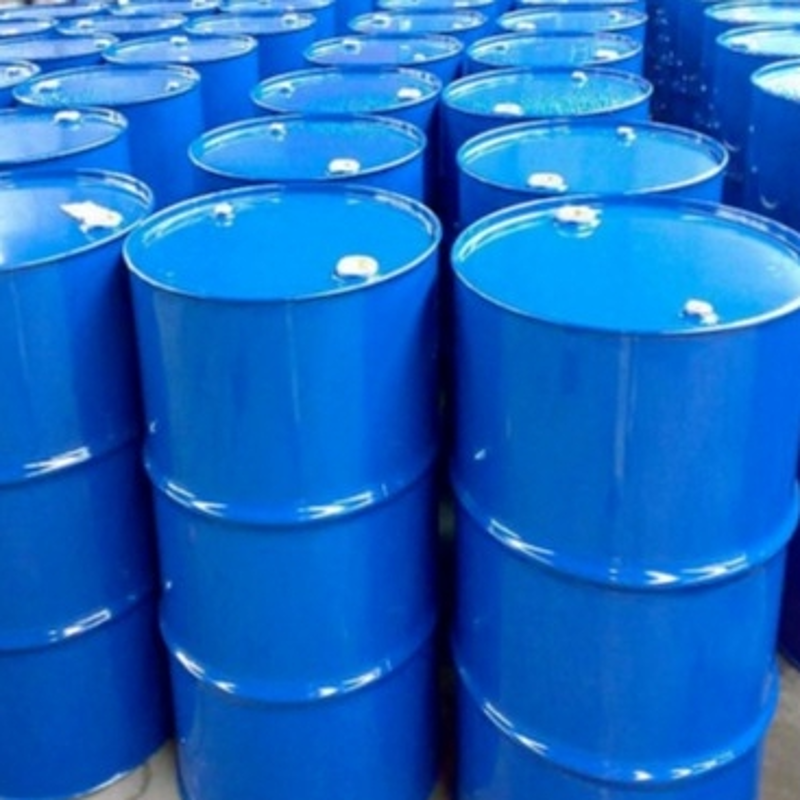
160kg/drum
2026-10-02

nitric acid,sles,xylene,aniline
-
Product Details
-
Seller Information
-
Inquiry History
-
DescriptionECHEMI Editorial ReferenceMethanol is a clear, colorless liquid with a characteristic pungent odor (NTP NIEHS web accessed 2/16/2013). The air odor threshold has been reported as 1500 ppm (approximately 2000mg/m3), much higher than the occupational guidelines.
Methanol (methyl alcohol; wood alcohol) is used extensively as a solvent for lacquers, paints, varnishes, cements, inks, dyes, plastics, and various industrial coatings. Large quantities are used in the production of formaldehyde and other chemical de
Methanol, also known as methyl alcohol, wood alcohol, wood naphtha, methyl hydrate, or wood spirits, is a chemical with the formula CH3OH (often abbreviated MeOH). Methanol acquired the name "wood alcohol" because it was once produced chiefly as a byproduct of the destructive distillation of wood. Today, industrial methanol is produced in a catalytic process directly from carbon monoxide, carbon dioxide, and hydrogen.Certificates-
 TDS
TDS
Basic Info-
Product Name:
Methanol
Other Name:Methanol;Carbinol;Methyl alcohol;Methyl hydroxide;Monohydroxymethane;Wood alcohol;Methylol;Bieleski's solution;Methanol cluster;Solutions,Bieleski's;NSC 85232;Nuclear;54841-71-3;1173023-83-0;1196157-60-4
CAS No.:67-56-1
UN No.:1230
Molecular Formula:CH4O
InChIKeys:InChIKey=OKKJLVBELUTLKV-UHFFFAOYSA-N
Molecular Weight:32.04190
Exact Mass:32.04
EC Number:200-659-6
HScode:2905110000
Categories:
Characteristics-
PSA:
20.23000
XLogP3:-0.39150
Appearance:Methanol appears as a colorless fairly volatile liquid with a faintly sweet pungent odor like that of ethyl alcohol. Completely mixes with water. The vapors are slightly heavier than air and may travel some distance to a source of ignition and flash back. Any accumulation of vapors in confined spaces, such as buildings or sewers, may explode if ignited. Used to make chemicals, to remove water from automotive and aviation fuels, as a solvent for paints and plastics, and as an ingredient in a wide variety of products.
Density:0.8100 g/cm3 @ Temp: 0 °C
Melting Point:-97.8 °C
Boiling Point:64.7 °C @ Press: 760 Torr
Flash Point:12ºC
Refractive Index:1.328-1.330
Water Solubility:Miscible
Storage Conditions:Store at RT.
Vapor Pressure:2.14mmHg at 25°C
Vapor Density:1.11
Toxicity:LD50 oral (rat) 5628 mg/kg LD50 skin (rabbit) 15,840 mg/kg LC50 inhal (rat) >145,000 ppm (1 h) PEL (OSHA) 200 ppm (260 mg/m3) TLV-TWA (ACGIH) 200 ppm (260 mg/m3)—skin STEL (ACGIH) 250 ppm (328 mg/m3)
Flammability characteristics:Class IB Flammable Liquid: Fl.P. below 73°F and BP at or above 100°F.
Explosive limit:vol% in air: 60
Odor:Slight alcoholic odor when pure; repulsive, pungent odor when crude
Hazard IdentificationClassification of the substance or mixture
Flammable liquids, Category 2
Acute toxicity - Category 3, Oral
Acute toxicity - Category 3, Dermal
Acute toxicity - Category 3, Inhalation
Specific target organ toxicity â single exposure, Category 1
GHS label elements, including precautionary statements
Pictogram(s) 
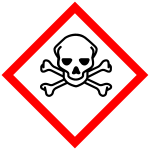
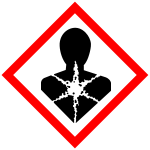
Signal word Danger
Hazard statement(s) H225 Highly flammable liquid and vapour
H301 Toxic if swallowed
H311 Toxic in contact with skin
H331 Toxic if inhaled
H370 Causes damage to organs
Precautionary statement(s) Prevention P210 Keep away from heat, hot surfaces, sparks, open flames and other ignition sources. No smoking.
P233 Keep container tightly closed.
P240 Ground and bond container and receiving equipment.
P241 Use explosion-proof [electrical/ventilating/lighting/...] equipment.
P242 Use non-sparking tools.
P243 Take action to prevent static discharges.
P280 Wear protective gloves/protective clothing/eye protection/face protection/hearing protection/...
P264 Wash ... thoroughly after handling.
P270 Do not eat, drink or smoke when using this product.
P261 Avoid breathing dust/fume/gas/mist/vapours/spray.
P271 Use only outdoors or in a well-ventilated area.
P260 Do not breathe dust/fume/gas/mist/vapours/spray.
Response P303+P361+P353 IF ON SKIN (or hair): Take off immediately all contaminated clothing. Rinse affected areas with water [or shower].
P370+P378 In case of fire: Use ... to extinguish.
P301+P316 IF SWALLOWED: Get emergency medical help immediately.
P321 Specific treatment (see ... on this label).
P330 Rinse mouth.
P302+P352 IF ON SKIN: Wash with plenty of water/...
P316 Get emergency medical help immediately.
P361+P364 Take off immediately all contaminated clothing and wash it before reuse.
P304+P340 IF INHALED: Remove person to fresh air and keep comfortable for breathing.
P308+P316 IF exposed or concerned: Get emergency medical help immediately.
Storage P403+P235 Store in a well-ventilated place. Keep cool.
P405 Store locked up.
P403+P233 Store in a well-ventilated place. Keep container tightly closed.
Disposal P501 Dispose of contents/container to an appropriate treatment and disposal facility in accordance with applicable laws and regulations, and product characteristics at time of disposal.
Other hazards which do not result in classification
no data available
Handling and StoragePrecautions for safe handling
NO open flames, NO sparks and NO smoking. NO contact with incompatible substances. Closed system, ventilation, explosion-proof electrical equipment and lighting. Do NOT use compressed air for filling, discharging, or handling. Use non-sparking handtools. Handling in a well ventilated place. Wear suitable protective clothing. Avoid contact with skin and eyes. Avoid formation of dust and aerosols. Use non-sparking tools. Prevent fire caused by electrostatic discharge steam.
Conditions for safe storage, including any incompatibilities
Fireproof. Separated from strong oxidants and food and feedstuffs. Cool.When large amounts of methanol are stored in enclosed 14 Methanol spaces, monitoring by means of lower explosion limit monitors is desirable.
-
-
Seller Information
-
Business Type:
Trader
-
Main Products:
nitric acid,sles,xylene,aniline
-
Location:
UNIT 903, 9/F., CAMERON COMM CENTRE, 458-468 HENNESSY ROAD, CAUSEWAY BAY HONG KONG
-
Payment Terms:
100% TT in advance
-
Average lead Time:
15 days
-
Total Annual Revenue:
$5 million-$10 million
-
Total Employees:
51-100
-
Year of Establishment:
2026
-
-
Inquiry History334 Inquiries
Country Product Purchase Quantity Date Posted  Germany
67-56-1 Methanol 99.9% Colourless Liquid Batong
40 TON Jan 20, 2025  Singapore
methanol methyl alcohol 99.9% min-cas 67-56-1
20000 MT Feb 16, 2026  India
India
Methanol
50.00 KG May 20, 2025
India
Methanol
20.00 KG May 16, 2025  Bangladesh
Methanol
30.00 KG Jun 12, 2025
India
Methanol
50.00 KG May 28, 2025
India
Methanol
1 MT Jul 21, 2026  United Arab Emirates
Methanol
80000 MT Feb 21, 2025  Thailand
Methanol
1000 KG Dec 20, 2023
India
Methanol
10.00 MT Nov 10, 2023  Saudi Arabia
Methanol
100.00 KG Jun 5, 2025
India
Methanol
20.00 MT Nov 13, 2023
India
Methanol
20 MT Sep 22, 2026
India
Methanol
4000 MT May 9, 2026
Bangladesh
Methanol
1000 MT Apr 22, 2024
India
Methanol
500 L Sep 12, 2025
India
Methanol
1000 KG Oct 12, 2026
India
Methanol
100.00 MT Oct 9, 2026  United States
Methanol
4 PCS Oct 6, 2026  Pakistan
Methanol
500.00 MT Sep 24, 2026 Post an enquiry for this product


 We are a professional exporter of industrial chemical solvents and mining‑use chemicals.
More from this Seller
-
-
 CAS 75-65-0 High Purity Industrial Grade Solvent")
-
Tert-Butanol (Tertiary Butyl Alcohol) CAS 75-65-0 High Purity Industrial Grade Solvent
Industrial Grade / 99%
-
-
-

-
Trichloro TCCA 80% 84% 87% Multifunction 20g Tablet in 1kg Bag 50kg Drum
Industrial Grade / 90%
-
-
-

-
High Quality Factory Prices H3po4 Phosphoric Acid 85% CAS 7664-38-2
Industrial Grade / 85%
-
-
-

-
Pesticide Intermediates Trimethylorthoacetate CAS No 1445-45-0
Agricultural Grade / 99%
-
-
-

-
Top Quality Industrial Grade Solvent CAS 1330-20-7 Mixed Xylene
Industrial Grade / 99%
-
-
-

-
2-Aminoethanethiol Cysteamine cas 60-23-1
Industrial Grade / 98%
$1200-1300/MT FOB
-


Hot Related Products
-
 Valeraldehyde With Best Quality
 -
 99% Naoh 98% 99% white pearl Caustic soda flakes 99 sodium hydroxide pearls factory
 -
 Methyl 4-aminobutyrate hydrochloride
 -
") Sodium Hydroxide (for water treatment)
Sodium Hydroxide (for water treatment) -
 Glyoxal Used as Insect Repellent, Deodorant, Preservative, Sand Curing Agent CAS: 107-22-2
 -
 Sodium Hydroxide 99% CAS 1310-73-2 Factory Supplier Caustic Soda Flakes in available stock
$190-200/MT FOB
-
 Glyoxal
 -
 Arctic Factory Hot Sale Sodium Hydroxide 99% Pearls CAS 1310-73-2 Low Impurity Industrial Alkali
$500-600/MT FOB
-
 H-γ-Abu-OMe.HCl
 -
 Sodium Hydroxide from China