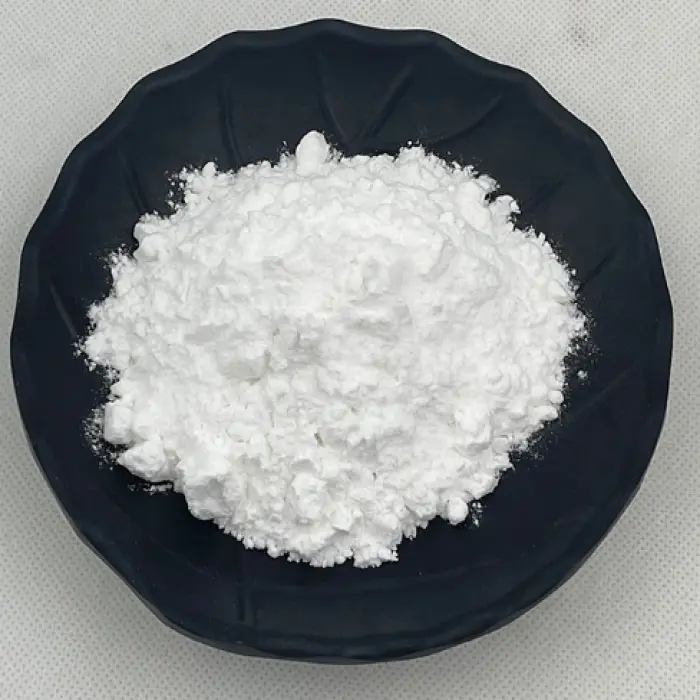
Zinc Phosphate 98% Industrial Corrosion Inhibitor
Zinc Phosphate 98% Industrial Grade, CAS No. 7779-90-0, is a white to light-grey inorganic phosphate powder used as a corrosion-inhibitor raw material, anti-corrosive pigment, protective-coating additive, and component of selected industrial corrosion-control formulations.
The product has the chemical formula Zn₃(PO₄)₂ and is characterized by its chemical stability, fine-powder form, and very low water solubility. Zinc Phosphate is widely used in protective coating systems for steel and other compatible metal substrates and may also be incorporated into appropriately formulated zinc/phosphate corrosion-control programs.
In suitable formulations, phosphate chemistry contributes to protective-film formation and surface passivation mechanisms that can help reduce corrosion of metal surfaces. Zinc Phosphate is particularly useful in anti-corrosive primers, industrial maintenance coatings, protective metal coatings, metal-treatment formulations, and specialty corrosion-inhibitor systems.
The material supplied under this specification is a solid Industrial Grade Zinc Phosphate powder. It should not be confused with a ready-to-use liquid cooling-water inhibitor. Because Zinc Phosphate is practically insoluble in water, use in industrial water-treatment systems requires appropriate formulation, dispersion, dosing, and technical evaluation.

Product Information
Product Name: Zinc Phosphate
Chemical Name: Zinc Phosphate
Alternative Name: Zinc Orthophosphate
Alternative Name: Trizinc Diphosphate
CAS No.: 7779-90-0
EC No.: 231-944-3
Chemical Formula: Zn₃(PO₄)₂
Molecular Weight: 386.08 g/mol
HS Code: 2835299000
Grade: Industrial Grade
Physical Form: Fine Powder
Appearance: White to Light Grey Powder
Zinc Phosphate Content: ≥98.0%
Water Solubility: Practically Insoluble
Density: Approx. 3.1–3.2 g/cm³
Primary Function: Corrosion-Inhibitor Raw Material
Primary Application: Industrial Corrosion Protection
Standard Packaging: 25 kg Bag
Key Features
- Zinc Phosphate content ≥98.0%
- Industrial Grade
- CAS No. 7779-90-0
- White to light-grey fine powder
- Stable inorganic phosphate material
- Corrosion-inhibitor raw material
- Anti-corrosive pigment
- Suitable for protective coating formulations
- Suitable for metal-treatment formulations
- Suitable for industrial anti-corrosion primers
- Suitable for selected zinc/phosphate water-treatment formulations
- Suitable for waterborne and solvent-borne coating systems subject to formulation testing
- Fine particle form for industrial formulation
- Standard 25 kg export packaging
- TDS, SDS, and batch-specific COA available according to actual supplied grade
Technical Specification
| Parameter | Specification |
| Product | Zinc Phosphate |
| Chemical Formula | Zn₃(PO₄)₂ |
| CAS No. | 7779-90-0 |
| EC No. | 231-944-3 |
| Molecular Weight | 386.08 g/mol |
| Grade | Industrial Grade |
| Appearance | White to Light Grey Fine Powder |
| Zinc Phosphate | ≥98.0% |
| Zinc Content | ≥46.0% |
| P₂O₅ Content | ≥40.0% |
| Moisture | ≤1.5% |
| Water-Soluble Matter | ≤1.0% |
| Oil Absorption | 25–40 g/100 g |
| pH, 10% Suspension | 6.0–8.0 |
| Residue on 45 µm Sieve | ≤0.5% |
| Water Solubility | Practically Insoluble |
| Density | Approx. 3.1–3.2 g/cm³ |
| Standard Packaging | 25 kg Bag |
The final contractual specification should correspond to the manufacturer's approved TDS and batch-specific Certificate of Analysis.
Corrosion-Inhibition Principle
Zinc Phosphate is used as an inorganic corrosion-inhibiting material in appropriately designed formulations.
In protective coating systems, phosphate-containing compounds can participate in chemical processes at the coating/metal interface that support formation of protective phosphate-containing layers.
These protective mechanisms can help reduce electrochemical corrosion when Zinc Phosphate is incorporated into a properly formulated coating or corrosion-control system.
Actual corrosion-inhibition performance depends on factors including:
- Metal type
- Surface preparation
- Zinc Phosphate concentration
- Particle size
- Binder chemistry
- Coating thickness
- Water chemistry
- pH
- Temperature
- Chloride concentration
- Humidity
- Environmental exposure
- Other pigments and additives
- Application conditions
Zinc Phosphate should therefore be considered a functional corrosion-inhibitor raw material rather than a guarantee of complete corrosion prevention.
Protective Coatings
One of the primary applications of Zinc Phosphate is as an anti-corrosive pigment in industrial protective coatings.
It may be incorporated into suitable:
- Epoxy primers
- Alkyd primers
- Acrylic coatings
- Polyurethane-compatible formulations
- Waterborne coatings
- Solvent-borne coatings
- Industrial maintenance coatings
- Metal primers
- Protective steel coatings
The appropriate concentration depends on binder chemistry, pigment volume concentration, coating thickness, substrate, and expected service environment.
Anti-Corrosive Primers
Zinc Phosphate is commonly incorporated into primer systems designed for corrosion protection of metal surfaces.
Potential applications include:
- Structural-steel primers
- Machinery primers
- Equipment coatings
- Fabricated-metal primers
- Industrial maintenance primers
- Automotive primers
- General metal-protection coatings
Proper surface preparation remains essential to achieving the intended coating performance.
Steel Protection
Zinc Phosphate-containing coatings may be used for corrosion protection of suitable steel structures and components.
Potential applications include:
- Carbon steel
- Structural steel
- Industrial machinery
- Storage tanks
- Steel pipelines
- Fabricated-metal components
- Construction equipment
- Agricultural machinery
- Industrial enclosures
- Metal furniture
Performance depends on the complete coating system rather than Zinc Phosphate alone.
Industrial Corrosion-Inhibitor Formulations
Zinc Phosphate may be incorporated as a functional raw material in specialty corrosion-control formulations.
Potential uses include:
- Phosphate-based corrosion inhibitors
- Zinc/phosphate inhibitor systems
- Protective metal-treatment formulations
- Specialty industrial inhibitor blends
- Anti-corrosion coating packages
The final formulation should be evaluated for stability, compatibility, application method, and corrosion performance.
Cooling-Water Corrosion-Control Formulations
Zinc and phosphate chemistry may be incorporated into appropriately designed industrial cooling-water corrosion-control programs.
Potential applications include formulations intended for:
- Cooling towers
- Recirculating cooling-water systems
- Industrial heat exchangers
- Condenser-water circuits
- Process cooling systems
- Industrial circulation-water systems
However, solid Zinc Phosphate is practically insoluble in water and should not automatically be treated as a directly soluble, ready-to-dose cooling-water chemical.
For water-treatment applications, it should be used as an appropriately formulated component or raw material where the formulation and dosing strategy have been technically validated.
Water-Treatment Considerations
When Zinc Phosphate chemistry is considered for industrial water-treatment formulations, important system parameters include:
- Water pH
- Calcium hardness
- Total alkalinity
- Chloride concentration
- Conductivity
- Temperature
- Flow velocity
- Cycles of concentration
- System metallurgy
- Existing scale inhibitors
- Other corrosion inhibitors
- Biocide program
- Zinc discharge limits
- Phosphorus discharge limits
Compatibility and precipitation behavior should be evaluated before full-scale application.
Metal Surface Treatment
Zinc Phosphate chemistry is used in selected metal-treatment applications.
Potential applications include:
- Metal surface conditioning
- Pre-paint treatment
- Phosphate conversion systems
- Corrosion-control formulations
- Coating-preparation systems
- Metal-finishing processes
The Zinc Phosphate powder described here is a raw material and should not be confused with a complete commercial phosphating bath.
Complete phosphating systems may contain acids, accelerators, metal salts, surfactants, and other proprietary additives.
Marine and Heavy-Duty Protective Coatings
Zinc Phosphate may be incorporated into suitable heavy-duty coating formulations intended for industrial and marine environments.
Potential applications include:
- Marine equipment
- Port infrastructure
- Industrial steel structures
- Heavy machinery
- Transportation equipment
- Storage vessels
- Industrial pipework
- Protective maintenance coatings
Performance in severe environments should be established through appropriate coating-system testing.
Automotive and Transportation Applications
Zinc Phosphate may be used in suitable corrosion-protection formulations for:
- Automotive primers
- Vehicle chassis coatings
- Commercial transportation equipment
- Metal components
- Agricultural vehicles
- Industrial vehicles
- Protective primer systems
Particle size, pigment loading, binder compatibility, and coating thickness should be selected according to the final formulation.
Construction and Infrastructure
Zinc Phosphate-based protective coatings may be used for suitable metal components found in:
- Industrial buildings
- Structural steel
- Bridges
- Warehouses
- Manufacturing facilities
- Utility structures
- Metal frameworks
- Process plants
The overall corrosion-protection performance depends on surface preparation, primer selection, intermediate coats, topcoat, film thickness, and exposure conditions.
Industrial Equipment
Potential applications include corrosion-protective coating systems for:
- Pumps
- Valves
- Tanks
- Machinery
- Metal housings
- Pipework
- Frames
- Fabricated steel
- Industrial tools
- Processing equipment
Selection should be based on the operating environment and the complete protective coating system.
Coating Formulation
The required Zinc Phosphate concentration varies according to:
- Binder type
- Pigment volume concentration
- Total solids
- Particle-size distribution
- Other anti-corrosive pigments
- Extenders
- Fillers
- Coating viscosity
- Required dry-film thickness
- Substrate type
- Environmental exposure
Laboratory formulation and corrosion-performance testing are recommended before commercial production of a new coating system.
There is no universal Zinc Phosphate percentage suitable for every paint or coating.
Compatibility
Zinc Phosphate may be compatible with various industrial coating and corrosion-control ingredients, subject to formulation testing.
Potential formulation components include:
- Epoxy binders
- Alkyd resins
- Acrylic systems
- Polyurethane systems
- Waterborne binders
- Solvent-borne binders
- Extenders
- Fillers
- Dispersants
- Rheology modifiers
- Other anti-corrosive pigments
For water-treatment formulations, compatibility should be evaluated with:
- Phosphonates
- Polyphosphates
- Dispersants
- Scale inhibitors
- Molybdates
- Silicates
- Biocides
- Oxidizing treatment chemicals
Testing should be performed to identify possible precipitation, instability, or undesirable chemical interaction.
Application and Dosage
There is no universal dosage for Zinc Phosphate across all corrosion-control applications.
For paints and protective coatings, the required loading depends on:
- Binder chemistry
- Pigment volume concentration
- Total pigment loading
- Coating solids
- Dry-film thickness
- Substrate
- Surface preparation
- Other pigments
- Required corrosion resistance
- Environmental exposure
For industrial water-treatment formulations, treatment concentration depends on:
- Final zinc concentration
- Phosphate concentration
- Water chemistry
- pH
- Corrosion rate
- System metallurgy
- Temperature
- Flow
- Cooling-water cycles
- Other treatment chemicals
- Environmental discharge requirements
The appropriate dosage should therefore be established through formulation development, laboratory testing, field evaluation, or the approved treatment program.
Physical Properties
Appearance: White to Light Grey Fine Powder
Physical State: Solid
Odor: Typically Odorless
Water Solubility: Practically Insoluble
Density: Approx. 3.1–3.2 g/cm³
Chemical Stability: Stable under recommended storage conditions
Primary Chemical Function: Inorganic Phosphate Corrosion-Inhibitor Raw Material
Because of its low water solubility, direct dispersion or formulation requirements should be considered during product development.
Environmental Considerations
Zinc-containing materials should be handled responsibly to prevent uncontrolled environmental release.
For industrial water-treatment applications, particular attention should be given to:
- Zinc discharge limits
- Total phosphorus limits
- Cooling-tower blowdown requirements
- Wastewater-treatment requirements
- Environmental permits
- Aquatic toxicity
- Local discharge regulations
Do not discharge concentrated Zinc Phosphate or Zinc Phosphate-containing waste directly into surface water, drains, or the environment.
Waste and contaminated packaging should be managed according to applicable regulations and the product-specific SDS.
Packaging
Standard Packaging
25 kg Bag
Recommended configuration:
25 kg PP Woven Bag with PE Inner Liner
or:
25 kg Paper Bag with PE Inner Liner
depending on the actual packaging supplied.

Bulk Packaging
Where available:
- 500 kg Jumbo Bag
- 1000 kg FIBC Jumbo Bag
Only packaging formats genuinely available from the supplier should be offered.
Storage
Store Zinc Phosphate in its original tightly closed packaging in a:
- Cool location
- Dry warehouse
- Well-ventilated area
Protect from:
- Moisture
- Rain
- Contamination
- Uncontrolled contact with incompatible chemicals
- Strong acids
- Damage to packaging
Keep containers or bags tightly closed when not in use.
Maintain good warehouse housekeeping and avoid unnecessary dust generation.
Handling and Safety
Handle Zinc Phosphate according to the current product-specific Safety Data Sheet.
Recommended workplace precautions may include:
- Protective gloves
- Safety goggles
- Protective clothing
- Suitable dust-control measures
- Adequate ventilation
- Good industrial hygiene
Avoid:
- Dust inhalation
- Eye contact
- Ingestion
- Unnecessary skin contact
- Uncontrolled environmental release
Wash thoroughly after handling and before eating, drinking, or smoking.
Transport and Environmental Classification
Transport classification must be based on the current SDS for the actual supplied product and packaging configuration.
Zinc Phosphate may be subject to environmental-hazard transport requirements.
Where applicable, the product-specific SDS should establish:
- UN Number
- Proper Shipping Name
- Transport Hazard Class
- Packing Group
- Marine Pollutant status
- ADR/RID classification
- IMDG classification
- IATA classification
Do not copy transport information from another supplier without confirming that it applies to the actual material being shipped.
Quality Control
Each production batch should be evaluated against the approved commercial specification.
Typical quality-control parameters may include:
- Appearance
- Zinc Phosphate content
- Zinc content
- P₂O₅ content
- Moisture
- Water-soluble matter
- pH
- Oil absorption
- Particle-size or sieve residue
- Packaging integrity
Actual test results should be recorded on the batch-specific Certificate of Analysis.

Technical Data Summary
Product: Zinc Phosphate
Chemical Name: Zinc Phosphate
Alternative Name: Zinc Orthophosphate
CAS No.: 7779-90-0
EC No.: 231-944-3
Formula: Zn₃(PO₄)₂
Molecular Weight: 386.08 g/mol
Grade: Industrial Grade
Appearance: White to Light Grey Fine Powder
Zinc Phosphate: ≥98.0%
Zinc Content: ≥46.0%
P₂O₅: ≥40.0%
Moisture: ≤1.5%
Water-Soluble Matter: ≤1.0%
Oil Absorption: 25–40 g/100 g
pH, 10% Suspension: 6.0–8.0
45 µm Sieve Residue: ≤0.5%
Water Solubility: Practically Insoluble
Density: Approx. 3.1–3.2 g/cm³
Primary Function: Corrosion-Inhibitor Raw Material
Primary Application: Industrial Corrosion Protection
Standard Packaging: 25 kg Bag
Supporting Documentation
Available documentation may include:
- Technical Data Sheet (TDS)
- Safety Data Sheet (SDS)
- Batch-Specific Certificate of Analysis (COA)
- Commercial Invoice
- Packing List
- Certificate of Origin
- Transport Documentation
Additional certifications, registrations, or third-party inspection reports should only be stated when valid and applicable to the actual supplied product.
Product Summary
Zinc Phosphate 98% Industrial Grade, CAS 7779-90-0, is a white to light-grey inorganic phosphate powder used primarily as a corrosion-inhibitor raw material and anti-corrosive pigment.
It is suitable for incorporation into protective primers, industrial coatings, steel-protection systems, metal-treatment formulations, and selected professionally formulated zinc/phosphate corrosion-control systems.
The product contains a minimum of 98.0% Zinc Phosphate and is practically insoluble in water. Because of its low water solubility, the solid powder should not be represented as a ready-to-dose soluble cooling-water treatment chemical. Water-treatment applications require appropriate formulation and technical evaluation.
Standard packaging is 25 kg bags, with bulk packaging available where applicable.
The product should be stored in a cool, dry, well-ventilated location in tightly sealed packaging, protected from moisture, contamination, and incompatible materials.
Final formulation concentration, application rate, corrosion-control performance, and system compatibility should be determined according to the intended application, substrate or water chemistry, operating conditions, and applicable environmental requirements.








 Australia
 Morocco
 Georgia
 Poland
 Russia