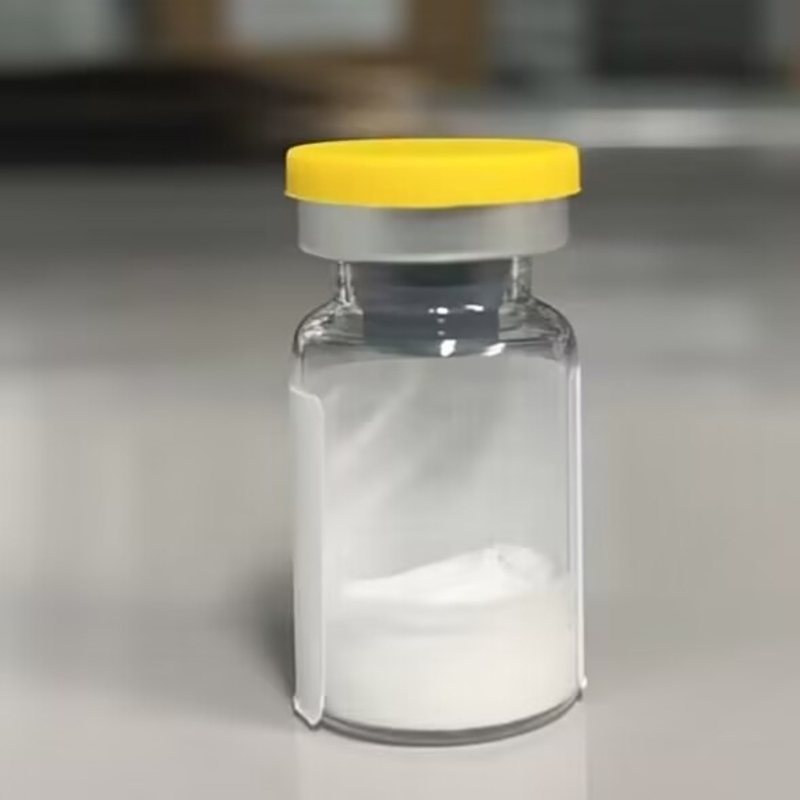
5-(4-Hydroxybenzyl)thiazolidine-2,4-dione CAS 74772-78-4 98% HPLC Thiazolidinedione Building Block for TZD Synthesis
Keywords: 5-(4-hydroxybenzyl)thiazolidine-2,4-dione, CAS 74772-78-4, thiazolidinedione intermediate, pioglitazone M1 metabolite, PTP1B inhibitor, TZD building block
Product Overview
5-(4-Hydroxybenzyl)thiazolidine-2,4-dione (CAS 74772-78-4) is a hydroxylated member of the thiazolidinedione family, supplied as a white to pale yellow powder or crystalline solid with a melting point of 145-147 C. Its defining feature is the phenolic hydroxyl group on the benzyl side chain, which acts as a reactive handle for etherification and makes the compound a key synthetic intermediate for glitazone class drugs. The same 4-hydroxy substituent underpins its documented biological activity as an inhibitor of aldose reductase and protein tyrosine phosphatase 1B, and the compound is also handled as the M1 metabolite reference of pioglitazone in bioanalytical work.
Key Attributes
| CAS No. | 74772-78-4 |
| Molecular Formula | C10H9NO3S |
| Molecular Weight | 223.25 g/mol |
| IUPAC Name | 5-[(4-hydroxyphenyl)methyl]-1,3-thiazolidine-2,4-dione |
| Exact Mass | 223.0303 Da |
| InChIKey | NKOHRVBBQISBSB-UHFFFAOYSA-N |
| MDL Number | MFCD00754499 |
| UNII | M8U25244KP |
| Chemical Family | Thiazolidinedione, hydroxybenzyl substituted heterocycle |
| Appearance | Powder to crystalline solid |
| Color | White to pale yellow to pale red |
| Purity | Not less than 98.0% by HPLC. A 95.0% HPLC grade is also available for screening use. |
| Melting Point | 145-147 C |
| Boiling Point | 471.5 C at 760 mmHg (calculated) |
| Density | 1.450 g/cm3 (calculated) |
| Solubility | Slightly soluble in DMSO on heating. Slightly soluble in methanol. |
| LogP | 1.7 (calculated) |
| pKa | 6.38 (calculated) |
| Hydrogen Bond Donors | 2 |
| Hydrogen Bond Acceptors | 4 |
| Rotatable Bonds | 2 |
| Stereochemistry | One undefined stereocenter at position 5. Supplied as the racemate unless a single enantiomer is requested. |
| Storage Condition | Store at room temperature in a tightly closed container, protected from moisture and light |
Key Highlights
- HIGH PURITY GRADE: Standard offer is not less than 98.0 percent assay by HPLC, with each batch released against a lot specific certificate of analysis.
- REACTIVE PHENOLIC HANDLE: The 4-hydroxy group on the benzyl side chain supports etherification chemistry, which is the step used to build more complex thiazolidinedione drug structures from this core.
- DOCUMENTED ENZYME ACTIVITY: Reported as an inhibitor of aldose reductase and protein tyrosine phosphatase 1B in published studies, giving it an established role in metabolic disease research.
- BIOANALYTICAL REFERENCE USE: Widely handled as the M1 metabolite reference of pioglitazone for chromatographic method work and metabolite quantification.
- SHARP MELTING POINT: Melts at 145-147 C, a narrow range that supports identity confirmation and batch to batch consistency in incoming inspection.
- FLEXIBLE ORDER QUANTITY: Minimum order quantity of 1 g allows small scale evaluation before committing to kilogram quantities, with graded packaging from 1 g up to 1 kg.
- FAST LEAD TIME: Orders are normally dispatched within 7 working days, shipped by courier or by air according to quantity and destination.
- COMPLETE DOCUMENTATION: Certificate of analysis and technical data sheet accompany every shipment, with batch traceability and structural confirmation data on request.
Product Description
5-(4-Hydroxybenzyl)thiazolidine-2,4-dione is a hydroxy functionalized thiazolidinedione with the molecular formula C10H9NO3S and a molecular weight of 223.25 g/mol. The compound presents as a powder to crystalline solid, white to pale yellow in color, with a melting point of 145-147 C and a calculated density of 1.450 g/cm3. It is slightly soluble in methanol and dissolves in DMSO with mild heating, which is the normal working condition for preparing stock solutions in laboratory use. Position 5 of the thiazolidinedione ring carries one stereocenter, so the material is supplied as a racemate in standard offers.
The chemistry of this molecule is dominated by two functional sites. The cyclic imide gives the thiazolidinedione ring its characteristic acidic proton and its hydrogen bonding pattern, which is the recognition motif shared across the glitazone class. The phenolic hydroxyl group on the benzyl side chain is the more useful of the two for synthetic work, because it can be alkylated or etherified under mild conditions to install a wide range of side chains. This makes the compound a practical starting point for building libraries of thiazolidinedione derivatives without having to construct the heterocyclic ring at each step. In the biological literature the same hydroxyl group is reported to be essential for target engagement, since the non hydroxylated benzyl analog shows markedly weaker activity in enzyme inhibition assays.
Dideu Group supplies this material in graded packaging from 1 g to 1 kg, with the standard grade at not less than 98.0 percent purity by HPLC and an alternative 95.0 percent grade for screening programs. Customized packaging and larger quantities are arranged according to customer requirements. The minimum order quantity is 1 g, standard lead time is within 7 working days after order confirmation, and goods move by courier or by air depending on the volume of the order and the destination market.
Applications
Thiazolidinedione Drug Intermediate
The largest commercial role of this compound is as a synthetic intermediate for thiazolidinedione based drug substances. The phenolic hydroxyl group is the attachment point for subsequent etherification steps that install the side chains of glitazone class molecules, including pioglitazone and related analogs. Because the heterocyclic core is already built and carries a reactive handle, formulators of synthetic routes can reach target structures in fewer steps than by ring construction late in the sequence.
Aldose Reductase Inhibitor Research
Published studies report this compound as a micromolar inhibitor of aldose reductase, with an IC50 of 1.1 uM in a bovine lens enzyme assay, against more than 100 uM for the non hydroxylated benzyl analog. That structure activity relationship makes it a standard tool compound for research programs addressing diabetic complications such as neuropathy, retinopathy and nephropathy, where aldose reductase is a validated target.
PTP1B Inhibitor Studies
The compound is documented as an inhibitor of protein tyrosine phosphatase 1B, with a reported IC50 of 3.86 uM compared with 17.2 uM for the 4-methoxy analog. It therefore serves as a starting point or positive control in screening campaigns and structure activity studies aimed at type 2 diabetes and obesity related targets, where PTP1B acts as a negative regulator of insulin signaling.
Tyrosinase and Monoamine Oxidase B Probes
Additional literature describes activity of this scaffold against tyrosinase, with a reported IC50 of 13.36 uM against a kojic acid reference of 24.72 uM in a mushroom tyrosinase assay, and reversible inhibition of monoamine oxidase B with a reported IC50 of 2.25 uM. These profiles support its use as a dual target probe in polypharmacology and enzyme screening work.
Bioanalytical Reference Standard
In pharmaceutical analysis this compound is handled as the M1 metabolite reference of pioglitazone. It is used for chromatographic identity confirmation, method development and validation, and metabolite quantification by liquid chromatography with tandem mass spectrometry, where an authentic reference of the exact metabolite structure is required rather than a generic thiazolidinedione.
Medicinal Chemistry Building Block
Beyond named targets, the compound is used as a heterocyclic building block in medicinal chemistry programs that explore the thiazolidinedione scaffold, including analog synthesis, library construction and structure activity relationship studies around the 5-position and the phenolic hydroxyl group.
Note: the enzyme inhibition values quoted above are figures reported in the published literature for this compound and are provided for orientation only. They are not batch release specifications and do not constitute a performance guarantee for any particular assay. Buyers should confirm activity in their own systems.
Specifications
| Item | Specification | Typical Value |
| Assay by HPLC | Not less than 98.0% | Complies |
| Appearance | Powder to crystalline solid | Complies |
| Color | White to pale yellow to pale red | Complies |
| Melting point | 145-147 C | Complies |
| Molecular formula | C10H9NO3S | Complies |
| Molecular weight | 223.25 g/mol | Complies |
| Solubility in DMSO | Slightly soluble on heating | Complies |
| Solubility in methanol | Slightly soluble | Complies |
| Packing | As ordered, from 1 g to 1 kg | Complies |
Packaging and Shipping
| Packaging Type | Standard Sizes |
| Aluminum foil bag, sealed | 1 g, 5 g, 25 g, 100 g |
| Amber glass bottle with liner | 250 g, 500 g, 1 kg |
| Customized packaging | Arranged according to customer requirements |
Storage Recommendations
- Store at room temperature in a cool, dry and well ventilated place.
- Keep the container tightly closed whenever the material is not in use.
- Protect from moisture and from direct sunlight.
- Keep away from heat sources and reseal the package promptly after dispensing.
Shipping and Lead Time
- Mode of transport: by courier or by air, selected according to order quantity and destination.
- Lead time: within 7 working days after order confirmation.
- Minimum order quantity: 1 g.
Company Profile
Dideu Group is a professional supplier of fine chemicals and specialty chemicals, serving customers in global markets with a full range of products from lab scale reagents to industrial quantities. Our portfolio covers heterocyclic building blocks, pharmaceutical and agrochemical intermediates, reference compounds for analytical work and custom synthesis starting materials.
We work with qualified manufacturing partners and maintain strict incoming and outgoing quality control, so every batch of 5-(4-Hydroxybenzyl)thiazolidine-2,4-dione is released with a certificate of analysis and a technical data sheet. Orders are handled by an experienced export team that manages documentation, packing and logistics from gram quantities up to kilogram scale. Our goal is to give buyers a dependable source of consistent material with clear technical support and honest lead times.
FAQ
1. What is the minimum order quantity?
The minimum order quantity at Dideu is 1 g, which allows buyers to evaluate a batch before committing to larger quantities. Graded packaging runs from 1 g up to 1 kg, and larger volumes are quoted on request.
2. What is the lead time?
Standard lead time is within 7 working days after order confirmation. The exact date is confirmed in writing when the order is placed, as it depends on the requested purity grade, packing format and total quantity.
3. Which packaging options do you offer?
Small quantities from 1 g to 100 g are packed in sealed aluminum foil bags, and quantities from 250 g to 1 kg are packed in amber glass bottles with an inner liner. Customized packaging can be arranged according to customer requirements.
4. What payment terms do you accept?
Dideu accepts payment by T/T and by L/C. The specific terms are agreed with the buyer before the order is confirmed and are stated on the proforma invoice.
5. Do you provide a certificate of analysis and technical documents?
Yes. Every shipment is accompanied by a batch specific certificate of analysis reporting HPLC purity and a technical data sheet. Structural confirmation data and batch traceability are available on request.
6. How do you ship the goods?
Goods are shipped by courier or by air depending on order quantity, destination and buyer preference. Gram scale orders normally move by international courier, while kilogram quantities are arranged by air freight.
7. Which purity grade should I choose?
The standard offer is not less than 98.0 percent by HPLC, which suits reference standard work, synthetic routes requiring a clean starting material and analytical method development. A 95.0 percent grade is also available and is normally sufficient for early stage screening and route scouting, where a lower unit cost matters more than the last few percent of purity.







 ISO Certificate
 REACH
REACH
 Russia