Product
Supplier
Encyclopedia
Inquiry
Home > Pharmaceutical Intermediates > Bulk Drug Intermediates > (-)-Carnitine for Sale > L-Carnitine 600, Energy metabolism, Lipid oxidation, Cell energy supply, Fatty acid transport, Antioxidant activity, Research raw material,
L-Carnitine 600, Energy metabolism, Lipid oxidation, Cell energy supply, Fatty acid transport, Antioxidant activity, Research raw material, buy - large image1
L-Carnitine 600, Energy metabolism, Lipid oxidation, Cell energy supply, Fatty acid transport, Antioxidant activity, Research raw material, buy - image1
L-Carnitine 600, Energy metabolism, Lipid oxidation, Cell energy supply, Fatty acid transport, Antioxidant activity, Research raw material, buy - image2
L-Carnitine 600, Energy metabolism, Lipid oxidation, Cell energy supply, Fatty acid transport, Antioxidant activity, Research raw material, buy - image3
L-Carnitine 600, Energy metabolism, Lipid oxidation, Cell energy supply, Fatty acid transport, Antioxidant activity, Research raw material, buy - image4
L-Carnitine 600, Energy metabolism, Lipid oxidation, Cell energy supply, Fatty acid transport, Antioxidant activity, Research raw material, buy - image5
L-Carnitine 600, Energy metabolism, Lipid oxidation, Cell energy supply, Fatty acid transport, Antioxidant activity, Research raw material, buy - image6

L-Carnitine 600, Energy metabolism, Lipid oxidation, Cell energy supply, Fatty acid transport, Antioxidant activity, Research raw material,

TDS 68 Inquiries

Unit Price:

$54/UNIT FOB

Get Latest Price
CAS No.:

541-15-1

Grade:

Pharmaceutical Grade

Content:

99%

Port:

HongKong

Brand:

Novio

Packaging:

10ml*10vials

Sample Available:

Yes

Price valid (until):

2027-01-01

Company Type:
Trader
Location:
China
Qualification:
Main Products:

Peptides,Cosmetic Raw Materials,Pharmaceutical Intermediates

  • Product Details

  • Seller Information

  • Inquiry History

  • Description


      Product Detail  


    WhatsApp: +852 9335 4794
    Email: 15030963274@163.com

    L-Carnitine 600 is a high-purity L-carnitine research-grade material widely used in studies concerning cellular metabolism. Characterized by a unique molecular structure, its primary function is to mediate the transmembrane transport of fatty acids, facilitating the entry of lipid substrates into oxidative pathways and participating in intracellular energy generation. With stable physicochemical properties, L-Carnitine 600 is compatible with various in vitro cell culture systems. It can be used either as a standalone experimental intervention for single-variable studies or in combination with other metabolic agents (such as peptides) to explore complex interactions. It serves as a standard experimental tool for elucidating the biochemical mechanisms underlying lipid turnover and energy supply, making it highly valuable in the fields of lipid metabolism and cellular bioenergetics.
    The core research value of L-Carnitine 600 lies in its role in fatty acid transport. Long-chain fatty acids cannot spontaneously traverse organelle membranes; they require carrier molecules to facilitate transmembrane transport before they can enter oxidative metabolic pathways. L-Carnitine 600 binds to long-chain fatty acids to form a transportable complex, delivering lipid substrates to specific reaction sites and initiating the process of fatty acid oxidation and breakdown. A deficiency of this carrier molecule hinders the entry of long-chain fatty acids into oxidative pathways, leading to intracellular accumulation and the buildup of lipid droplets, which disrupts metabolic balance. In high-lipid in vitro cell culture models, the addition of L-Carnitine 600 at appropriate concentrations enhances fatty acid transport efficiency, promotes the breakdown and consumption of lipid substrates, reduces intracellular lipid accumulation, and maintains a dynamic equilibrium between lipid storage and consumption. This transport capability is the fundamental reason why the material is highly valued in lipid metabolism research.
    Lipid oxidation and cellular energy supply constitute another key area of ​​research involving L-Carnitine 600. Once fatty acids have undergone transmembrane transport, they enter a series of oxidative biochemical reactions, where they are progressively broken down to generate energy molecules that the cell can utilize. As a transport carrier, L-Carnitine 600 plays an indispensable role in the conversion of lipids into energy. In *in vitro* culture systems where lipids serve as the primary nutritional substrate, supplementation with L-Carnitine 600 activates fatty acid oxidation pathways and enhances the efficiency of energy production from lipids, thereby providing stable energy support for essential cellular activities. An adequate energy supply ensures the smooth operation of biochemical processes such as cell proliferation and matrix synthesis. In cell models subjected to high metabolic stress, this ingredient optimizes substrate utilization patterns by mobilizing stored lipid substrates for energy generation, thereby alleviating growth abnormalities caused by energy deficits.
    Antioxidant protection and the maintenance of organelle homeostasis are also key functional attributes of L-Carnitine 600. Fatty acid oxidation generates reactive oxygen species (ROS); excessive ROS can attack biological macromolecules, compromise membrane integrity, damage organelles, and disrupt normal cellular metabolism. L-Carnitine 600 assists in scavenging excess free radicals, mitigating the sustained damage caused by oxidative chain reactions, reducing the adverse effects of oxidative stress, and preserving the structural integrity of organelle membranes. In *in vitro* models of oxidative damage, treatment with L-Carnitine 600 leads to reduced levels of oxidative stress markers, better preservation of organelle structure, and improved cell survival rates. Furthermore, this ingredient minimizes the intracellular accumulation of untransported free fatty acids, reduces secondary stress caused by free lipids, fosters a stable intracellular microenvironment, and mitigates the impact of metabolic stress on cellular health.
    L-Carnitine 600 gently modulates cellular metabolic rhythms and optimizes substrate utilization preferences. Cells can switch between carbohydrate and lipid substrates for energy production depending on the available nutrients in their environment. L-Carnitine 600 enhances the cellular capacity to utilize long-chain fatty acids, encouraging cells to prioritize stored lipids as an energy source and shifting their substrate preference. In long-term *in vitro* culture experiments, this substrate-switching effect reduces lipid droplet accumulation and sustains metabolic homeostasis. Rather than directly altering gene expression signals, this raw material regulates metabolic patterns at the level of substrate supply by opening up substrate transport pathways. Its mode of action is mild and stable, making it suitable for continuous observation and research in long-term cell culture models.
    Physicochemically, the research-grade L-Carnitine 600 product typically appears as a white crystalline powder with good water solubility, yielding a clear, colorless solution. The purification process adheres to strict standard operating procedures, involving multiple rounds of purification to remove impurities. Product purity is verified via High-Performance Liquid Chromatography (HPLC), with molecular structure confirmed through spectroscopic analysis; each batch comes with a comprehensive Certificate of Analysis (COA) documenting key metrics such as purity, moisture content, heavy metals, and related impurities, facilitating quality verification by the purchaser. The powder should be stored in a sealed, light-protected environment to prevent moisture absorption and ensure the stability of molecular activity during long-term storage. During in vitro experiments, the crystalline powder can be dissolved in suitable solvents to prepare stock solutions of varying concentrations, which are then diluted as needed and added to the cell culture medium. L-Carnitine 600 aqueous solutions are highly compatible with standard cell culture media; they dissolve without precipitation and do not introduce irritating by-products, thereby minimizing solvent-induced experimental interference and ensuring the reproducibility of results.
    L-Carnitine 600 offers diverse applications in scientific research, spanning various branches of cell biology and biochemistry. First, in studies of fatty acid transport mechanisms, it is used to establish in vitro biochemical reaction systems and concentration gradients to investigate how L-Carnitine 600 regulates the transmembrane transport of long-chain fatty acids and to elucidate the underlying biochemical logic of lipid transport. Second, in research involving cellular lipid accumulation models, it is used in high-fat-induced culture systems to observe changes in lipid droplet morphology and intracellular lipid content following L-Carnitine 600 intervention, thereby assessing the material's ability to promote lipid oxidation pathways—a process useful for screening metabolically active compounds. Third, in experiments concerning protection against oxidative stress, it is used to establish models of oxidative cell damage, monitor changes in oxidative markers, and evaluate the protective effects of L-Carnitine 600 on cellular organelles. Fourth, research into cellular substrate metabolic preferences investigates how raw materials influence cellular energy substrate selection and elucidates changes in cellular physiological states during lipid-based energy production. Fifth, parallel control experiments—often involving comparative testing against metabolic and antioxidant research peptides such as 5-Amino-1MQ, Mazdutide, Tirzepatide, and Retatrutide—are used to distinguish the mechanistic differences between carrier-type materials and receptor-modulating peptides regarding lipid metabolism and energy supply.
    L-Carnitine 600 is classified as a research material involved in lipid transport and energy metabolism; compared to peptides in the same field, it shares certain research objectives while exhibiting distinct characteristics. 5-Amino-1MQ focuses on enhancing mitochondrial energy turnover and accelerating lipid breakdown; as a peptide, it acts directly on mitochondrial regulatory pathways. In contrast, L-Carnitine 600 functions as a carrier molecule responsible for the transmembrane transport of fatty acids, operating at the upstream substrate-delivery stage of lipid oxidation; while the research models for both are similar, their specific targets of action differ completely. Mazdutide, Tirzepatide, and Retatrutide are multi-receptor agonist peptides that regulate lipid synthesis and breakdown at the level of gene expression by activating receptor signaling networks—a form of upstream signal regulation. L-Carnitine 600, however, does not bind to receptors but participates directly in the biochemical reactions of substrate transport. Humanin and SS-31 focus on mitochondrial antioxidant protection, preserving organelle structure and reducing oxidative damage; however, they lack fatty acid transport capabilities and cannot mediate the transmembrane delivery of long-chain lipid substrates. Researchers can utilize L-Carnitine 600 independently or in parallel with the aforementioned metabolic peptides to analyze, from multiple perspectives, the underlying molecular mechanisms by which these active substances regulate lipid metabolism and cellular energy supply.
    When conducting *in vitro* cell experiments, a rigorous control group design is essential for obtaining reliable data. Standard experimental protocols require the inclusion of blank control groups and solvent control groups to rule out any effects attributable to the culture medium or the solvent itself. Establishing groups with multiple concentration gradients allows for the plotting of dose-response curves and the identification of the optimal working concentration range for the experimental model. Factors such as cell seeding density, incubation duration, and culture conditions (temperature and gas composition) influence the efficacy of L-Carnitine 600. Preliminary experiments are essential prior to the main study to optimize parameters, minimize data deviations caused by extraneous variables, and ensure the stability and reproducibility of results in accordance with scientific standards. As the material exhibits dose-dependent effects—where excessively high concentrations may impose metabolic stress on cells—concentration screening is a critical step in experimental design.
    Raw material quality is a prerequisite for successful experimentation. Rigorous control throughout the industrial purification process—including the removal of residual solvents, heavy metals, and contaminating proteins, alongside strict adherence to impurity limits—ensures consistent quality across batches. High-quality, consistent raw materials prevent reproducibility issues arising from batch-to-batch purity variations, thereby saving researchers time, consumables, and funding. For scientific laboratories and biotechnology R&D institutions, high-purity L-Carnitine 600 serves as a reliable reagent for research into fatty acid transport, lipid oxidation, and cellular energy metabolism.
    As fundamental research into lipid metabolism advances, *in vitro* studies concerning cellular substrate transport and energy production continue to deepen. With its unique carrier molecule structure, L-Carnitine 600 offers multiple activities—including fatty acid transport, promotion of lipid oxidation, support for cellular energy supply, and antioxidant protection—thereby enriching the repertoire of research materials in the field of metabolism. It can be used either as a standalone intervention reagent in single-variable experiments or in combination with other materials (such as peptides) to investigate how multiple active substances collectively influence cellular lipid metabolism and energy status. Extensive *in vitro* cell studies continue to elucidate the mechanism of action of L-Carnitine 600, driving progress in research regarding fatty acid transport pathways and lipid oxidative metabolism. As a classic research material for lipid metabolism, L-Carnitine 600 continues to provide robust support for fundamental research in cellular biochemistry and metabolic biology, helping researchers elucidate the molecular mechanisms underlying the regulation of cellular lipid metabolism and driving ongoing exploration in the development of formulations based on active metabolic ingredients.

    Items Specifications
    Names L-Carnitine
    Appearance White hygroscopic crystalline powder
    Purity ≥99.0%
    Shop L-Carnitine 600, Energy metabolism, Lipid oxidation, Cell energy supply, Fatty acid transport, Antioxidant activity, Research raw material,-Detailed Image 1
    Shop L-Carnitine 600, Energy metabolism, Lipid oxidation, Cell energy supply, Fatty acid transport, Antioxidant activity, Research raw material,-Detailed Image 2
    Shop L-Carnitine 600, Energy metabolism, Lipid oxidation, Cell energy supply, Fatty acid transport, Antioxidant activity, Research raw material,-Detailed Image 3
    Shop L-Carnitine 600, Energy metabolism, Lipid oxidation, Cell energy supply, Fatty acid transport, Antioxidant activity, Research raw material,-Detailed Image 4
    Shop L-Carnitine 600, Energy metabolism, Lipid oxidation, Cell energy supply, Fatty acid transport, Antioxidant activity, Research raw material,-Detailed Image 5
    Shop L-Carnitine 600, Energy metabolism, Lipid oxidation, Cell energy supply, Fatty acid transport, Antioxidant activity, Research raw material,-Detailed Image 6
    Shop L-Carnitine 600, Energy metabolism, Lipid oxidation, Cell energy supply, Fatty acid transport, Antioxidant activity, Research raw material,-Detailed Image 7
    Shop L-Carnitine 600, Energy metabolism, Lipid oxidation, Cell energy supply, Fatty acid transport, Antioxidant activity, Research raw material,-Detailed Image 8
    Shop L-Carnitine 600, Energy metabolism, Lipid oxidation, Cell energy supply, Fatty acid transport, Antioxidant activity, Research raw material,-Detailed Image 9
    Shop L-Carnitine 600, Energy metabolism, Lipid oxidation, Cell energy supply, Fatty acid transport, Antioxidant activity, Research raw material,-Detailed Image 10
    ECHEMI Editorial Reference
    L-carnitine is constituent of striated muscle and liver. It is used therapeutically to stimulate gastric and pancreatic secretions and in the treatment of hyperlipoproteinemias.Target: OthersL-Carnitine is an endogenous molecule involved in fatty acid metabolism, biosynthesized within the human body using amino acids: L-lysine and L-methionine, as substrates. L-Carnitine can also be found in many foods, but red meats, such as beef and lamb, are the best choices for adding carnitine into
    Solid
    (R)-carnitine is the (R)-enantiomer of carnitine. It has a role as an antilipemic drug, a water-soluble vitamin (role), a nutraceutical, a nootropic agent and a Saccharomyces cerevisiae metabolite. It is a conjugate base of a (R)-carnitinium. It is an enantiomer of a (S)-carnitine.|Constituent of striated muscle and liver. It is used therapeutically to stimulate gastric and pancreatic secretions and in the treatment of hyperlipoproteinemias.|Levocarnitine is a Carnitine Analog.|Levocarnitine is an amino acid derivative. Levocarnitine facilitates long-chain fatty acid entry into mitochondria, delivering substrate for oxidation and subsequent energy production. Fatty acids are utilized as an energy substrate in all tissues except the brain. (NCI04)|A constituent of STRIATED MUSCLE and LIVER. It is an amino acid derivative and an essential cofactor for fatty acid metabolism.

    Certificates
    • L-Carnitine 600, Energy metabolism, Lipid oxidation, Cell energy supply, Fatty acid transport, Antioxidant activity, Research raw material, Certificates 1 TDS

    Basic Info
    Product Name:

    (-)-Carnitine

    Other Name:

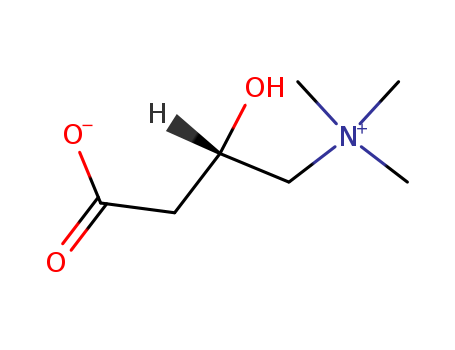
    1-Propanaminium,3-carboxy-2-hydroxy-N,N,N-trimethyl-,inner salt,(2R)-;Ammonium,(3-carboxy-2-hydroxypropyl)trimethyl-,hydroxide,inner salt,L-;1-Propanaminium,3-carboxy-2-hydroxy-N,N,N-trimethyl-,hydroxide,inner salt,(R)-;(-)-Carnitine;Carnitine,(-)-;l-Carnitine;Vitamin BT;L-(-)-Carnitine;Carnitine;L-Carnitine;(-)-L-Carnitine;Levocarnitine;(R)-Carnitine;1-Propanaminium,3-carboxy-2-hydroxy-N,N,N-trimethyl-,inner salt,(R)-;ST 198;Carniking 50;Carnitene;Carniking;Carnitor;Carnilean;Coaxel;Carnipass;Carnipass 20;L-Carnipure;Natrulon RC;Carnivit;Carnil;Aminocarnifarm;(3R)-3-Hydroxy-4-(trimethylazaniumyl)butanoate;101512-81-6;4209-27-2;7634-98-2

    CAS No.:

    541-15-1

    Molecular Formula:

    C7H15NO3

    InChIKeys:

    InChIKey=PHIQHXFUZVPYII-ZCFIWIBFSA-N

    Molecular Weight:

    161.199

    Exact Mass:

    161.105194

    EC Number:

    208-768-0

    UNII:

    0G389FZZ9M

    NSC Number:

    759132|741806

    DSSTox ID:

    DTXSID4023208

    NCI Thesaurus Code:

    C26657

    Color/Form:

    White, crystalline, hygroscopic powder

    ATC Code:

    A16AA01|A - Alimentary tract and metabolism

    HScode:

    29239000

    Characteristics
    PSA:

    60.36000

    XLogP3:

    -0.2

    Appearance:

    Solid

    Density:

    0.64 g/cm3

    Melting Point:

    196-198 °C

    Refractive Index:

    -32 ° (C=1, H2O)

    Water Solubility:

    2500 g/L (20 ºC)

    Storage Conditions:

    2-8°C

    Toxicity:

    LD50 orally in Rabbit: > 5000 mg/kg

    Specific rotation:

    The specific optical rotation is between -29 and -32

    PKA:

    3.8None

    Collision Cross Section:

    133.1 Ų [M+H]+ [CCS Type: DT, Method: single field calibrated with Agilent tune mix (Agilent)]|130 Ų [M+H]+ [CCS Type: TW, Method: calibrated with polyalanine]|132.9 Ų [M+H]+ [CCS Type: DT, Method: single field calibrated with ESI Low Concentration Tuning Mix (Agilent)]|132.9 Ų [M+H]+ [CCS Type: TW, Method: calibrated with polyalanine and drug standards]

    Experimental Properties:

    Hydroxyl radical reaction rate constant = 2.7X10⁻¹¹ cu cm/molecule-sec at 25 °C (est)

    Hazard Identification

    Classification of the substance or mixture

    Not classified.

    GHS label elements, including precautionary statements

    Pictogram(s) No symbol.
    Signal word

    No signal word

    Hazard statement(s)

    none

    Precautionary statement(s)
    Prevention

    none

    Response

    none

    Storage

    none

    Disposal

    none

    Other hazards which do not result in classification

    no data available

    Handling and Storage

    Precautions for safe handling

    Handling in a well ventilated place. Wear suitable protective clothing. Avoid contact with skin and eyes. Avoid formation of dust and aerosols. Use non-sparking tools. Prevent fire caused by electrostatic discharge steam.

    Conditions for safe storage, including any incompatibilities

    Store the container tightly closed in a dry, cool and well-ventilated place. Store apart from foodstuff containers or incompatible materials.

  • Seller Information
    Business Type:

    Trader

    Main Products:

    Peptides,Cosmetic Raw Materials,Pharmaceutical Intermediates

    Location:

    Room 1359, Room 103, Building Jia 19, Jixiang Garden, Tongzhou District, Beijing

    Year of Establishment:

    2026

  • Inquiry History
    68 Inquiries
    Country Product Purchase Quantity Date Posted
    Egypt

    L-Carnitine

    100.00 KG Oct 8, 2026
    Cameroon

    (-)-Carnitine

    10 PCS Sep 26, 2026
    Philippines

    L-Carnitine

    1 KG Sep 14, 2026
    Uzbekistan

    levocarnitine

    500 KG Sep 10, 2026
    Pakistan

    L-Carnitine

    10.00 KG Aug 24, 2026
    India

    L-Carnitine

    30.00 KG Aug 13, 2026
    India

    Cantine base

    4 MT Jul 29, 2026
    India

    L-Carnitine Base

    4 MT Jul 29, 2026
    Mexico

    Weight Loss L Carnitine Powder

    1 KG Jun 6, 2026
    Jordan

    L-carnitine

    1 KG May 13, 2026
    Brazil

    CARNITINE CAS 541-15-1

    5 KG Apr 1, 2026
    India

    L-Carnitine

    20.00 KG Mar 23, 2026
    India

    L-Carnitine

    2.0 MT Mar 9, 2026
    United States

    L carnitine powder

    2 KG Feb 27, 2026
    Pakistan

    L CARNITNINE

    50.00 KG Jan 27, 2026
    Mexico

    24-epi-brassinolide 90% 24-epi-brassinolide 90%

    25 KG Dec 19, 2025
    India

    L- carnitine USP

    25.00 KG Oct 13, 2025
    India

    L-Carnitine

    100.00 KG Aug 21, 2025
    United Arab Emirates

    L-Carnitine

    100.00 MT Aug 4, 2025
    United Kingdom

    L-Threonine

    50.00 KG Jun 12, 2025
    Post an enquiry for this product
pic ×

Scan the QR Code to Share

All products displayed on this website are only for non-medical purposes such as industrial applications or scientific research, and cannot be used for clinical diagnosis or treatment of humans or animals. They are not medicinal or edible.

According to relevant laws and regulations and the regulations of this website, units or individuals who purchase hazardous materials should obtain valid qualifications and qualification conditions.

The information shown above is provided by the enterprise itself, and the authenticity, accuracy and legitimacy of the content are the responsibility of the publishing company. ECHEMI does not bear any guarantee responsibility for this. Please be aware that risks in internet transactions objectively exist.

Feedback & Suggestions
Send Message

Thank you for your feedback. If you require further assistance, please contact us by email at info@echemi.com or call us at +86-532-55729510.