




Polyurethane

-
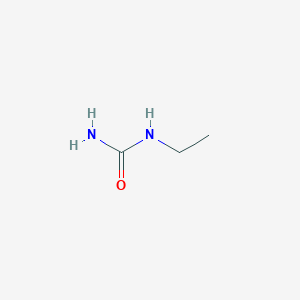
Polyurethane
structure -
-
CAS No:
9009-54-5
-
Formula:
C3H8N2O
-
Chemical Name:
Polyurethane
-
Synonyms:
Polyisocyanurate resins;Polyurethanes, cellular;PU foam;The following companies react isocyanates or prepolymers with polyols to produce polyurethane foams. The list is incomplete.;POLYURETHANEOLIGOMERS;POLYURETHANEVARNISH;POLYURETHANELACQUER;Polyurethane foam: (Urethane polymers)
- Categories:
-
CAS No:
Description
clear solid, white powder or milky suspension
Polyurethane foams are resistant to a wide range of solvents. In this respect, polyester foams are generally superior to polyether foams, particularly in resistance to dry cleaning solvents. Polyurethane foams are subject to degradation by aqueous acids and alkalis and steam. Ester, amide and urethane groups represent sites for hydrolytic attack. Since the ether group is not readily attacked, polyether foams are generally more resistant to hydrolysis than polyester foams.
Polyurethanes are an immensely versatile class of polymers used in insulators, foams, elastomers, synthetic skins, coatings, adhesives, and so forth. Polyurethane was first developed through essential diisocyanate polyaddition reactions by Dr. Otto Bayer and partners. In 1937, it reached industrial-scale synthesis and was established in the market in the 1950s[1].
Questionable carcinogen with experimental tumorigenic data. When heated to decomposition it emits acrid toxic fumes of CNand NOx.
Safety Information
WGK 3
Stable. Combustible. Incompatible with strong oxidizing agents.
P261, P264, P271, P280, P302+P352, P304+P340, P305+P351+P338, P312, P321, P332+P313, P337+P313, P362, P403+P233, P405, P501
Evolves toxic fumes on ignition.
Polyurethane Use and Manufacturing
Prosthetic aid (internal bone splint).
Polyurethane resins and foams are two important industrial polymers. They can be produced as rigid, semirigid, or elastic foams or resins, which give PUR many versatile commercial uses. Polyurethane can be found in furniture, bedding material, automotive sealing material, adhesives, carpet, packaging material and coatings, and many other products. It is favored industrially because of its resistance to oil, light, and solvents, in addition to its strength and flexibility. These polymers are formed by polyaddition reactions between a diisocyanate and a polyhydroxyl compound, such as a polyol.
Several isocyanates (tolylene diisocyanate, hexamethylene diisocyanate, dicyclohexylmethane diisocyanate, etc.) are used in preparing polyurethanes. All are lowviscosity liquids at room temperature with the exception of 4, 4- diphenylmethane diisocyanate (MDI), which is a crystalline solid. The aromatic isocyanates are more reactive than the aliphatic isocyanates and are widely used in urethane foams, coatings, and elastomers. The cyclic structure of aromatic and alicyclic isocyanates contributes to molecular stiffness in polyurethanes.
Flexible polyurethane foams are open-cell structures which are usually produced with densities in the range 24-48 kg/m3 (1.5-3Ib/ft3). The major interest in flexible foams is for upholstery applications and thus the loadcompression characteristics are of importance.
Castable polyurethane elastomers are fabricated from polyurethane prepolymers, which are obtained by reacting an excess of diisocyanate with high-molecular-weight diols. These NCO-terminated oligomers (prepolymers) are commercially available under a variety of trade names and in numerous types depending upon the types of diisocyanates and polyols that are used to synthesize them. The NCO content of these prepolymers can vary from less than 3% to as much as 20%. A cast polyurethane fabricator mixes these liquid prepolymers with approximately stoichiometric quantities of a curing agent (or a blend of curing agents) such as an appropriate low-molecular- weight diol or diamine.Generally a prepolymer is heated to reduce its viscosity before mixing it with a liquid or a molten curing agent. The prepolymer curing agent blends have a limited working time (pot life) during which they are still liquid and can be poured into molds. The liquid prepolymer/curing agent blend is degassed and then poured into molds, which are often heated to expedite curing. After curing, the solid polyurethane elastomer articles are removed from the mold and are sometimes finished by keeping them at elevated temperature to complete the cure and to maximize mechanical properties.
Recommended Suppliers of Polyurethane
-
![China]() CN
CN
4 YRS
Business licensed Certified factoryManufactory Supplier of Fine chemicals,Oilfield drilling chemicals,Polyurethane raw materials,Basic chemicalsInquiryCAS No.: 9009-54-5Grade: Industrial GradeContent: 99% -
![Netherlands]() NL
NL
4 YRS
Business licensedTrader Supplier of Food Chemicals,Industrial Chemicals,Organic Chemicals -
![Georgia]() GE
GE
1 YR
Business licensedDistributor Supplier of Ethanol,Retatrutide,SLES,Tirzepatide,GHK-CU,Semaglutide,Glutathione,Mots-CInquiryCAS No.: 9009-54-5Grade: Industrial GradeContent: 90% -
![South Africa]() ZA
ZA
3 YRS
Business licensedDistributor Supplier of Sodium Lauryl Ether Sulfate,Caustic Soda,Soda Ash,Citric Acid,Calcium Hypochlorite,Oxalic Acid,Sodium Hydrosulfide,Acetic Acid Glacial,Trichloroisocyanuric Acid 90%,Hydrogen Peroxide,Calcium Carbide,Phosphoric Acid,Linear Alkylbenzene Sulfonic Acid,Sulphuric Acid,Ethanol 96%,Sodium BicarbonateInquiryCAS No.: 9009-54-5Grade: Industrial GradeContent: 99.9%


Latest News on Polyurethane
- Covestro Introduces Desmodur® ClimateValue to Cut pMDI Carbon Footprint by 25%
- Purtiso Advances Chemical Recycling of Polyurethane Waste by Recovering Polyols and Isocyanates
- Dow Europe Raises Polyurethane Prices in EMEA and India
- BASF Coatings Expands Polyester and Polyurethane Resin Capacity in Shanghai
- Dow acquires Corteva's Plant in Mexico, adding Polyurethane business
Learn More Other Chemicals
-
Hexanoic acid, 2-ethyl-, molybdenum salt (1:?)
34041-09-3
-
N-[(3-bromophenyl)methyl]pentan-1-amine
774547-39-6
-
tert-butyl 2,2-dimethylpropanoate
16474-43-4
-
AMBERLITE IR-120 Formula
78922-04-0
-
6-(5-CHLORO-2-HYDROXYPHENYL)-2-OXO-1,2,3,6-TETRAHYDRO-4-PYRIMIDINECARBOXYLIC ACID Formula
439095-04-2
-
CARBONICACIDALLYLETHYLESTER Formula
1469-70-1
-
SULFATE STANDARD Structure
14808-79-8
-
DIBENZYLPHOSPHITE Structure
538-60-3
-
What is ALLYL PHENYL CARBONATE97
16308-68-2
-
What is Phosphorous acid, diisooctyl phenyl ester
26544-22-9