




ALLURA RED AC
-
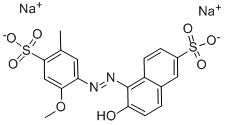
ALLURA RED AC
structure -
-
CAS No:
25956-17-6
-
Formula:
C18H17N2NaO8S2
-
Chemical Name:
ALLURA RED AC
-
Synonyms:
2-naphthalenesulfonicacid,6-hydroxy-5-[(2-methoxy-5-methyl-4-sulfophenyl)azo];2-Naphthalenesulfonicacid,6-hydroxy-5-[(2-methoxy-5-methyl-4-sulfophenyl)azo]-,disodiumsalt;6-hydroxy-5-((6-methoxy-4-sulfo-m-tolyl)azo)-2-naphthalenesulfonicacidiso;alluraredacdye;c.i.foodred17;fd&credno.40;C.I. Food Red 17 - disodium salt;Fancy red
- Categories:
-
CAS No:
Description
Red powder
Dark red powder or granules
Allura red AC is a naphthalenesulfonic acid.
FD & C Red No. 40 is principally the disodium salt of 6-hydroxy5-[(2-methoxy-5-methyl-4-sulfophenyl)azo]2-napthalenesulfonic acid.The colorant is a red powder that dissolves in water to give a solution red at neutrality and in acid and dark red in base. It is slightly soluble in 95% ethanol.FD & C Red No. 40 is used in gelatins, puddings, custards, alcoholic and nonalcoholic beveraes, sauces, toppings, candy sugars, frostings, fruits, juices, dairy products, bakery products, jams, jellies, condiments, meat, and poultry. FD & C Red No. 40 is also used for coloring drugs and cosmetics.1 .
ALLURA RED AC Basic Attributes
476.45
495.998688
247-368-0
WZB9127XOA
TSCA listed
DTXSID4024436
Dark red
29270000
Characteristics
504 nm
185
log Kow = -0.55 (estimated)
Dark red powder
0.448[at 20℃]
>300 °C(lit.)
325.16℃[at 101 325 Pa]
53.878g/L at 25℃
0Pa at 25℃
Non flammable
Inert atmosphere,Room Temperature
Safety Information
NONH for all modes of transport
2
22-24/25
QK2260000
SRP: The most favorable course of action is to use an alternative chemical product with less inherent propensity for occupational harm/injury/toxicity or environmental contamination. Recycle any unused portion of the material for its approved use or return it to the manufacturer or supplier. Ultimate disposal of the chemical must consider: the material's impact on air quality; potential migration in soil or water; effects on animal and plant life; and conformance with environmental and public health regulations.
All batches of this color additive when used in foods shall meet the specifications, uses and restrictions, and labeling regulations contained in 21 CFR Part 74 and be certified in accordance with regulations in 21 CFR Part 80.|All batches of this color additive when used in drugs shall meet the specifications, uses and restrictions, and labeling regulations contained in 21 CFR Part 74 and be certified in accordance with regulations in 21 CFR Part 80.|All batches of this color additive when used in cosmetics shall meet the specifications, uses and restrictions, and labeling regulations contained in 21 CFR Part 74 and be certified in accordance with regulations in 21 CFR Part 80.
The U.S. high production volume (HPV) chemicals are those which are manufactured in or imported into the United States in amounts equal to or greater than one million pounds per year. Robust Summaries include health effects, ecotoxicity data, and environmental fate information for selected chemicals. EPA/Office of Pollution Prevention and Toxics; High Production Volume (HPV) Challenge Program's Robust Summaries and Test Plans.[Available from, as of November 15, 2004: http://www.epa.gov/hpv/pubs/hpvrstp.htm]|Joint FAO/WHO Expert Committee on Food Additives; WHO Food Additives Ser 15: Allura Red AC (1980).[Available from, as of October 28, 2004: http://www.inchem.org/documents/jecfa/jecmono/v15je02.htm]
Toxicity
In this study, the color and its alumina lake were applied to the subjects volvar forearms (200 subjects) as an aqueous solution for 10 alternate days, for 24-hr periods, followed by a 14-day rest period. Challenge batches were then applied under occlusion to fresh skin sites on the subjects scapular backs for 24 hours. The color did not produce either irritation or allergic responses during the induction phase nor contact dermatitis in the challenge period. ... Allura Red and its lake were evaluated on sites under occlusion for five 48-hr, alternate-day periods. These sites had been previously irradiated for 5 min with Xenon light which had been filtered through a window-glass equivalent to limit the exposure to non-erythema-producing, long-wave radiation. A 10-day rest period followed this induction exposure, and then the color was applied to fresh skin sites, irradiated for 5 min with Xenon and subsequently removed and the sites were evaluated. Allura Red was shown not to produce photosensitization on the 25 subjects studied.|In 2006, the Korea Food and Drug Administration reported that combinations of dietary colors such as allura red AC, tartrazine, sunset yellow FCF, amaranth, and brilliant blue FCF are widely used in food manufacturing. Although individual tar food colors are controlled based on acceptable daily intake (ADI), there is no apparent information available for how combinations of these additives affect food safety. In the current study, the potencies of single and combination use of /dyes/ were examined on neural progenitor cell (NPC) toxicity, a biomarker for developmental stage, and neurogenesis, indicative of adult central nervous system (CNS) functions. /allura red AC/ and /amaranth/ reduced NPC proliferation and viability in mouse multipotent NPC, in the developing CNS model. Among several combinations tested in mouse model, combination of /tartrazine/ and /brilliant blue FCF/ at 1000-fold higher than average daily intake in Korea significantly decreased numbers of newly generated cells in adult mouse hippocampus, indicating potent adverse actions on hippocampal neurogenesis. However, other combinations including /allura red AC/ and /amaranth/ did not affect adult hippocampal neurogenesis in the dentate gyrus. Evidence indicates that single and combination use of most tar food colors may be safe with respect to risk using developmental NPC and adult hippocampal neurogenesis...
LD50 Dog oral (male) > 5,000 mg/kg bw[EPA/Office of Pollution Prevention and Toxics; High Production Volume (HPV) Challenge Program's Robust Summaries and Test Plans for: 2-Naphthalenesulfonic acid, 6-hydroxy-5-|LD50 Rat oral >10,000 mg/kg bw[EPA/Office of Pollution Prevention and Toxics; High Production Volume (HPV) Challenge Program's Robust Summaries and Test Plans for: 2-Naphthalenesulfonic acid, 6-hydroxy-5-|LD50 Rabbit dermal 10,000 mg/kg bw
Allura Red AC dye's production and use as a color additive in foods, drugs and cosmetics(1) may result in its release to the environment through various waste streams(SRC).
TERRESTRIAL FATE: Allura Red AC dye is expected to be mobile in soil(SRC); this compound is expected to exist almost entirely in anion form in the environment and anions generally do not adsorb more strongly to soils containing organic carbon and clay than their neutral counterparts(1). Volatilization from moist soil is not expected because the compound exists as an anion and anions do not volatilize(SRC). Allura Red AC dye is not expected to volatilize from dry soil surfaces(SRC) because it is a salt and is nonvolatile.The concentrations of azo dyes with a phenolic OH and two sulfonic acid groups remain constant throughout activated sludge treatment and are therefore not expected to be biodegradable in water and soils(2).[(1) Doucette WJ; pp. 141-188 in Handbook of Property Estimation Methods for Chemicals. Boethling RS, Mackay D, eds. Boca Raton, FL: Lewis Publ (2000) (2) US EPA; High Production Volume (HPV) Challenge Program. The HPV voluntary challenge chemical list. Robust summaries and test plans. 2-Naphthalenesulfonic acid, 6-hydroxy-5-|AQUATIC FATE: Allura Red AC dye is not expected to adsorb to suspended solids and sediment(SRC). This compound will almost entirely exist in anion form in the environment and anions generally do not adsorb more strongly to soils containing organic carbon and clay than their neutral counterparts(1). Volatilization from water surfaces is not expected(2) based on its expected ionic character in the environment. The potential for bioconcentration in aquatic organisms is expected to be low(SRC) based on the ionic character of the compound. The concentrations of azo dyes with a phenolic OH and two sulfonic acid groups remain constant throughout activated sludge treatment and are therefore not expected to be biodegradable in water and soils(3).[(1) Doucette WJ; pp. 141-188 in Handbook of Property Estimation Methods for Chemicals. Boethling RS, Mackay D, eds. Boca Raton, FL: Lewis Publ (2000) (2) Lyman WJ et al; Handbook of Chemical Property Estimation Methods. Washington, DC: Amer Chem Soc pp. 15-1 to 15-29 (1990) (3) US EPA; High Production Volume (HPV) Challenge Program. The HPV voluntary challenge chemical list. Robust summaries and test plans. 2-Naphthalenesulfonic acid, 6-hydroxy-5-|ATMOSPHERIC FATE: According to a model of gas/particle partitioning of semivolatile organic compounds in the atmosphere(1), Allura Red AC dye, a salt, is expected to exist solely in the particulate phase in the ambient atmosphere because salts do not volatilize(SRC). Particulate-phase Allura Red AC dye may be removed from the air by wet or dry deposition(SRC). Allura Red AC dye may be susceptible to direct photolysis by sunlight, after its concentration decreased by 7% after 50 minutes in an experiment using 15-watt lamps as a UV source(2).[(1) Bidleman TF; Environ Sci Technol 22: 361-367 (1988) http://www.epa.gov/chemrtk/viewsrch.htm (2) US EPA; High Production Volume (HPV) Challenge Program. The HPV voluntary challenge chemical list. Robust summaries and test plans. 2-Naphthalenesulfonic acid, 6-hydroxy-5-
Allura Red AC dye is not expected to undergo hydrolysis in the environment due to the lack of functional groups that hydrolyze under environmental conditions(1). After 50 minutes exposure using two 15-watt low pressure lamps as a UV source, Allura Red AC dye concentration decreased by 7% in the direct experiment; in an indirect experiment in which acetone was used as a sensitizer, the concentration of Allura Red AC dye decreased by 99% after 20 minutes(2).[(1) Lyman WJ et al; Handbook of Chemical Property Estimation Methods. Washington, DC: Amer Chem Soc pp. 7-4, 7-5, 8-12 (1990) (2) US EPA; High Production Volume (HPV) Challenge Program. The HPV voluntary challenge chemical list. Robust summaries and test plans. 2-Naphthalenesulfonic acid, 6-hydroxy-5-
The ionic character of Allura Red AC dye indicates that the potential for bioconcentration in aquatic organisms is expected to be low. (SRC)
Allura Red AC dye is expected to be mobile in soil; this compound will almost entirely exist in anion form in the environment and anions generally do not adsorb more strongly to soils containing organic carbon and clay than their neutral counterparts(1).
Allura Red AC dye is expected to exist as an anion in the environment, and therefore volatilization from moist soil is not expected because anions do not volatilize. Allura Red AC dye is not expected to volatilize from dry soil surfaces because it is a salt, and salts do not volatilize. (SRC)
NIOSH (NOES Survey 1981-1983) has statistically estimated that 88,602 workers (50,574 of these were female) were potentially exposed to Allura Red AC dye in the US(1). Occupational exposure to Allura Red AC dye may occur through dermal contact with this compound at workplaces where Allura Red AC dye is produced or used. Use data indicate that the general population may be exposed to Allura Red AC dye via ingestion of food, beverages, and drug products that contain this color additive, and dermal contact with cosmetics(2) that use this compound.
Drug Information
Chemicals and substances that impart color including soluble dyes and insoluble pigments. They are used in INKS; PAINTS; and as INDICATORS AND REAGENTS. (See all compounds classified as Coloring Agents.)|Natural or synthetic dyes used as coloring agents in processed foods. (See all compounds classified as Food Coloring Agents.)
Rats were fed a diet containing 5.19% of Allura Red. It was observed that 0.1% and 29% of the intact dye was excreted in the urine and feces respectively. In later studies, rats and dogs were pretreated daily with nonradioactive Allura Red. Subsequently, the animals were dosed with the 35S labelled compound and studied for up to 72 hours for excretion and distribution patterns of the color. Both species showed limited absorption of the compound with the major route of excretion being via the feces. In the dog 92-95% of the recovered radioactivity appeared in the feces within 72 hours while in the rat 76-92% of the recovered radioactivity appeared in the feces within this time period. Urinary recoveries of the color in rats and dogs, respectively varied between 5.7 and 19.8% and 2.7 and 3.6%. After sacrifice, significant retention of radioactivity was located in the intestinal contents of both species and in the washed intestines of the rats. This was thought to be due to adhesion of the compound to the intestinal wall, since the total carcass and viscera of these animals contained <0.4% of the administered dose.
Several metabolites, possibly resulting from azo-reduction in the gastrointestinal tract (two identified as aromatic amines, p-cresidine sulfonic acid being the major one), were also found in the feces and urine. Finally, significant retention in the washed intestines of rat was observed, probably due to adhesion to the intestinal wall.|Cresidinesulfonic acid was found to be the major metabolite of Allura Red in the urine of these two species, whereas the parent compound was not measurable. In addition, two other unidentifiable metabolites were found in the urine of the rats. In the rat fecal extracts, cresidinesulfonic acid was a major metabolite along with two unknowns and the parent compound. The dog fecal sample revealed an identical metabolite pattern as seen in the rat, and in addition, a third unknown was discovered. One of the urinary unknowns demonstrated an Rf value which was identical to that of the one of the fecal unknowns suggesting that they were one and the same. The other unknowns exhibited distinctive Rf values which indicated that these metabolites were different. It has been postulated that azo reduction by gut flora of the dye will yield the two components of the parent compound: 2-methoxy-5-methyl-aniline-4-sulfonic acid (cresidine-4-sulfonic acid) and 1-amino-2-naphthol-6-sulfonic acid. It appears that negligible quantities of intact Red are absorbed and excreted in the urine, and that the major portion of the color is excreted as metabolites in the feces.
/SRP:/ Immediate first aid: Ensure that adequate decontamination has been carried out. If patient is not breathing, start artificial respiration, preferably with a demand valve resuscitator, bag-valve-mask device, or pocket mask, as trained. Perform CPR if necessary. Immediately flush contaminated eyes with gently flowing water. Do not induce vomiting. If vomiting occurs, lean patient forward or place on the left side (head-down position, if possible) to maintain an open airway and prevent aspiration. Keep patient quiet and maintain normal body temperature. Obtain medical attention. /Poisons A and B/|/SRP:/ Basic treatment: Establish a patent airway (oropharyngeal or nasopharyngeal airway, if needed). Suction if necessary. Watch for signs of respiratory insufficiency and assist ventilations if needed. Administer oxygen by nonrebreather mask at 10 to 15 L/min. Monitor for pulmonary edema and treat if necessary ... . Monitor for shock and treat if necessary ... . Anticipate seizures and treat if necessary ... . For eye contamination, flush eyes immediately with water. Irrigate each eye continuously with 0.9% saline (NS) during transport ... . Do not use emetics. For ingestion, rinse mouth and administer 5 mL/kg up to 200 mL of water for dilution if the patient can swallow, has a strong gag reflex, and does not drool ... . Cover skin burns with dry sterile dressings after decontamination ... . /Poisons A and B/|/SRP:/ Advanced treatment: Consider orotracheal or nasotracheal intubation for airway control in the patient who is unconscious, has severe pulmonary edema, or is in severe respiratory distress. Positive-pressure ventilation techniques with a bag valve mask device may be beneficial. Consider drug therapy for pulmonary edema ... . Consider administering a beta agonist such as albuterol for severe bronchospasm ... . Monitor cardiac rhythm and treat arrhythmias as necessary ... . Start IV administration of D5W /SRP: "To keep open", minimal flow rate/. Use 0.9% saline (NS) or lactated Ringer's if signs of hypovolemia are present. For hypotension with signs of hypovolemia, administer fluid cautiously. Watch for signs of fluid overload ... . Treat seizures with diazepam or lorazepam ... . Use proparacaine hydrochloride to assist eye irrigation ... . /Poisons A and B/
/HUMAN EXPOSURE STUDIES/ Allura Red was applied either as a neat or as a 25% aqueous solution to the skin of 200 human subjects. The initial exposure to the compound was for 72 hours, and this was followed by a 24-hr application 10 to 14 days later. None of the subjects exhibited compound induced irritation or sensitization.|/HUMAN EXPOSURE STUDIES/ In this study, the color and its alumina lake were applied to the subjects volvar forearms (200 subjects) as an aqueous solution for 10 alternate days, for 24-hr periods, followed by a 14-day rest period. Challenge batches were then applied under occlusion to fresh skin sites on the subjects scapular backs for 24 hours. The color did not produce either irritation or allergic responses during the induction phase nor contact dermatitis in the challenge period. ... Allura Red and its lake were evaluated on sites under occlusion for five 48-hr, alternate-day periods. These sites had been previously irradiated for 5 min with Xenon light which had been filtered through a window-glass equivalent to limit the exposure to non-erythema-producing, long-wave radiation. A 10-day rest period followed this induction exposure, and then the color was applied to fresh skin sites, irradiated for 5 min with Xenon and subsequently removed and the sites were evaluated. Allura Red was shown not to produce photosensitization on the 25 subjects studied.|/HUMAN EXPOSURE STUDIES/ The study involved 153 3-year old and 144 8- to 9-year old children. A global hyperactivity aggregate (GHA) score was the main outcome of the study, and this parameter was based on aggregated z-scores of observed behaviors and ratings by teachers, class room observers and parents, plus, for 8- to 9- year old children, a computerized test of attention. Mix A in this study contained Ponceau 4R, Tartrazine, Sunset Yellow FCF, Carmoisine and sodium benzoate. Mix B in this study contained Allura Red AC, and in addition Sunset Yellow FCF, Carmoisine, Quinoline Yellow and sodium benzoate. Mix A significantly increased the GHA scores for all 3-year old children compared to the placebo control GHA scores (effect size 0.20 [CI 0.01 to 0.39], p < 0.05). This result persisted when analysis was restricted to 3-year old children who consumed more than 85 % of juice and had no missing data (complete case group); in this analysis the effect of Mix A in the 3-year old children was still significantly increased compared to the placebo control (effect size 0.32 [CI 0.05 to 0.60, p < 0.05]). For the 8- to 9- year old children a significant effect of Mix A (effect size 0.12 [CI 0.02 to 0.23], p <0.05) and Mix B (effect size 0.17 [0.07 - 0.28], p < 0.001) was seen when analysis was restricted to those children consuming at least 85 % of drinks with no missing data (complete case group). When all 8- to 9- year old children that completed the study were taken into account, Mix A had no effect on the GHA scores compared to the placebo control (effect size 0.08 [CI -0.02 to 0.17]). The clinical significance of the observed effects for normal functioning of the exposed children remains unclear.|/CASE REPORTS/ In 52 patients who were suffering from urticaria or angioedema for more than four weeks were placed on an elimination diet for at least three weeks. All non-vital drugs were suspended during the study as were any food ingredients which were known to cause urticaria. In most patients, challenge with Allura Red was performed when the patients were free of symptoms. Reactions were considered positive only when the flare-up of symptoms was reproducible within the same time from intake to skin reaction. Allura Red was administered via the oral route in either a dose of 1 or 10 mg, and induced a positive reaction in 15% of the 52 patients challenged.
allura red
ALLURA RED AC Use and Manufacturing
Allure Red is prepared by coupling sodium 2-methyl-4-amino-5-methoxybenzenesulfonate with diazotization and coupling with 2-naphthol-6-sulfonate sodium. Preparation of temptation red aluminum color ingot Add temptation red aqueous solution to the aluminum oxide hydrate formed by the action of aluminum sulfate, aluminum chloride aqueous solution and sodium carbonate to make it absorb and precipitate to obtain the product.
Color additive in foods, drugs and cosmetics.
Dyes
Food, Drug & Cosmetics
Color additive in foods, drugs and cosmetics. It is used as a food dye and has the E number E129. The study found increased levels of hyperactivity and attention deficit hyperactivity disorder and low er IQs were observed in children consuming the chemicals. It is banned in Denmark, Belgium, France, Switzerland, Sweden.
Allura Red AC (FD&C Red #40) is a colorant. It has good stability to ph changes from ph 3 to 8, showing no appreciable change. It has excellent solubility in water with a solubility of 22 g/100 ml at 25°c. It has very good stability to light, fair to poor stability to oxidation, good stability to heat, and shows no appreciable change in stability in 10% sugar systems. It has a yellowish-red hue and has a very good tinctorial strength. It has very good compatibility with food components and is used in beverages, desserts, candy, confections, cereals, and ice cream. The common name is allura red ac.
2-Naphthalenesulfonic acid, 6-hydroxy-5-[(2-methoxy-5-methyl-4-sulfophenyl)azo]-, disodium salt is listed as a High Production Volume (HPV) chemical (65FR81686). Chemicals listed as HPV were produced in or imported into the U.S. in >1 million pounds in 1990 and/or 1994. The HPV list is based on the 1990 Inventory Update Rule. (IUR) (40 CFR part 710 subpart B; 51FR21438).[EPA/Office of Pollution Prevention and Toxics; High Production Volume (HPV) Challenge Program. 2-Naphthalenesulfonic acid, 6-hydroxy-5-|Production volumes for non-confidential chemicals reported under the Inventory Update Rule. [Table#6871]
Food, beverage, and tobacco product manufacturing|2-Naphthalenesulfonic acid, 6-hydroxy-5-[2-(2-methoxy-5-methyl-4-sulfophenyl)diazenyl]-, sodium salt (1:2): ACTIVE|Preparation: GB 1164249 C.A. 72, 68195j (1970) corresponding to Rast, Steiner, US 3519617 (1969, 1970, both to Allied Chem.)
EPA Safer Chemical Functional Use Classes -> Colorants|Safer Chemical Classes -> Green circle - The chemical has been verified to be of low concern|Food additives|Food Additives -> COLOUR; -> JECFA Functional Classes|Cosmetics -> Cosmetic colorant; Hair dyeing
Food Additives -> COLOUR;
Drug Function and Efficacy
Synthetic color additive used for aesthetic purposes in the product.
Recommended Suppliers of ALLURA RED AC
-
![China]() CN
CN
3 YRS
Business licensedTrader Supplier of Food Additives -
![India]() IN
IN
6 YRS
Business licensedTrader Supplier of Synthetic Food Colors,D&C Colours,FD&C Colours,Lake Colours,Blend Colours,Tartrazine,Erythrosine,Carmoisine,Allura Red,Ponceau 4R,Quinoline Yellow,Sunset Yellow,Amaranth,Indigo Carmine,Chocolate Brown HT,Brilliant Blue,Apple Green,Green S,D&C Green 8,Black PN,Patent Blue V,Egg Yellow,Lemon Yellow,Strawberry Red,Raspberry Red,Tomato Red,Orange Red,Pea Green,Ext D&C Violet 2,Acid Red 52,D&C Red 27,Lake Amaranth,Lake Tartrazine,Lake Quinoline Yellow,Lake Sunset Yellow FCF,Lake Carmoisine,Lake Ponceau 4R,Ponceau SX,Lake Erythrosine,Lake Allura Red,Lake Patent Blue V,Lake Indigo Carmine,Lake Brilliant Blue FCF,Lake Green S,D&C Red 22,D&C Red 21,D&C Red 28,Acid Yellow 73 -
![China]() CN
CN
5 YRS
Business licensedTrader Supplier of PVC resin,pvc paste resin,melamine -
![India]() IN
IN
1 YR
Business licensedTrader Supplier of Tartrazine,Sunset Yellow,Carmoisine,Allura Red,Brilliant BlueInquiryCAS No.: 25956-17-6Grade: Food Grade


Learn More Other Chemicals
-
4,4'-{(3,3'-Dimethoxy-4,4'-biphenyldiyl)bis[2,1-diazenediyl(3-met hyl-5-oxo-4,5-dihydro-1H-pyrazole-4,1-diyl)]}dibenzenesulfonic ac id
84682-05-3
-
C.I. Direct Red 243
86543-85-3
-
C.I. Pigment Red 175
6985-92-8
-
Acid Red 95 Formula
33239-19-9
-
BASIONIC(TM) AC 75 Formula
35487-17-3
-
C.I. Basic Red 27 Formula
12221-53-3
-
BASIONIC(TM) AC 39 Structure
681281-87-8
-
Acid Red 73 Structure
5413-75-2
-
What is Acid Red 249
6416-66-6
-
What is C.I. Pigment Red 89
6409-74-1