




Povidone iodine

-
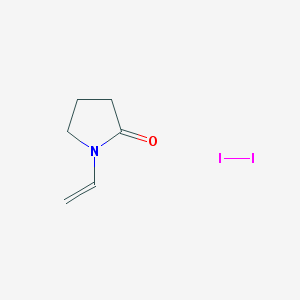
Povidone iodine
structure -
-
CAS No:
25655-41-8
-
Formula:
C6H9I2NO
-
Chemical Name:
Povidone iodine
-
Synonyms:
PovidoneIodine(Betadine;1-Ethenyl-2-pyrrolidinone homopolymer compound with iron;disadined.p.;disphex;efo-dine;inadine;iodine-polyvinylpyrrolidonecomplex;poly(1-(2-oxo-1-pyrrolidinyl)ethylene)iodinecomplex
- Categories:
-
CAS No:
Description
Povidone iodine displays excellent antibacterial activity which can against MRSA and MSSA strains with MICs of 31.25 mg/L and 7.82 mg/L, respectively.
DryPowder|YELLOW-TO-BROWN HYGROSCOPIC POWDER.
An iodinated polyvinyl polymer used as topical antiseptic in surgery and for skin and mucous membrane infections, also as aerosol. The iodine may be radiolabeled for research purposes.
Povidone iodine is a complex of iodine with povidone. It occurs as a yellowish brown to reddish brown amorphous powder, having a slight characteristic odour. Its solution is acid to litmus. Soluble in water and in alcohol, practically insoluble in chloroform, in carbon tetrachloride, in ether, in solvent hexane, and in acetone. It is an external antiseptic with a broad microbicidal spectrum against bacteria, fungi, viruses, protozoa, and yeasts. This gel has about 1.0% available iodine.
Povidone iodine (PI) is frequently used during surgical preparation, postoperative wound cleaning and dressing. It was described by Shelaski about seventy years ago (Shelanski and Shelanski, 1956). PI consists of the complex structure of povidone, a polymer that is structurally similar to plasma proteins, and the iodine element, which has antimicrobial properties. The function of polyvinylpyrrolidone (PVP) used as a polymer includes increasing iodine solubility and penetration, decreasing iodine ion concentration and keeping iodine bound. However, PVP does not have antimicrobial properties. Shelanski defined this complex structure as 'iodophor' (Shelanski and Shelanski, 1956).
Povidone iodine Basic Attributes
364.95
364.877319
607-771-8
1471
26245|28655
TSCA listed
DTXSID8035712
Yellow-brown
29339900
Characteristics
20.3
2.46160
Yellow-brown Powder
300 °C
217.6ºC at 760 mmHg
93.9ºC
Soluble in water, ethyl alcohol, isopropyl alcohol, polyethylene glycol and glycerol. Insoluble in chloroform, carbon tetrachloride, hexane, acetone and petroleum ether.
Conditions for safe storage, including any incompatibilities: Keep container tightly closed in a dry and well-ventilated place.
0.132mmHg at 25°C
ylsh. brn. amorphous powd., sl. char. odor
Aqueous solutions have a pH near 2 and may be made more neutral (but less stable) by the addition of sodium bicarbonate
Solutions do not give the familiar starch test when freshly prepared.
Keep in dark place,Inert atmosphere,Room temperature
Safety Information
NONH for all modes of transport
2
24/25-22
TR1579600
Dry. Well closed.
Stable under recommended storage conditions.
P264, P273, P280, P302+P352, P305+P351+P338, P310, P321, P332+P313, P337+P313, P362, P391, P501
H315
SRP: The most favorable course of action is to use an alternative chemical product with less inherent propensity for occupational harm/injury/toxicity or environmental contamination. Recycle any unused portion of the material for its approved use or return it to the manufacturer or supplier. Ultimate disposal of the chemical must consider: the material's impact on air quality; potential migration in soil or water; effects on animal and plant life; and conformance with environmental and public health regulations.|Waste treatment methods. Product: Offer surplus and non-recyclable solutions to a licensed disposal company. Contact a licensed professional waste disposal service to dispose of this material. Dissolve or mix the material with a combustible solvent and burn in a chemical incinerator equipped with an afterburner and scrubber. Contaminated packaging: Dispose of as unused product.
A mixture of providone-iodine solution and hydrogen peroxide [brown bubbly] has caused explosions..|Incompatible materials: Oxidizing agents.
The Approved Drug Products with Therapeutic Equivalence Evaluations List identifies currently marketed drug products, incl povidone-iodine, approved on the basis of safety and effectiveness by FDA under sections 505 and 507 of the Federal Food, Drug, and Cosmetic Act.
USEPA/Office of Prevention, Pesticides and Toxic Substances; Reregistration Eligibility Decision Document - Iodine and Iodophor Complexes EPA 739-R-06-010 (July 2006). The RED summarizes the risk assessment conclusions and outlines any risk reduction measures necessary for the pesticide to continue to be registered in the U.S.[Available from, as of November 4, 2014: http://www.epa.gov/pesticides/reregistration/status.htm]
Gives off irritating or toxic fumes (or gases) in a fire.
|Danger|H315 (98.08%): Causes skin irritation [Warning Skin corrosion/irritation]|P264, P273, P280, P302+P352, P305+P351+P338, P310, P321, P332+P313, P362, P391, and P501|Aggregated GHS information provided by 162 companies from 7 notifications to the ECHA C&L Inventory. Each notification may be associated with multiple companies.
Eye/face protection: Safety glasses with side-shields conforming to EN166. Use equipment for eye protection tested and approved under appropriate government standards such as NIOSH (US) or EN 166(EU).|Skin protection: Handle with gloves.|Body Protection: Choose body protection in relation to its type, to the concentration and amount of dangerous substances, and to the specific work-place. The type of protective equipment must be selected according to the concentration and amount of the dangerous substance at the specific workplace.|Respiratory protection: Respiratory protection is not required. Where protection from nuisance levels of dusts are desired, use type N95 (US) or type P1 (EN 143) dust masks. Use respirators and components tested and approved under appropriate government standards such as NIOSH (US) or CEN (EU).
Suitable extinguishing media: Use water spray, alcohol-resistant foam, dry chemical or carbon dioxide.|Advice for firefighters: Wear self contained breathing apparatus for fire fighting if necessary.
Special hazards arising from the substance or mixture: Nature of decomposition products not known.
Accidental Release Measures. Personal precautions, protective equipment and emergency procedures: Use personal protective equipment. Avoid dust formation. Avoid breathing vapours, mist or gas. Ensure adequate ventilation. Avoid breathing dust. Environmental precautions: Do not let product enter drains. Methods and materials for containment and cleaning up: Pick up and arrange disposal without creating dust. Sweep up and shovel. Keep in suitable, closed containers for disposal.
Precautions for safe handling: Further processing of solid materials may result in the formation of combustible dusts. The potential for combustible dust formation should be taken into consideration before additional processing occurs. Provide appropriate exhaust ventilation at places where dust is formed.|Appropriate engineering controls: Handle in accordance with good industrial hygiene and safety practice. Wash hands before breaks and at the end of workday.|Gloves must be inspected prior to use. Use proper glove removal technique (without touching glove's outer surface) to avoid skin contact with this product. Dispose of contaminated gloves after use in accordance with applicable laws and good laboratory practices. Wash and dry hands.
Dry. Well closed.
Repeated or prolonged contact with skin may cause dermatitis.
Protective gloves.
Toxicity
IDENTIFICATION AND USE: 1-Vinyl-2-pyrrolidinone polymers, iodine complex (povidone-iodine) is a yellowish-brown amorphous hygroscopic powder. Povidone-iodine is an iodophore that is used as a disinfectant and antiseptic mainly for the treatment of contaminated wounds and pre-operative preparation of the skin and mucous membranes, as well as for disinfection of equipment. HUMAN EXPOSURE AND TOXICITY: From patch tests carried out in 413 patients with contact dermatoses, 1 was found to be allergic to povidone-iodine. Reversible hyperthyroidism has been reported during the second week of treatment of first- and second-degree burns to the dorsa of both hands with povidone-iodine; delayed iodine excretion might have been involved. In another case report severe hypernatremia and acidosis occurred in a patient with second-degree burns who was treated topically with povidone-iodine. In addition, hypothyroidism in a neonate following topical administration to a surgical wound of a providone-iodine ointment has been described. Burns are a rare but potentially serious complication of povidone-iodine use. Acute renal failure secondary to povidone iodine administration is possible, especially through mucosal surfaces. In addition, even dilute solutions of povidone-iodine are toxic to human fibroblasts. The concentrations used clinically (0.1 to 20%) are toxic for granulocytes and monocytes. Povidone-iodine was cytotoxic to SH-SY5Y (neuronal) and RSC96 (Schwann) cells. ANIMAL STUDIES: Povidone-Iodine preparation was ototoxic in guinea pigs. Corneal edema developed in rabbits when povidone-iodine was placed directly in the anterior eye chamber. Injury to the urothelium occurred from intravesical instillation in female rats. No long-term studies in animals have been performed to evaluate the carcinogenic or mutagenic potential of povidone-iodine. One report of the mutagenic potential of povidone-iodine indicated that it was positive in a modification of the Ames S. typhimurium model, but these results could not be reproduced by another researcher. Another test using mouse lymphoma and Balb/3T3 cells showed that povidone-iodine has no significant mutagenic or transformation capabilities. Other data indicated that it does not produce mutagenic effects in mice or hamsters according to the dominant lethal test, micronucleus test, and chromosome analysis.
The effect of ethyl alcohol, glycerin, sodium lauryl sulfate, benzalkonium chloride (I) and polysorbate 80, on iodine release from povidone-iodine formulations, was studied in vitro and in rats. Ethyl alcohol and I increased the absorption of iodine 24 h after oral doses. In vitro results on iodine release were variable, with I producing the greatest effect. Possible interferences with laboratory tests were noted. Liver, blood and thyroid levels in rats were reported.
An overload of iodine can suppress thyroid hormonogenesis, and the fetal and neonatal thyroid glands are especially sensitive. In pregnant women, vaginitis should not be treated with povidone-iodine because of the possible development of iodine-induced goiter and hypothyroidism in the fetus and newborn. The risk is especially high when povidone-iodine is used repeatedly.|Regular or prolonged use should be avoided in patients with thyroid disorders or those receiving lithium therapy.
According to the 2012 TSCA Inventory Update Reporting data, the number of persons reasonably likely to be exposed in the industrial manufacturing, processing, and use of povidone-iodine is 500-999; the data may be greatly underestimated(1).|NIOSH (NOES Survey 1981-1983) has statistically estimated that 94,521 workers (86,547 of these were female) were potentially exposed to povidone-iodine in the US(1).
Drug Information
Anti-Infective Agents, Local|Povidone-iodine is an iodophore that is used as a disinfectant and antiseptic mainly for the treatment of contaminated wounds and pre-operative preparation of the skin and mucous membranes as well as for disinfection of equipment.|BETADINE 5% Sterile Ophthalmic Prep Solution for the eye is indicated for prepping of the periocular region (lids, brow, and cheek) and irrigation of the ocular surface (cornea, conjunctiva, and palpebral fornices).
No studies are available in patients with thyroid disorders; therefore, caution is advised in using BETADINE 5% Sterile Ophthalmic Prep Solution in these patients due to the possibility of iodine absorption.|Because of the potential for serious adverse reactions in nursing infants from BETADINE 5% Sterile Ophthalmic Prep Solution, a decision should be made to discontinue nursing or discontinue the drug, taking into account the importance of the drug to the mother.|FDA Pregnancy Risk Category: C /RISK CANNOT BE RULED OUT. Adequate, well controlled human studies are lacking, and animal studies have shown risk to the fetus or are lacking as well. There is a chance of fetal harm if the drug is given during pregnancy; but the potential benefits may outweigh the potential risk./|For external use only. Not for intraocular injection or irrigation.|For more Drug Warnings (Complete) data for Povidone-iodine (9 total), please visit the HSDB record page.
Substances used on humans and other animals that destroy harmful microorganisms or inhibit their activity. They are distinguished from DISINFECTANTS, which are used on inanimate objects. (See all compounds classified as Anti-Infective Agents, Local.)
Topical application of povidone iodine on the umbilical cord and normal intact skin of newborn infants resulted in significantly elevated plasma iodine levels. High iodine levels were also found in two neonates who had povidone iodine applied to denuded skin. No significant alteration in thyroid function was seen. The possible toxic manifestations of high plasma iodine levels are discussed.|In 12 nonpregnant women, total iodine, protein-bound iodine, inorganic iodine, and thyroxine values were measured in serum before and 15, 30, 45 or 60 minutes after a two-minute vaginal disinfection with povidone-iodine (Betadine). Only 15 minutes after application, serum iodine levels were raised and remained significantly elevated 30, 45 and 60 minutes after disinfection. Serum concentrations of total iodine and inorganic iodine were increased up to fivefold to 15-fold, respectively; during the relative short period of observation, thyroxine levels were not altered.
Rinse and then wash skin with water and soap.
/SRP:/ Immediate first aid: Ensure that adequate decontamination has been carried out. If patient is not breathing, start artificial respiration, preferably with a demand-valve resuscitator, bag-valve-mask device, or pocket mask, as trained. Perform CPR as necessary. Immediately flush contaminated eyes with gently flowing water. Do not induce vomiting. If vomiting occurs, lean patient forward or place on left side (head-down position, if possible) to maintain an open airway and prevent aspiration. Keep patient quiet and maintain normal body temperature. Obtain medical attention. /Iodine and related compounds/|/SRP:/ Basic treatment: Establish a patent airway (oropharyngeal or nasopharyngeal airway, if needed). Suction if necessary. Watch for signs of respiratory insufficiency and assist ventilations if necessary. Administer oxygen by nonrebreather mask at 10 to 15 L/min. Monitor for pulmonary edema and treat if necessary ... . Monitor for shock and treat if necessary ... . For eye contamination, flush eyes immediately with water. Irrigate each eye continuously with 0.9% saline (NS) during transport ... . Do not use emetics. For ingestion, rinse mouth and administer 5 mL/kg up to 200 mL of water for dilution if the patent can swallow, has a strong gag reflex, and does not drool. Administer activated charcoal ... . Cover skin burns with dry sterile dressings after decontamination ... . /Iodine and related compounds/|/SRP:/ Advanced treatment: Consider orotracheal or nasotracheal intubation for airway control in the patient who is unconscious, has severe pulmonary edema, or is in severe respiratory distress. Positive-pressure ventilation techniques with a bag valve mask device may be beneficial. Consider drug therapy for pulmonary edema ... . Monitor cardiac rhythm and treat arrhythmias if necessary ... . Start IV administration of D5W /SRP: "To keep open", minimal flow rate/. Use 0.9% saline (NS) or lactated Ringer's (LR) if signs of hypovolemia are present. For hypotension with signs of hypovolemia, administer fluid cautiously. Consider vasopressors if patient is hypotensive with a normal fluid volume. Watch for signs of fluid overload ... . Use proparacaine hydrochloride to assist eye irrigation ... . /Iodine and related compounds/
/HUMAN EXPOSURE STUDIES/ The high incidence of transient thyroid dysfunction in newborns from /this/ hospital (0.6%), led /the staff/ to investigate whether povidone perineal preparation during delivery and daily postpartum antisepsis, induced iodine overload in the newborn, and whether breast milk was the vehicle. In a controlled randomized trial /the study/ used either povidone-iodine or clorhexidine in 36 mothers, and investigated in them and in their newborns iodine levels and thyroid function. Iodine levels in cord blood, maternal urine and newborn urine were significantly higher in povidone treated group (p less than 0.001) up to the 4th postpartum day. These levels were also significantly higher in breast fed than in formula-fed babies within the group of povidone-iodine-treated mothers. Maternal prepartum urine iodine, and thyroid function in mothers and newborns were not significantly different in both groups.|/HUMAN EXPOSURE STUDIES/ A study to evaluate the incidence of contact dermatitis associated with povidone-iodine found that 14 of 500 patients (2.8%) had a positive patch test with 10% povidone-iodine aqueous solution. On retesting with the same solution using a repeated open application test only 2 of the 14 (0.4%) were found to have true contact dermatitis to povidone-iodine.|/SIGNS AND SYMPTOMS/ Hyperthyroidism or hypothyroidism may occur after ingestion or absorption of large quantities. Hypothyroidism has occurred in neonates both as a result of absorption of iodine from povidone-iodine applied to the neonate and also to the mother during pregnancy or breast feeding.|/SIGNS AND SYMPTOMS/ The application of povidone-iodine to severe burns or to large areas of otherwise denuded of skin may produce the systemic adverse effects associated with iodine and metabolic acidosis, hypernatremia, and renal impairment.|For more Human Toxicity Excerpts (Complete) data for Povidone-iodine (16 total), please visit the HSDB record page.
Alphadine
Povidone iodine Use and Manufacturing
PVP-I is a broad spectrum antiseptic for topical application. It is used in first aid for minor cuts, grazes, burns, abrasions and blisters. PVP-I has broad applications in medicine as a surgical scrub; for pre- and post-operative skin cleansing; for the
Surface active agents
Personal care products
povidone iodine has bactericidal effect like iodine. It can be used as disinfectant and bacteriostatic agent in the medicine for anti-septic purposes for eye drops, nasal drops, and cream agents. It can also be made into disinfectant. povidone iodine is mainly used for the skin disinfection and equipment disinfection in hospital surgery and injections as well as prevention of infection in the field of stomatology, gynecology, surgery, and dermatology; it can also be used for disinfection of household utensils and appliances; for food industry and aquaculture industry, it is used for disinfection and animal disease control. It is the preferred international and domestic choice of medical iodine-contained fungicides and disinfectants for epidemic prevention. povidone iodine is a kind of iodine carrier, the so-called “tamed iodine”. Because this product can gradually release iodine to exert an antibacterial effect; its mechanism of action is through causing the protein denaturation and further death of bacteria. It is effective in treating bacteria, fungi, as well as viruses with a relative small tissue irritation effect.
50,000,000 - 100,000,000 lb|Non-confidential 2012 Chemical Data Reporting (CDR) information on the production and use of chemicals manufactured or imported into the United States. Chemical: 2-Pyrrolidinone, 1-ethenyl-, homopolymer, compd. with iodine. National Production Volume: 29,603 lb/yr.
BETADINE- povidone-iodine swab: Povidone-iodine Solution USP, 10% (equal to 1% available iodine)|BETADINE- povidone-iodine spray: Povidone-iodine, 5% (0.5% available iodine).|BETADINE: 5% Sterile Ophthalmic Prep Solution contains 5% povidone-iodine (0.5% available iodine) as a sterile dark brown solution stabilized by glycerin. Inactive Ingredients: citric acid, glycerin, nonoxynol-9, sodium chloride, sodium hydroxide, and dibasic sodium phosphate.|BETADINE SKIN CLEANSER- povidone-iodine solution: Povidone-iodine, 7.5% - equal to 0.75% available iodine|PVP Iodine Solution Fe-150 (H & S Chemicals Division c/o Lonza, Inc.): Active ingredient: betadine 1.28%.
Pharmaceutical and medicine manufacturing|2-Pyrrolidinone, 1-ethenyl-, homopolymer, compd. with iodine: ACTIVE|XU - indicates a substance exempt from reporting under the Chemical Data Reporting Rule, (40 CFR 711).|A complex of iodine with providone, containing 9 to 12% of available iodine calculated on dry basis.
Human Drugs -> FDA Approved Drug Products with Therapeutic Equivalence Evaluations (Orange Book) -> Active Ingredients|Cosmetics -> Antimicrobial
Drug Function and Efficacy
Povidone-iodine belongs to the iodine disinfectant class. The 1-vinyl-2-pyrrolidone homopolymer is a surfactant, which helps the solution to wet and penetrate objects, thereby enhancing the bactericidal effect of iodine. It can destroy the permeability barrier of bacterial cell walls, leak nucleic acids, reduce enzyme activity, and kill bacteria. It has a good killing effect on bacterial propagules, fungi, and respiratory and intestinal viruses. Its bactericidal effect is enhanced as the free iodine contained in the solution increases.
Registered Holders
-
RN LABORATORIES EUROPE BV
Active![United States]() United States
United States
-
HUZHOU SUNFLOWER PHARMACEUTICAL CO LTD
Active![United States]() United States
United States
-
BASF SE
Active![Denmark]() Denmark
Denmark


Recommended Suppliers of Povidone iodine
-
![China]() CN
CN
YRS
Business licensedTrader Supplier of Intermediates,Building blocks,API,Silicones,Peptides,Lab chemicals,Biochemicals,Pharmaceuticals,Screening Compounds,Food Additives -
![China]() CN
CN
YRS
Business licensed Certified factoryManufactory Supplier of Semaglutide,Tirzepatide,HCG,Retatrutide,Cagrilintide,Medetomidine,Medetomidine Hydrochloride,Selank,5-Amino-1MQ,Thymosin Alpha 1,TB500,SS-31,MOTS-c,GLOW,KLOW,KPV,VIP,Inulin,Pinealon,Adamax,Humanin,L-serine,Sh-oligopeptide-7,Mushroom Chitosan,Sodium C14-16 olefin sulfonate,Disodium Lauryl Sulfosuccinate,Phenothiazine,Piroctone Olamine,Saffron extract,Citrus Pectin,Apple Pectin,Alpha-Bisabolol,Climbazole,Octocrylene,Avobenzone,Diethylamino hydroxybenzoyl hexyl benzoate,Bemotrizinol,Bis-Ethylhexyloxyphenol Methoxyphenyl Triazine,Orotic Acid Anhydrous,Rice Peptide,Salidroside,Sulforaphane,Soy Isoflavones,Alginate Oligosaccharide,Acetoacetoxyethyl methacrylate,Menthyl Isovalerate,Refined fish oil,krill oil,Cooling agent WS12,Cooling agent WS23,Cooling agent WS3,Cooling agent WS5,Cooling agent WS10,Cooling Agent WS27,Menthyl Lactate,Menthyl PCA,Ethyl ascorbic acid,Ectoin,Milk thistle extract,NAD+,GHK-Cu,Glutathione,HCG,Soy Lecithin,Mung bean peptide,Sea cucumber peptide,Lactose anhydrous,Lactose monohydrate,Vegan Vitamin D3,Riboflavin Sodium Phosphate,DSIP,AHK-CuInquiryUnit Price: nullnull /null nullCAS No.: 25655-41-8Grade: Chemical GradeContent: 10.5% -
![China]() CN
CN
YRS
Business licensed Certified factoryManufactory Supplier of Octocrylene,Etocrilene,Ethylhexyl Triazone,Tris Base,DL-Homocysteinethiolactone hydrochloride,Thiodiglycolic anhydride,Tris HCL,DHHB,VCE -
![China]() CN
CN
YRS
Business licensedTrader Supplier of API OLED Organic intermediate -
![Hongkong, China]() HK
HK
YRS
Business licensedTrader Supplier of chemicalsInquiryUnit Price: nullnull /null nullCAS No.: 25655-41-8Grade: Industrial GradeContent: 99.99%


Learn More Other Chemicals
-
S-(diethylcarbamoylsulfanyl) N,N-diethylcarbamothioate;molecular iodine
29925-58-4
-
Iodine bromide (IBr)
7789-33-5
-
1-ethenylpyrrolidin-2-one,hydrogen peroxide,molecular iodine
113813-79-9
-
Iodine pentoxide Formula
12029-98-0
-
GRAM'S IODINE Formula
12298-68-9
-
Iodine chloride Formula
7790-99-0
-
Oxirane, 2-methyl-, polymer with oxirane, monobutyl ether, compd. with iodine Structure
68610-00-4
-
Poly(oxy-1,2-ethanediyl), α-[4-(1,1,3,3-tetramethylbutyl)phenyl]-ω-hydroxy-, compd. with iodine Structure
53404-04-9
-
What is 8-ethenoxyquinoline, molecular iodine
71479-89-5
-
What is Iodine bromide (IBr3)
7789-58-4