




Ro-Neet 6E Safety Data Sheets
SAFETY DATA SHEETS
According to the UN GHS revision 8
SECTION 1: Identification
1.1 GHS Product identifier
| Product name | S-ethyl N-cyclohexylthiocarbamate |
|---|
1.2 Other means of identification
| Product number | - |
|---|---|
| Other names | Caswell No. 432A; S-ethyl cyclohexyl(ethyl)carbamothioate; CYCLOATE |
1.3 Recommended use of the chemical and restrictions on use
| Identified uses | Industrial and scientific research uses. |
|---|---|
| Uses advised against | no data available |
1.4 Supplier's details
| Company | Echemi.com |
|---|---|
| Address | Echemi.com |
| Telephone | Echemi.com |
1.5 Emergency phone number
| Emergency phone number | Echemi.com |
|---|---|
| Service hours | Monday to Friday, 9am-5pm (Standard time zone: UTC/GMT +8 hours). |
SECTION 2: Hazard identification
2.1 Classification of the substance or mixture
Skin sensitization, Category 1
Acute toxicity - Category 4, Inhalation
Hazardous to the aquatic environment, short-term (Acute) - Category Acute 1
Hazardous to the aquatic environment, long-term (Chronic) - Category Chronic 1
2.2 GHS label elements, including precautionary statements
| Pictogram(s) |  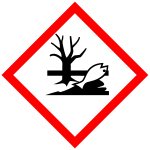 |
|---|---|
| Signal word | Warning |
| Hazard statement(s) | H317 May cause an allergic skin reaction H332 Harmful if inhaled H410 Very toxic to aquatic life with long lasting effects |
| Precautionary statement(s) | |
| Prevention | P261 Avoid breathing dust/fume/gas/mist/vapours/spray. P272 Contaminated work clothing should not be allowed out of the workplace. P280 Wear protective gloves/protective clothing/eye protection/face protection/hearing protection/... P271 Use only outdoors or in a well-ventilated area. P273 Avoid release to the environment. |
| Response | P302+P352 IF ON SKIN: Wash with plenty of water/... P333+P317 If skin irritation or rash occurs: Get medical help. P321 Specific treatment (see ... on this label). P362+P364 Take off contaminated clothing and wash it before reuse. P304+P340 IF INHALED: Remove person to fresh air and keep comfortable for breathing. P317 Get medical help. P391 Collect spillage. |
| Storage | none |
| Disposal | P501 Dispose of contents/container to an appropriate treatment and disposal facility in accordance with applicable laws and regulations, and product characteristics at time of disposal. |
2.3 Other hazards which do not result in classification
no data available
SECTION 3: Composition/information on ingredients
3.1 Substances
| Chemical name | Common names and synonyms | CAS number | EC number | Concentration |
|---|---|---|---|---|
| S-ethyl N-cyclohexylthiocarbamate | S-ethyl N-cyclohexylthiocarbamate | 1134-23-2 | 214-482-7 | 100% |
SECTION 4: First-aid measures
4.1 Description of necessary first-aid measures
If inhaled
Move the victim into fresh air. If breathing is difficult, give oxygen. If not breathing, give artificial respiration and consult a doctor immediately. Do not use mouth to mouth resuscitation if the victim ingested or inhaled the chemical.
Following skin contact
Take off contaminated clothing immediately. Wash off with soap and plenty of water. Consult a doctor.
Following eye contact
Rinse with pure water for at least 15 minutes. Consult a doctor.
Following ingestion
Rinse mouth with water. Do not induce vomiting. Never give anything by mouth to an unconscious person. Call a doctor or Poison Control Center immediately.
4.2 Most important symptoms/effects, acute and delayed
Excerpt from ERG Guide 171 [Substances (Low to Moderate Hazard)]: Inhalation of material may be harmful. Contact may cause burns to skin and eyes. Inhalation of Asbestos dust may have a damaging effect on the lungs. Fire may produce irritating, corrosive and/or toxic gases. Some liquids produce vapors that may cause dizziness or suffocation. Runoff from fire control may cause pollution. (ERG, 2016)
4.3 Indication of immediate medical attention and special treatment needed, if necessary
Skin decontamination. Skin contamination should be treated promptly by washing with soap and water. Contamination of the eyes should be treated immediately by prolonged flushing of the eyes with large amounts of clean water. If dermal or ocular irritation persists, medical attention should be obtained without delay. Other herbicides
SECTION 5: Fire-fighting measures
5.1 Suitable extinguishing media
If material /is/ on fire or involved in /a/ fire do not extinguish fire unless flow can be stopped. Use water in flooding quantities as fog. Solid streams of water may be ineffective. Cool all affected containers with flooding quantities of water. Apply water from as far a distance as possible. Use "alcohol" foam, dry chemical or carbon dioxide. Carbamate pesticide, liquid, nos, (compounds and preparations) (agricultural insecticides, nec, liquid); Carbamate pesticide, liquid, nos (compounds and preparations) (agricultural insecticides, nec, liquid); Carbamate pesticide, liquid, nos (compounds and preparations) (insecticides, other than agricultural, nec
5.2 Specific hazards arising from the chemical
Excerpt from ERG Guide 171 [Substances (Low to Moderate Hazard)]: Some may burn but none ignite readily. Containers may explode when heated. Some may be transported hot. For UN3508, be aware of possible short circuiting as this product is transported in a charged state. (ERG, 2016)
5.3 Special protective actions for fire-fighters
Wear self-contained breathing apparatus for firefighting if necessary.
SECTION 6: Accidental release measures
6.1 Personal precautions, protective equipment and emergency procedures
Avoid dust formation. Avoid breathing mist, gas or vapours.Avoid contacting with skin and eye. Use personal protective equipment.Wear chemical impermeable gloves. Ensure adequate ventilation.Remove all sources of ignition. Evacuate personnel to safe areas.Keep people away from and upwind of spill/leak.
6.2 Environmental precautions
Prevent further spillage or leakage if it is safe to do so. Do not let the chemical enter drains. Discharge into the environment must be avoided.
6.3 Methods and materials for containment and cleaning up
Do not discharge effluent containing this product into lakes, streams, ponds, estuaries, oceans, or other waters unless in accordance with the requirements of a National Pollution Discharge Elimination System (NPDES) permit and the permitting authority has been notified in writing prior to discharge. Do not discharge effluent containing this product to sewer systems without previously notifying the local sewage treatment plant authority. For guidance, contact your State Water Board or Regional Office of the EPA.
SECTION 7: Handling and storage
7.1 Precautions for safe handling
Handling in a well ventilated place. Wear suitable protective clothing. Avoid contact with skin and eyes. Avoid formation of dust and aerosols. Use non-sparking tools. Prevent fire caused by electrostatic discharge steam.
7.2 Conditions for safe storage, including any incompatibilities
Keep containers closed when not in use. Do not store near seeds, fertilizers, or foodstuffs. Protect from temperatures below 20 deg F. Product crystallizes at lower temperatures. Warm or store at higher temperatures and mix to redissolve crystals and assure uniformity before use. Do not store near sources of heat or open flame. Combustible liquid. RO-NEET 6-E
SECTION 8: Exposure controls/personal protection
8.1 Control parameters
Occupational Exposure limit values
no data available
Biological limit values
no data available
8.2 Appropriate engineering controls
Ensure adequate ventilation. Handle in accordance with good industrial hygiene and safety practice. Set up emergency exits and the risk-elimination area.
8.3 Individual protection measures, such as personal protective equipment (PPE)
Eye/face protection
Wear tightly fitting safety goggles with side-shields conforming to EN 166(EU) or NIOSH (US).
Skin protection
Wear fire/flame resistant and impervious clothing. Handle with gloves. Gloves must be inspected prior to use. Wash and dry hands. The selected protective gloves have to satisfy the specifications of EU Directive 89/686/EEC and the standard EN 374 derived from it.
Respiratory protection
If the exposure limits are exceeded, irritation or other symptoms are experienced, use a full-face respirator.
Thermal hazards
no data available
SECTION 9: Physical and chemical properties and safety characteristics
| Physical state | Cycloate is a colorless liquid with an aromatic odor. Used as a selective systemic herbicide. |
|---|---|
| Colour | Colorless liquid |
| Odour | Aromatic |
| Melting point/freezing point | 11.5ºC |
| Boiling point or initial boiling point and boiling range | 303ºC at 760 mmHg |
| Flammability | no data available |
| Lower and upper explosion limit/flammability limit | no data available |
| Flash point | 137.1ºC |
| Auto-ignition temperature | no data available |
| Decomposition temperature | no data available |
| pH | no data available |
| Kinematic viscosity | no data available |
| Solubility | Miscible with most organic solvents, e.g. acetone, benzene, methanol, ethanol, xylene, kerosene, etc. |
| Partition coefficient n-octanol/water | log Kow = 3.88 |
| Vapour pressure | 1.57X10⁻³ mm Hg at 25 deg C |
| Density and/or relative density | 1.02 g/cm3 |
| Relative vapour density | no data available |
| Particle characteristics | no data available |
SECTION 10: Stability and reactivity
10.1 Reactivity
Thio and dithiocarbamates slowly decompose in aqueous solution to form carbon disulfide and methylamine or other amines. Such decompositions are accelerated by acids or alkalis.
10.2 Chemical stability
Stable, 50% unchanged greater than 10 yr at 70 deg c.
10.3 Possibility of hazardous reactions
Fire point: 149 deg CCYCLOATE is a thiocarbamate ester. Flammable gases are generated by the combination of thiocarbamates and dithiocarbamates with aldehydes, nitrides, and hydrides. Thiocarbamates and dithiocarbamates are incompatible with acids, peroxides, and acid halides.
10.4 Conditions to avoid
no data available
10.5 Incompatible materials
no data available
10.6 Hazardous decomposition products
When heated to decomposition it emits toxic fumes of /sulfur and nitrogen oxides/.
SECTION 11: Toxicological information
Acute toxicity
- Oral: LD50 Rat oral 1678 mg/kg
- Inhalation: LC50 Rat inhalation 90 g/cu m/1 hr
- Dermal: no data available
Skin corrosion/irritation
no data available
Serious eye damage/irritation
no data available
Respiratory or skin sensitization
no data available
Germ cell mutagenicity
no data available
Carcinogenicity
Cancer Classification: Not Likely to be Carcinogenic to Humans
Reproductive toxicity
no data available
STOT-single exposure
no data available
STOT-repeated exposure
no data available
Aspiration hazard
no data available
SECTION 12: Ecological information
12.1 Toxicity
- Toxicity to fish: LC50; Species: Oncorhynchus mykiss (Rainbow trout); Conditions: freshwater, static; Concentration: 4500 ug/L for 96 hr (95% confidence interval: 3000-8000 ug/L) /97.8% purity
- Toxicity to daphnia and other aquatic invertebrates: EC50; Species: Daphnia magna (Water flea, age <24 hr); Conditions: freshwater, static; Concentration: 24000 ug/L for 48 hr (95% confidence interval: 18000-32000 ug/L); Effect: intoxication, immobilization /96.8% purity
- Toxicity to algae: no data available
- Toxicity to microorganisms: no data available
12.2 Persistence and degradability
AEROBIC: Thiocarbamates, such as cycloate, undergo rapid biodegradation(1,4). Cycloate was not mineralized in sewage or lakewater, but it was metabolized to organic products(2). When incorporated 3 inches deep into moist loam at a temperature of 70-80 deg C, an 83% loss of cycloate occurred in 70 days; at 40 deg C only 32% loss occurred(3). In dry soil incubated at 70-80 deg C, only 9% loss occurred(3). Autoclaving the soils greatly increased the persistence of cycloate indicating that microbial degradation is important(3). Cycloate does not decrease the number or biochemical activity of soil organisms(4). Using a continuous flow-through system and soil inoculum, 14C-labeled cycloate was up to 90% mineralized(5). Laboratory metabolism study using aerobic soil resulted in a half-life of 43 days; soil degradates include the sulfoxide and N-ethylcyclohexylamine, N-cyclohexyl-N-ethylformamide and N-ethyl-N-formyl-S- ethyl thiocarbamate(6).
12.3 Bioaccumulative potential
An estimated BCF of 190 was calculated for cycloate(SRC), using a log Kow of 3.88(1) and a regression-derived equation(2). According to a classification scheme(3), this BCF suggests the potential for bioconcentration in aquatic organisms is high, provided the compound is not metabolized by the organism(SRC).
12.4 Mobility in soil
The Koc of cycloate has been experimentally determined to be 345(1,2). The compound tends to sorb to soil under dry conditions and is not reversed if soil is later flooded(3). If already flooded, then cycloate desorbs readily and then volatilizes. Koc values of 500-800 have been reported(3). According to a classification scheme(4), these Koc values suggest that cycloate is expected to have moderate mobility in soil. Cycloate was found at a maximum depth of 6-9 inches in a leaching study using four different soils(5).
12.5 Other adverse effects
no data available
SECTION 13: Disposal considerations
13.1 Disposal methods
Product
The material can be disposed of by removal to a licensed chemical destruction plant or by controlled incineration with flue gas scrubbing. Do not contaminate water, foodstuffs, feed or seed by storage or disposal. Do not discharge to sewer systems.
Contaminated packaging
Containers can be triply rinsed (or equivalent) and offered for recycling or reconditioning. Alternatively, the packaging can be punctured to make it unusable for other purposes and then be disposed of in a sanitary landfill. Controlled incineration with flue gas scrubbing is possible for combustible packaging materials.
SECTION 14: Transport information
14.1 UN Number
| ADR/RID: Not dangerous goods. (For reference only, please check.) | IMDG: Not dangerous goods. (For reference only, please check.) | IATA: Not dangerous goods. (For reference only, please check.) |
14.2 UN Proper Shipping Name
| ADR/RID: Not dangerous goods. (For reference only, please check.) | IMDG: Not dangerous goods. (For reference only, please check.) | IATA: Not dangerous goods. (For reference only, please check.) |
14.3 Transport hazard class(es)
| ADR/RID: Not dangerous goods. (For reference only, please check.) | IMDG: Not dangerous goods. (For reference only, please check.) | IATA: Not dangerous goods. (For reference only, please check.) |
14.4 Packing group, if applicable
| ADR/RID: Not dangerous goods. (For reference only, please check.) | IMDG: Not dangerous goods. (For reference only, please check.) | IATA: Not dangerous goods. (For reference only, please check.) |
14.5 Environmental hazards
| ADR/RID: Yes | IMDG: Yes | IATA: Yes |
14.6 Special precautions for user
no data available
14.7 Transport in bulk according to IMO instruments
no data available
SECTION 15: Regulatory information
15.1 Safety, health and environmental regulations specific for the product in question
| Chemical name | Common names and synonyms | CAS number | EC number |
|---|---|---|---|
| S-ethyl N-cyclohexylthiocarbamate | S-ethyl N-cyclohexylthiocarbamate | 1134-23-2 | 214-482-7 |
| European Inventory of Existing Commercial Chemical Substances (EINECS) | Listed. | ||
| EC Inventory | Listed. | ||
| United States Toxic Substances Control Act (TSCA) Inventory | Not Listed. | ||
| China Catalog of Hazardous chemicals 2015 | Not Listed. | ||
| New Zealand Inventory of Chemicals (NZIoC) | Not Listed. | ||
| Philippines Inventory of Chemicals and Chemical Substances (PICCS) | Not Listed. | ||
| Vietnam National Chemical Inventory | Listed. | ||
| Chinese Chemical Inventory of Existing Chemical Substances (China IECSC) | Not Listed. | ||
| Korea Existing Chemicals List (KECL) | Not Listed. | ||
SECTION 16: Other information
Information on revision
| Creation Date | July 15, 2019 |
|---|---|
| Revision Date | July 15, 2019 |
Abbreviations and acronyms
- CAS: Chemical Abstracts Service
- ADR: European Agreement concerning the International Carriage of Dangerous Goods by Road
- RID: Regulation concerning the International Carriage of Dangerous Goods by Rail
- IMDG: International Maritime Dangerous Goods
- IATA: International Air Transportation Association
- TWA: Time Weighted Average
- STEL: Short term exposure limit
- LC50: Lethal Concentration 50%
- LD50: Lethal Dose 50%
- EC50: Effective Concentration 50%
References
- IPCS - The International Chemical Safety Cards (ICSC), website: http://www.ilo.org/dyn/icsc/showcard.home
- HSDB - Hazardous Substances Data Bank, website: https://toxnet.nlm.nih.gov/newtoxnet/hsdb.htm
- IARC - International Agency for Research on Cancer, website: http://www.iarc.fr/
- eChemPortal - The Global Portal to Information on Chemical Substances by OECD, website: http://www.echemportal.org/echemportal/index?pageID=0&request_locale=en
- CAMEO Chemicals, website: http://cameochemicals.noaa.gov/search/simple
- ChemIDplus, website: http://chem.sis.nlm.nih.gov/chemidplus/chemidlite.jsp
- ERG - Emergency Response Guidebook by U.S. Department of Transportation, website: http://www.phmsa.dot.gov/hazmat/library/erg
- Germany GESTIS-database on hazard substance, website: http://www.dguv.de/ifa/gestis/gestis-stoffdatenbank/index-2.jsp
- ECHA - European Chemicals Agency, website: https://echa.europa.eu/
Disclaimer: The above information is believed to be correct but does not purport to be all inclusive and shall be used only as a guide. The information in this document is based on the present state of our knowledge and is applicable to the product with regard to appropriate safety precautions. It does not represent any guarantee of the properties of the product. We as supplier shall not be held liable for any damage resulting from handling or from contact with the above product.
Ro-Neet 6E is included in Herbicides category.
Industry News
More Safety Data Sheets