The Surprising Science: Why Does Baking Soda React With Water?
What Happens When Baking Soda Meets Water?
Baking soda, or sodium bicarbonate (NaHCO₃), is a white crystalline powder. When it dissolves in water, it undergoes a mild chemical reaction called alkaline hydrolysis. In this process, baking soda interacts with water molecules and forms carbonic acid (H₂CO₃), which quickly decomposes into carbon dioxide gas (CO₂) and water (H₂O).
The carbon dioxide gas escapes as bubbles, causing fizzing and foaming—this is the same gas that helps baked goods rise in the oven or creates a frothy reaction when used in cleaning solutions.
The Chemical Equation
The reaction between baking soda and water can be summarized like this:
NaHCO₃ (aq) + H₂O (l) → H₂CO₃ (aq) → CO₂ (g) + H₂O (l)
This two-step reaction highlights the temporary formation of carbonic acid, which quickly breaks down, releasing CO₂ bubbles.
Why This Reaction Matters
This simple reaction plays important roles in daily life:
- Baking: Carbon dioxide gives dough and batter their airy, fluffy texture.
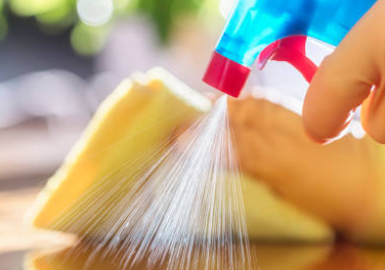
- Cleaning: The alkaline nature of baking soda helps dissolve grease, neutralize odors, and remove dirt.
- Deodorizing: As CO₂ forms, it can help eliminate smells by reacting with acidic odor molecules.
- De-icing: The reaction can help break down light ice layers on surfaces in winter.
pH Change and Alkalinity
When baking soda is dissolved in water, it increases the solution’s pH, making it more basic (alkaline). This is due to the formation of hydroxide ions (OH⁻), which shift the balance away from neutrality.
| Property | Before Reaction | After Reaction |
|---|---|---|
| pH Level | Around 7 (neutral) | Above 8 (alkaline) |
| Gas Released | None | CO₂ (carbon dioxide) |
| Foaming | No | Yes |
Is It Safe?
Yes. Baking soda is non-toxic and safe for household use. The carbonic acid produced is weak and breaks down rapidly. However, it’s best used in moderation, especially when cleaning delicate surfaces.
Final Thoughts
So, why does baking soda react with water? Because sodium bicarbonate is a mild base that undergoes a chemical change when mixed with water, forming carbon dioxide and altering pH. This simple but important reaction is what makes baking soda a valuable tool in the kitchen, for cleaning, and even in science experiments.
Looking for chemical products? Let suppliers reach out to you!
You May Interested In


Glow70/KLOW80 99% China Peptides Warehouse Direct Delivery Lyophilized Powder in Stock
$169/UNIT FOB


2026-10-25
Trade Alert
Delivering the latest product trends and industry news straight to your inbox.
(We'll never share your email address with a third-party.)

Related News
-
Find Out What Kind Of Gas Does Vinegar And Baking Soda Make!
-
What is components of baking soda and its use?
-
What is baking soda vinegar balanced equation and its benefits
-
What is the preparation of baking_soda chemistry and its use?
-
Why is baking soda a compound?
-
How to make sodium hydroxide from baking soda and its uses
-
What is baking soda an organic compound, or inorganic?
-
How Many Elements Are In Baking Soda, And What Are They?
-
How Is The Manufacturing Process of Baking Soda
-
The Magical Baking Soda and Vinegar Reaction: How It Works
Recommend Reading
-
![Understanding the Arsenate Symbol and Its Uses]()
Understanding the Arsenate Symbol and Its Uses
-
![Why You Should Never Mix Bleach and Vinegar]()
Why You Should Never Mix Bleach and Vinegar
-
![Benzoylecgonine: Detection and Testing Methods]()
Benzoylecgonine: Detection and Testing Methods
-
![What Color Should a Zinc-Copper Couple Be?]()
What Color Should a Zinc-Copper Couple Be?
-
![Business Society’s Market Outlook for Maleic Anhydride on August 20, 2026: Volatile]()
Business Society’s Market Outlook for Maleic Anhydride on August 20, 2026: Volatile
-
![Business Society October 12, 2026 Isobutanol Trend Analysis: Strongly Bullish]()
Business Society October 12, 2026 Isobutanol Trend Analysis: Strongly Bullish
-
![Business Society September 7, 2026 Ethanol Market View: Strong Consolidation]()
Business Society September 7, 2026 Ethanol Market View: Strong Consolidation
-
![Business Society’s Market Outlook for Propylene Oxide on August 20, 2026: Price Trend Is Expected to Be Volatile]()
Business Society’s Market Outlook for Propylene Oxide on August 20, 2026: Price Trend Is Expected to Be Volatile
-
![Business Society October 12, 2026 Acrylic Acid Trend Analysis: Strong Consolidation]()
Business Society October 12, 2026 Acrylic Acid Trend Analysis: Strong Consolidation