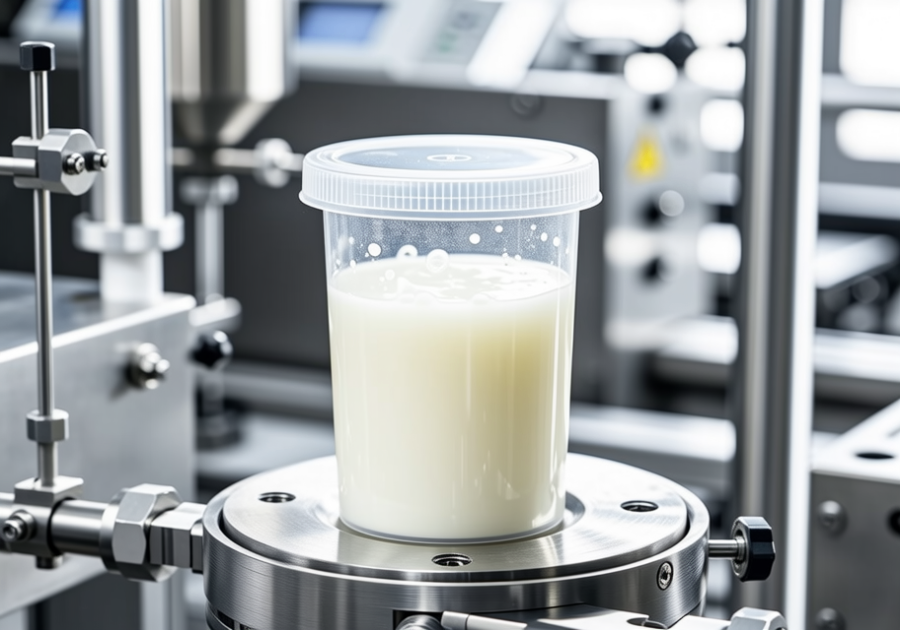
Flavorings from a microalgae oil waste stream
A new study aims to develop a scalable methodology for production of microalgae-based polyols for polyurethane synthesis from waste oils derived from algae biomass.
Renewable polymers have become an important focus in next-generation materials, and algae biomass offers an environmentally low-impact feedstock that can serve multiple uses.
Following separation of omega-3 fatty acids from algae oil, residual oils can offer valuable building blocks for petrochemical replacements. However, unlike vegetable oils, algae oils contain organic contaminants, including photosynthetic pigments and hydrophobic cofactors that can complicate preparative methodologies.
The researchers convert and purify waste streams from omega-3 depleted Nannochloropsis salina algae oil, with major components consisting of palmitic and palmitoleic acid, into azelaic acid (AA) as a building block for flexible polyurethanes, with a simultaneous production of heptanoic acid (HA) as a flavor and fragrance precursor.
Extraction of organic contaminants
Conversion of free fatty acid mixtures into a soft soap allows extraction of organic contaminants, and urea complexation provides isolated palmitoleic acid, which is subsequently ozonolyzed to produce AA and HA. Bio-based polyester diols are prepared from AA via esterification to provide a polyol monomer for flexible polyurethane foam preparation.
The HA co-product is modified to produce the flavoring agent methyl heptanoate and also decarboxylated to produce hexane as a renewable solvent. This scalable process can be performed on oils from multiple algal species, offering valuable monomers from a highly sustainable source.

You May Interested In


High Quality β-Nicotinamide adenine dinucleotide CAS 53-84-9 NADwith ready stock and best price
$3E+1/UNIT FOB


2026-10-24
Trade Alert
Delivering the latest product trends and industry news straight to your inbox.
(We'll never share your email address with a third-party.)

Related News
-
Betulin was first discovered in China as the natural active ingredient against peach aphids
-
IPP·CAAS revealed the action metabolism of Chinese novel pesticide Cyetpyrafen
-
China丨Intelligent delivery system of pesticide developed by 'Science Island'
-
China丨Hundreds of new pesticides are expected to emerge
-
China 丨Jiangnan university developed Chiral nano-pesticide against plant viruses
-
China丨Chitin biosynthesis study sheds light on green pesticide development
-
US researchers evaluate pesticide-embedded paint for poultry facilities
-
Novartis has the most new drugs approved, and Roche's new drugs have the highest value!
-
New effects of metformin discovered
-
Metakaolin-based geopolymer coatings on metals
Recommend Reading
-
![Libya’s Largest Refinery Faces Full Shutdown After Five Rounds of Airstrikes]()
Libya’s Largest Refinery Faces Full Shutdown After Five Rounds of Airstrikes
-
![SIBUR’s Massive Siberian Petrochemical Complex Shuts After Drone Attack, LPG Supply Disrupted]()
SIBUR’s Massive Siberian Petrochemical Complex Shuts After Drone Attack, LPG Supply Disrupted
-
![Lotte Chemical Jumps Nearly 13% as Korean Petrochemical Stocks Rally on Supply-Tightening Bets]()
Lotte Chemical Jumps Nearly 13% as Korean Petrochemical Stocks Rally on Supply-Tightening Bets
-
![Explosions Reported Near Saudi Aramco Headquarters as Missile Is Intercepted Over Dhahran]()
Explosions Reported Near Saudi Aramco Headquarters as Missile Is Intercepted Over Dhahran
-
![European Gas Breaks €80 Intraday, Putting Chemical and Fertilizer Output Back Under Pressure]()
European Gas Breaks €80 Intraday, Putting Chemical and Fertilizer Output Back Under Pressure
-
![Business Society’s LDPE Market Outlook on August 10, 2026: Volatile with a Slight Bullish Bias]()
Business Society’s LDPE Market Outlook on August 10, 2026: Volatile with a Slight Bullish Bias
-
![Costs Rise, Aggregate MDI Market Stabilizes First, Then Rises]()
Costs Rise, Aggregate MDI Market Stabilizes First, Then Rises
-
![Business Society’s BDO Trend Analysis on September 11, 2026: Volatile Consolidation]()
Business Society’s BDO Trend Analysis on September 11, 2026: Volatile Consolidation
-
![This Week's Isopropanol Market Sees Significant Increase (9.7-9.11) in China]()
This Week's Isopropanol Market Sees Significant Increase (9.7-9.11) in China
-
![Raw Material Prices Surge, Phthalic Anhydride Price Exceeds 10,000 Yuan per Ton in September in China]()
Raw Material Prices Surge, Phthalic Anhydride Price Exceeds 10,000 Yuan per Ton in September in China