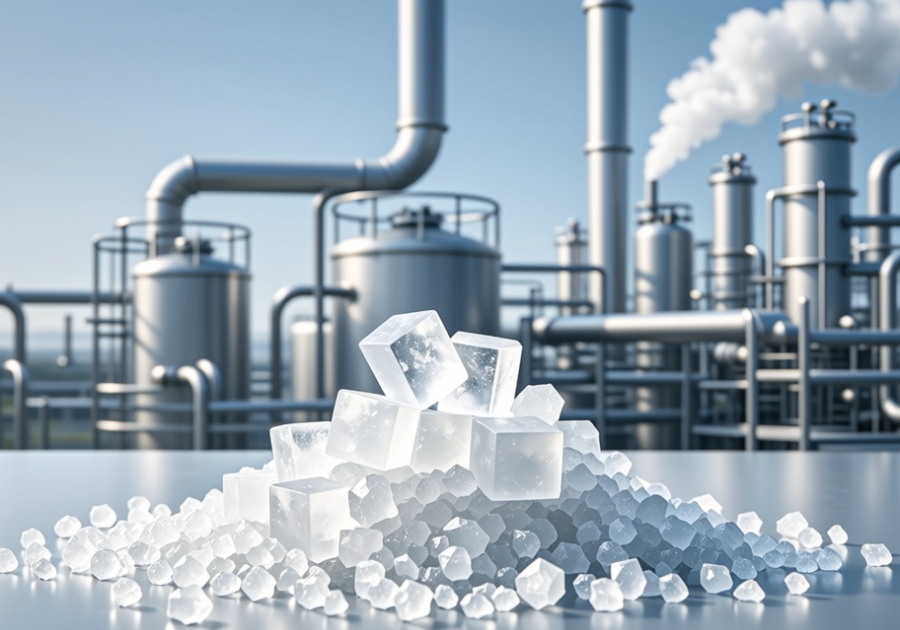
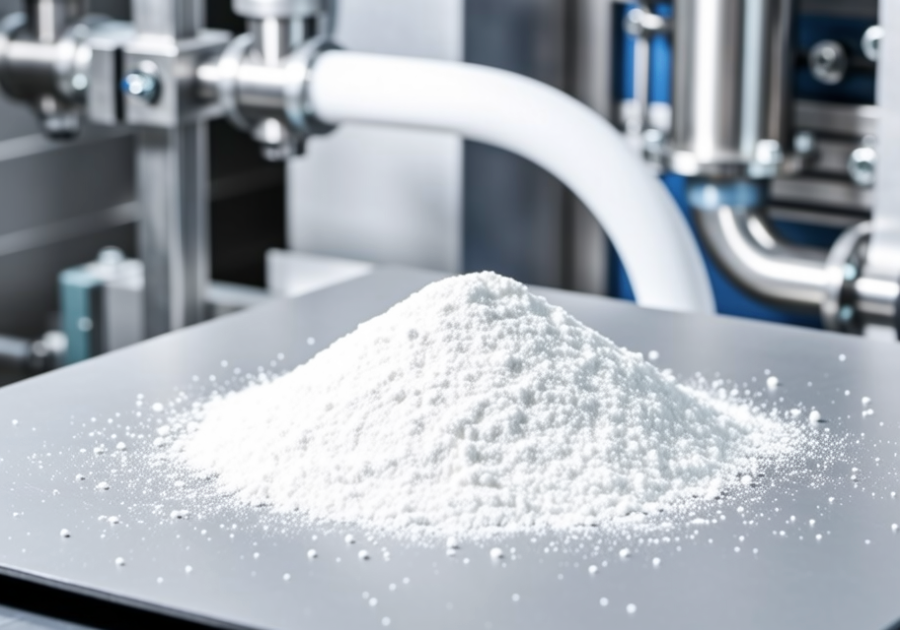
Beirut's ammonium nitrate explosion: how powerful is this chemical?
According to Lebanese officials, the huge explosion in the early hours of yesterday morning was caused by improper storage of 2,750 tons of ammonium nitrate in the port. The accident has killed 100 people and injured more than 4000 others.
Ammonium nitrate first appeared in the 17th century. It is mainly used as a high-nitrogen fertilizer in agriculture. It is widely preferred by crops, especially fruits, vegetables, and tobacco in dryland crops, but it is also a powerful explosive. By the time of World War II, ammonium nitrate had long been an essential material for explosives.
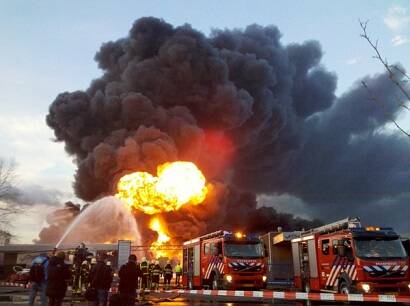
AMMONIUM Nitrate is not resistant to high temperatures and can be decomposed in different ways at high temperatures, and at the same time emits ammonia and highly toxic nitrogen oxide compounds. Due to collisions and other reasons, the temperature of local ammonium nitrate may rise above 300°C to cause an explosion. Ammonium nitrate can form an explosive mixture with any flammable liquid and many powdered metals.
It can be seen from the live video data that the explosion produced a high mushroom cloud. The high-temperature low-pressure gas produced during the explosion will quickly rise to a certain height with water vapor, explosive decomposition products and dust, and the speed will slow down, and the gas behind it will keep accumulating, thus forming a mushroom cloud. The more obvious the mushroom cloud, the more violent the explosion.
The data collected by the US Geological Survey showed that the seismic waves generated by the explosion that day were equivalent to a magnitude 3.3 earthquake, and the actual power was even greater than a magnitude 3.3 earthquake. Nearby residents described the explosion as "like an atomic bomb (explosion)". Even Cyprus, on the other side of the Mediterranean Sea, felt the earthquake.
In view of this, most countries have established standards for this hazardous chemical. Safety regulations must be strictly observed in production, storage, transportation and use. Lebanese President Aoun said that it was "unacceptable" for 2,750 tons of ammonium nitrate to be stored in a warehouse without safety measures for 6 years, and he vowed to expose those responsible to the "most severe punishment."
In 2014, when a ship was heading to Africa, the ammonium nitrate had to be unloaded due to a problem with the ship, and then it was unloaded in Beirut Seaport Zone 12.
The Lebanese International Broadcasting Group cited a safety report showing that at the time of the incident, “the staff was welding the door of the warehouse where the explosives were stored. The welding sparks ignited the explosives in the warehouse, which caused the nitric acid stored in another warehouse. Ammonium exploded."
Gabriel da Silva, a senior lecturer in chemical engineering at the University of Melbourne, agreed with Lebanon’s official statement that ammonium nitrate will ignite only under appropriate circumstances and requires extreme environments to cause an explosion.
Ammonium nitrate has caused the worst industrial explosion in American history. On April 16, 1947, the freighter "Grand Camp" berthed in Texas City caught fire, detonating 2,300 tons of ammonium nitrate and triggering a 4.5-meter-high tsunami. The explosion killed at least 500 people.
In 2015, a fire and explosion accident in a warehouse in Tianjin Binhai New Area killed 165 people. The investigation team finally determined that the direct cause of the accident was: partial drying of the nitrocellulose in the warehouse due to the loss of wetting agent, accelerated decomposition of heat under the action of high temperature (weather) and other factors, heat accumulation and spontaneous combustion, causing the nitrocellulose and the nitrocellulose in adjacent containers Other hazardous chemicals burned in large areas for a long time, causing the explosion of hazardous chemicals such as ammonium nitrate stacked in the arrival area.
Silva of the University of Melbourne said that although the chemicals in the AIR will dissipate quickly after the explosion, the remaining pollutants will cause subsequent problems, such as air pollution and indirect formation of "acid rain." Judging from the blood red smoke produced by the online explosion, there are nitrogen oxide air pollutants in the air.
Nitrogen oxides can stimulate the lungs, making it harder for people to resist respiratory diseases such as colds. At the same time, nitrogen oxides, mainly nitric oxide and nitrogen dioxide, are an important cause of photochemical smog and acid rain.
And "acid rain" has direct and potential harm to human health, ecosystems and building facilities. According to Jiemian News, the weather in Beirut will be fine and fine in the next two weeks. There will be no significant rainfall, but the wind will not be strong.
After the incident, the U.S. Embassy in Beirut issued a statement saying that there was news that the explosion released toxic gases, and it was recommended that people wear masks and stay indoors.

You May Interested In


High Quality β-Nicotinamide adenine dinucleotide CAS 53-84-9 NADwith ready stock and best price
$3/UNIT FOB


2026-10-18
Trade Alert
Delivering the latest product trends and industry news straight to your inbox.
(We'll never share your email address with a third-party.)

Related News
-
U.S.-Iran Détente Triggers Oil Price Plunge, Energy and Chemical Sectors Tumble
-
"Zipper-Like" Opening and Closing of Hormuz Coupled with Russian Export Ban Send Energy and Chemical Prices Soaring
-
Global Countries Impose Tariffs on Chinese Chemical Products
-
AUTOMA Chem 2026: Powering Industry 4.0 in Chemistry
-
Chemical Raw Materials: How to Source Quality Suppliers & Understand Grades
-
Big adjustment! Basf quietly closed 11 factories in Germany and transferred to China for plant investment!
-
Fluorine chemical: profit generally declined, under the pressure to expand profit space
-
Chemical production in the 27 EU countries has continued to recover, and the market recovery is still cautious
-
China: The development of green agricultural is the trend, and the future focus is on innovation and quality
-
Bayer: Revenue of 13.765 billion euros( Q1)was in line with expectations
Recommend Reading
-
![Uganda Sets Sugar Standards: East African Drafts Define Sweetness and Safety]()
Uganda Sets Sugar Standards: East African Drafts Define Sweetness and Safety
-
![Japan Tightens Tap: Pesticide Limits in Drinking Water Get a Safety Overhaul]()
Japan Tightens Tap: Pesticide Limits in Drinking Water Get a Safety Overhaul
-
![From “10,000-Ton Bet” to “5,000-Ton Test”: Acore’s Polyetheramine Dilemma—Is This a Symptom of Industry Winter or the Prelude to Strategic Retreat?]()
From “10,000-Ton Bet” to “5,000-Ton Test”: Acore’s Polyetheramine Dilemma—Is This a Symptom of Industry Winter or the Prelude to Strategic Retreat?
-
![Korea Unlocks Additive Flexibility: New Rules Broaden Food Ingredient Horizons]()
Korea Unlocks Additive Flexibility: New Rules Broaden Food Ingredient Horizons
-
![Congo Copper and Cobalt Miners Are Being Forced to Cut Chemical Use as Middle East Conflict Hits the New Energy Supply Chain]()
Congo Copper and Cobalt Miners Are Being Forced to Cut Chemical Use as Middle East Conflict Hits the New Energy Supply Chain
-
![In early April, the price of urea in China slightly increased (4.1-4.10)]()
In early April, the price of urea in China slightly increased (4.1-4.10)
-
![This Week's Pure Benzene Market Prices Declined in China (8.3-8.7)]()
This Week's Pure Benzene Market Prices Declined in China (8.3-8.7)
-
![September Isooctanol Prices in China Surge Before Declining]()
September Isooctanol Prices in China Surge Before Declining
-
![Traditional Peak Season Arrives, Palm Oil Prices Expected to Rise in China]()
Traditional Peak Season Arrives, Palm Oil Prices Expected to Rise in China
-
![This Week China Titanium Dioxide Market Prices Decreased (8.3-8.7)]()
This Week China Titanium Dioxide Market Prices Decreased (8.3-8.7)