Cancer Res | new algorithm for decoding cancer's genetic ancestors
Many published large-scale cancer genomic studies have shown differences in the molecular composition of diseases between groups of different ancestral backgrounds, and that race and ethnicity are important determinants of the incidence, clinical course, and outcome of many cancers. There are two main sources of ancestral traits for cancer-derived data: the patient's self-identified race and ethnicity (SIRE) and the patient's cancer-free genotype. But SIRE is often incomplete or inaccurate and often not tied to genetic ancestry, which prevents doctors from capturing complete patient ancestry information, especially in the case of mixed ancestry. Genotyping a patient's DNA from cancer-free tissue often yields more accurate and detailed ancestral traits, but it is not applicable to all types of cancer, such as leukemia. In this case, it is necessary to infer the genetic ancestry of the patient from the nucleic acid sequence of the tumor itself.
Recently, the research team of Cold Spring Harbor Laboratory (CSHL) published an article entitled "Genetic Ancestry Inference from Cancer-Derived Molecular Data across Genomic and Transcriptomic Platforms" in the journal Cancer Research. The research team revealed lineage associations between cancer and race/ethnicity and developed a new algorithm capable of accurately and reliably infering a patient's genetic ancestry from tumor DNA and RNA in the absence of matching cancer-free genomic data. The research helps clinicians develop new strategies for early cancer detection and personalized treatment.
Article published in Cancer Research
The research team developed a data synthesis framework to infer genetic ancestry from cancer-derived data, including whole exomes, transcriptomes, and targeted genomes (the algorithm flow is shown in Figure 1). The algorithm first performs data synthesis on genomic data from patient samples and known ancestors. The research team applied the established ancestor inference method to the algorithm and compared the resulting results with known ancestor data to generate multiple synthetic data to evaluate its accuracy in inferring the genetic ancestors of patients. In addition, by using synthetic data, the research team was able to optimize the algorithm's inference process based on the parameters it relied on.
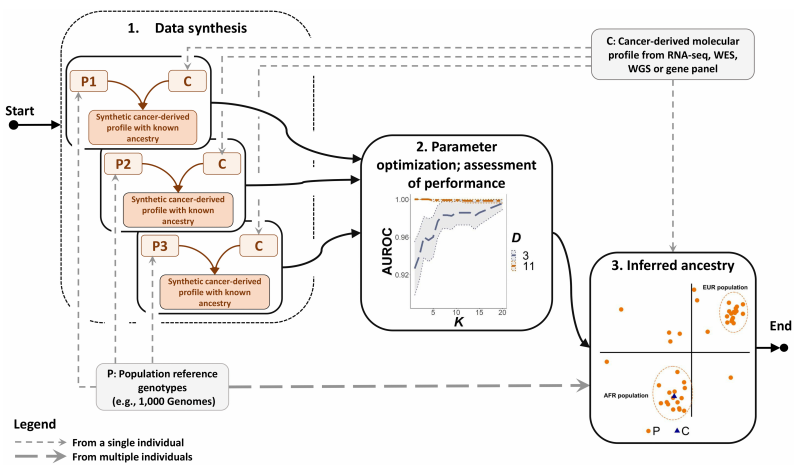
Figure 1. An overview of inferring genetic ancestry from cancer-derived molecular data using data synthesis. Source: Cancer Research
The research team included data from four datasets, including TCGA-Ovarian Cystadenocarcinoma (TCGA-OV), TCGA-Breast Cancer Ancestral Diversity Subset (TCGA-BRCA), Beat AML Clinical Trial (Beat AML), and a Pancreatic Ductal Adenocarcinoma Study Using PDO (PDAC) (Figure 2), and aggregated the data used in the form of Venn plots, including cancer DNA (whole exon or whole genome) sequences, Cancer RNA sequences and matching normal DNA (whole exon or whole genome) sequences. In addition, the research team used the 1,000 Genome Project (1KG) dataset as a reference, comparing it with patient molecular data to infer global ancestry at the continental level. The latter is defined as a categorical variable with five values: Africa (AFR), East Asia (EAS), Europe (EUR), the Americas (AMR), and South Asia (SAS).
THE RESEARCH TEAM PERFORMED PRELIMINARY DATA PROCESSING ON THE 1KG DATASET, LABELING THE GENOMIC (HFS) LOCATIONS OF ITS HIGH-FREQUENCY ALTERNATIVE VARIANTS AS THE BASIS FOR ANCESTOR INFERENCE, AND THE SUBSET OF HFS LOCATIONS IS CALLED THE HIGH CONFIDENCE GENOTYPE (HCG) SET. Further, the research team pruned the HCG genomic locations to reduce correlations between adjacent genotypes, resulting in a pruned set of high-confidence genotype (PHCG) locations.
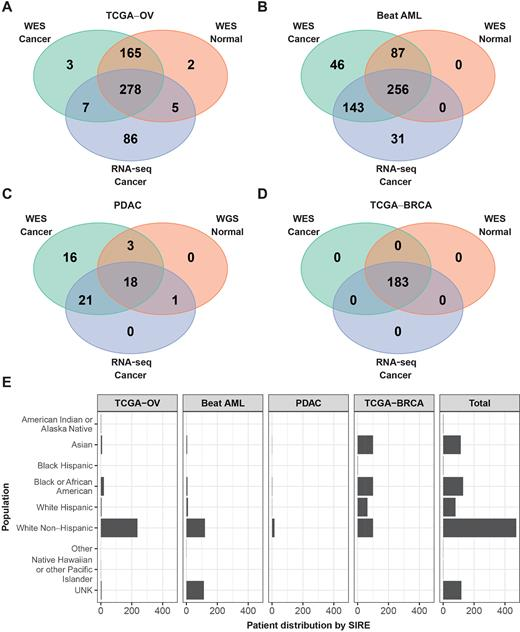
Figure 2. Molecular data used in the study. Source: Cancer Research
The flow of genetic ancestry inference is shown in Figure 3, and the research team used a combination of principal component analysis (PCA) and K-nearest neighbor classification. For a subset of patients in each cohort, the research team evaluated the ancestry inference performance of the parameters K and D functions separately, and retained the number of primary dimensions to evaluate them based on data synthesis.
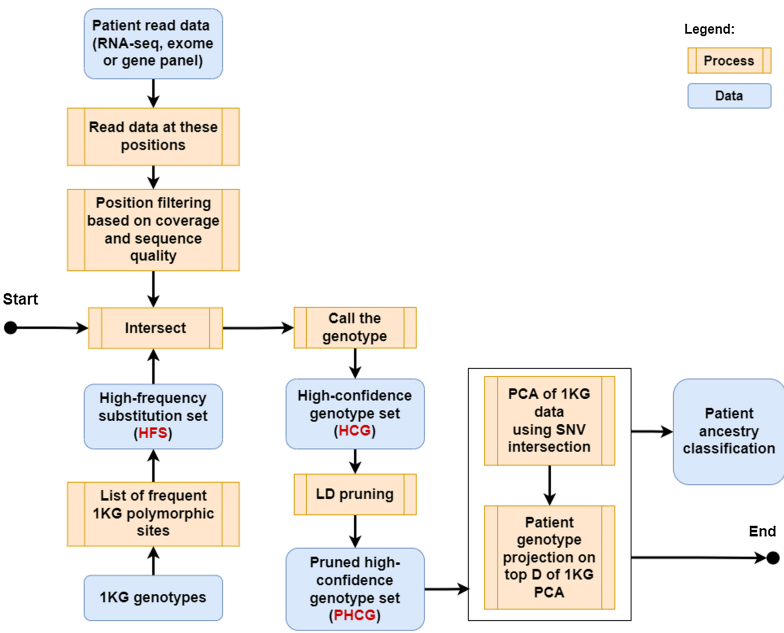
Figure 3. Flowchart of genetic ancestry inference. Source: Cancer Research
To verify the effectiveness of the algorithm, the research team studied four cancer types, namely pancreatic adenocarcinoma (PDAC), ovarian cystadenocarcinoma, epithelial tumors represented by breast cancer, and hematopoietic malignancies represented by acute myeloid leukemia (AML). The research team selected D and K value pairs in the optimal range and applied them to cancer-free WES spectra in TCGA-OV and TCGA-BRCA patients. The results show that the ancestor presumption results obtained by the algorithm are consistent with the database data. The team also compared it to matching ancestor inferences based on cancer-free genotypes, and for patients with Beat AML, TCGA-OV and TCGA-BRCA, the presumption of ancestors was consistent with database data. The above results show that the algorithm shows high accuracy in all cohorts and analysis modes.
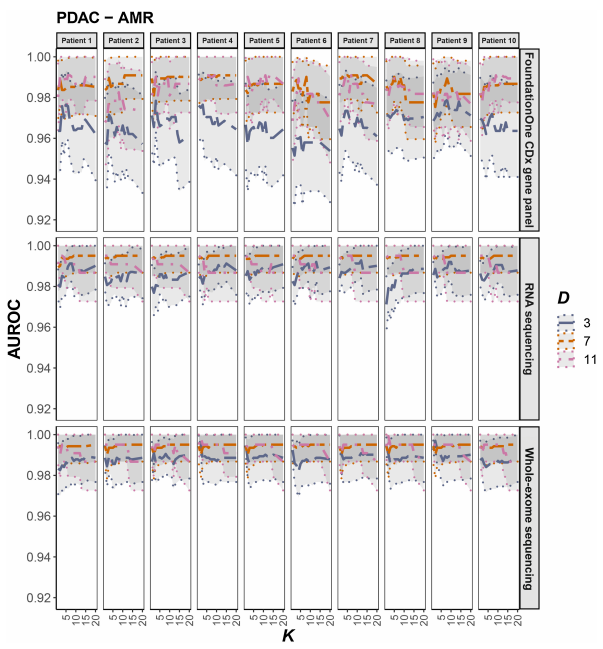
Figure 4. AMR-specific dependence of AUROC on inferred parameters D and K. Source: Cancer Research
In summary, the research team developed a computational method for accurate and robust ancestor inference from cancer-derived molecular data. This method combines a PCA-based ancestry inference technique with a method for inference parameter optimization using synthetic data to facilitate genetic lineage-oriented cancer research. The research team also created sample maps from cancers of known background and unrelated cancer-free genomes, and verified the performance of the algorithm using pancreatic, ovarian, breast and blood cancer samples of known ancestry, showing that the algorithm was more than 95% accurate.

You May Interested In


High Quality β-Nicotinamide adenine dinucleotide CAS 53-84-9 NADwith ready stock and best price
$3/UNIT FOB


2026-10-17
Trade Alert
Delivering the latest product trends and industry news straight to your inbox.
(We'll never share your email address with a third-party.)

Related News
-
24th Pharma Asia International Exhibition & Conferences to Open in Karachi, Pakistan
-
Pharma Asia 2026: Bringing the Global Pharmaceutical Industry to Pakistan
-
Egyptian Pharmaceutical Market Research
-
CPHI China 2023 | At the Heart of Pharma
-
A Guide Into What the Pharmaceutical Use of Hexamine Is
-
In line with the 8201, Hengrui Pharmaceutical plans the HER2 ADC in this way
-
$50 billion in products were 'returned' to rationalize those blockbuster BD deals
-
Tronsound long-acting IL-36R antibody obtained FDA clinical IND
-
Dapagliflozin is approved in the EU for the treatment of symptomatic chronic heart failure
-
The FDA accepted Zuranolone's NDA application and granted it priority review rights for the treatment of MDD and PDD
Recommend Reading
-
![Sichuan Unveils Revised List of 14 Qualified Chemical Parks in Major Industrial Realignment]()
Sichuan Unveils Revised List of 14 Qualified Chemical Parks in Major Industrial Realignment
-
![Antidumping Pressure Hits the Chemical Chain as Chinese Exports Face Higher Barriers in Europe]()
Antidumping Pressure Hits the Chemical Chain as Chinese Exports Face Higher Barriers in Europe
-
![Lianolong Bets Big on Electronic Adhesives with $50M Strategic Stake in Sidofu]()
Lianolong Bets Big on Electronic Adhesives with $50M Strategic Stake in Sidofu
-
![EU mulls expanding tariff scope on Chinese chemicals, sector-wide measures in the pipeline]()
EU mulls expanding tariff scope on Chinese chemicals, sector-wide measures in the pipeline
-
![IEA Warns Oil Inventories Are Draining Fast as Chemicals Enter Risk Pricing]()
IEA Warns Oil Inventories Are Draining Fast as Chemicals Enter Risk Pricing
-
![Crude Oil Prices First Fall, Then Rise; Retail Prices for Refined Oil Products Raised Again in This Round]()
Crude Oil Prices First Fall, Then Rise; Retail Prices for Refined Oil Products Raised Again in This Round
-
![Insufficient Demand for Cyclohexane in China, Prices Narrowly Fluctuate]()
Insufficient Demand for Cyclohexane in China, Prices Narrowly Fluctuate
-
![This Week, Anhydrous Hydrogen Fluoride Prices Remain Stable at High Levels in China (4.13-4.17)]()
This Week, Anhydrous Hydrogen Fluoride Prices Remain Stable at High Levels in China (4.13-4.17)
-
![This Week's Styrene Market Slightly Declined (4.13-4.17) in China]()
This Week's Styrene Market Slightly Declined (4.13-4.17) in China
-
![Coke Market Prices Remain Stable with a Rising Trend]()
Coke Market Prices Remain Stable with a Rising Trend