How to Remove Birds --- Methyl anthranilate bird repellent
Being bothered by birds is the worst thing that can happen. This brings up the question: What is the most effective method for eliminating birds? Discover the solution by continuing to read. You will learn from reading it why Methyl anthranilate bird repellent is useful.
There is no question that the farming industry is impacted by a wide range of risk variables, including the weather, the economy, unpredictable markets, disease, and pests, to mention a few difficulties. Despite the fact that many issues are beyond our control, some can be avoided or at the very least minimized. Birds are a serious danger to the sustainability of crops that are susceptible, including wheat, grapes, berries, and sunflowers. Birds are sophisticated animals that constantly look for food, water, and places to nest. Moving them once they discover this utopia can be quite difficult, and managing crop damage can be a nightmare.
When human activities put birds in danger, such as at hazardous waste sites, or when birds harm crops, and buildings, or are a source of zoonotic disease, the use of bird repellents may be necessary. Exclusion using netting, hazing (i.e., scare techniques), and chemical repellents are common protective measures to keep birds away from regions. If the use of these techniques follows a predictable pattern or if the sign stimuli are not combined with a prominent unpleasant reinforcing signal, birds can quickly become used to visual and aural hazing.
Chemical repellents are frequently employed to make a resource unpleasant and, as a result, to make it less desirable for birds to visit a specific location. An extremely strong avian chemosensory irritant is methyl anthranilate (MA).
What is Methyl anthranilate?
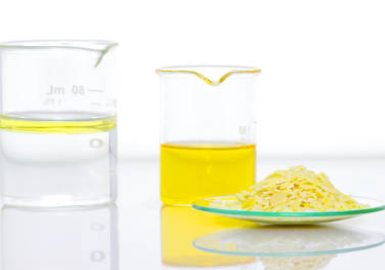
An ester of anthranilic acid, methyl anthranilate is often referred to as MA, methyl 2-aminobenzoate, or carbomethoxyaniline. C8H9NO2 is its chemical formula. It derives from organic materials like flowers and Concord grapes.
Methyl anthranilate serves as a deterrent to birds. It can be used to safeguard corn, sunflowers, rice, citrus, and golf courses and is of food-grade quality. Methyl Anthranilate (MA) is categorized as Generally Recognized As Safe (GRAS) because it meets or exceeds the requirements of the US Food Chemical Codes (FCC). Because it has a rich, fruity grape aroma. It is used in a wide variety of foods, including soda, ice cream, candy, and gelatin, as a scent or flavoring.
Its primary use is as a flavoring agent.
Methyl anthranilate bird repellent
You can use chemicals to repel birds. Methyl Anthranilate bird repellant is a product that is used to prevent pest birds from congregating in open areas. When birds swallow the chemicals, their nervous systems are influenced, making them lose their hunger, yet it's harmless for humans! These repellents' active components usually include methyl anthranilate. Scientists have approved the use of this repellent chemical to manage geese and save fruit. The product is also effective against large terrestrial animals like ducks and turkeys as well as other waterfowl, making it ideal for the backyard farmer or gardener.
How Does It Operate?
Some Methyl Anthranilate (MA) bird repellants are designed to be used with haze and fog generators. How Does It Operate? Spraying a fine mist of the repellant over the desired region is how the product works. Birds find the repellent's odor repulsive, and once they notice it, they usually fly away.
For example, EcoBird is a contact repellent, meaning that for it to work, the birds must be exposed to haze or fog. Scientists have been testing EcoBird 4.0 in a variety of settings across New Zealand, and the results have been excellent. It has been applied in both enclosed and semi-enclosed settings. These are currently pack houses, warehouses, coffee shops, and garages. By counting the number of birds before application, after two weeks of activity, and then again after four weeks, the effects are evaluated. The use rate for a first application that is intensive is about 50 miles per week. As the interval between application bursts is increased, this decreases. Birds have a sensitivity to particles smaller than two microns and develop a timidness. Birds will learn to avoid the treated area when the Ecobird is released into the air, making it unattractive for them to nest or roost there. No birds had been spotted roosting in the treated area after four weeks.
Some aromatic bird repellent, for example, Avian BlockTM, is released into the air using passive fragrance technology to efficiently keep all birds away from open spaces and partially enclosed locations. It is easy to install and just takes a few seconds to hang. Simply hang the block or pouch to fend off pesky birds.
Conclusion:
In this article, we learn that Methyl anthranilate bird repellent is a strong avian chemosensory irritant that can repel birds. Birds’ nervous systems would be affected when they are exposed to the methyl anthranilate chemicals, thus they feel sick of eating. Methyl anthranilate bird repellent is very useful the experimental result of the product have been excellent.
Looking for chemical products? Let suppliers reach out to you!
You May Interested In


Glow70/KLOW80 99% China Peptides Warehouse Direct Delivery Lyophilized Powder in Stock
$169/UNIT FOB


2026-10-21
Trade Alert
Delivering the latest product trends and industry news straight to your inbox.
(We'll never share your email address with a third-party.)

Related News
-
Potassium Nitrate Reactions & Uses (KNO3)
-
L-Alanine: Amino Acid Profile, Sports Nutrition, and Metabolic Role
-
Sodium Hypochlorite: Uses, Concentration Guide, and Critical Safety Hazards
-
Isopropyl Alcohol (IPA) vs Ethanol: Which Solvent or Disinfectant is Better?
-
Understanding Titanium Oxide: Properties and Uses
-
SiO2: Properties, Uses, and Applications
-
Uses of Dithiothreitol in Laboratories
-
Chemical Reactions and Uses of Stilbene
-
PEG (Polyethylene Glycol): Uses in Pharma, Cosmetics, and PEGylation
-
What is HCO3? (Bicarbonate Ion Function & Normal Levels)
Recommend Reading
-
![Chemical Properties of Dibenzylideneacetone]()
Chemical Properties of Dibenzylideneacetone
-
![Applications of Diphenyl Cyanide]()
Applications of Diphenyl Cyanide
-
![Isobutyl: Properties, Uses, and Industrial Applications]()
Isobutyl: Properties, Uses, and Industrial Applications
-
![Iohexol: Properties, Uses, and Safety]()
Iohexol: Properties, Uses, and Safety
-
![Permanganate: Properties, Uses, and Safety]()
Permanganate: Properties, Uses, and Safety
-
![Business Society October 21, 2026 Styrene Trend Analysis: Volatile and Bearish]()
Business Society October 21, 2026 Styrene Trend Analysis: Volatile and Bearish
-
![Business Society October 20, 2026 MTBE Trend Analysis: Bearish Volatility]()
Business Society October 20, 2026 MTBE Trend Analysis: Bearish Volatility
-
![Business Society’s Market Outlook for Petroleum Coke on August 26, 2026: Volatile]()
Business Society’s Market Outlook for Petroleum Coke on August 26, 2026: Volatile
-
![China’s New Food-Contact Standards Take Effect, Resetting Compliance for Coatings and Silicone Rubber]()
China’s New Food-Contact Standards Take Effect, Resetting Compliance for Coatings and Silicone Rubber
-
![Business Society, October 20, 2026: Fuel Oil 180CST Trend Analysis – Volatility]()
Business Society, October 20, 2026: Fuel Oil 180CST Trend Analysis – Volatility