Potassium Nitrate Reactions & Uses (KNO3)
Potassium nitrate (KNO3) is best known for two reasons: it is a powerful oxidizing compound used in chemical reactions and a valuable nutrient source in agriculture. From educational chemistry demonstrations to crop nutrition programs, this compound plays an important role in both laboratories and fields worldwide.
This article explains the most common reactions involving potassium nitrate—including potassium nitrate and sugar and potassium nitrate and HCl—while also discussing why potassium nitrate fertilizer is widely used in modern farming.
What Is Potassium Nitrate?
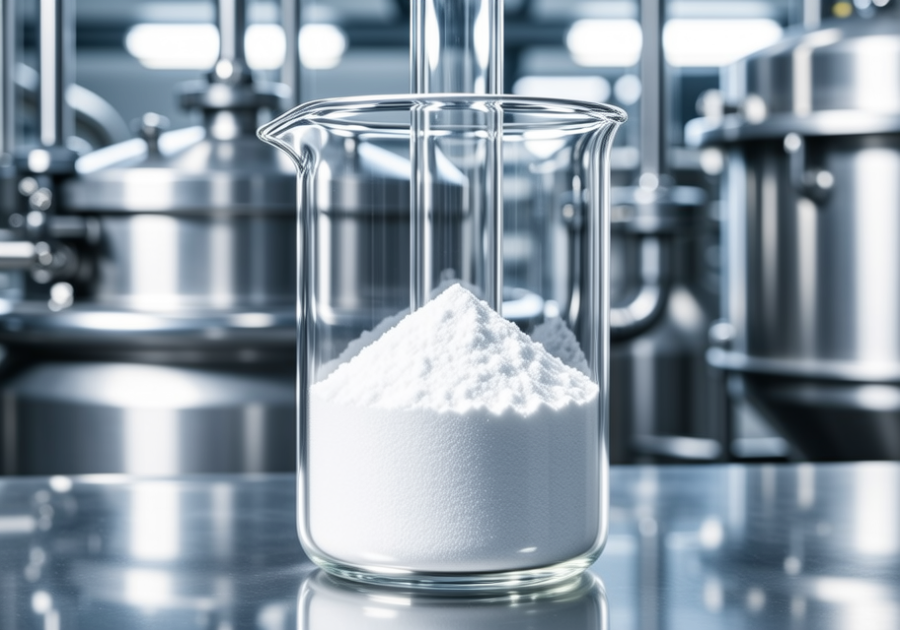
Potassium nitrate (chemical formula KNO3) is an inorganic salt composed of potassium (K⁺) and nitrate (NO3⁻) ions. It appears as a white crystalline solid and dissolves readily in water. Because of its chemical structure, it acts as a strong oxidizing agent in many reactions.
Historically, potassium nitrate—sometimes called saltpeter—was used in early food preservation and black powder production. Today, however, its primary industrial and commercial use is in fertilizers and specialty chemical applications.
According to the Food and Agriculture Organization (FAO), potassium and nitrogen are two of the most essential nutrients required for plant growth, which explains the widespread agricultural demand for KNO3.
What Happens When Potassium Nitrate Mixes with Sugar?
When potassium nitrate and sugar are combined and heated, they undergo a classic redox (reduction–oxidation) reaction. In this process, potassium nitrate acts as the oxidizer while sugar acts as the fuel.
The reaction produces gases and heat rapidly, which is why this mixture is sometimes used in experimental demonstrations or small educational rocket fuel models often called “rocket candy.”
| Component | Role in Reaction | Explanation |
|---|---|---|
| Potassium Nitrate (KNO3) | Oxidizing agent | Supplies oxygen that supports combustion |
| Sugar (Sucrose) | Fuel / reducing agent | Burns rapidly when oxygen becomes available |
| Heat | Reaction trigger | Initiates the redox reaction |
During the reaction, gases such as carbon dioxide and water vapor form quickly, producing thrust. This property is why the mixture is sometimes studied in introductory rocketry experiments. However, these reactions should only be conducted under controlled laboratory conditions because oxidizers and fuels can pose safety risks.
How Does Potassium Nitrate React with Hydrochloric Acid?
The reaction between potassium nitrate and HCl (hydrochloric acid) is significantly less dramatic than the sugar reaction. When dissolved in water, potassium nitrate simply dissociates into ions, and mixing it with hydrochloric acid typically does not produce a strong visible reaction.
Instead, the solution mainly contains potassium ions (K⁺), nitrate ions (NO3⁻), hydrogen ions (H⁺), and chloride ions (Cl⁻). Because these ions remain stable in solution, no major precipitate or gas formation usually occurs under normal laboratory conditions.
However, under specialized chemical conditions—such as high temperatures or the presence of other reagents—nitrate ions may participate in further reactions. These scenarios are more relevant in industrial chemistry rather than simple mixing experiments.
Why Is Potassium Nitrate Used as a Fertilizer?
One of the most important modern uses of potassium nitrate is as a potassium nitrate fertilizer. This compound provides two essential macronutrients for plants:
| Nutrient | Role in Plant Growth | Benefits |
|---|---|---|
| Nitrogen (N) | Supports leaf and stem growth | Improves photosynthesis and plant vigor |
| Potassium (K) | Regulates water balance and enzyme activity | Enhances crop quality and stress resistance |
Unlike some nitrogen fertilizers, potassium nitrate contains nitrate nitrogen rather than ammonium nitrogen. This means plants can absorb it quickly, making it particularly useful in high-value crops such as fruits, vegetables, and greenhouse plants.
Agricultural research from institutions such as the International Plant Nutrition Institute (IPNI) shows that balanced potassium supply can improve crop yield, fruit size, and resistance to drought or disease.
Other Industrial and Scientific Uses
Beyond agriculture and basic chemical reactions, potassium nitrate has several additional applications:
- Food preservation and curing salts in regulated food processing
- Glass and ceramic manufacturing
- Laboratory oxidizing reagent
- Heat transfer salts in solar thermal energy systems
- Educational chemistry demonstrations
These uses rely on potassium nitrate’s stability, high solubility, and ability to release oxygen under the right conditions.
Safety Considerations
Although potassium nitrate is widely used and generally stable under normal conditions, it should still be handled carefully. As an oxidizing agent, it can accelerate combustion if mixed with fuels.
Laboratory guidelines from organizations such as the National Institute for Occupational Safety and Health (NIOSH) recommend proper storage in cool, dry environments and avoiding contact with combustible materials.
For agricultural use, potassium nitrate fertilizers should always be applied according to crop nutrient management plans to prevent nutrient runoff and environmental impact.
Conclusion
Potassium nitrate is a versatile chemical compound with applications ranging from agriculture to laboratory chemistry. Its ability to act as a strong oxidizer explains reactions such as the well-known potassium nitrate and sugar mixture, while its nutrient content makes potassium nitrate fertilizer an essential product for modern crop production.
Understanding how potassium nitrate behaves in different chemical environments—whether mixed with sugar, acids like HCl, or soil nutrients—helps scientists, educators, and farmers use it effectively and safely.
Looking for chemical products? Let suppliers reach out to you!
You May Interested In


Glow70/KLOW80 99% China Peptides Warehouse Direct Delivery Lyophilized Powder in Stock
$169/UNIT FOB


2026-10-25
Trade Alert
Delivering the latest product trends and industry news straight to your inbox.
(We'll never share your email address with a third-party.)

Related News
-
2021 China's potassium hydroxide market development trend forecast
-
Prospects for China's potassium nitrate
-
ADAMA Targets Sucking Pests with Ateka
-
EFSA Reviews Clodinafop Risk
-
Hydrogen Peroxide Formula: H2O2 Concentration & Safety
-
Imidazole: Heterocyclic Chemistry, Antifungal Drugs, and Buffer Systems
-
Ammonia Chemical Formula: NH3 Structure & Properties
-
Benzyl Alcohol: Uses in Cosmetics, Preservative Efficacy, and Safety
-
Melamine: Toxicity, Industrial Resin Uses, and Food Safety Scandals
-
Methylamine: Chemical Properties, Synthesis, and Industrial Applications
Recommend Reading
-
![What is Serine? (Amino Acid Function & Sources)]()
What is Serine? (Amino Acid Function & Sources)
-
![Sulfuric Acid Reactions: With Sugar (Dehydration), Water, and Metals]()
Sulfuric Acid Reactions: With Sugar (Dehydration), Water, and Metals
-
![Understanding PCl5: Compound Name and Uses]()
Understanding PCl5: Compound Name and Uses
-
![What is a Surfactant? (Definition, Types, and How They Work)]()
What is a Surfactant? (Definition, Types, and How They Work)
-
![Isoascorbic Acid: Uses and Safety]()
Isoascorbic Acid: Uses and Safety
-
![EFSA Reviews Clodinafop Risk]()
EFSA Reviews Clodinafop Risk
-
![DMF Primarily in Oscillating Mode; Upside Potential Limited]()
DMF Primarily in Oscillating Mode; Upside Potential Limited
-
![Bullish Factors Remain, April Adipic Acid Prices in China Expected to Rise]()
Bullish Factors Remain, April Adipic Acid Prices in China Expected to Rise
-
![March adipic acid prices see a significant increase in China]()
March adipic acid prices see a significant increase in China
-
![Surge by 4,000 CNY/ton! Is the melamine market in China showing signs of peaking?]()
Surge by 4,000 CNY/ton! Is the melamine market in China showing signs of peaking?