




Is sodium acetate a base or not?
In this passage, you could have a general impression of the question “Is sodium acetate a base”. Sodium Acetate is a chemical compound that appears in all walks of fields in production and daily life. This passage showcased different aspects including the introduction of what “base” is, what sodium acetate is, what are the features of it, how it works and what are the common use of this chemical compound, etc. Going through all these illustrations, you might be a little bit more familiar with this chemical compound sodium acetate, the symbol is CH3COONa. Let’s have a look together.
What is “Base”?
Basic introduction of “Base” and “Acid”:
To get into the discussion around the question “Is sodium acetate a base or not”, we need to have a general idea of what “base” is in terms of chemical components. A “base” in chemistry means that it is a molecule that can both accept protons and gives electrons in an aqueous solution.
Opposite from acid, which separates H+ ions into the water and donates proton once dissolved, a base will separate and donate electrons, accept protons, and at the same time release hydroxide (OH-) ions when dissolved, purifying the water. Besides, basic chemicals react with hydrogen ions neutralizing acid chemicals. To supplement, pure water is neutral.
Common examples of basic chemical compounds
As a major type of chemical compound, there are many different strands of base and various different basic chemical compounds. In general, the most common basic chemicals can be found in minerals. They react with acids, forming water (H2O) and Salts. While different types of bases include the oxides, hydroxides, and carbonates of metals. The followings are some common examples of basic chemical compounds, they are all strong bases, Sodium Hydroxide (NaOH), Rubidium Hydroxide (RbOH), Calcium Hydroxide (Ca(OH)2), and Magnesium Hydroxide (Ma(OH)2). While there’s a ton more than that. Common cooking materials like sugar and baking soda are basic chemicals as well.
General introduction of sodium acetate
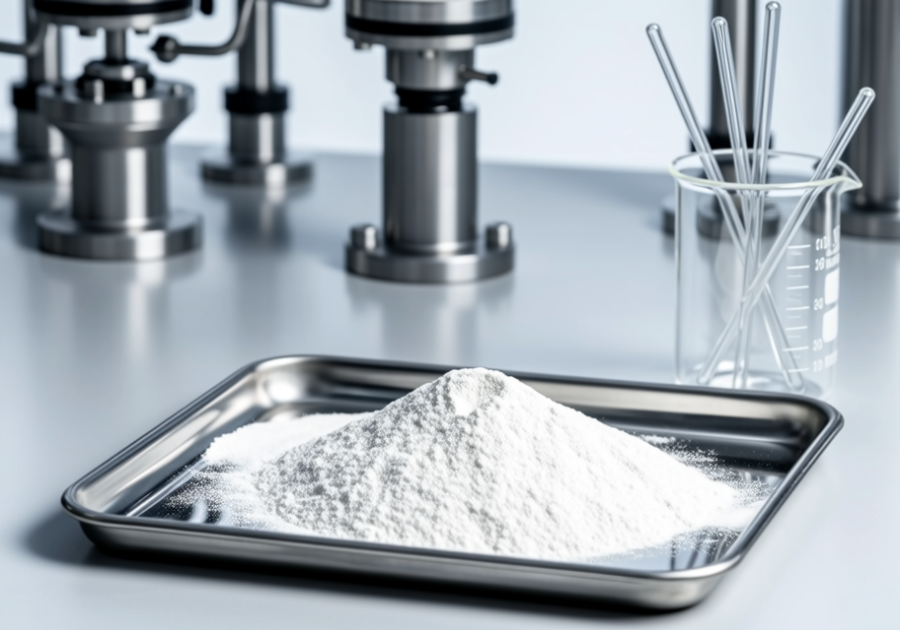
What is sodium acetate (C2H3NaO2)? Sodium acetate, with the chemical formula C2H3NaO2 (also NaC2H3O2, as well as NaOAc in abbreviated form), is a kind of acetic acid, that appears to be colorless and deliquescent. It would be white when in power form. It has an acetic fume when heated, and when heated to the point of 324°C (615 °F; 597 K) in the form without water it will melt, and it boils when the temperature reaches 881.4 °C (1,618.5 °F; 1,154.5 K). If it’s in trihydrate form it melts at 58 °C (136 °F; 331 K) and boils at 122 °C (252 °F; 395 K).
Closely in regard to the topic “Is sodium acetate a base or not”, we should have a look at its acidity and basicity. When at 20 °C, the acidity of C2H3NaO2 is 51, while the basicity is 9.25. However, when it’s mixed with CH3COOH, the basicity would be 4.75.
It is obvious that we have the answer to the question “Is sodium acetate a base or not” knowing its acidity and basicity. Sodium acetate is clearly a base, it is not acid. It is a kind of salt of a weak acid and a strong base.
The common application of sodium acetate (C2H3NaO2)
Sodium acetate is used in all walks of life. In mass production of day-to-day commodities, sodium acetate (C2H3NaO2) is used to neutralize sulfuric acid waste from factories, being a cleaning agent. It could shine off the rust from metal surfaces as well. Moreover, it is applied in the process of leather tanning and photo image making.
Besides industrial uses, sodium acetate is also used in daily cooking. Baking soda is a kind of sodium acetate, it creates bubbles by reacting with acid, usually vinegar, forming carbon dioxide (CO2).
Conclusion:
In conclusion, it is apparent that we could have a positive answer to the question “Is sodium acetate a base or not”. Going through the concept of base and acid, while having a general idea of what sodium acetate is, and what it is used for in common life, we could know that sodium acetate is a strong base that is applied in all walks of life and mass industrial production.
Looking for chemical products? Let suppliers reach out to you!
Is polyethylene plastic or not?
You May Interested In


Glow70/KLOW80 99% China Peptides Warehouse Direct Delivery Lyophilized Powder in Stock
$169/UNIT FOB


2026-10-23
Trade Alert
Delivering the latest product trends and industry news straight to your inbox.
(We'll never share your email address with a third-party.)

Related News
Recommend Reading
-
![2025 Toluene Market Fluctuates Downward, 2026 Supply and Demand Competition Outlook]()
2025 Toluene Market Fluctuates Downward, 2026 Supply and Demand Competition Outlook
-
![In 2025, China's hydrofluoric acid prices fluctuated upward; in 2026, the price level may continue to rise]()
In 2025, China's hydrofluoric acid prices fluctuated upward; in 2026, the price level may continue to rise
-
![2025 PVC Prices Decline Due to Capacity Expansion & Supply-Demand Imbalance, 2026 May See a Recovery]()
2025 PVC Prices Decline Due to Capacity Expansion & Supply-Demand Imbalance, 2026 May See a Recovery
-
![A Comprehensive Review and Trend Forecast for Ethylene Glycol Prices in 2025-2026]()
A Comprehensive Review and Trend Forecast for Ethylene Glycol Prices in 2025-2026
-
![December China Soda Ash Market Fluctuates]()
December China Soda Ash Market Fluctuates
- Hot Searches
- samarium oxide 3n price 2025
- dimethyl carbonate price
- where to buy semax
- trimethylamine market
- what's the price of kerosene
- chem pharma
- sodium carbonate material safety data sheet
- phosphorus pentoxide sds
- where to buy sodium nitrite
- 2 4 4 trimethylpentane
- anhydrous sodium sulfate price
- etoricoxid