Prospects and Challenges of Veterinary API Market in Bangladesh
Bangladesh is the eighth most populous country in the world, with a dense population of approximately 169 million. It has a land area of 148,460 square kilometers and borders India to the west, north and east, Myanmar to the southeast, and the coastline of the Bay of Bengal to the south.
Relying on its large population base and investment facilities, Bangladesh's pharmaceutical industry is growing rapidly, with generic drugs and veterinary drugs dominating the country's pharmaceutical market. Currently, the pharmaceutical industry is the second largest revenue-generating industry in Bangladesh, but there are few patented drugs, accounting for only 20%. At the same time, it faces challenges such as soaring pharmaceutical costs. This article focuses on the prospects and challenges of the veterinary API market in Bangladesh, as well as the industry norms and guidelines for exporting APIs to Bangladesh.
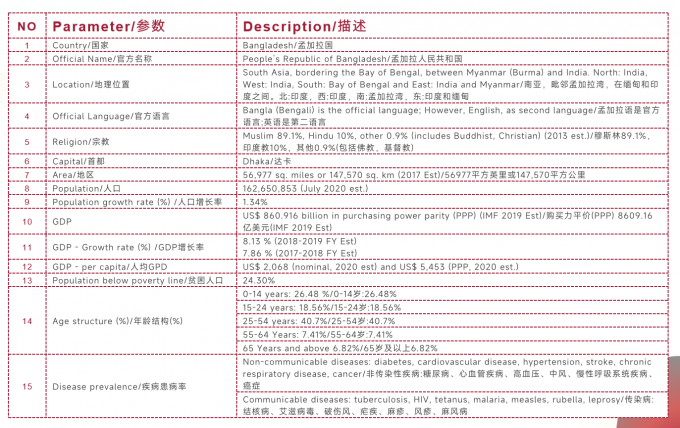
Overview of pharmaceutical industry of Bangladesh
Currently, there are more than 300 small, medium, and large Allopathic, 205 Ayurvedic, 271 Unani, 32 Herbal and 79 Homeopathic drug producing companies in the country. According to Director General of Drug Administration (DGDA), the industry has 3,657 generics of allopathic medicine, 2,400 registered Homeopathic drugs, 6,389 registered Unani Drugs and 4,025 registered Ayurvedic drugs.
Pharmaceutical Market in Bangladesh
Presently, in the pharmaceutical industry in Bangladesh, 98 percent of the country’s total demand for medicine is met by domestic institutions. The country also exports medicines to several countries parallel to meeting domestic demand.
The pharmaceutical industry has grown from about $25 million in 1982 to about $3.5 billion as of June 2021-2022. Driven by the increasing purchasing power of the domestic population. Pharmaceutical industry growth rate (2014-2022) is 17%, with a year on year export growth of 25%. Bangladesh on track to becoming a $6b pharma market by 2025.
In the fiscal year 2021-2022, Bangladesh’s pharmaceutical export revenue was US$ 188.78 million. In this context, Bangladesh ranks 71st in the world in terms of global pharmaceutical exports.
Bangladesh Pharma Industry Value and Growth Rate


List of Top 10 Pharmaceutical Companies in Bangladesh (2022-2023)
1.Square Pharmaceuticals Ltd.
2.Incepta Pharmaceutical Ltd.
3.Beximco Pharmaceuticals Ltd.
4.Healthcare Pharmaceuticals Ltd
5.Renata Ltd.
6.Opsonin Pharma Ltd.
7.Aristopharma Ltd.
8.Eskayef Pharmaceuticals Ltd.
9.Radiant.
10.ACME Laboratories Ltd.
List of Top 12 API Indenter/Distributor in Bangladesh (2022-2023)
1.Grand Corporation
2.Gentry Corporation
3.Technokit
4.Pharmaraw Bangladesh
5.Drugland Corporation
6.Shaminaz
7.Liberty
8.Biobiz
9.Alam Trading
10.N F Trading
11. Tareq Enterprise
12. Khan & Din
Pharmaceuticals Market Segment by share
In the Bangladesh pharmaceutical market, alimentary and metabolism drugs account for 36.5%,
systemic anti-infectives drugs account for 14.0%, cardiovascular system drugs account for 11.5%, nervous system drugs account for 10.5%, respiratory system drugs account for 9.5%, musculoskeletal system drugs account for 5.0%, sex hormones drugs account for 3.5%, others account for 9.5%.
Revenue in the OTC Pharmaceuticals in 2023
Revenue in the OTC Pharmaceuticals market amounts to US$1,315.34m in 2023. Among them, analgesic revenue is US$179.5 million, cold & cough remedies revenue is US$241.10 million, digestive & intestinal remedies revenue is US$147.50 million, eye care revenue is US$66.18 million, hand sanitizer revenue is US$16.30 million, others OTC pharmaceuticals revenue is US$29.05 million, skin treatment revenue is US$106.30 million, sleep aids revenue is US$8.20 million, vitamins & minerals revenue is US$514.60 million, wound care revenue is US$6.61 million.
Generic-wise Market Value, Share, and Growth of the Pharma Market in Bangladesh

Bangladesh intermediates market
The total demand for APIs is approximately US$1.3 billion, local API production is US$190 million, accounting for 15%, and imported APIs account for 85%. Currently, 15 companies, including Eskayef, Square, Beacon and Beximco, produce APIs, up from 10 a few years ago. Local manufacturers can meet 10% to 15% of the annual demand for APIs.
Bangladesh APIs Market Forecast

Bangladesh Pharmaceutical Market Dynamics
Strengths: In Bangladesh, 15% of industrial production comes from the pharma and chemical sectors.
The second-highest industrial growth sector of the country was the pharma and medical used chemical industry.
The country has 858 drug manufacturers including Allopathic - 271, Ayurvedic - 205, Unani - 271, Herbal- 32, and Homeopathic - 79.
Weaknesses: Price driven Market.
Lack of product patent.
The industry is expanding gradually, but the small firms are either losing market share or leaving the industry meaning that the industry is converging toward the large firms.
Opportunity: Bangladesh has a large population and investment facilities, so the pharmaceutical industry is growing fast.
New drug policy will help to expand pharmaceuticals industry.
Fast changing lifestyles in urban and to some extent rural centers. This opens a huge market for lifestyle drugs.
The country is now exporting its pharma products to more than 100 countries after meeting its local demand.
Threat: Rising the cost of the wages and it will increase the selling prices of the medicines.
Increasing the interest rate of the bank day by day.
API import purpose LC delay by bank for $USD dollar crisis.
The short-term threat uncertainty regarding the implementation of VAT.
Veterinary Medicine API Market
Total Livestock Population in BD

Global Trend of Protein Consumption

Disease prevalence of Animal in Bangladesh

Mostly used APIs in Bangladesh in veterinary medicine include:
Oxytetracycline Hydrochloride BP/ Amoxicillin Trihydrate BP/ Doxycycline Hyclate BP/ Tylosin Tartrate BP/ Ceftriaxone Sodium USP/ Erythromycin Thiocyanate INN/ Levofloxacin Hemihydrate USP/ Sulphaclozine Sodium/ Trimethoprim BP/ Tilmicosin phosphate/ Tiamulin hydrogen fumarate/ Neomycin Sulphate USP/ Zinc Sulfate Monohydrate/ Calcium Carbonate/ Ascorbic acid BP/ Triclabendazole INN/ Levamisole Hydrochloride BP/ Butophosphene/ Cyanocobalamin (Vitamin B12)/ Calcium gluconate monohydrate/ Metronidazole BP/ Ivermectin BP/ Tolfenamic acid BP/ Nicotinamide BP.
Emerging markets/ new API in Bangladesh:
Florfenicol INN/ Lincomycin HCl/ Tylvalosin tartrate/ Ceftiofur sodium/ Danofloxacin/ Apramycin sulfate/ Clavulanic acid/ Amikacin/ Tulathromycin/ Spiramycin.
Veterinary Total Industry Market Size & Growth
From 2020 to 2021, the market size of Bangladesh's drugs used to protect animal health is US$266.41 million, with a growth rate of 8.34%. From 2021 to 2022, the market size is US$295.36 million, with a growth rate of 10.86%. The market size is about US$329.55 million in 2023, with a growth rate of 11.58%.
About 70% of the drug are supplied by local pharmaceutical companies like Renata, Square, ACI, Acme, Opsonin, Eskayef, Navana, Popular, and Incepta, which means that they hold a US$ 230.68 million market share.
Fastest growing Market in the pharmaceutical industry of Bangladesh
1.Human medicine
Immunomodulators : Revenue in the Immunosuppressants market is projected to reach US$22.19m in 2023. Revenue is expected to show an annual growth rate (CAGR 2023-2028) of 17.24%, resulting in a market volume of US$49.15m by 2028.
Oncology : The market's largest market is Oncology Drugs with a projected market volume of US$132.90m in 2023 and was registering a growth of over 20 per cent per year.
Dermatological Products: The Bangladesh skin care products market size was valued at $1.23 billion in 2020, and is expected to garner $2.12 billion by 2027, registering a CAGR of 8.1% from 2021 to 2027.
2.Veterinary
Herbal Extract/ Essential Oil
Antimicrobial Peptides/Lysozyme
Alternative of Antibiotics Solution
Vaccines
Disinfectants
Regulatory Bodies in Bangladesh Pharmaceutical Market
Regulatory Rules for Registration of API in Bangladesh
Source validation/registration in DGDA is mandatory for importing APIs for finished formulations.
If Pharma DRA/a Regulatory consultancy firm holds the source validation certificate, then the manufacturer can export the material/API/Excipient directly to the Bangladeshi finished formulators without any hassle.
Need Documents for Source Validation for API Registration
1. Principal Company Profile (Attachested by the Embassy of Bangladesh/Chamber of Commerce
2.Principal Company Manufacturing License (Attachested by the Embassy of Bangladesh/Chamber of Commerce)
3.Principal Company Registered office & Factory Address (Attachested by the Embassy of Bangladesh/Chamber of Commerce)
4.GMP Certificate from concerned country’s Licensing Authority (Attachested by the Embassy of Bangladesh/Chamber of Commerce)/GMP
5.List of the countries where they export of their own manufacturing API (Attachested by the Embassy of Bangladesh/Chamber of Commerce)
6.Specification of each item, Certificate of Analysis and Impurity Profile with acceptable limit of BP/USP/IP for INN declaration of QA of the company with reference. (Attachested by the Embassy of Bangladesh/Chamber of Commerce)
7.Product List/API Registration Certificate through Licensing Authority of concerning country (Attachested by the Embassy of Bangladesh/Chamber of Commerce)
8.Form-9 ( List of the items mentioned in Form-9 attachested by the manufacturer)
9.Agency Agreement
10.Link of API of Country of origin
11.Approved Copy of Authenticated Pre-Clinical, Clinical full study Report and Clinical trial protocol from DGDA
12.Approval from Drug regulatory Authority of the supplied country against API of Manufacturers. (Attachested by the Embassy of Bangladesh/Chamber of Commerce)
13. List of the Local Agent/Local Bangladeshi Companies & their agreed documents where APIs will be sold out by the indenter.
14. In case of Biological bulk items-due to thermolabile products, necessary documents and facilities.
needed for proper storing, transportation & distribution and when importing the biological.
products, Reading of the Data Logger must be submitted.
15. URL Link of API Registration
( 11-15 for registration of Biological/Biosimilar API )
Necessary Documents for New Indenter: National ID, Trade Licence, Indent Certificate, TIN Certificate )
Registration Fee : BDT 8000 and For each item additional BDT 1000
Challan Code: 1-2715-0000-1863
Procedure to Register API in Bangladesh
1.Local agent Selection and Agreement with selected Agent
2. Fill-up the above Listed Documents for Source Validation
3. Local Agent will approve the Source Validation through DGDA
4. Buyer/Local Pharmaceutical Company will submit the Block List
(Kind of Proforma Approval for API)
5.After Approve Block List, Buyer will open LC

You May Interested In


High Quality β-Nicotinamide adenine dinucleotide CAS 53-84-9 NADwith ready stock and best price
$3/UNIT FOB


2026-10-18
Trade Alert
Delivering the latest product trends and industry news straight to your inbox.
(We'll never share your email address with a third-party.)

Related News
-
Bangladesh announces tariff exemption on edible oils, effective until March 31, 2025
-
ECHEMI International Trade Business School Bangladesh Pharmaceutical Summary
-
Market Analysis of Feed Industry of Bangladesh
-
Explosions Reported Near Saudi Aramco Headquarters as Missile Is Intercepted Over Dhahran
-
Solvay's "Slimming Action": Soda Ash Production Capacity in Spain Slashed by 180,000 Tons, 77 Jobs to Go
-
Kemira Acquires AquaBlue
-
Fertilizer Costs Rise as Middle East Tensions Pressure Global Food Production
-
GLP-1 API Route to U.S. Abruptly Narrows: FDA Heavily Penalizes U.S. Compounding Pharmacy and Bypasses Warning Letter to Ban Chinese Factory
-
US Imposes Heavy Duties on Chinese L-Lysine with Combined Rates up to 188%
-
Fertilizer Costs Rise as Middle East Tensions Pressure Global Food Production
Recommend Reading
-
![Platinum Chemotherapy Shortages Expose the Fragility of Essential API Supply]()
Platinum Chemotherapy Shortages Expose the Fragility of Essential API Supply
-
![SIBUR’s Massive Siberian Petrochemical Complex Shuts After Drone Attack, LPG Supply Disrupted]()
SIBUR’s Massive Siberian Petrochemical Complex Shuts After Drone Attack, LPG Supply Disrupted
-
![Libya’s Largest Refinery Faces Full Shutdown After Five Rounds of Airstrikes]()
Libya’s Largest Refinery Faces Full Shutdown After Five Rounds of Airstrikes
-
Japanese Plastics Market Accelerates its Shifts to Recycled Materials and Bioplastics
-
![Honeywell Acquires Johnson Matthey Catalyst Business at a Discount, Cutting £475 Million from the Price]()
Honeywell Acquires Johnson Matthey Catalyst Business at a Discount, Cutting £475 Million from the Price
-
![Premium Global Chemical Sourcing Requests (07-10May, 2026)]()
Premium Global Chemical Sourcing Requests (07-10May, 2026)
-
![Supply and Demand Stable, Formic Acid Prices Running Steadily]()
Supply and Demand Stable, Formic Acid Prices Running Steadily
-
![China's Acetone Market Reverses Decline and Rises]()
China's Acetone Market Reverses Decline and Rises
-
![Supply and Demand Improve; Early Month Sees Rising Prices for n-Butanol Market]()
Supply and Demand Improve; Early Month Sees Rising Prices for n-Butanol Market
-
![Weak Balance Under Cost Support—Melamine Market Struggles to Stay Firm]()
Weak Balance Under Cost Support—Melamine Market Struggles to Stay Firm