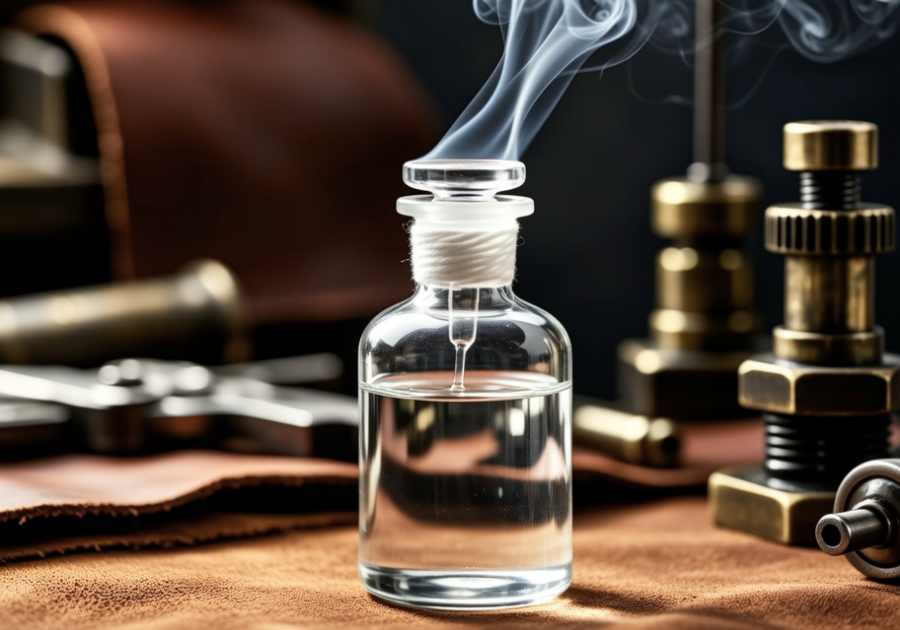
What happens if you eat smelling salts?
Are smelling salts bad for you or they are as good as any other naturally occurring salt? This article explores these questions.
Introduction:
Are smelling salts bad for you? To answer this, we need to dig deep into smelling salts and their history. We humans are composed of naturally existing chemicals including different salts and our body systems are all influenced by them. If you are not aware of history, you might be surprised to know that for centuries, smelling salts have been used by humans for many different reasons. This article is our take on the basics of smelling salts and also attempts to explain if they are really good for us or not.
What are Smelling Salts?
As the name suggests, these salts have a strong smell due to the presence of active ammonium carbonate ((NH4)2CO3H2O) in them. Also called ammonia inhalants, these salts have an incredibly old history and are also termed sal ammoniac in the early Hisstorian books. It is non-combustible and exists as an s a colorless crystalline solid with an appearance of white powder. These salts are very soluble in water, even in water vapors.
What does Smelling Salt do?
The presence of ammonia (NH3) in smelling salts gives them a strong and foul-smelling feel. We humans have a strong sense to detect salt due to our evolutionary survival instincts and when our noses are introduced to such smelling salts, this irritates the membranes of the nose and lungs, triggering an inhalation reflex. This reaction changes the breathing rhythm, resulting in increased respiratory flow rates and potentially attentiveness.
This attentiveness is driven by an extra dose of adrenaline. How? Well, whiffing-smelling salts is a negative sensory impression that increases heart and brain activity by stimulating the sympathetic nervous system. It simulates an acute pain reaction, such as when you inadvertently whack your finger with a hammer. This triggers our brains to push more adrenaline into our bloodstream and hence makes the individual more active.
This feature of smelling salts is also practical in helping people who have fainted for some reason as the sharp smell causes them to wake up again. It is also worth mentioning here that significant scientific research is still not carried out on these salts which are now claimed to raise alertness, improve reaction speeds, or have other good cognitive effects on humans. Also, smelling salts may have a helping effect on human consciousness in a situation of syncope but this doesn't apply to a situation where an individual faints due to concussive injuries.
Are Smelling Salts Bad for You?
These salts have been used by our ancestors to keep people attentive and stay away from laziness. Now, modern athletes inhale them while standing on the sidelines in the hopes of increasing their performance.
But what happens if you eat smelling salts? To put it into simple words, it is not recommended to eating such salts. The reason is that these salts have strong quantities of ammonia which are very water soluble and can potentially cause burns in your mouth and throat leading to permanent tissue damage. But this is only when you ingest such salts. These smelling salts when in an aqueous solution give liquid ammonia and if they come in contact with the skin or eyes can cause burns and open sores. In case of a simple whiff, these salts are safe to use like many athletes do to keep themself active in their sport.
What do smelling salts smell like?
As stated above, the presence of ammonia in these salts gives them a foul and highly irritating smell. Their smell can be characterised as sharp and pungent odor which is extremely unpleasant and irritating to humans.
Conclusion:
To conclude our explanation of the query "Are smelling salts bad for you" it can be concluded with a Yes and a No. They are bad for us if we inhale them too much because of their toxic ammonia or if we ingest them which can potentially damage your digestive and breath track. And if only inhaled from a proper distance (10-15cm) is said to be safe. It should be noted that there is no scientific research done on all these uses and potential benefits of smelling salts but they are still frequently used as restorative or stimulants for humans.
Looking for chemical products? Let suppliers reach out to you!
Is Chlorine an Acid or Base?
You May Interested In


Glow70/KLOW80 99% China Peptides Warehouse Direct Delivery Lyophilized Powder in Stock
$169/UNIT FOB


2026-10-25
Trade Alert
Delivering the latest product trends and industry news straight to your inbox.
(We'll never share your email address with a third-party.)

Related News
-
Paraffin Wax vs. Beeswax: Candles, Cosmetics, and Industrial Applications
-
Lanolin: Benefits for Skin, Cosmetic Uses, and Allergy Risks
-
Sodium Hydroxide (Caustic Soda): Soap Making, Cleaning, and pH Control Guide
-
Sulfuric Acid (H2SO4): Properties, Battery Uses, and Extreme Safety Hazards
-
SiO2: Properties, Uses, and Applications
-
What is Trametenolic Acid? (Structure, Sources & Research)
-
Chemical Properties and Uses of Caesium Fluoride
-
Uses and Properties of Chromium Oxide
-
Uses of Sodium Citrate Dihydrate in Food Industry
-
Sodium Nitrate: Fertilizer, Food Curing, and Explosive History
Recommend Reading
-
![Sodium Benzoate (E211): Safety, Benzene Risk, and Preservative Uses]()
Sodium Benzoate (E211): Safety, Benzene Risk, and Preservative Uses
-
![Aluminum Oxide (Al2O3): Abrasive Uses, Ceramic Applications, and Safety]()
Aluminum Oxide (Al2O3): Abrasive Uses, Ceramic Applications, and Safety
-
![Permanganate: Properties, Uses, and Safety]()
Permanganate: Properties, Uses, and Safety
-
![Understanding Titanium Oxide: Properties and Uses]()
Understanding Titanium Oxide: Properties and Uses
-
![Iohexol: Properties, Uses, and Safety]()
Iohexol: Properties, Uses, and Safety
-
![Geopolitical Conflicts Reignite, Why Lithium Carbonate Has Not Shown the Same Frenzy as 4 Years Ago in China]()
Geopolitical Conflicts Reignite, Why Lithium Carbonate Has Not Shown the Same Frenzy as 4 Years Ago in China
-
![China’s 15th Five-Year Plan Sets New Priorities for Pharmaceutical Innovation and Supply Chains]()
China’s 15th Five-Year Plan Sets New Priorities for Pharmaceutical Innovation and Supply Chains
-
![Premium Global Chemical Sourcing Requests (30 July-2Aug, 2026)]()
Premium Global Chemical Sourcing Requests (30 July-2Aug, 2026)
-
![Formic Acid Market Operating Steadily]()
Formic Acid Market Operating Steadily
-
![Geopolitics]()
Geopolitics "Ignites" Energy and Chemical Sector, Maleic Anhydride Surges High