Merck Strikes Billion-Dollar Partnership Again
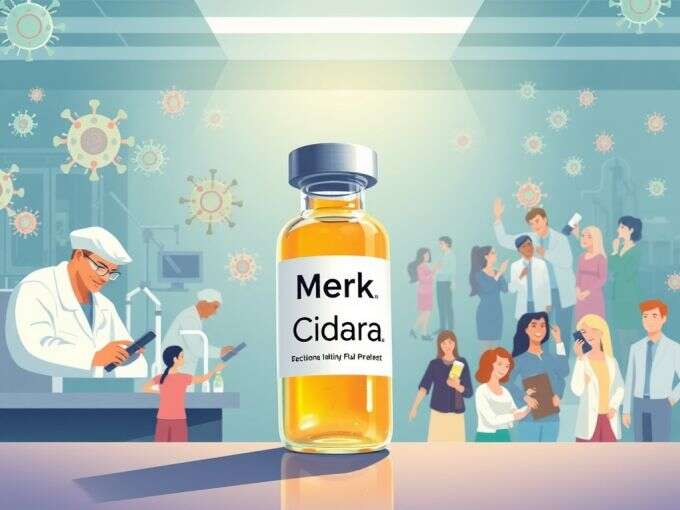
Merck, a leading pharmaceutical company, has recently announced a groundbreaking collaboration that could revolutionize the field of cancer therapeutics. This strategic partnership, involving Pearl Bio, aims to develop innovative biopharmaceutical products for cancer treatment utilizing non-standard amino acids through the Genomically Recoded Organisms (GRO) platform. With a potential value of up to $1 billion in upfront and milestone payments, this venture holds immense promise for advancing the frontiers of biomedical research.
On March 12th, Pearl Bio and Merck finalized a licensing, collaboration, and option agreement, marking a significant milestone in the pursuit of novel cancer therapies. Pearl Bio, headquartered in Massachusetts, was founded based on the research conducted by Professor Farren Isaacs at Yale School of Medicine and Dr. Michael Jewett at Stanford University. Their pioneering work on Genomically Recoded Organisms (GROs) proposed the incorporation of non-natural amino acids into proteins, offering a potential breakthrough in drug development.
Recognizing the immense potential of this concept, Merck invested a staggering $1 billion in collaborating with Pearl Bio to develop GROs and advance the discovery of candidate drugs. Initially, the focus of this partnership will be on applying this technology to the discovery and development of cancer immunotherapies. The ultimate goal is to create multifunctional candidate therapies with adjustable characteristics, addressing critical limitations faced by biopharmaceuticals.
By utilizing synthetic amino acids, researchers can potentially generate more potent proteins, leading to the identification of solutions for long-standing challenges, such as optimizing the drug-antibody ratio in antibody-drug conjugates (ADCs). This collaboration between Pearl Bio and Merck represents a strategic move to harness the power of synthetic biology and capitalize on the emerging field of biopharmaceuticals.
Notably, Merck is not the only multinational corporation venturing into synthetic biology. Companies like Johnson & Johnson and Sanofi have also been active in this domain. In January 2024, Johnson & Johnson announced its acquisition of Ambrx Biopharma, a clinical-stage biopharmaceutical company specializing in next-generation antibody-drug conjugates. The deal, valued at approximately $2 billion, highlights the growing interest in synthetic biology and its potential to revolutionize the biopharmaceutical industry.
Similarly, Sanofi's acquisition of Synthorx in December 2019 for $2.5 billion further demonstrates the industry's enthusiasm for synthetic biology. Synthorx developed a technology that expanded the genetic code beyond the natural A-T and G-C base pairs, enabling the incorporation of non-natural amino acids into recombinant proteins. This breakthrough allowed for the modification of protein characteristics and the introduction of site-specific conjugation, overcoming limitations associated with traditional conjugation techniques.
The economic impact of synthetic biology and biomanufacturing is projected to reach $100 billion by 2025, according to McKinsey data. In addition to multinational pharmaceutical giants, domestic companies in China, such as Hua Xi Biological, Meihua Biological, and Jincheng Pharmaceuticals, are also strategically positioning themselves in the field of synthetic biology.
As Merck embarks on this transformative partnership with Pearl Bio, the potential for groundbreaking advancements in cancer therapeutics becomes increasingly tangible. By leveraging the power of synthetic biology and non-standard amino acids, this collaboration has the potential to revolutionize the development of biopharmaceuticals and address key challenges in the field. As the global economy faces uncertainties, companies that can harness the potential of synthetic biology will undoubtedly be at the forefront of innovation and shape the future of healthcare.

You May Interested In


2026-09-25
Trade Alert
Delivering the latest product trends and industry news straight to your inbox.
(We'll never share your email address with a third-party.)

Related News
-
From Recovery to Roaring: Mosaic’s Q3 2025 Delivers Triple-Digit Profit Surge on Fertilizer Resurgence
-
Glyphosate Becomes a Trade Fight
-
Nitrogen’s Quiet Powerhouse: CF Industries Delivers Record Profit Amid Global Food Security Shift
-
The Crop Protection Patent Cliff Is Here
-
Profit Soars While Sales Dip: Syngenta Group Defies Headwinds with 28% EBITDA Surge in Q3 2025
-
From the Brink to the Bend: Bayer’s Q3 2025 Shows Dramatic Loss Reduction—but Crop Science Still Bleeds
-
South Korea’s June Petrochemical Export Value Rises 18.8%, While Export Volume Falls 14.6%
-
Growing Pains, But the Roots Are Strong: Corteva Narrows Losses Amid Sales Surge in Q3 2025
-
Covestro CEO: The EU Must Decide Which Industries to Protect, or Energy-Intensive Sectors Will Move Out
-
From Modest Gains to Massive Profits: Nutrien’s Q3 2025 Marks a Stunning Agricultural Comeback
Recommend Reading
-
![BASF’s 2025 Report Card—“The Profit Evaporation Act”: Behind the €6.6 Billion EBITDA Lies a Deliberate Strategic Retreat]()
BASF’s 2025 Report Card—“The Profit Evaporation Act”: Behind the €6.6 Billion EBITDA Lies a Deliberate Strategic Retreat
-
![Biocon Weighs Merger of Biocon Biologics to Unlock Value]()
Biocon Weighs Merger of Biocon Biologics to Unlock Value
-
![Merck Nears Acquisition of Cidara to Strengthen Flu Prevention Arsenal]()
Merck Nears Acquisition of Cidara to Strengthen Flu Prevention Arsenal
-
![Wanhua Chemical’s “Tale of Two Cities”: 850,000 Tonnes Isn’t Capacity—It’s a Declaration of War]()
Wanhua Chemical’s “Tale of Two Cities”: 850,000 Tonnes Isn’t Capacity—It’s a Declaration of War
-
![Braskem to Expand Ethylene and Polyethylene Production Capacity]()
Braskem to Expand Ethylene and Polyethylene Production Capacity
-
![February China Soda Ash Market Trend Weakens]()
February China Soda Ash Market Trend Weakens
-
![Business Society’s MTBE Market Outlook on August 25, 2026: Volatile Consolidation]()
Business Society’s MTBE Market Outlook on August 25, 2026: Volatile Consolidation
-
![Sodium Hydroxide (Caustic Soda): Soap Making, Cleaning, and pH Control Guide]()
Sodium Hydroxide (Caustic Soda): Soap Making, Cleaning, and pH Control Guide
-
![February Petrocoke Market Trends: First Decline, Then Rise]()
February Petrocoke Market Trends: First Decline, Then Rise
-
![Business Society’s Market Outlook for Phenol on August 25, 2026: High-Level Correction]()
Business Society’s Market Outlook for Phenol on August 25, 2026: High-Level Correction