




LANXESS Celebrates 100 years of 'Catalyst Laboratory' in Leverkusen

The “Catalyst Laboratory” was founded 100 years ago in Leverkusen – where the CHEMPARK is located today. At that time, the scope of activities was outlined as “work on catalytic reactions involving organic substances”. This laboratory now belongs to LANXESS and operates as a cross-divisional competence center for catalysts and their applications
An anniversary ceremony was held at LANXESS in Leverkusen on Dec. 17, 2018,“Experts estimate that 80 to 90 percent of all industrial chemical synthesis routes today contain at least one catalyzed reaction step. Catalysts ensure that the desired products are formed under mild conditions, safely, selectively and in high yields,” said Dr. Dirk Müller, head of the global technology & innovation team within the production, technology, safety & environment group function. “Catalysis is, therefore, a key factor for energy and resource efficiency. It makes a decisive contribution to sustainability and cost-effectiveness.”
A catalyzed chemical reaction is characterized by increased reactivity and/or selectivity. The catalyst emerges from the reaction unchanged, i.e. it is not consumed itself. Industrial catalytic reactions are inspired by metabolic processes in all living organisms taking place under the influence of enzymes.
The catalyst laboratory owes its foundation to the growing industrial importance of heterogeneous catalytic reactions in which the catalyst and reacting substrates are present in different phases, e.g. solid/liquid and solid/gas systems. According to a historical report, interest was initially focused on “catalytic oxidations, reductions, hydrogenations, dehydrogenations, exchange and addition reactions.”
For many decades, the laboratory, together with the catalyst production plant made important contributions to the development of highly productive catalytic processes. Many new and improved catalysts were invented, manufactured and further developed here. Numerous operating instructions, recipes and patents bear witness to this.
Even today, the employees of the catalyst laboratory play a major role in ensuring that heterogeneous catalytic processes run as efficiently as possible in many production areas at LANXESS. For that purpose, they develop, optimize and characterize catalysts for new and existing processes and advise users on their procurement and on the selection and instruction of suitable manufacturers. If necessary, they also accompany the production process. Quality control of the catalysts, problem-solving operational support and process development are also part of their range of tasks.
“Since we no longer produce catalysts ourselves today, we work together with competent suppliers to whom we provide precise recipes. Especially in the initial phase of the cooperation, the quality of the catalysts supplied has to be precisely controlled so that our production plants can produce the best possible products in a reproducible manner,” said Paul Sprenger, head of the catalyst laboratory.
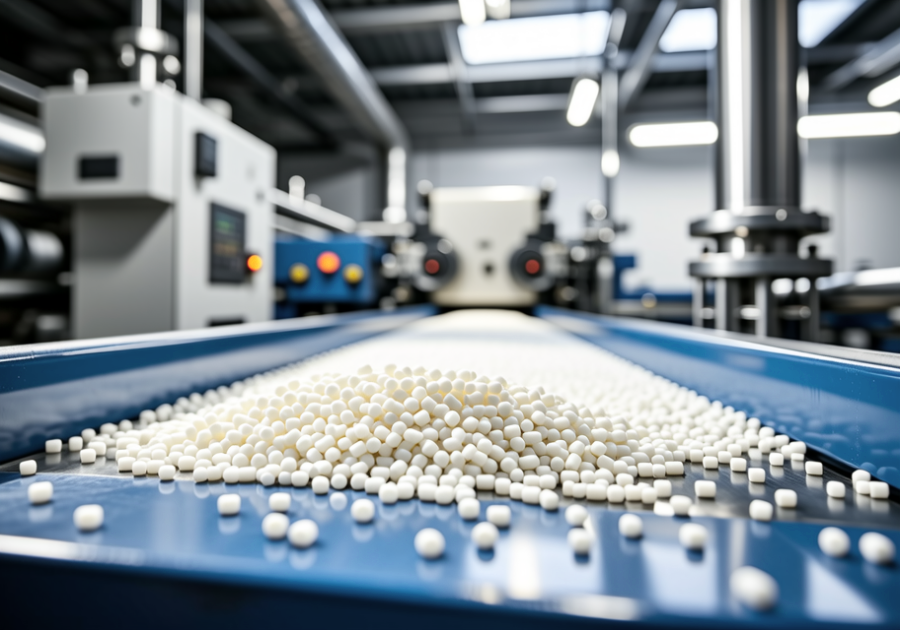
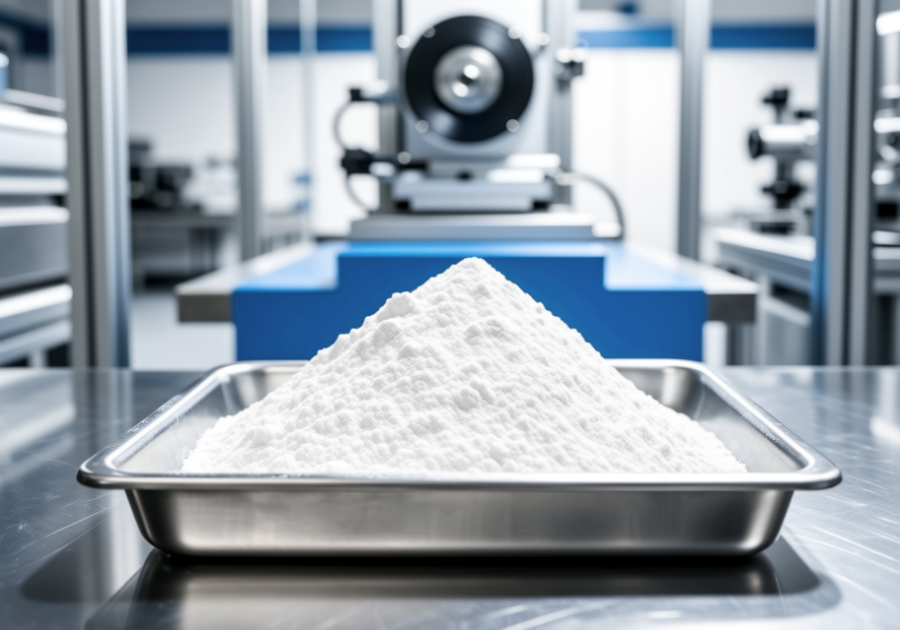
The performance of such catalysts depends not only on the chemical composition but also on physical properties such as the shape of the particles or their active surface. For example, solid catalysts can have different forms of appearance. These include powders, pellets or extrudates made from the pure catalyst material, but also ceramic shapes as supports which are impregnated or coated with the catalytically active substance.
For decades, the catalyst laboratory has been intensively involved, for example, with catalyzed reactions within the aromatic network. However, it not only ensures continuity in ongoing production and in established processes – but new challenges also have to be mastered. A current example of this is the development of a specially modified oxidic catalyst that allows the selective alkylation of an aromatic starting compound at the beginning of a longer synthesis sequence.
“A total of about five years have passed since the first experiments and optimization in the catalyst laboratory were turned into a functioning technical process that already produced around 100 metric tons of product in pilot scale. The next step is now the large-scale implementation,” said Sprenger, describing the path from the laboratory to the plant.
“Even minor impurities in the starting materials – not unusual in technical substances – can have an enormous effect on the productivity, selectivity and service life of a catalyst. In catalyst production itself, each step must also be considered individually and, if necessary, the sequence of steps must be varied,” Sprenger added.

You May Interested In


Glow70/KLOW80 99% China Peptides Warehouse Direct Delivery Lyophilized Powder in Stock
$169/UNIT FOB


2026-10-24
Trade Alert
Delivering the latest product trends and industry news straight to your inbox.
(We'll never share your email address with a third-party.)

Related News
-
Clariant Wins Catalyst Contract for World’s Largest Propane Dehydrogenation Unit
-
Honeywell Acquires Johnson Matthey Catalyst Business at a Discount, Cutting £475 Million from the Price
-
From LANXESS’s 50% to Tire Makers’ 5%: The Rubber Industry Chain Is Experiencing a “Decreasing-Cost Transmission”
-
LANXESS Launches New Rubber Additive to Make Tires More Durable
-
LANXESS opens Application Development Center in India
-
LANXESS expands Scopeblue portfolio
-
LANXESS sells polyurethane systems and officially exits polymer business
-
LANXESS cancels sale of chromium oxide business, maintains production in Germany
-
LANXESS launches new sustainable ion exchange resin for water softening
-
Azelis to distribute LANXESS' polymer additive phosphorus flame retardants in the U.S.
Recommend Reading
-
![Exit! Why Did Clariant Divest Its Venezuelan Business at a “Low Price”?]()
Exit! Why Did Clariant Divest Its Venezuelan Business at a “Low Price”?
-
![Geopolitical Conflict Drives Up Chemical Costs: The Industry Signal Behind DuPont’s Upgraded Outlook]()
Geopolitical Conflict Drives Up Chemical Costs: The Industry Signal Behind DuPont’s Upgraded Outlook
-
![Supply Chain Resilience Reshapes Chemical Competition: What Lies Behind BASF’s Stable Outlook]()
Supply Chain Resilience Reshapes Chemical Competition: What Lies Behind BASF’s Stable Outlook
-
![$25 Billion Paint Giant Born: AkzoNobel and Axalta Shareholders Approve Merger by Landslide]()
$25 Billion Paint Giant Born: AkzoNobel and Axalta Shareholders Approve Merger by Landslide
-
![ContextLogic Acquires gChem for $850 Million in Major Specialty Chemicals Deal]()
ContextLogic Acquires gChem for $850 Million in Major Specialty Chemicals Deal
-
![Business Society’s Ethanol Trend Analysis for September 11, 2026: Clearly Upward]()
Business Society’s Ethanol Trend Analysis for September 11, 2026: Clearly Upward
-
![Raw material prices fall, sodium metabisulfite prices drop]()
Raw material prices fall, sodium metabisulfite prices drop
-
![Polyester Bottle Flakes Market Shows Strong Upward Trend in Recent Two Days]()
Polyester Bottle Flakes Market Shows Strong Upward Trend in Recent Two Days
-
![Business Society September 29, 2026 PP (Fiber) Trend Analysis: Volatility]()
Business Society September 29, 2026 PP (Fiber) Trend Analysis: Volatility
-
![Supply-side Disruptions Continue, Lithium Carbonate Prices Keep Rising]()
Supply-side Disruptions Continue, Lithium Carbonate Prices Keep Rising



- Hot Searches
- raw steroid powder
- deuterated water price
- ammonium sulphate price
- buy magnesium-ascorbyl-phosphate
- boric cid
- where to get sulfur hexafluoride
- na-931 buy online
- chemsynthesis chemical database
- pet pricing
- eriochrome black t msds
- methylamine price per gallon
- acrylonitrile butadiene styrene price