What Is Paraffin Wax Hand Treatment & How to Perform It
Paraffin wax hand treatment sounds like a very foreign concept. Many people have heard of paraffin wax, but don't know much about it. It is a mixture of hydrocarbons extracted from petroleum or other mineral oils with asphalt particles, and it is a colorless, odorless, white, or yellowish transparent solid with solid alkanes as its main component.
Paraffin wax has a large heat capacity, low thermal conductivity, long heat retention time, and other characteristics, that can be used for wax therapy. Covering the local skin with paraffin wax, the capillaries will dilate and become congested, the heat penetration can reach 1-5 cm under the skin, and the secretion of the local sweat glands will increase, resulting in a lot of local sweating.
As wax therapy has strong and long-lasting heat penetration, it is conducive to the absorption of hematoma, accelerates the subsidence of edema, and enhances the phagocytosis of the reticuloendothelial system, improves the metabolism, so it also has anti-inflammatory effects.
Paraffin is also one of the common ingredients in cosmetics. Used as a base in skincare and color cosmetics, paraffin increases the consistency and viscosity of the product, making it easier to apply and spread. Also, paraffin wax forms a protective film that prevents water loss and keeps the skin moisturized.
How to Perform Paraffin Wax Hand Treatment at Home with Minimal Supplies
Paraffin wax treatments can be done at home with minimal supplies. Follow these steps for effective paraffin wax hand treatment:
What needs to prepare:
- ·High-quality paraffin wax (approximately 1 kg)
- ·Double boiler or microwave-safe bowl
- ·Olive oil
- ·Sealable plastic bag
- ·Towel or oven mitts
- ·Timer
- ·Moisturizer
Step 1: Melt the wax
1. Melt about 1 kg of paraffin wax in a microwaveable bowl.
2. Add a tablespoon of olive oil to the melted wax to add moisture.
After melting, verify the temperature for safety before application; a preferable range lies around 51.7°C (125°F).
Step 2: Applying the wax
1. Massage a small amount of olive oil into the area to be treated.
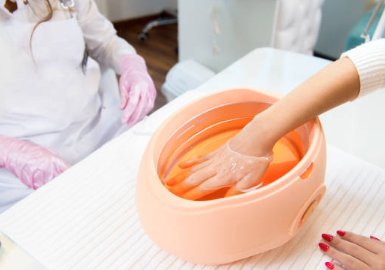
Dip your hand into the melted wax, forming a thin layer, and maintain this position for a few seconds, allowing it to solidify.
2. Repeat the dipping process until you have at least 5-7 layers of wax.
Step 3: Bagging Hands
1. Place hands in a sealable plastic bag.
2. Wait 15-20 minutes. This helps the wax to penetrate and moisturize your skin.
Step 4: Remove Wax
1. After the set time, remove your hands from the bag.
2. Gently peel off the wax or wipe it off with a paper towel.
3. Use your favorite moisturizer to keep skin hydrated.
Step 5: Cleanup and storage
1. Clean residual wax with a damp cloth.
2. Store the remaining wax in a cool, dry place for future use.
With these simplified steps, you can enjoy a paraffin wax hand treatment at home using minimal products, ensuring soft and nourished skin.
Is Paraffin Wax Safe for Home Use? What to Consider:
The laboratory conducted rigorous testing on paraffin wax to ascertain its safe and hygienic viability for body use; indeed, this entirely natural substance—with a low melting point—allows for facile application onto the skin without the risk of burns or blisters at relatively cool temperatures.
However, if you have any following cases, don’t do the treatment:
Usually, most people tolerate paraffin well, however, the heat may provoke a rash in individuals with exceptionally sensitive skin. Prickly heat might appear as small, yet noticeable, red spots on your epidermis, which can induce an uncomfortable itchiness and distress.
Past medical history:
Do not use paraffin if you have any of the following conditions:
- Poor circulation
- Stiff arms or legs
- Diabetes mellitus
- Any rashes or open sores on the skin
The petroleum-derived nature of paraffin wax may cause individuals with chemical sensitivities to experience slight swelling or cracking during a wax treatment.
Ensure you do not overheat the paraffin wax when performing home-based treatments; overheating can potentially result in burns. Moreover, at the initiation of your treatment, maintain a wax temperature that does not exceed 125°C.
In conclusion, paraffin wax is generally safe for use on the skin, providing a natural and low-risk option for various treatments. However, individuals with specific health conditions or sensitivities should exercise caution and, if necessary, consult with a healthcare professional before attempting a paraffin wax treatment at home.
Looking for chemical products? Let suppliers reach out to you!
An Exploration of Mineral Oil in Lotion
You May Interested In


2026-09-24
Trade Alert
Delivering the latest product trends and industry news straight to your inbox.
(We'll never share your email address with a third-party.)

Related News
-
Applications of Aluminium Orthophosphate
-
Iohexol: Properties, Uses, and Safety
-
Uses of Dithiothreitol in Laboratories
-
Chemical Reactions and Uses of Stilbene
-
SiO2: Properties, Uses, and Applications
-
Chemical Properties of Dibenzylideneacetone
-
Applications of Diphenyl Cyanide
-
Sodium Chloride (NaCl): Food Grade vs Industrial Grade Uses & Safety Data
-
Chemical Raw Materials: How to Source Quality Suppliers & Understand Grades
-
Lanolin: Benefits for Skin, Cosmetic Uses, and Allergy Risks
Recommend Reading
-
![Paraffin Wax vs. Beeswax: Candles, Cosmetics, and Industrial Applications]()
Paraffin Wax vs. Beeswax: Candles, Cosmetics, and Industrial Applications
-
![Sulfuric Acid (H2SO4): Properties, Battery Uses, and Extreme Safety Hazards]()
Sulfuric Acid (H2SO4): Properties, Battery Uses, and Extreme Safety Hazards
-
![What is Trametenolic Acid? (Structure, Sources & Research)]()
What is Trametenolic Acid? (Structure, Sources & Research)
-
![Sodium Hydroxide (Caustic Soda): Soap Making, Cleaning, and pH Control Guide]()
Sodium Hydroxide (Caustic Soda): Soap Making, Cleaning, and pH Control Guide
-
![Uses and Properties of Copper Acetate]()
Uses and Properties of Copper Acetate
-
![Cost Benefits Drive a Noticeable Price Increase in Polyester Staple Fiber]()
Cost Benefits Drive a Noticeable Price Increase in Polyester Staple Fiber
-
![Both Cost and Demand Weaken, PTA Prices Remain Stagnant and Consolidate]()
Both Cost and Demand Weaken, PTA Prices Remain Stagnant and Consolidate
-
![Raw Material Side Shows Resilience—PTA Prices Surge Over 3% in a Single Day]()
Raw Material Side Shows Resilience—PTA Prices Surge Over 3% in a Single Day
-
![Methanol Market Conditions Consolidate and Operate]()
Methanol Market Conditions Consolidate and Operate
-
![Palm Oil Market in November Experiences Volatile Decline]()
Palm Oil Market in November Experiences Volatile Decline