Uses and Properties of Copper Acetate
Why Does Copper Acetate Continue to Matter?
Copper acetate is not a new discovery, nor is it a rare compound. Yet it continues to appear in chemistry labs, reference manuals, and research notes. The reason is simple: it behaves in ways chemists can reliably predict. That reliability is often more valuable than novelty.
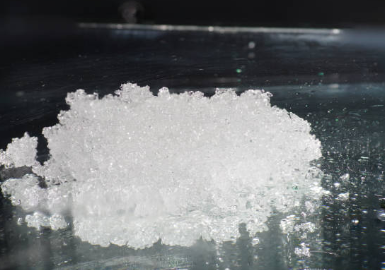
Its distinctive blue-green crystals are familiar to many students, but beyond appearance, copper acetate offers a stable and manageable source of copper(II) ions. This makes it useful not only for demonstrations, but also for controlled reactions where consistency matters.
What Exactly Is Copper Acetate?
Copper acetate is an inorganic copper salt formed when copper reacts with acetic acid. In most practical settings, the compound encountered is copper(II) acetate, written as Cu(CH3COO)2. It commonly crystallizes as a hydrated solid and dissolves readily in water.
From a chemical standpoint, its value lies in the copper ion. Copper in the +2 oxidation state is well studied, which allows chemists to anticipate how copper acetate will behave in solution and in reactions.
Physical and Chemical Properties
Several properties make copper acetate easy to recognize and work with under standard conditions:
- Color ranging from blue to greenish-blue
- Good solubility in water and polar solvents
- Mild vinegar-like odor when damp
- Stable at room temperature when stored properly
These properties are consistent with data reported by institutions such as the National Institute of Standards and Technology (NIST), which provides reference values used in laboratories worldwide.
Practical Copper Acetate Applications
When discussing copper acetate applications, it helps to separate historical use from modern practice. In the past, copper acetate was widely used as a pigment and dye component. Today, those uses are limited due to safety concerns.
In current laboratory and industrial contexts, copper acetate is more commonly used as:
- A precursor for synthesizing other copper compounds
- A catalyst or catalyst component in organic reactions
- A reagent in analytical and coordination chemistry
- A teaching material for demonstrating ionic reactions
Its role is rarely dramatic, but it is dependable, which explains its continued presence in chemical workflows.
Copper Acetate in Chemistry Labs
Copper acetate in chemistry labs is often chosen for educational and research purposes because it offers clear visual feedback. Color changes, precipitate formation, and complex ion reactions are easy to observe.
In undergraduate laboratories, it is frequently used to illustrate topics such as solubility rules, ligand exchange, and equilibrium. For instructors, it provides consistent results without requiring complex preparation.
Typical Copper Acetate Reactions
Most copper acetate reactions begin with dissociation in water, producing copper(II) ions and acetate ions. From there, copper ions readily participate in precipitation, redox, and coordination reactions.
Common reaction patterns include:
- Formation of insoluble copper salts with sulfides or carbonates
- Reduction of Cu2+ to metallic copper under suitable conditions
- Complex formation with ammonia or organic ligands
These reactions are well documented in laboratory literature published by organizations such as the American Chemical Society (ACS), which is why they are frequently used as reference examples.
Handling and Safety Considerations
Although copper acetate is not classified as extremely hazardous, it should never be treated casually. Copper compounds can be toxic if ingested or released into the environment in large amounts.
Standard precautions—gloves, eye protection, and proper ventilation—are generally sufficient. Regulatory guidance from agencies such as the U.S. Environmental Protection Agency (EPA) emphasizes responsible disposal, particularly to protect aquatic ecosystems.
How Copper Acetate Compares to Other Copper Salts
The comparison below highlights why copper acetate is often selected over other copper compounds:
| Copper Compound | Water Solubility | Common Use |
|---|---|---|
| Copper Acetate | High | Laboratory reagent, synthesis |
| Copper Sulfate | High | Electrochemistry, agriculture |
| Copper Oxide | Low | Ceramics, catalysts |
Environmental and Regulatory Context
From an environmental perspective, copper acetate is regulated primarily because of its copper content. Many regulatory frameworks treat copper salts collectively when assessing environmental impact.
As a result, even small-scale laboratory use is expected to follow waste management guidelines, especially in institutional settings.
Final Thoughts on Copper Acetate
Copper acetate remains relevant not because it is cutting-edge, but because it is predictable and well understood. For chemists, that reliability reduces risk and simplifies experimental design.
In both teaching and applied research, it continues to serve as a practical example of how traditional compounds still hold value in modern chemistry.
Looking for chemical products? Let suppliers reach out to you!
You May Interested In


Glow70/KLOW80 99% China Peptides Warehouse Direct Delivery Lyophilized Powder in Stock
$169/UNIT FOB


2026-10-21
Trade Alert
Delivering the latest product trends and industry news straight to your inbox.
(We'll never share your email address with a third-party.)

Related News
-
Sodium Hydroxide (Caustic Soda): Soap Making, Cleaning, and pH Control Guide
-
Potassium Carbonate: Properties, Uses, and Applications
-
Dimethyl Carbonate: Properties and Industrial Applications
-
Hydrobromic Acid: Properties, Uses, and Safety
-
Cocamidopropyl Betaine: Uses, Benefits, and Safety
-
Lanolin: Benefits for Skin, Cosmetic Uses, and Allergy Risks
-
Paraffin Wax vs. Beeswax: Candles, Cosmetics, and Industrial Applications
-
Key Reactions of Cobalt Chloride
-
Chemical Properties and Applications of Cyclopropen
-
France’s Vineyards Find a New Shield: Eden’s Mevalone Enters the Frontline of a Changing Fungicide Era
Recommend Reading
-
![India Unleashes a Triple-Action Defender: Parijat Introduces NILANIX SC into the Rice Battlefront]()
India Unleashes a Triple-Action Defender: Parijat Introduces NILANIX SC into the Rice Battlefront
-
![Uses and Properties of 3-Methyl-1-Butanol]()
Uses and Properties of 3-Methyl-1-Butanol
-
![Key Reactions and Uses of Lithium Aluminum Hydride]()
Key Reactions and Uses of Lithium Aluminum Hydride
-
![Phosphoric Acid: Uses in Cola, Rust Removal, and Fertilizers Explained]()
Phosphoric Acid: Uses in Cola, Rust Removal, and Fertilizers Explained
-
![Silver Nitrate: Medical Uses, Photography History, and Staining Properties]()
Silver Nitrate: Medical Uses, Photography History, and Staining Properties
-
![Sluggish Demand Sends Hydrogen Peroxide Market Down]()
Sluggish Demand Sends Hydrogen Peroxide Market Down
-
![Business Society’s Market Outlook for Ethanol on August 27, 2026: Volatile Consolidation]()
Business Society’s Market Outlook for Ethanol on August 27, 2026: Volatile Consolidation
-
![Recent EVA Market Trend Continues to Be Weak in China]()
Recent EVA Market Trend Continues to Be Weak in China
-
![Rubber Sector Rises Across the Board in August]()
Rubber Sector Rises Across the Board in August
-
![Styrene-butadiene Rubber Market Prices Slightly Rise]()
Styrene-butadiene Rubber Market Prices Slightly Rise