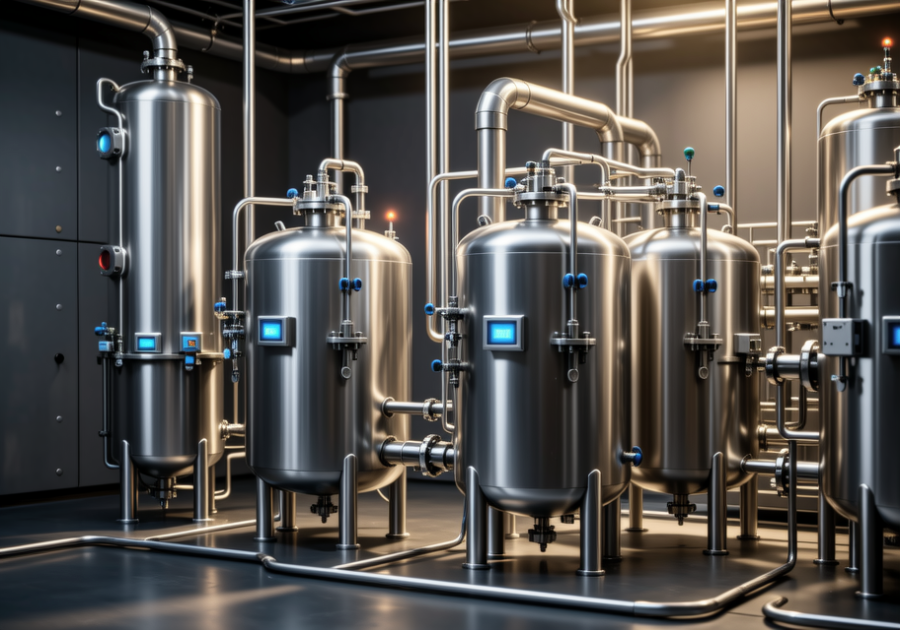
Basf plans to close two of its Glufosinate ammonium production sites in Germany to deal with the global serious overcapacity!
Basf said in a statement on July 10 that due to economic reasons, BASF plans to stop the production of Glufosinate ammonium at the Knapsack and Frankfurt production sites in Germany by the end of 2024, and subsequently close the two production sites.
This move is mainly to deal with the serious surplus of Glufosinate ammonium in the world, to participate in the competition of Glufosinate ammonium industrial chain with light assets, and the Michigan production base is also considering the production layout of Glufosinate ammonium market in the United States.
Glufosinate ammonium (C5H15N2O4P) is a highly effective, broad-spectrum, low-toxicity non-selective herbicide developed by Hoechst(later Bayer, now BASF) in the 1980s. Since 2014, due to the global ban on the use of Paraquat, the increasingly serious problem of Glyphosate resistance, and the promotion and use of Glufosinate ammonium resistant transgenic technology, the demand for Glufosinate ammonium has grown rapidly, and it has become the second largest herbicide for genetically modified crops.
With the rapid development of the global market for Glufosinate ammonium, it has also led to a fierce expansion of upstream production capacity such as the technicals and its intermediates, and in the past period of time, the upstream transfer and layout of China's Glufosinate ammonium industry chain to Inner Mongolia and Ningxia are particularly significant. Such as IMM CropScience’s annual output of 50,000 tons of Glufosinate ammonium and gradually put into production, long-term production capacity will be expanded to 75,000 tons; In addition, Yongnong, Binong and other enterprises have the production capacity of Glufosinate ammonium technical in Ningxia and Inner Mongolia, which leads to a significant increase in the supply capacity of Glufosinate ammonium and overdraft the market demand in the medium term. According to the statistics, the global effective production capacity of Glufosinate ammonium in 2023 reached 121,800 tons, compared with 2022, an increase of 62.40%, and the increase in production capacity mainly comes from Chinese enterprises.
At present, the global production capacity of Glufosinate ammonium is mainly distributed in China, Germany (the United States) and India and other countries. Among them, BASF has a capacity of 8,000 tons, accounting for 7% of the total capacity, and its factories are located in Frankfurt, Michigan. India's UPL capacity is 8,000 tons, accounting for 7% of global capacity, while the remaining 105,800 tons comes from China, accounting for 86.86% of global capacity. It can be seen that China has the largest supply capacity of Glufosinate ammonium, with exports of about 30,000 tons, ranking first in the world.

You May Interested In


SS-31 Cosmetic peptides, discounted price improving cognitive impairment factory supply
$8E+1/UNIT FOB


2026-09-16
Trade Alert
Delivering the latest product trends and industry news straight to your inbox.
(We'll never share your email address with a third-party.)

Related News
-
Bayer and Syngenta Score Consecutive Regulatory and Legal Wins in the U.S.
-
Glyphosate Becomes a Trade Fight
-
China agrochemical industry weekly(0802)
-
Paraquat in Australia is about to face restrictions, and Roundup safety is supported
-
India has decided to impose anti-dumping duties on Sodium cyanide and initiate an anti-dumping investigation on Glufosinate ammonium
-
India has decided to impose anti-dumping duties on Sodium cyanide and initiate an anti-dumping investigation on Glufosinate ammonium
-
China: Details of import and export of main chemical fertilizers in May
-
Invest 45 million! Lier (Hunan) plans to build 100,000 tons of green plant protection formulation project (Glufosinate-P)
-
Invest 45 million! Lier (Hunan) plans to build 100,000 tons of green plant protection formulation project (Glufosinate-P)
-
China:The price of Glufosinate ammonium TK hit a new low in ten years
Recommend Reading
-
![BASF and Encina Bet on Circular Chemical Feedstocks]()
BASF and Encina Bet on Circular Chemical Feedstocks
-
![Intercos Plans Acquisition of US Companies to Expand Beyond Cosmetics]()
Intercos Plans Acquisition of US Companies to Expand Beyond Cosmetics
-
![Azelis Acquires 100% Stake in Specialty Chemical Distributor Distona]()
Azelis Acquires 100% Stake in Specialty Chemical Distributor Distona
-
![Kuraray Exits China’s PMMA Market, with Jiangsu Shuangxiang Group Taking Over]()
Kuraray Exits China’s PMMA Market, with Jiangsu Shuangxiang Group Taking Over
-
![Beiersdorf Launches Eucerin Skincare Brand in Japan]()
Beiersdorf Launches Eucerin Skincare Brand in Japan
-
![China's Soda Ash Market Remains Stable]()
China's Soda Ash Market Remains Stable
-
![This week, the market price of propylene oxide in China showed a slight upward trend (6.8-6.12)]()
This week, the market price of propylene oxide in China showed a slight upward trend (6.8-6.12)
-
![At the end of the month, the 180CST fuel oil market in China remains stable]()
At the end of the month, the 180CST fuel oil market in China remains stable
-
![This Week's Pure Benzene Market Prices Fluctuated and Declined in China (6.8-6.12)]()
This Week's Pure Benzene Market Prices Fluctuated and Declined in China (6.8-6.12)
-
![China Releases 15th Five-Year Carbon-Peaking Action Plan, Pushing Coal Chemicals into a Mandatory Low-Carbon Upgrade Cycle]()
China Releases 15th Five-Year Carbon-Peaking Action Plan, Pushing Coal Chemicals into a Mandatory Low-Carbon Upgrade Cycle