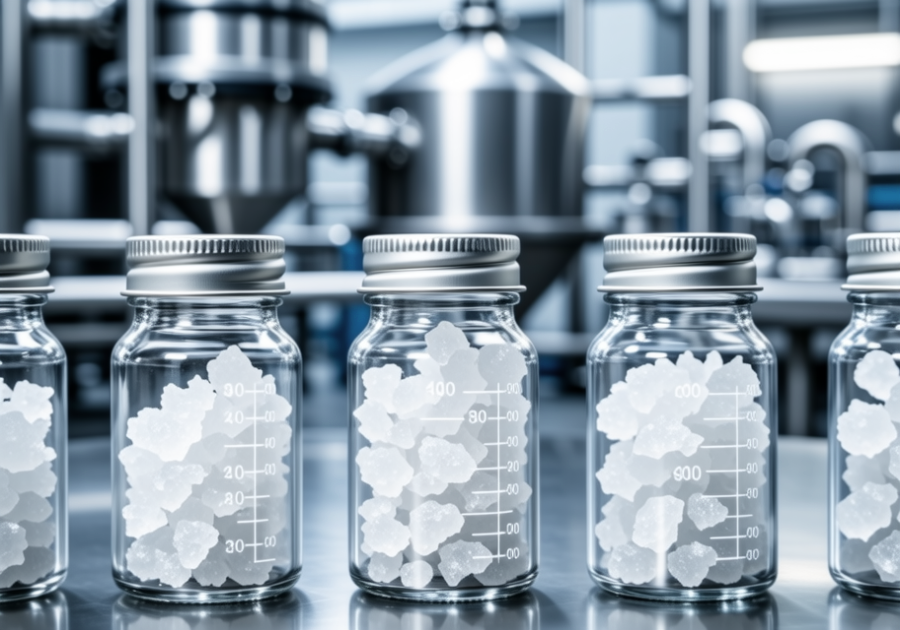
BASF Ludwigshafen announces additional production capacity for expandable polystyrene (EPS) granules by 50,000 tonnes/year
BASF is strengthening its styrene value chain at the Ludwigshafen site by increasing annual production capacity for Neopor by 50,000 tonnes. The increase is aimed at meeting the growing market demand for grey insulation materials. The new production facility is scheduled to be commissioned in early 2027.
Neopor is a graphite-containing expandable polystyrene (EPS) granule developed by BASF as a raw material for the production of energy-saving thermal insulation for building envelopes. The graphite content gives the material a grey colour and improves the thermal insulation performance of the sheets by 30% compared to white EPS. Neopor insulation sets new standards for new and refurbished buildings.
"BASF's sustainability assessment ranks Neopor as a 'pioneer' in the highest category and is part of BASF's 'solutions for a sustainable future'," said Stephan Kothrade, member of the Board of Executive Directors and Chief Technology Officer of BASF SE. "Our goal is to be the chemical company of choice for our customers and help them achieve a green transition. Neopor is a great example of how we can achieve this goal."
BASF expects that the demand for energy-efficient building renovation materials will increase significantly in the coming years. The EU's goal is to make the European construction industry climate neutral by 2050. To achieve this ambitious goal, all EU member states implement the European Building Energy Efficiency Directive, which places high demands on improving building energy efficiency.
“Well-insulated building envelopes are essential for reducing greenhouse gas emissions and achieving climate targets. This is also a prerequisite for the rational use of modern heating technology. Our polystyrene insulation materials play an important role in this regard,” said Klaus Ries, Head of Business Management Europe at BASF Styrenics.
“Over their decades-long service life, they significantly reduce CO2 emissions and energy consumption for heating/cooling buildings. This is not only good for the climate, but also saves energy costs. Neopor with graphite has excellent insulation values and is easy to process, cost-effective and recyclable. Neopor is one of the most environmentally friendly insulation materials.”

You May Interested In


Glow70/KLOW80 99% China Peptides Warehouse Direct Delivery Lyophilized Powder in Stock
$169/UNIT FOB


2026-10-24
Trade Alert
Delivering the latest product trends and industry news straight to your inbox.
(We'll never share your email address with a third-party.)

Related News
-
BASF and Highsun Group Plan to Establish a Polyamide 6 Joint Venture
-
BASF and Evonik Rumored Potential Acquisition or Merger
-
BASF and Thailand’s NEO Corporate Enter Joint Development Partnership in Personal Care
-
BASF Raises North American Nylon Products by $0.08/lb, Fourth Price Increase in Six Months
-
First New UV Filter in Nearly 27 Years: BASF's Tinosorb® S Approved by FDA, Marking a Historic Shift for the U.S. Sunscreen Market
-
Multiple Chemical Industry Leaders Post Strong H1 Earnings Growth as Sector Profitability Revives
-
The Crop Protection Patent Cliff Is Here
-
BASF's Intensified Moves from May to June: Plant Closures, Divestitures, and Transformation in Sync
-
EU Clears Carlyle's Acquisition of BASF's Coatings Business, but Demands Divestment of Nouryon's Polysulfide Assets: What Are the Underlying Risks?
-
BASF, Covestro, Huntsman Raise MDI Prices in North America Amid Global Supply Crunch
Recommend Reading
-
![Aster Opens Singapore’s Storage and Marine Network to Third Parties]()
Aster Opens Singapore’s Storage and Marine Network to Third Parties
-
![Ashland Explores Sale as Private Equity Circles $4.5 Billion Specialty Chemicals Portfolio]()
Ashland Explores Sale as Private Equity Circles $4.5 Billion Specialty Chemicals Portfolio
-
![$12 Billion Merger! A New North American Chemical Giant Is About to Be Born]()
$12 Billion Merger! A New North American Chemical Giant Is About to Be Born
-
![China National Salt Industry Corporation Advances 10,000 t/y Sodium Metal Expansion Project, Industry Leader Invests Nearly RMB 100 Million]()
China National Salt Industry Corporation Advances 10,000 t/y Sodium Metal Expansion Project, Industry Leader Invests Nearly RMB 100 Million
-
![$2.43 Billion Deal: Olin Buys Huntsman]()
$2.43 Billion Deal: Olin Buys Huntsman
-
![Business Society’s PTA Market Outlook for September 2, 2026: Volatile]()
Business Society’s PTA Market Outlook for September 2, 2026: Volatile
-
![Business Society’s Market Outlook for Maleic Anhydride on August 24, 2026: Volatile]()
Business Society’s Market Outlook for Maleic Anhydride on August 24, 2026: Volatile
-
![Business Society’s Market Outlook for Phthalic Anhydride on August 25, 2026: Strongly Bullish]()
Business Society’s Market Outlook for Phthalic Anhydride on August 25, 2026: Strongly Bullish
-
![Business Society’s Market Outlook for Propylene Oxide on August 25, 2026: Deep Correction (Bearish, Nature of the Correction)]()
Business Society’s Market Outlook for Propylene Oxide on August 25, 2026: Deep Correction (Bearish, Nature of the Correction)
-
![Business Society’s August 27, 2026 Melamine Market Outlook: Clearly Upward Trend]()
Business Society’s August 27, 2026 Melamine Market Outlook: Clearly Upward Trend