SABIC's Innovative Technology Reduces Packaging Carbon Footprint by 30% and Thickness by 20%
Packaging with SABIC polymers can reduce the carbon footprint by approximately 30% while reducing the thickness of co-extruded films by 20%. These SABIC polymers are derived from waste frying-oil-based biorenewable feedstock certified for mass balance.
The project represents a comprehensive value chain partnership between SABIC, Lamb Weston and OPACKGROUP. Lamb Weston is the industry's first to adopt SABIC certified biorenewable polyethylene (PE) bags for frozen pre-fried potato products, which were officially launched in September this year.
SABIC, the world's leading diversified chemical company, has teamed up with Lamb Weston, the world's leading brand and producer of frozen potato products, to develop a lightweight and sustainable co-extruded film structure packaging bag using a closed-loop process, in which at least 60% of the composition is made of bio-feedstock polymers prepared from waste cooking oil (UCO).
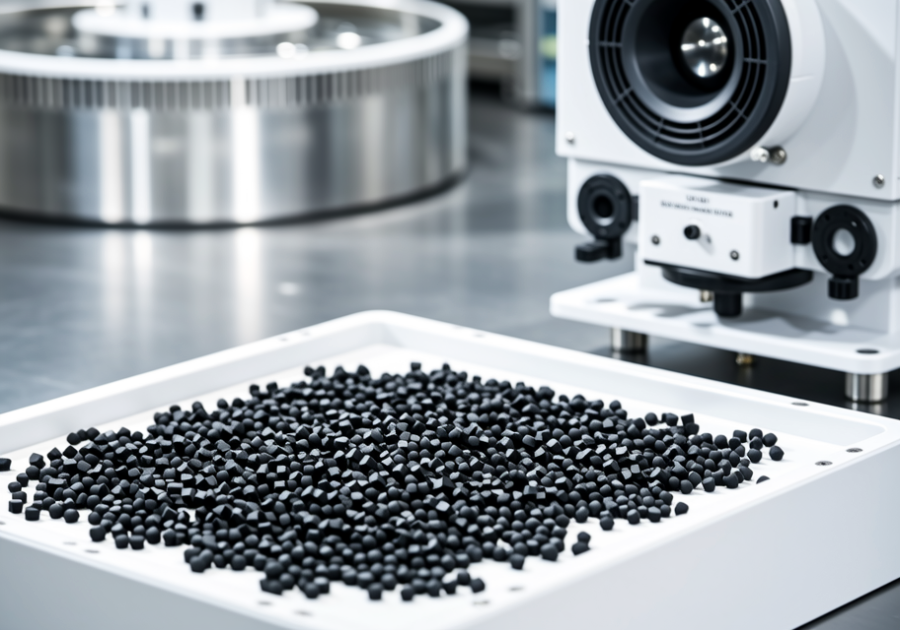
The process begins with the collection of waste cooking oil from the production of Lamb Weston, which is then converted into biological feedstock to produce certified biorenewable SABIC® HDPE (high density polyethylene) and SUPEER™ mLLDPE (metallocene linear low density polyethylene) polymers. The resulting packaging contains at least 60% biorenewable polymer materials based on waste edible oil, which form a key part of the SABIC TRUCIRCLE™ portfolio. Oerlemans Plastics, a subsidiary of OPACKGROUP and a specialist manufacturer of flexible films and packaging, converted these polymers into multi-layer polyethylene films for the packaging of pre-fried frozen potato products at Lamb Weston.
Khaled Al-Jalawi, Global Director of SABIC's Circular Economy business, said: "This closed-loop project, which we implemented in conjunction with Lamb Weston and OPACKGROUP, exemplified the concept of a circular economy. The project achieves excellent recyclability by using waste cooking oil more efficiently to produce recycled polymers and in a closed-loop manner."
At least 60% of the raw material in the new Lamb Weston retail packaging is renewable, with this proportion certified from polymers to films. The company tracks and records the renewable content of its materials in accordance with the recognized International Sustainability and Carbon Certification (ISCC) PLUS quality balance requirements.
Sebastiaan Besems, Lamb Weston's vice president of commercial for Europe, Middle East and Africa, said: "Distributors, retailers and consumers are becoming more aware of the impact they are making on the environment and are increasingly turning to more sustainable packaging. We anticipated this trend and developed an industry-leading bio-cycle retail packaging solution for our pre-fried frozen potato products, designed to deliver a highly responsible value proposition. As part of our sustainability plan and innovation in the frozen potato category, 60% of our brand's new European retail packaging is made from biorecycled plastic, derived from Lamb Weston waste cooking oil and ISCC PLUS certified. By using SABIC's biorenewable polymers, reducing packaging materials and improving packaging performance, this innovation has reduced the carbon footprint of our retail packaging by 30%, in line with consumer expectations that FMCG brands are as environmentally friendly as possible. The success of this project is also in line with our stated goals to halve food waste, reduce our overall product carbon footprint by 25% by 2030 and move to more circular production."
Laura Hanegraaf, Sales Manager at Oerlemans Plastics, a subsidiary of the OPACKGROUP, added: "This project reinforces our efforts with SABIC to promote low carbon and renewable products in the industry and is a significant step forward for us to achieve together. It allows us to offer our customers high-quality flexible film products made from waste edible oil-based renewable materials."
The film thickness is reduced by 20%, the average unit weight of the bag is only 10 grams, and the biobased renewable SABIC® polyethylene (PE) is used, so the new bag has about 30% less carbon footprint than its predecessor. SABIC® HDPE resin in the film structure provides high strength and toughness, while SUPEER mLLDPE resin provides excellent sealing for packaging bags. Both materials meet the requirements of the European Food Safety Authority (EFSA) and the US Food and Drug Administration (FDA) for food contact materials.
Following extensive testing and evaluation, Lamb Weston launched the first frozen potato products in the UK and the Netherlands in September in packaging made from Oerlemans multi-layer film, produced from SABIC certified renewable PE polymers.

You May Interested In


Glow70/KLOW80 99% China Peptides Warehouse Direct Delivery Lyophilized Powder in Stock
$1.8E+2/UNIT FOB


2026-09-06
Trade Alert
Delivering the latest product trends and industry news straight to your inbox.
(We'll never share your email address with a third-party.)

Related News
-
Merck to Lay Off 150 Workers at US Gardasil Plant Amid Sales Weakness
-
BASF Raises North American Nylon Products by $0.08/lb, Fourth Price Increase in Six Months
-
COSMAX Acquires 51% Stake in Keminova, Establishes First European Production Base
-
LyondellBasell Expands Laboratory Capabilities at Suzhou Technology Center
-
Covestro Unveils TPU Application Development Hub in Guangzhou, Strengthening Regional Innovation Network
-
Symrise Launches “Care & Wellness” Division to Strengthen Beauty–Health Integration
-
McKinsey Pays to Close a Purdue Liability Chapter
-
Sun Pharma’s Organon Bid Would Redraw Indian Pharma M&A
-
AstraZeneca India Eyes ₹3,400 Crore Bengaluru Sale
-
Iran Conflict Leaves a Long Shadow on Drug Supply
Recommend Reading
-
![A Cold-Chain Crackdown in Delhi Sends a Much Bigger Message]()
A Cold-Chain Crackdown in Delhi Sends a Much Bigger Message
-
![Unable to Buy Entire AkzoNobel, Nippon Paint Begins a]()
Unable to Buy Entire AkzoNobel, Nippon Paint Begins a "Disassembled Approach"
-
![AstraZeneca to Invest $2 Billion in New U.S. Biologics Facilities]()
AstraZeneca to Invest $2 Billion in New U.S. Biologics Facilities
-
![BASF Builds New Alkyl Polyglucoside Plant in Thailand, Expands Its Business Footprint in Asia]()
BASF Builds New Alkyl Polyglucoside Plant in Thailand, Expands Its Business Footprint in Asia
-
![After Two Price Hikes in One Week, Dow Has Fully Exposed the Most Sensitive Nerve in Europe’s Polyurethane Market]()
After Two Price Hikes in One Week, Dow Has Fully Exposed the Most Sensitive Nerve in Europe’s Polyurethane Market
-
![This Week's Activated Carbon Prices Rise (12.1-12.5) in China]()
This Week's Activated Carbon Prices Rise (12.1-12.5) in China
-
![Business Society’s Market Outlook for MIBK on August 27, 2026: Stable Operation]()
Business Society’s Market Outlook for MIBK on August 27, 2026: Stable Operation
-
![Business Society’s Ethanol Market Outlook on September 2, 2026: Volatile Consolidation]()
Business Society’s Ethanol Market Outlook on September 2, 2026: Volatile Consolidation
-
![BDO Market Conditions Remain Relatively Stable]()
BDO Market Conditions Remain Relatively Stable
-
![Business Society’s Market Outlook for Butadiene Rubber on August 26, 2026: Short-term Market Trends Primarily Characterized by Fluctuations]()
Business Society’s Market Outlook for Butadiene Rubber on August 26, 2026: Short-term Market Trends Primarily Characterized by Fluctuations