Eli Lilly's New Drug Muvalaplin Reduces Lp(a) by 85.8%!
Eli Lilly and Company recently announced positive results in a Phase 2 clinical trial for muvalaplin, its once-daily oral lipoprotein (a) -- Lp (a) inhibitor. The study results showed that the trial met its primary endpoint, and muvalaplin was able to significantly reduce Lp (a) levels in adult patients, showing significant improvement in the percentage change in Lp (a) levels from baseline to week 12. Data from these studies have been published in the Journal of the American Medical Association (JAMA) and presented at the American Heart Association (AHA) Annual Scientific Meeting 2024.
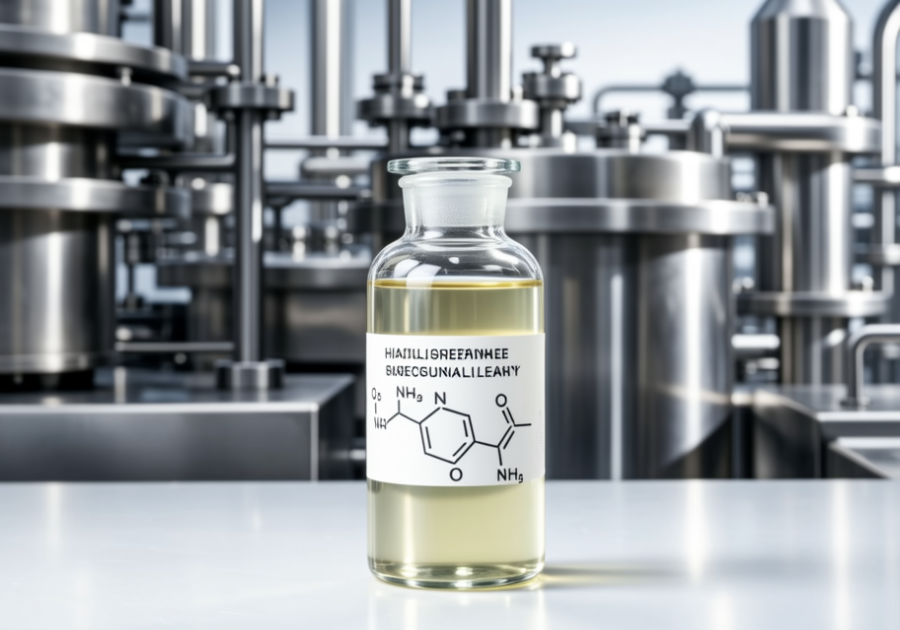
Muvalaplin is an oral small-molecule drug that works by blocking the interaction of apo (a) with apo B100 while avoiding interaction with the homologous protein plasminogen, thereby inhibiting Lp (a) production.
The analysis showed that muvalaplin (at doses of 10 mg, 60 mg, and 240 mg, respectively) significantly reduced Lp (a) levels in patients evaluated at the primary endpoint at week 12. After adjustment for placebo, a reduction of up to 85.8% was assessed using the full Lp (a) test and up to 70.0% was assessed using the apo (a) test. Specific data are as follows:
With full Lp (a) detection, the reduction of 10 mg, 60 mg and 240 mg doses was 47.6%, 81.7% and 85.8%, respectively.
When apo (a) was used, the reduction of 10 mg, 60 mg and 240 mg doses was 40.4%, 70.0% and 68.9%, respectively.
In addition, muvalaplin achieved a secondary endpoint at all tested doses. In terms of safety, the incidence of adverse events with muvalaplin was comparable to those in the placebo group, and most were minor events, demonstrating its well-tolerated and safe profile.

You May Interested In


Glow70/KLOW80 99% China Peptides Warehouse Direct Delivery Lyophilized Powder in Stock
$169/UNIT FOB


2026-10-17
Trade Alert
Delivering the latest product trends and industry news straight to your inbox.
(We'll never share your email address with a third-party.)

Related News
-
Procter & Gamble Posts Higher Profits on Strong Personal Care Sales and Recovery in China
-
Huntsman Issues Two Consecutive MDI Price Hike Notices: €250 Increase in Europe, $300 Increase in India
-
Lotte Chemical Plans Sale of Selected Operations in Malaysia, Indonesia, and the United States
-
Dover to Acquire Cloeren and Expand Its Polymer-Extrusion Equipment Portfolio
-
GACL Approves Additional Hydrochloric Acid Unit at Dahej
-
Croda’s First-Half Profit Outpaces Sales as Beauty Actives Grow 19%
-
argenx to Acquire Forte Biosciences for $2.2 Billion in Major Autoimmune Antibody Deal
-
Advent Drops Its 2026 Purchase, and LANXESS’s €1.2 Billion Exit Plan Falls Through
-
Wanhua Chemical Establishes a RMB 1.488 Billion New Energy Materials Company in Weifang, Further Integrating Green Power and Battery Materials Businesses
-
BASF Moves to Sell 4,400 Employee Homes—Union Fury Reveals the Survival Math of a Chemical Giant
Recommend Reading
-
![EU Clears Bayer-KWS Sugar Beet Event]()
EU Clears Bayer-KWS Sugar Beet Event
-
![EU Clears Bayer-KWS Sugar Beet Event]()
EU Clears Bayer-KWS Sugar Beet Event
-
![BioNTech’s Founders Turn the Page]()
BioNTech’s Founders Turn the Page
-
![Deméter Enters China with a Stress-Focused Pitch]()
Deméter Enters China with a Stress-Focused Pitch
-
![Novo Nordisk Faces a Compliance Test]()
Novo Nordisk Faces a Compliance Test
-
![This Week's Isopropyl Alcohol Market Prices Decline in China (12.1-12.5)]()
This Week's Isopropyl Alcohol Market Prices Decline in China (12.1-12.5)
-
![October Natural Rubber Market Fluctuates, Shows Slight Increase Overall]()
October Natural Rubber Market Fluctuates, Shows Slight Increase Overall
-
![Business Society’s Trend Analysis for Isooctanol on September 16, 2026: Strongly Bullish]()
Business Society’s Trend Analysis for Isooctanol on September 16, 2026: Strongly Bullish
-
![PVC Prices Decline in October, May Stabilize at Bottom Later]()
PVC Prices Decline in October, May Stabilize at Bottom Later
-
![Business Society’s Trend Analysis for Hydrofluoric Acid on September 15, 2026: Weak Fluctuations with a Bearish Bias]()
Business Society’s Trend Analysis for Hydrofluoric Acid on September 15, 2026: Weak Fluctuations with a Bearish Bias