BASF Expands Battery Anode Binder Production Capacity in the United States
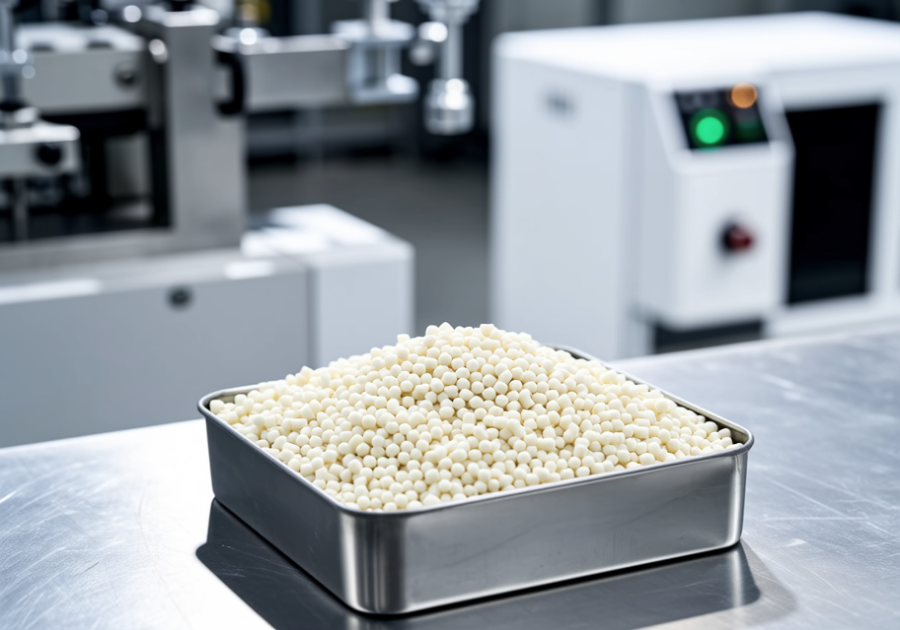
BASF announced that it has significantly expanded its production capacity in the United States and has now started producing Licity anode binders to support the rapidly growing lithium-ion battery industry. With this expansion, BASF will provide the Licity product range globally. The company expects that battery manufacturers and OEMs will continue to focus on local supply of raw materials and global supply chain stability in the coming years.
The Licity product range complements BASF's existing styrene butadiene rubber (SBR) production sites and further consolidates its technological advantages in this field. Currently, BASF has multiple production sites in Jiangsu and Guangdong, China, Ludwigshafen, Germany, Hamina, Finland, and Monaca, Pennsylvania and Chattanooga, Tennessee in the United States, dedicated to providing SBR binders for electric vehicle batteries.
Although small in size, anode binders play a vital role in battery performance and stability. BASF's water-based anode binders provide a sustainable option with high quality and stable performance. These innovative binders not only increase battery capacity and enhance cycle stability, but also shorten battery charging time. Licity binders can also be customized to meet different technical requirements such as pure graphite or silicon-containing anodes, and are widely used in electric vehicles, energy storage systems and consumer electronics.
Denise Hartmann, Senior Vice President of Dispersions and Resins, BASF Americas, said: "This is an important milestone for the North American battery industry. With the expansion of Licity anode binder production capacity in the United States, we are very pleased to further support the growth of global customer demand."
BASF's binders are specifically designed to overcome the various performance limitations of lithium-ion batteries. They use water-based formulations with high colloidal stability and are highly compatible with auxiliary binders such as carboxymethyl cellulose (CMC).

You May Interested In


Glow70/KLOW80 99% China Peptides Warehouse Direct Delivery Lyophilized Powder in Stock
$169/UNIT FOB


2026-10-22
Trade Alert
Delivering the latest product trends and industry news straight to your inbox.
(We'll never share your email address with a third-party.)

Related News
-
BASF and Highsun Group Plan to Establish a Polyamide 6 Joint Venture
-
BASF and Evonik Rumored Potential Acquisition or Merger
-
BASF and Thailand’s NEO Corporate Enter Joint Development Partnership in Personal Care
-
BASF Raises North American Nylon Products by $0.08/lb, Fourth Price Increase in Six Months
-
First New UV Filter in Nearly 27 Years: BASF's Tinosorb® S Approved by FDA, Marking a Historic Shift for the U.S. Sunscreen Market
-
Multiple Chemical Industry Leaders Post Strong H1 Earnings Growth as Sector Profitability Revives
-
The Crop Protection Patent Cliff Is Here
-
BASF's Intensified Moves from May to June: Plant Closures, Divestitures, and Transformation in Sync
-
EU Clears Carlyle's Acquisition of BASF's Coatings Business, but Demands Divestment of Nouryon's Polysulfide Assets: What Are the Underlying Risks?
-
BASF, Covestro, Huntsman Raise MDI Prices in North America Amid Global Supply Crunch
Recommend Reading
-
![$1.35 Billion! AkzoNobel to Sell Decorative Paints Business in Southeast Asia and Australia to Nippon Paint]()
$1.35 Billion! AkzoNobel to Sell Decorative Paints Business in Southeast Asia and Australia to Nippon Paint
-
![BASF-Evonik Takeover Faces Political Resistance as German State Defends Jobs and Independence]()
BASF-Evonik Takeover Faces Political Resistance as German State Defends Jobs and Independence
-
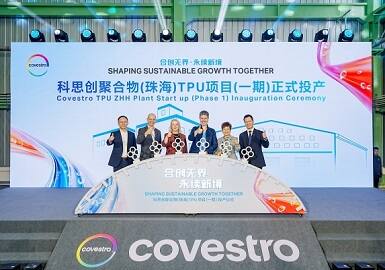
![Three-Phase Plan for 120,000 Tons! “TPU King” Zhuhai Makes Its Move—Covestro’s New Plant Signals Not Just Capacity Expansion but a Full-Scale Upgrade in the Asia-Pacific Market Battle]()
Three-Phase Plan for 120,000 Tons! “TPU King” Zhuhai Makes Its Move—Covestro’s New Plant Signals Not Just Capacity Expansion but a Full-Scale Upgrade in the Asia-Pacific Market Battle
-
![“A Single Tube of Adhesive—Enough to Shake the Global Chemical Chessboard?”: The Hidden Power Struggle Behind the FTC’s Block of Henkel’s Liquid Nails Deal]()
“A Single Tube of Adhesive—Enough to Shake the Global Chemical Chessboard?”: The Hidden Power Struggle Behind the FTC’s Block of Henkel’s Liquid Nails Deal
-
![Reducing to Refocus: Novo Nordisk’s 9,000-Job Cut and the Strategic Realignment in Pharma]()
Reducing to Refocus: Novo Nordisk’s 9,000-Job Cut and the Strategic Realignment in Pharma
-
![Business Society October 9, 2026 PP (Fiber) Trend Analysis: Volatility]()
Business Society October 9, 2026 PP (Fiber) Trend Analysis: Volatility
-
![Business Society’s MTBE Market Outlook on August 17, 2026: Slightly Bearish Consolidation]()
Business Society’s MTBE Market Outlook on August 17, 2026: Slightly Bearish Consolidation
-
![Business Society October 9, 2026: Methyl Chloride Trend Analysis – Strong Rebound, Bullish Volatility]()
Business Society October 9, 2026: Methyl Chloride Trend Analysis – Strong Rebound, Bullish Volatility
-
![Business Society’s Market Outlook for Fuel Oil 180CST on August 17, 2026: Volatile (Bullish Tendency)]()
Business Society’s Market Outlook for Fuel Oil 180CST on August 17, 2026: Volatile (Bullish Tendency)
-
![Business Society ABS Market Commentary for October 9, 2026: Clear Uptrend]()
Business Society ABS Market Commentary for October 9, 2026: Clear Uptrend