Ethylene Glycol: Production, Uses, and Safety
Ethylene glycol plays a discreet but vital role in many engineered systems — from car radiators to polyester fibers. If you need the takeaway first: it is an efficient heat-transfer fluid and polymer feedstock produced reliably at scale, but it must be respected for its toxicity and handled according to clear safety rules. Below I outline the production route, the chemical features that make it useful, common applications (including Ethylene Glycol in antifreeze), and the safety practices that reduce risk.
How ethylene glycol is made from ethylene
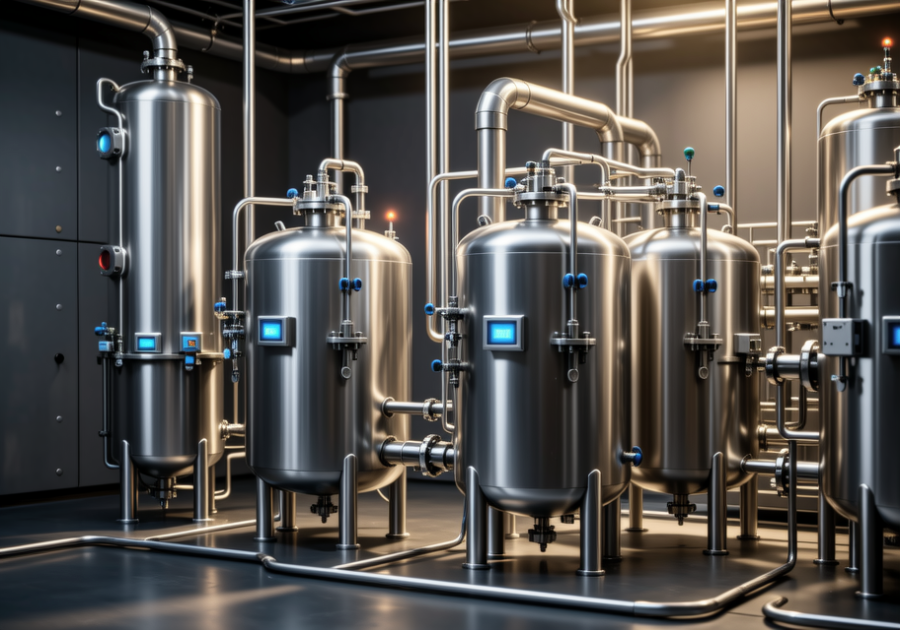
Commercial ethylene glycol is most often manufactured from ethylene. The industry uses a straightforward two-step method. First, ethylene is oxidized to form ethylene oxide — a reactive intermediate made in continuous catalytic reactors. Second, ethylene oxide is hydrated to produce ethylene glycol; reaction conditions and stoichiometry are controlled to maximize yield and limit by-products.
This pathway dominates global Ethylene Glycol production because it is efficient and scalable. Incremental improvements — better catalysts, process heat recovery, and integrated separations — have reduced energy use and waste over the past decades.
Key chemical properties that determine use
Several Ethylene Glycol chemical properties are central to why it is selected. It lowers the freezing point and raises the boiling point of aqueous mixtures, which is essential for heat-transfer fluids. The molecule contains two hydroxyl groups that support hydrogen bonding; this explains its high miscibility with water, moderate viscosity, and solvent behavior.
Those same properties make ethylene glycol a reliable monomer for polyester production (for example, PET). In practical terms: engineers rely on predictable thermal performance, while chemists value the compound’s reactivity in polycondensation reactions.
Practical uses: from antifreeze to polymers
The most familiar role is as the active component in engine coolants — Ethylene Glycol in antifreeze formulations helps engines survive cold starts and reduces overheating by improving heat-transfer characteristics. Beyond automobiles, ethylene glycol serves in HVAC chillers, geothermal loops, data-center cooling, and cold-storage systems.
On the manufacturing side, it is a key feedstock for polyethylene terephthalate (PET), polyester resins, and a range of specialty chemicals. Its dual role — thermal fluid and chemical intermediate — explains the broad demand across transport, construction, textiles, and packaging sectors.
Ethylene Glycol vs Propylene Glycol — a practical comparison
When choosing between Ethylene Glycol vs Propylene Glycol, weigh performance against exposure risk. Ethylene glycol typically gives better freeze protection and is less expensive. Propylene glycol is less toxic and therefore chosen when human contact or environmental release is a concern.
| Aspect | Ethylene Glycol | Propylene Glycol |
|---|---|---|
| Toxicity | Higher; ingestion can be fatal | Lower; considered safer around people |
| Thermal performance | Superior freeze/boil control | Adequate for many applications |
| Typical use cases | Automotive, industrial heat-transfer, PET | Food industry, consumer products, pharma |
Safety and handling: concise guidance
Ethylene glycol is effective, but it is also hazardous if misused. Key controls are straightforward and widely recommended by safety authorities:
- Use appropriate PPE: gloves, goggles, and protective clothing when handling concentrated material.
- Maintain good ventilation where vapors or mists may form.
- Store in labeled, sealed containers away from heat and incompatible substances.
- Follow local waste and spill-response regulations; do not release concentrated liquid to drains.
- For consumer products, bittering agents and clear labeling reduce accidental ingestion risks.
Final note
Ethylene glycol is a mature, well-understood chemical: inexpensive to produce from ethylene and broadly useful across industries. Its advantages are technical and economic, but they come with a clear obligation to manage health and environmental risks. Selecting between ethylene and propylene glycols comes down to the specific balance you need between thermal performance, cost, and safety.
Looking for chemical products? Let suppliers reach out to you!
You May Interested In


Glow70/KLOW80 99% China Peptides Warehouse Direct Delivery Lyophilized Powder in Stock
$169/UNIT FOB


2026-10-25
Trade Alert
Delivering the latest product trends and industry news straight to your inbox.
(We'll never share your email address with a third-party.)

Related News
-
Asia will lead the increase in global ethylene glycol production capacity
-
Vanillin: Properties, Uses, and Safety
-
Applications of Aluminium Orthophosphate
-
Reactions and Uses of Ammonium Dichromate
-
Key Properties and Applications of Para-Nitrophenol
-
Understanding Reactions Between Silver and Chloride
-
Heptane: Properties, Uses, and Industrial Applications
-
HNO2 (Nitrous Acid): Properties, Uses, and Safety
-
Isobutyl: Properties, Uses, and Industrial Applications
-
Iohexol: Properties, Uses, and Safety
Recommend Reading
-
![Permanganate: Properties, Uses, and Safety]()
Permanganate: Properties, Uses, and Safety
-
![Sodium Hypochlorite: Uses, Concentration Guide, and Critical Safety Hazards]()
Sodium Hypochlorite: Uses, Concentration Guide, and Critical Safety Hazards
-
![Isopropyl Alcohol (IPA) vs Ethanol: Which Solvent or Disinfectant is Better?]()
Isopropyl Alcohol (IPA) vs Ethanol: Which Solvent or Disinfectant is Better?
-
![Sulfuric Acid (H2SO4): Properties, Battery Uses, and Extreme Safety Hazards]()
Sulfuric Acid (H2SO4): Properties, Battery Uses, and Extreme Safety Hazards
-
![What is Trametenolic Acid? (Structure, Sources & Research)]()
What is Trametenolic Acid? (Structure, Sources & Research)
-
![Business Society’s Market Outlook for Propylene Oxide on August 31, 2026: Price Trend Is Expected to Be Volatile]()
Business Society’s Market Outlook for Propylene Oxide on August 31, 2026: Price Trend Is Expected to Be Volatile
-
![Business Society’s DOP Market Outlook on August 24, 2026: Short-Term Correction]()
Business Society’s DOP Market Outlook on August 24, 2026: Short-Term Correction
-
![Premium Global Chemical Sourcing Requests (19-21Oct.,2026)]()
Premium Global Chemical Sourcing Requests (19-21Oct.,2026)
-
![June Shandong Asphalt Market Exhibits an Overall Trend of Rising First and Then Falling]()
June Shandong Asphalt Market Exhibits an Overall Trend of Rising First and Then Falling
-
![Business Society’s Ethanol Trend Analysis for September 17, 2026: Volatile Consolidation]()
Business Society’s Ethanol Trend Analysis for September 17, 2026: Volatile Consolidation