China’s API Export Shift Takes Center Stage at API China 2026
The direction of the global pharmaceutical market is changing quickly. For Chinese API companies, the overseas market is no longer defined only by shipment volume, price advantage, and familiar trade routes. Slower export growth, tighter overseas policies, and increasingly intense price competition are pushing the industry toward a more practical question: where will the next phase of growth come from?
For years, many Chinese API suppliers built competitiveness through scale, manufacturing efficiency, and broad product coverage. That foundation remains important. However, the market environment has changed. Mature markets are raising compliance expectations, emerging regions are accelerating pharmaceutical localization, and high-value segments such as peptides, oligonucleotides, biosimilars, and specialty medicines are becoming new strategic battlegrounds.
The future of API exports will not be shaped by volume growth alone. It will depend on product upgrading, market selection, regulatory readiness, and supply-chain resilience.
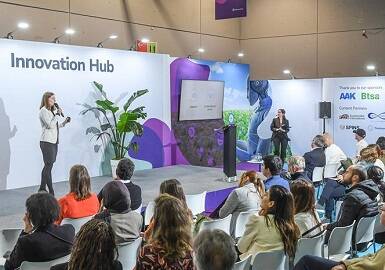
On May 14, from 10:00 a.m. to 12:00 p.m., ECHEMI will join hands with the 94th API China to host the 2026 Overseas Pharmaceutical Products and Market Trends Conference at Meeting Room M203, National Exhibition and Convention Center, Shanghai. The closed-door seminar will focus on overseas pharmaceutical market products and trends, bringing together three speakers with practical market experience and regional insight.
This is not a broad discussion built on general market language. It is a focused exchange around specific regions, specific product directions, and specific overseas growth strategies.
Chinese API Exports Reach a Structural Turning Point
The first keynote will be delivered by Bree Wang, Vice President of ECHEMI and General Manager of the Pharmaceutical Division. With 15 years of hands-on overseas market distribution and expansion experience, Bree Wang has long been involved in international trade, global channel building, customer development, and cross-border business growth.
Her speech, “A Turning Point for China’s API Exports: Reshaping the Global Pharmaceutical Supply Chain,” will address one of the most pressing contradictions facing the industry today: export volumes may continue to grow, but margins are becoming thinner and competition is becoming more concentrated.
The answer lies in structure. Chinese API companies are entering a stage where traditional scale advantages need to be matched with higher-value product portfolios, stronger compliance systems, and more diversified global layouts. In this context, product upgrading is no longer an optional direction. It is becoming a key path toward sustainable growth.
China’s API industry is moving from scale-led export growth toward value-led global competition.
Bree Wang will focus on the changing structure of China’s API exports, the performance of core product categories, and the broader global trade landscape. She will also explore how companies can identify future growth points in specialty APIs, peptide APIs, and upstream core raw materials for oligonucleotides.
These high-growth areas matter because they connect API manufacturing with the next generation of pharmaceutical innovation. Peptides and oligonucleotides are no longer niche technical fields. They are increasingly linked to obesity treatments, metabolic disease, rare diseases, oncology, and precision medicine. For Chinese suppliers, the opportunity is significant, but the threshold is also rising.
The real challenge is not whether Chinese API companies can export, but whether they can export with stronger value, stronger compliance, and stronger global positioning.
The session will also examine policy changes in major markets including India, the United States, and the European Union, as well as domestic policy support for industrial upgrading. In an environment of trade uncertainty and stricter regulatory review, companies need to build competitiveness through business model optimization, product structure upgrading, global layout, and supply-chain resilience.
South Korea’s Biopharma Ecosystem Offers a New Growth Window
The second keynote will be delivered by Jurie Hwang, Director of Public & International Affairs at the Korea Biotechnology Industry Organization. Her speech, “Growth Trends in South Korean Biopharma Market: Opportunities for the Next Decade,” will focus on the growth structure and future opportunities of South Korea’s biopharmaceutical sector.
South Korea is often recognized globally for consumer technology and cultural influence, but its biopharma industry is becoming increasingly important in the global healthcare ecosystem. Its competitiveness is not built on one single factor. It comes from a combination of startup growth, venture investment, sustained R&D spending, IPO activity, global licensing expansion, regulatory improvement, and manufacturing capability.
South Korea’s biopharma rise is not only a scientific story. It is an ecosystem story built around startups, capital, policy, clinical capacity, and global partnerships.
Jurie Hwang will present a broader map of Korea’s biopharma ecosystem, including the growth of biotech startups, investment momentum, government and public funding support, and the R&D intensity of major pharmaceutical companies. These forces are helping Korea move from regional competitiveness toward global value creation.
One of South Korea’s key advantages lies in its mature clinical trial environment and improving regulatory efficiency under the Ministry of Food and Drug Safety, or MFDS. At the same time, Korean companies have gained international competitiveness in biosimilars, CDMO services, and next-generation biologics platforms.
The next decade of South Korean biopharma growth will depend on converting innovation pipelines into durable global value.
This transition will rely on cross-border licensing, international clinical collaboration, manufacturing partnerships, and capital formation. KoreaBIO, together with BIX, Korea’s largest bio-health convention, sits at the center of this ecosystem by linking companies, policymakers, investors, and global partners.
For international companies seeking regional partnerships, South Korea offers more than a sales market. It offers an innovation ecosystem with increasing global connectivity. For Chinese pharmaceutical companies, the Korean market may provide opportunities in licensing, clinical cooperation, supply partnerships, technology exchange, and joint market development.
South Korea is becoming a strategic bridge between Asian biopharma innovation and global pharmaceutical commercialization.
The Middle East Becomes a Strategic Pharma Gateway
The third keynote will be delivered by Muzzamil Rahmath Shariff, Business Development Manager at Arvento Edge Events. His speech, “The Middle East Pharma Market Today: Policies, Trade Flows, and Emerging Opportunities,” will examine one of the fastest-changing pharmaceutical regions from the perspective of policy, trade, localization, and market access.
The Middle East is no longer only viewed through the lens of energy. It is becoming an increasingly important pharmaceutical and healthcare hub connecting Asia, Africa, and Europe. Governments in the region, particularly in the UAE and Saudi Arabia, are advancing regulatory reforms, encouraging local pharmaceutical manufacturing, and strengthening partnerships with global healthcare and pharmaceutical companies.
The Middle East pharmaceutical market is shifting from an import-dependent destination toward a regional platform for manufacturing, distribution, innovation, and strategic sourcing.
Post-COVID policy changes have accelerated digital health adoption and supply-chain resilience. At the same time, ongoing geopolitical tensions are reshaping trade flows, making supply diversification and strategic procurement more important for regional healthcare systems.
For international stakeholders, including Chinese companies, the Middle East presents rising opportunities in generics, biosimilars, contract manufacturing, specialty medicines, and healthtech collaboration. These opportunities are not only driven by demand growth, but also by policy priorities. Regional governments are actively encouraging more resilient pharmaceutical supply chains and stronger domestic healthcare capacity.
The region’s opportunity lies not only in selling products, but in participating in the formation of a more localized and diversified pharmaceutical ecosystem.
Muzzamil Rahmath Shariff will focus on the Middle East pharmaceutical market overview and growth trends, UAE pharma policies and regulatory advancements, post-COVID healthcare transformation, manufacturing localization, and supply-chain resilience. His session will also cover the impact of geopolitical conflicts on pharma trade flows, changing import-export dynamics with Asia and China, and the rise of generics, biosimilars, and specialty medicines.
Digital health, artificial intelligence, public-private partnerships, investment opportunities, and post-war market recovery will also be key discussion points. These areas show that the Middle East is becoming more than a destination for pharmaceutical exports. It is becoming a strategic gateway for companies seeking regional expansion and cross-continental business growth.
For Chinese pharmaceutical companies, the Middle East offers a rare combination of demand growth, policy support, localization needs, and regional gateway value.
Three Markets, One Shared Question
The three keynote sessions cover different regions and themes: China’s API export transformation, South Korea’s biopharma innovation ecosystem, and the Middle East’s emerging pharmaceutical gateway role. Yet they point to the same underlying question: how should pharmaceutical companies grow overseas when the old logic of global expansion is no longer enough?
In the past, overseas growth often meant finding customers, offering competitive prices, and increasing shipment volume. That model still has value, but it is no longer sufficient. The global pharmaceutical market is becoming more regulated, more localized, more segmented, and more policy-sensitive.
Future overseas growth will require companies to understand not only demand, but also regulation, local industrial policy, regional partnership models, and product value positioning.
For API companies, this means moving beyond traditional volume competition and identifying higher-value segments. For biopharma companies, it means understanding how innovation ecosystems such as South Korea can support licensing, clinical collaboration, and global partnership. For companies targeting the Middle East, it means recognizing the region’s shift from import market to strategic pharma hub.
Why This Seminar Matters Now
The timing of this seminar is especially relevant. Global pharmaceutical supply chains are being reshaped by geopolitical conflict, trade policy shifts, localization strategies, regulatory tightening, and changing demand patterns. In this environment, overseas market expansion requires sharper market reading and more precise strategic choices.
The seminar is designed to provide grounded insight rather than broad market slogans. It focuses on practical questions: where the next API growth points may emerge, how South Korea’s biopharma ecosystem is evolving, and why the Middle East is becoming a more important strategic region for global pharmaceutical companies.
The value of the seminar lies in connecting product direction, regional opportunity, and market-entry logic within one focused discussion.
Industry professionals interested in global pharmaceutical markets, API export strategy, biopharma partnerships, regional market development, and overseas pharmaceutical supply chains are welcome to attend. Participation is free, and seats are limited.
Event Time: 10:00 a.m. – 12:00 p.m., May 14, 2026
Event Venue: Meeting Room M203, National Exhibition and Convention Center, Shanghai
Event Theme: 2026 Overseas Pharmaceutical Products and Market Trends Conference
Co-hosted by: ECHEMI and the 94th API China
For those unable to attend in person, the seminar can also be followed through the LinkedIn live broadcast:
https://www.linkedin.com/events/7454349962819080192?viewAsMember=true
The global pharmaceutical market is already moving into a new stage. The companies that understand product upgrading, regional change, and policy-driven opportunity earlier will be better positioned to capture the next wave of overseas growth.

Looking for chemical products? Let suppliers reach out to you!
You May Interested In


Glow70/KLOW80 99% China Peptides Warehouse Direct Delivery Lyophilized Powder in Stock
$1.8E+2/UNIT FOB


2026-08-27
Trade Alert
Delivering the latest product trends and industry news straight to your inbox.
(We'll never share your email address with a third-party.)

Recommend Reading
-
![Registration opens for in-cosmetics Korea 2026 as K-Beauty momentum continues]()
Registration opens for in-cosmetics Korea 2026 as K-Beauty momentum continues
-
![IN-COSMETICS GLOBAL TO LAUNCH FIRST DEDICATED INNER BEAUTY ZONE FOR NUTRICOSMETIC INNOVATIONS IN 2026]()
IN-COSMETICS GLOBAL TO LAUNCH FIRST DEDICATED INNER BEAUTY ZONE FOR NUTRICOSMETIC INNOVATIONS IN 2026
-
![Fi Europe 2025 registration opens: the home of food ingredients returns to Paris for its 30th edition]()
Fi Europe 2025 registration opens: the home of food ingredients returns to Paris for its 30th edition
-
![Driving Business, Innovation, and Growth: Saudi PPPP Returns to Riyadh this June]()
Driving Business, Innovation, and Growth: Saudi PPPP Returns to Riyadh this June
-
![Vitafoods Europe unveils programme to help industry navigate the sector’s most disruptive trends]()
Vitafoods Europe unveils programme to help industry navigate the sector’s most disruptive trends
-
![This week, caustic soda prices remain firm (3.23-3.27)]()
This week, caustic soda prices remain firm (3.23-3.27)
-
![This Week's TDI Market Rises to a High Level (3.23-3.27) in China]()
This Week's TDI Market Rises to a High Level (3.23-3.27) in China
-
![Cost-driven, Polyester Bottle Flakes Remain Highly Volatile This Week (Mar. 23–27)]()
Cost-driven, Polyester Bottle Flakes Remain Highly Volatile This Week (Mar. 23–27)
-
![Insufficient Spot Buying Momentum, Acrylonitrile Market Continues to Weaken in China]()
Insufficient Spot Buying Momentum, Acrylonitrile Market Continues to Weaken in China
-
![BDO Market Continues to Fluctuate and Rise in China]()
BDO Market Continues to Fluctuate and Rise in China