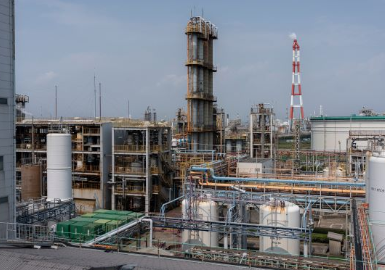
On June 8, BASF announced that it would shut down its expandable polystyrene (EPS) production asset at its Ulsan plastics site in South Korea. Production operations are scheduled to stop in mid-June 2026.
BASF said the decision is part of its ongoing strategic review to optimize its global styrenics production setup and improve competitiveness in response to changing market conditions.
This is not just a normal shutdown of a single plant. It is another signal that global chemical majors are continuing to exit non-core or structurally pressured assets.
EPS Faces Pressure from Demand, Cost and Regional Competition
EPS is widely used in building insulation, packaging, cold-chain boxes and protective materials for home appliances. However, Asia’s EPS market has been under several layers of pressure in recent years.
Regional supply competition remains intense. Demand from construction and packaging has recovered unevenly. Margins across the styrene chain have fluctuated sharply. At the same time, some mature assets have lost cost competitiveness.
For a global chemical company such as BASF, maintaining capacity in every region is no longer necessarily the best option.
The shutdown of the Ulsan EPS unit is essentially a rebalancing of BASF’s global styrenics asset structure.
Mature Asian Assets Are Under Stronger Pressure
South Korea has long been an important petrochemical and materials manufacturing base in Asia. But the regional landscape has changed.
New capacity has increasingly come from China and the Middle East. China has expanded across styrene, PS, ABS and EPS chains, putting stronger price pressure on mature Northeast Asian assets.
At the same time, logistics, energy, labor and environmental costs have made older assets harder to defend.
BASF’s decision to shut the EPS unit rather than keep running a pressured asset shows that multinational chemical companies are placing greater emphasis on asset quality instead of simply maintaining production scale.
For mature chemicals, global majors are moving from “capacity everywhere” to “capacity only where competitiveness can be defended.”
For the Asian EPS market, the short-term impact may not be a severe supply shortage. Regional supply remains available, especially from China and other Asian producers.
But over the medium and long term, such shutdowns may change market expectations. The exit of less competitive capacity could ease some supply pressure and refocus market attention on production cost, product differentiation and downstream demand structure.
For Chinese EPS and styrene-chain producers, this is both an opportunity and a warning. The opportunity lies in stronger export and substitution space as older regional capacity exits. The warning is that if China’s own capacity continues to expand faster than demand, similar rationalization pressure may eventually appear in more Asian assets.