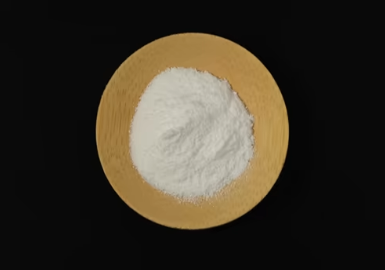
November 2nd news
[Key Takeaway] Currently, 1,4-butanediol prices are fluctuating at high levels. Upstream feedstock support remains relatively stable, but downstream demand for PBAT, PTMEG, and other products lacks significant positive momentum. Consequently, the market is expected to consolidate at elevated levels in the short term, with limited upside potential.
The latest available data is up to November 1, 2026. It is recommended to refer to real-time data.
1. Average Difference Variation Table
| Moving Average Type | Value on 2026.11.01 | Value on 2026.10.31 | Direction of Change |
|---|---|---|---|
| 5-Day Moving Average (D5) | 0.00 | 0.00 | No Change |
| 10-Day Moving Average (D10) | 0.00 | 3.83 | - |
| 20-Day Moving Average (D20) | 14.16 | 11.42 | + |
2. Signal Status Judgment
The current three differences have inconsistent directions compared to the previous day, indicating a volatile (no clear unilateral) signal.
3. Trend Direction Conclusion
The current price trend is a high-level fluctuation. Reason: The directions of the three average differences compared to the previous day are inconsistent, which does not meet the criteria for a clear upward or downward trend, but fits the characteristics of fluctuation. Fundamentally, the stable prices of upstream calcium carbide and formaldehyde provide cost support. In the downstream, there are no significant positive developments in emerging demand areas, and traditional demand is mainly driven by essential purchases. Overall, supply and demand are in a weak balance, with no clear one-sided driving force in the short term.
4. Positional Spatial Reference
The prices of 1,4-butanediol over 60-day, 3-month, and 1-year cycles are all at the fifth tier (high levels), indicating that short-term upside is significantly constrained, while downside support from cost floors keeps declines relatively limited.
5. Trend Chart Display
6. Risk Warning
The above analysis is for reference only and does not constitute trading advice.